




Vintage Glass Container
A vintage glass container brings practical elegance to a room, storing everything from biscuits on the sideboard to powder on the dressing table.
Vintage Glass Container
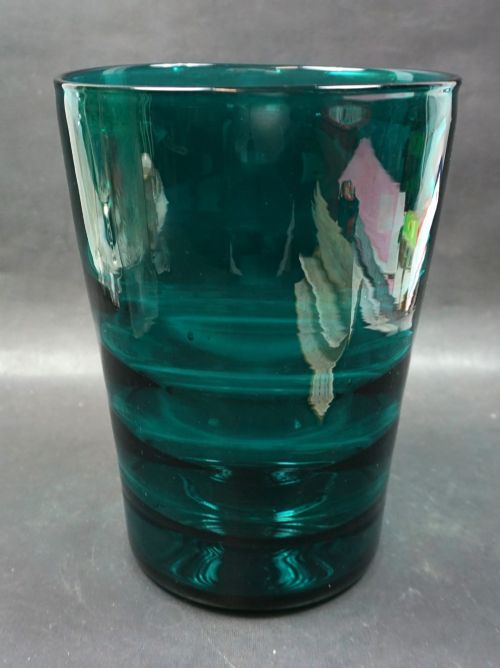
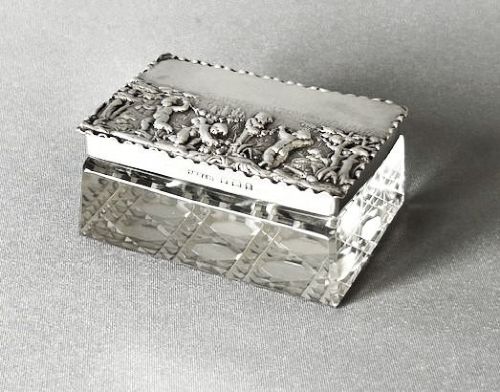
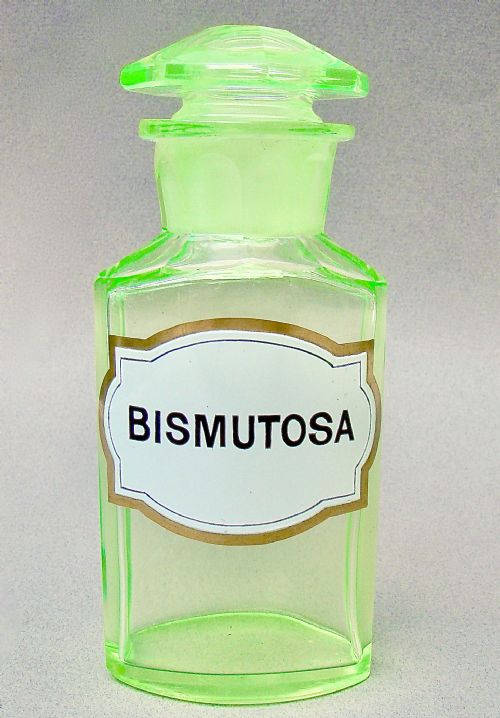
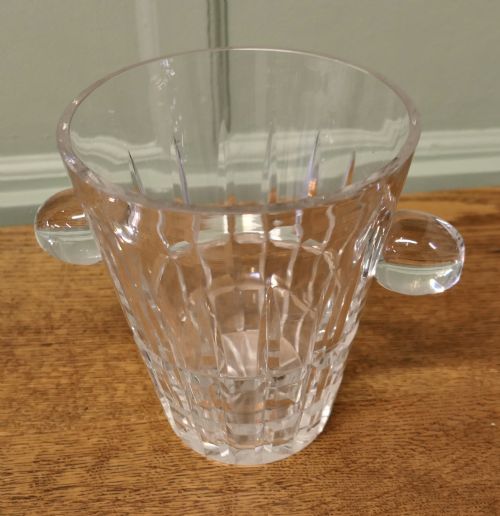
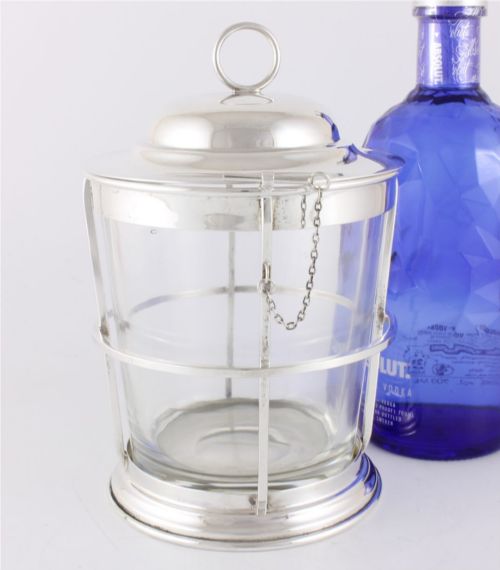
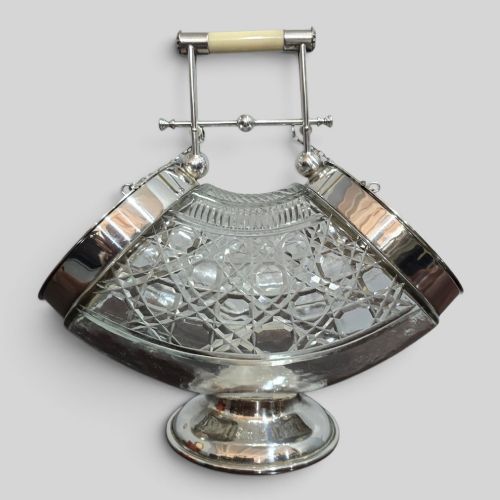
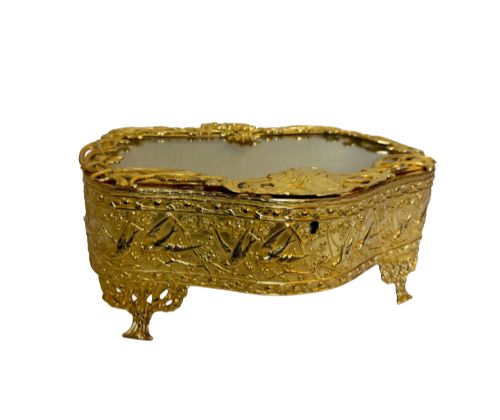
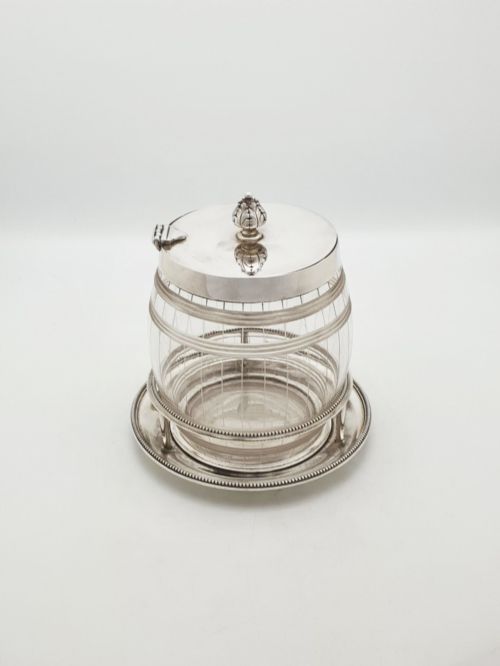
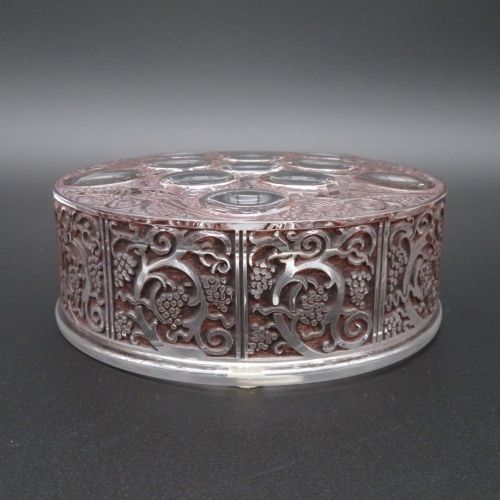
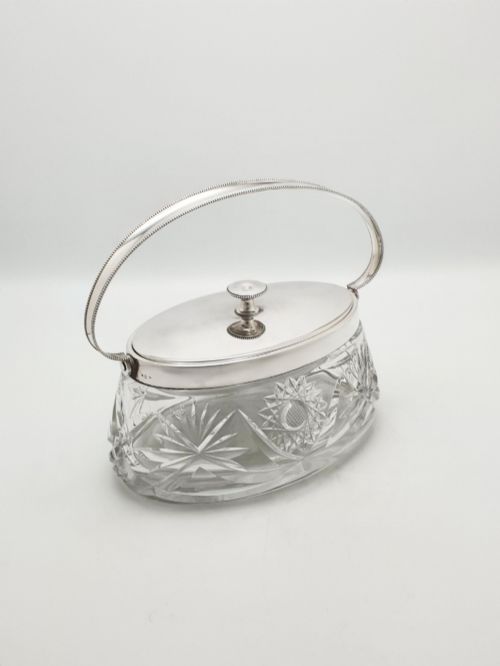
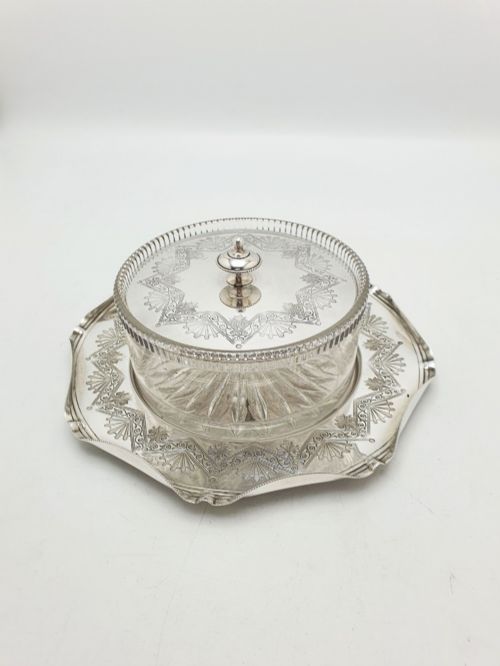
A vintage glass container encompasses a diverse array of utilitarian and decorative objects originating from the Victorian, Edwardian, and Art Deco periods, alongside mid-century pieces. The selection on this page frequently includes biscuit barrels, vanity jars, powder boxes, and ice buckets that combine functional vessels with decorative mounts.
Makers often housed glass bodies within silver plate or sterling silver mounts, creating serveware and desktop accessories designed for daily domestic use. These pieces bridge the gap between utility and display, reflecting the aesthetic shifts from ornate Victorian design to geometric Art Deco lines.
Materials and Technique
Makers utilised heavy cut crystal, moulded glass, and cranberry glass for the body of each vintage glass container, often applying hobnail cutting or geometric facets to catch the light. Silver plate, sterling silver, and gilt bronze formed the collars, lids, handles, and swing Bales that secured and accented the glass.
Enamel work, guilloche patterns, and tortoiseshell inserts frequently decorated the metal mounts, particularly on smaller vanity and powder boxes. Silver components commonly bear hallmarks indicating manufacture in silversmithing hubs such as Birmingham and Sheffield during the nineteenth and twentieth centuries.
Vintage Glass Container Retail Price Guide 2026
Typical asking prices for vintage glass container among the pieces listed under this phrase on Sellingantiques today, from the lower quarter to the upper quarter. They describe what is for sale here now, not the wider market.
One determined silversmith shaped a preserve pot precisely like an apple, proving that breakfast preserves deserved a touch of botanical whimsy.
Judging Quality
Quality rests upon the crispness of the glass cutting and the weight of the metal mount, where deeper facets and heavier gauge silver distinguish superior workshop output. The integration between the glass liner and its metal frame demonstrates the precision of the silversmith.
Elkington·Mappin and Webb·Hukin and Heath·James Dixon and Sons·René Lalique
The Vintage Glass Container Glossary
- Biscuit barrel
- A covered ceramic or glass jar designed for storing dry biscuits on the dining or drawing room table, usually fitted with a metal swing handle.
- Guilloche
- An engraved decorative pattern of intersecting curved lines produced by a mechanical lathe, frequently coated with translucent enamel on silver vanity items.
- Hobnail cut
- A raised, diamond-shaped geometric cutting pattern applied to glassware that creates a tactile, light-refracting surface texture.
- Silver plate
- A manufacturing technique where a thin layer of silver is fused to a base metal such as copper or Britannia metal, common in domestic tableware.
- Vanity jar
- A small lidded container intended for dressing table use to hold cosmetics, trinkets, or powder, often mounted with a sterling silver lid.
Vintage Glass Container: Frequently Asked Questions
What were glass biscuit barrels used for?
These lidded vessels sat on dining tables or sideboards to keep dry sweet biscuits fresh and presentable for guests during afternoon tea.
Their substantial glass walls and fitted metal lids helped protect the contents from moisture while adding a decorative element to the room.
How do I date a silver mounted jar?
Birmingham and Sheffield hallmarked silver mounts provide the most reliable dating evidence through stamped assay office symbols and date letters.
Stylistic cues such as Art Deco geometry or Victorian floral engraving also help place the piece within a specific decade.
Are these glass containers safe for food?
Most historic glass and silver-plated containers function well for dry storage, though older silver plate requires careful cleaning and non-toxic maintenance.
Utensils like jam pots and biscuit barrels were made for consumables, but collectors generally use them for display or dry goods today.
What is the difference between crystal and glass?
Crystal contains mineral additives like lead oxide that increase the weight, refractive index, and clarity of the material compared to standard soda-lime glass.
This higher density allows artisans to cut deeper, sharper facets into the surface without fracturing the vessel.