


Vintage Glass Clock
These vintage glass clock pieces combine functional timekeeping with transparent cases or opalescent dials, offering collectors a view of internal mechanics.
Vintage Glass Clock
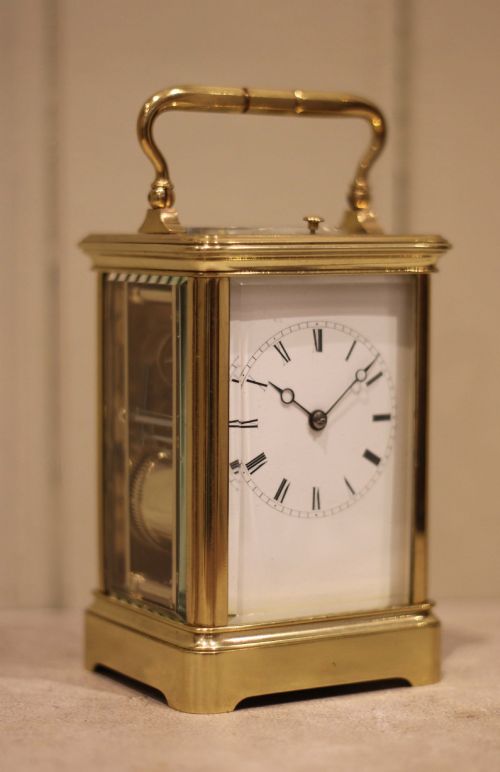
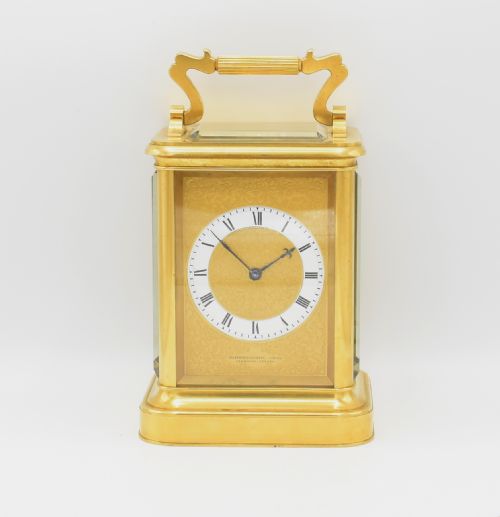
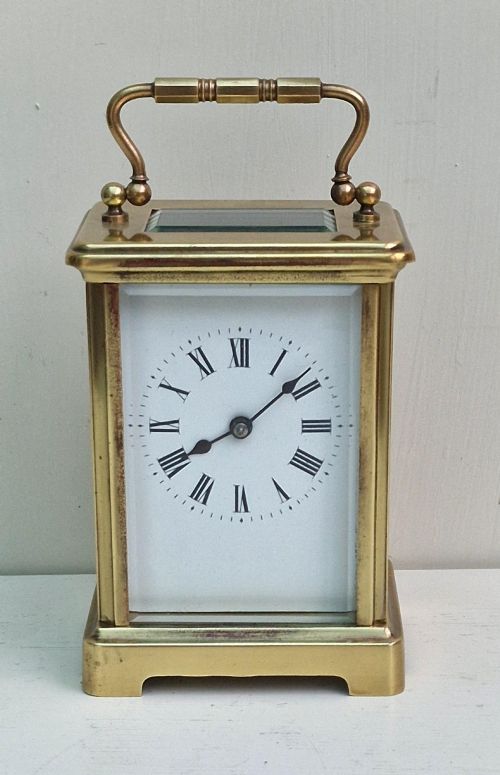
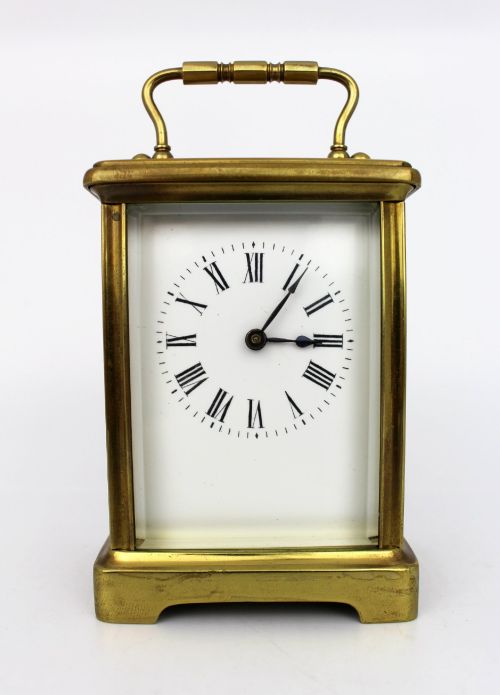
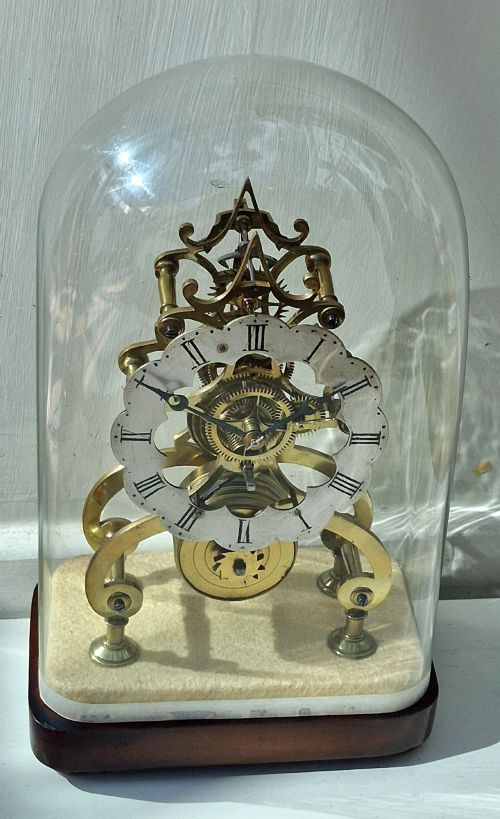
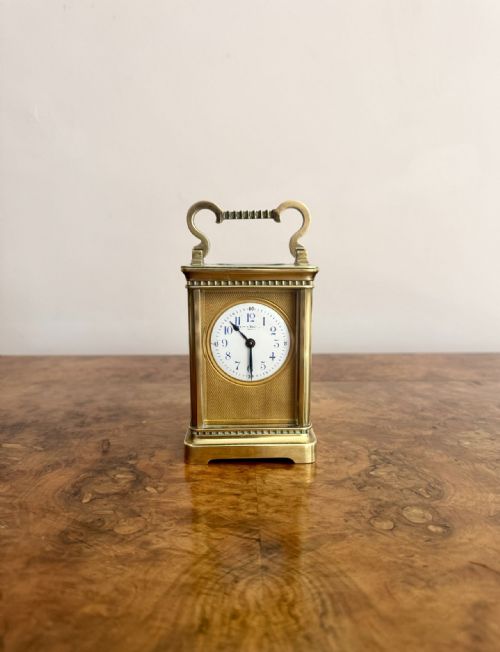
A vintage glass clock typically manifests as a carriage clock, skeleton clock, or mantel clock utilising glass panels, domes, or opalescent moulded bodies. These items span periods from the mid nineteenth century through the Art Deco era of the 1930s, reflecting Victorian, Edwardian, and modernist design philosophies.
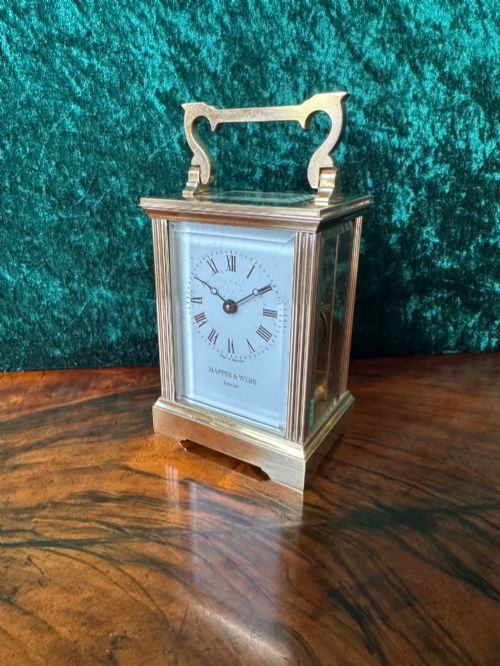
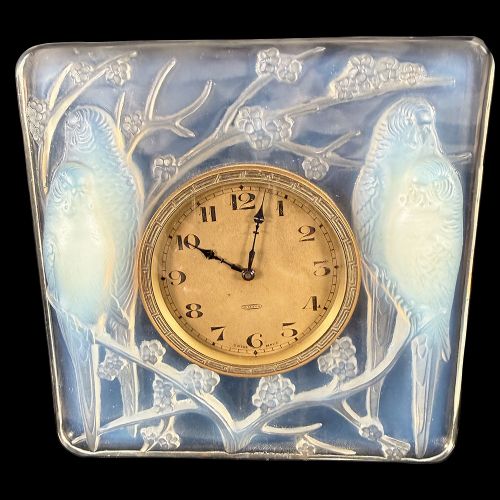
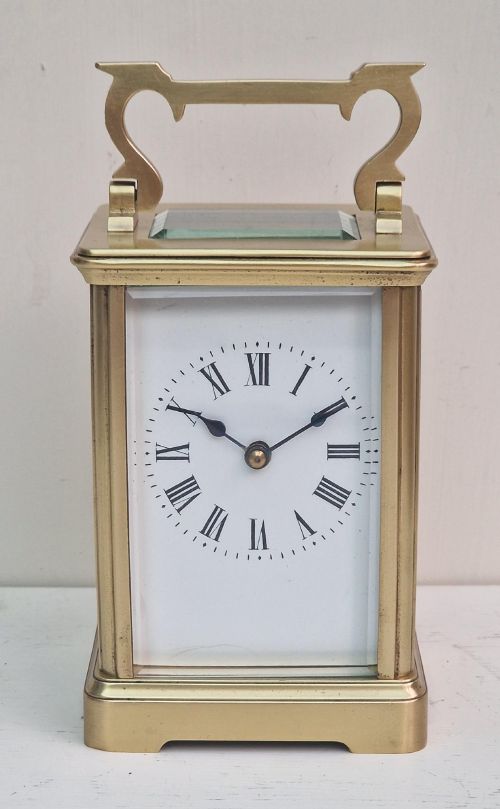
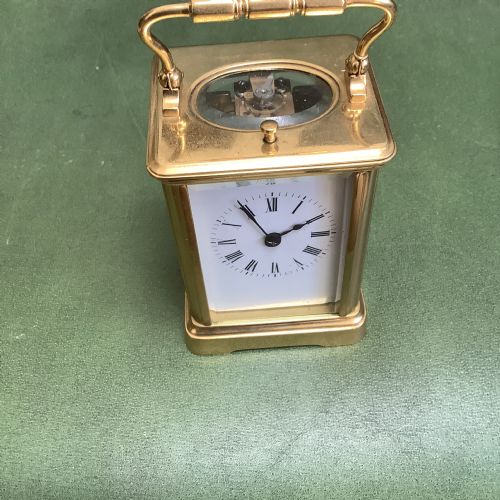
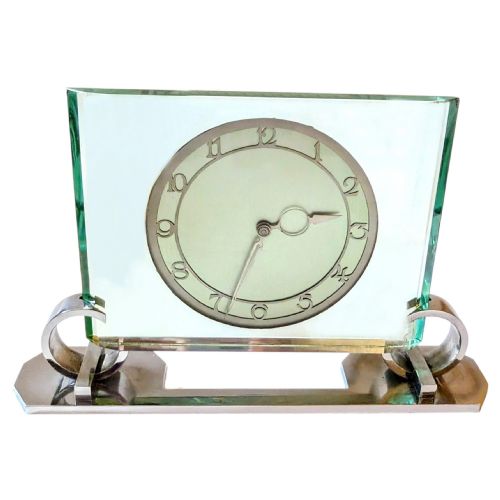
The most common formats encountered in this selection include brass framed carriage clocks with multiple glass viewing panes, French four glass mantel clocks, and striking Art Deco pieces featuring moulded opalescent glass. Structural supports frequently incorporate brass, gilt brass, chrome, or wood such as mahogany and walnut alongside the transparent housing.
Materials and construction methods
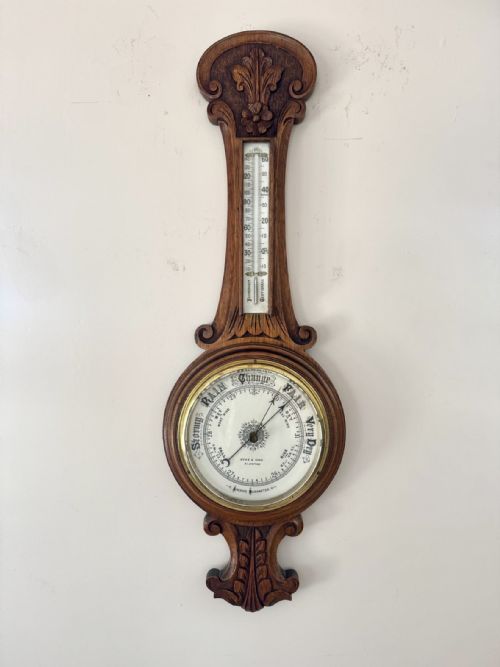
Horologists combined cast and polished brass, gilt bronze, or chrome frames with bevelled glass plates to construct transparent housings for delicate escapements and gear trains. Wood elements like walnut and mahogany provided stable bases or decorative surrounds for barometer and clock combinations.
Art Deco examples utilised pressed and opalescent glass panels created in specialised moulds, sometimes paired with enamel dials and painted details. Movements relied on traditional mechanical winding systems, spring driven or fusee mechanisms, and later electric or torsion configurations.
Materials documented across the collection include brass, gilt brass, chrome, mahogany, walnut, enamel, and glass.
Distinctions in craftsmanship and execution
Quality separates mass produced items from master workshops through the precision of the brass casting, the clarity and thickness of the bevelled glass panes, and the intricacy of case engraving. Finer movements feature repeating strikes, complex gear trains, and signed dials from recognised makers.
The artistic merit of the glass body itself dictates value in decorative pieces, particularly where specialised moulding and opalescent finishes create distinct visual depth. Heavier metal gauges, fire gilding, and fully intact enamel painted dials indicate superior original manufacture.
Goldsmiths Alliance Ltd·Hyde and Sons Sleaford·Mappin and Web·R Lalique·Smiths Clockmakers·Richard Winter·John Morley·Duverdrey and Bloquel
The Vintage Glass Clock Glossary
- Carriage clock
- A portable spring driven timepiece originally designed for travelling officers during the nineteenth century. These items typically feature brass frames inset with glass panels to view the movement.
- Skeleton clock
- A timepiece designed with an open framework that exposes the entire gear train and escapement to view. This style emphasises the mechanical complexity of the movement without obscuring it behind a solid dial plate.
- Fusee
- A conical pulley used in mechanical clocks to maintain even force on the gear train as the mainspring unwinds. This mechanism ensures more accurate timekeeping throughout the duration of the wind.
- Torsion clock
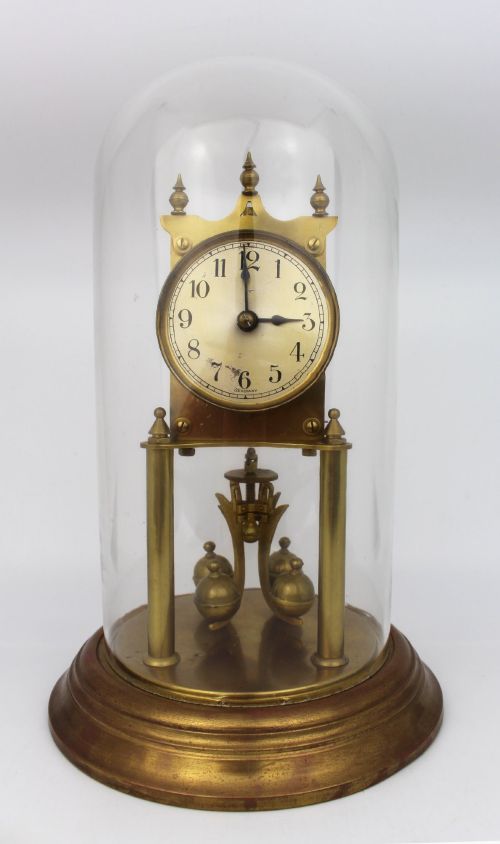
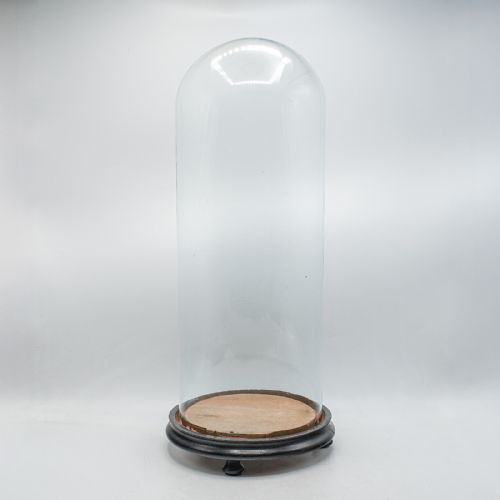
- A timepiece regulated by a suspended pendulum that rotates back and forth in a twisting motion rather than swinging. Also known as a year clock, it often operates under a glass dome to prevent air currents from disrupting the delicate suspension spring.
Vintage Glass Clock: Frequently Asked Questions
What is a vintage glass clock?
A vintage glass clock is a timepiece encased in transparent panels or constructed from moulded glass bodies, allowing visual access to the internal mechanics. These items range from nineteenth century brass framed carriage clocks to 1930s Art Deco designs.
They serve as both functional timekeepers and decorative display objects, showcasing period craftsmanship in metalwork and glass production.
How do I wind a mechanical glass clock?
Mechanical models require a key or built in wind up mechanism to tension the mainspring within the movement. Care must be taken not to over wind the spring, stopping as soon as resistance is felt.
Most traditional movements operate on an eight day cycle or require annual winding for specific torsion mechanisms.
Where should I place a glass clock?
These clocks suit stable surfaces such as mantelpieces, desks, or glass display cabinets where they are protected from vibrations and accidental knocks. Placing them away from direct sunlight and damp environments preserves both the metal case and the internal lubricants.
Because many examples feature glass panels on multiple sides, positioning them to allow ambient light through enhances the visual appeal of the movement.
How do I date a vintage glass clock?
Dating relies on stylistic indicators such as the heavy brass framing of Victorian pieces, the sleek geometry of 1930s Art Deco opalescent glass, or the specific signatures and hallmarks on the dial and movement. Maker marks, patent stamps, and the complexity of the escapement also provide chronological markers.
Comparing construction techniques against documented periods from the nineteenth and twentieth centuries helps narrow the manufacturing window.