


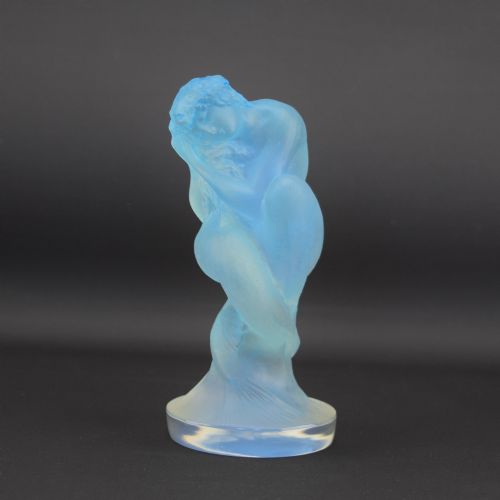
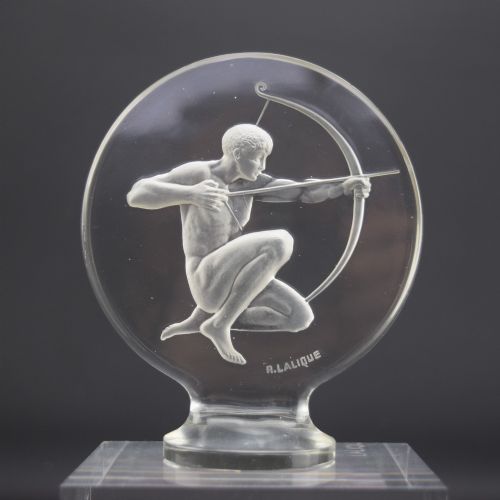


Vintage Glass Car Ornament
A vintage glass car ornament brings striking Art Deco presence and sculptural elegance to any desk or mantelpiece.
Vintage Glass Car Ornament
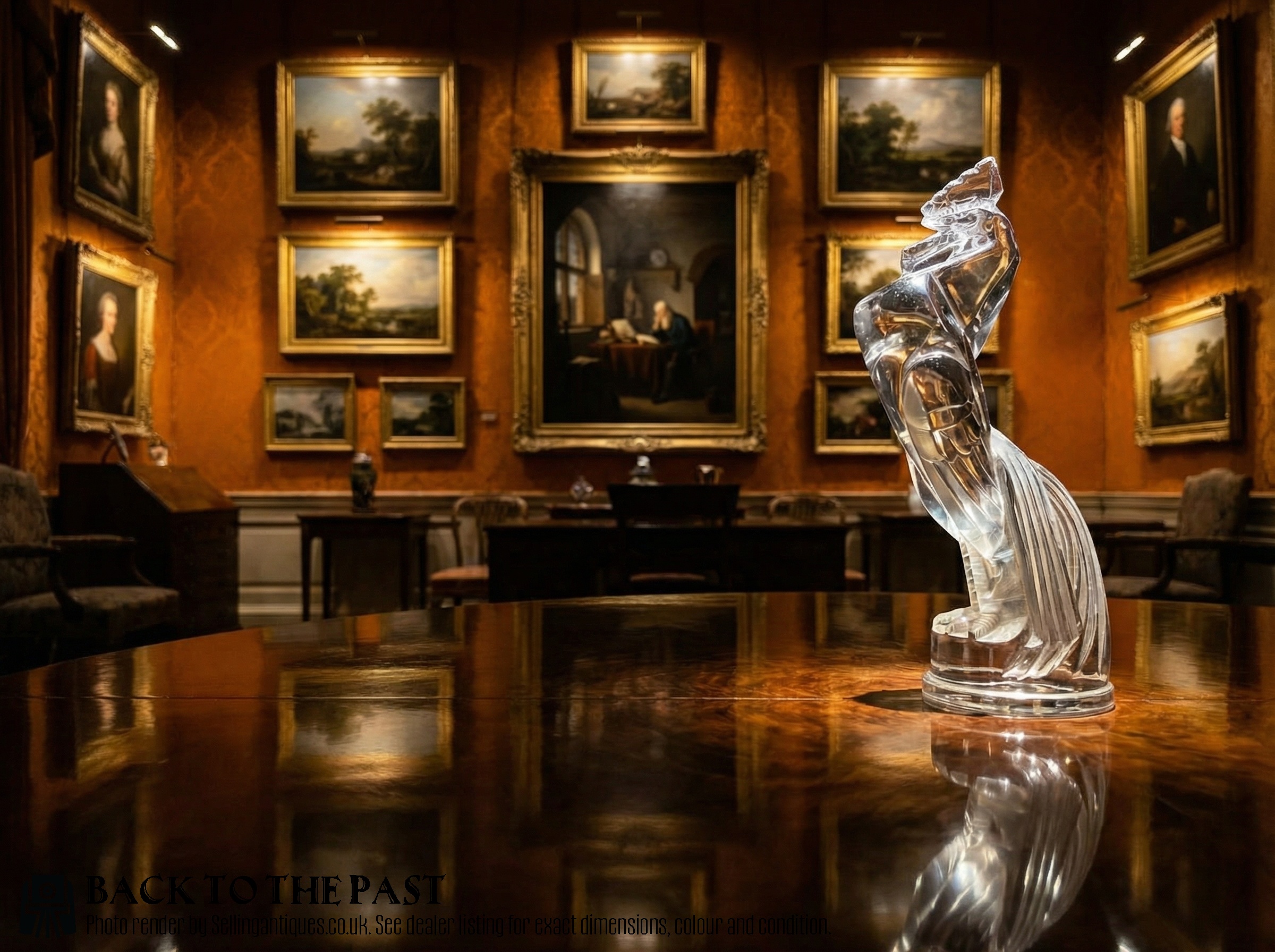
A vintage glass car ornament is a sculptural car mascot or paperweight produced primarily during the 1920s and 1930s. These pieces take the form of figures, animals, and birds designed to mount upon a motor vehicle radiator cap or to sit on a surface.
The versions most commonly met in these listings are Art Deco car mascots created by Rene Lalique. They represent distinct subjects such as insects, birds, mythological figures, and animals.
Many of these objects cross over in function, serving equally as car mascots and as decorative desk objects or paperweights. Their origins lie firmly in the interwar period of European motoring luxury.
How they were made
These items are produced using moulded glass, pressed glass, clear glass, frosted glass, and opalescent glass techniques. The manufacturing process often incorporates contrasting textures where frosted or opalescent surfaces meet clear areas to catch the light.
Metal and wood components sometimes supplement the glass body, particularly in the mounting hardware required for vehicle attachment. The glass itself relies on precise mould work to capture fine anatomical and decorative details.
Vintage Glass Car Ornament Retail Price Guide 2026
Typical asking prices for vintage glass car ornament among the pieces listed under this phrase on Sellingantiques today, from the lower quarter to the upper quarter. They describe what is for sale here now, not the wider market.
Current listings span the 1920 and 1930 periods entirely within the Art Deco style.
What varies in quality
Quality in a vintage glass car ornament rests upon the crispness of the moulded detail and the depth achieved in the glass. The treatment of frosted and opalescent surfaces dictates how light interacts with the subject.
The sophistication of the sculptural form itself separates standard production from superior pieces. The fidelity of the animal, human, or insect representation determines the visual impact of the work.
Rene Lalique
The Vintage Glass Car Ornament Glossary
- Car Mascot
- A sculptural ornament mounted on the radiator cap of a motor vehicle. These figures identify the marque or simply provide decorative flair.
- Opalescent Glass
- Glass that diffuses light with a milky or bluish glow. This effect changes depending on the angle of illumination.
- Moulded Glass
- Glass shaped by being pressed or blown into a prepared form. This technique allows for complex three-dimensional figures.
- Art Deco
- The dominant design style of the 1920s and 1930s characterised by stylised forms and geometric symmetry. It heavily influences these motoring ornaments.
Vintage Glass Car Ornament: Frequently Asked Questions
What is a vintage glass car ornament?
A vintage glass car ornament is a decorative sculptural piece designed to sit on a motor vehicle radiator cap during the early twentieth century. Many double as desk paperweights.
These items are strongly associated with the Art Deco design movement and feature prominent animal, human, and insect subjects.
How do I display a car mascot?
These pieces sit securely on flat surfaces such as desks, shelves, or mantelpieces where natural light can pass through the glass. Proper placement highlights the frosted and opalescent qualities.
Ensure the surface is stable and away from heavy vibrations or direct edges to protect the moulded glass structure.
What periods do these pieces come from?
The available pieces date from the 1920s and 1930s, capturing the height of interwar automotive and decorative arts design. This era produced distinctive moulded glassware.
Stylistically, they belong firmly to the Art Deco period, reflecting the streamlined aesthetics of that decade.
Are these ornaments made entirely of glass?
While glass is the primary material, utilising moulded, frosted, clear, and opalescent varieties, some pieces incorporate metal and wood components.
These supplementary materials are typically found in the mounts and fixings associated with their original use on motor vehicles.