





French Glass Sculpture
French glass sculpture brings together moulded, frosted, and opalescent forms from the late nineteenth and twentieth centuries.
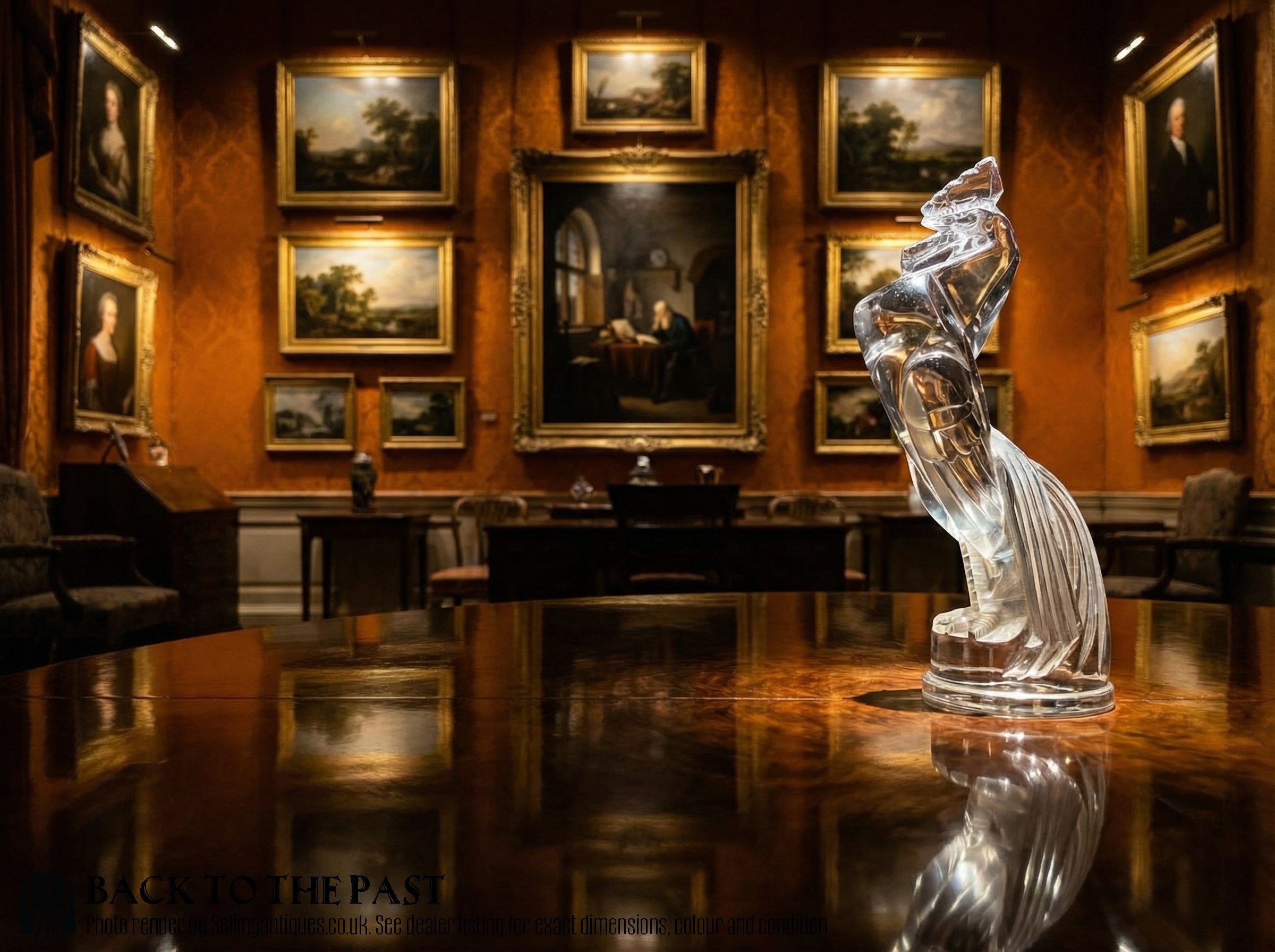
French Glass Sculpture
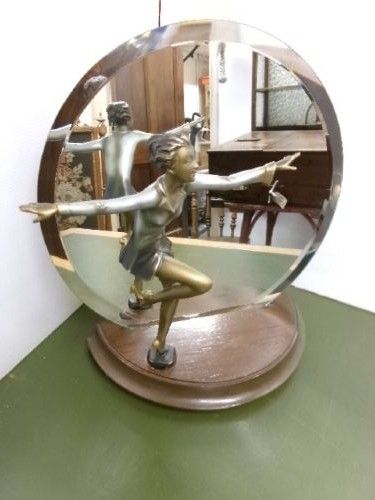
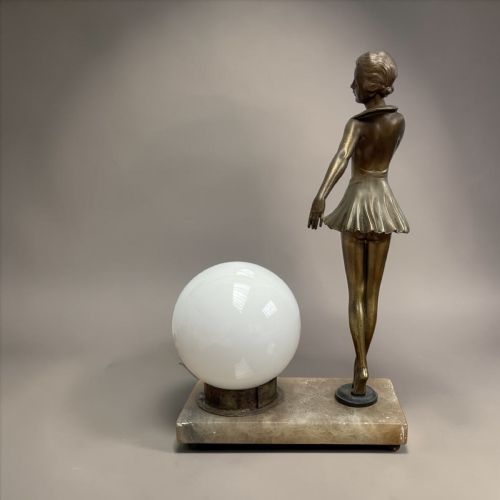
French glass sculpture encompasses a range of decorative objects, car mascots, paperweights, and sculptural table lamps created primarily during the Art Deco and Art Nouveau periods. These works combine glass with mixed media bases such as bronze, spelter, and marble.
The pieces on this page lean heavily towards the 1920s and 1930s, reflecting the surge of artistic output in moulded and opalescent glass during the interwar years. Figures, animals, and utilitarian items executed with artistic ambition dominate the current selection.
Materials and Techniques
Makers utilised moulded, frosted, and opalescent glass, often pairing translucent sculptural elements with metal mountings in bronze or spelter. Bases of marble and granite frequently provide sturdy foundations for figural lamps and night lights.
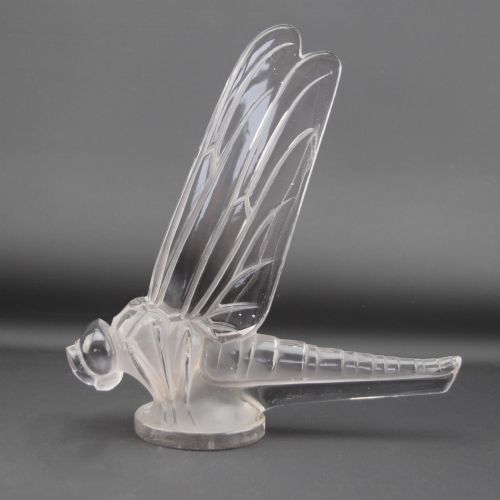
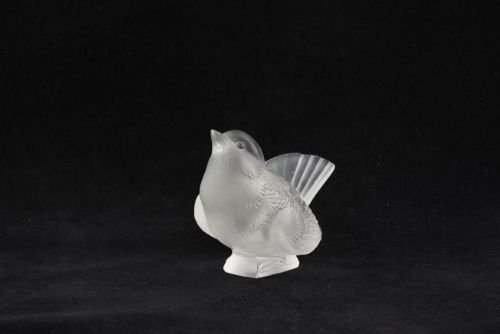
Techniques relied on precise mould-making to achieve high relief and varied light-scattering properties. Blue staining, enamelling, and surface frosting were applied to accentuate the contours of birds, insects, and human figures.
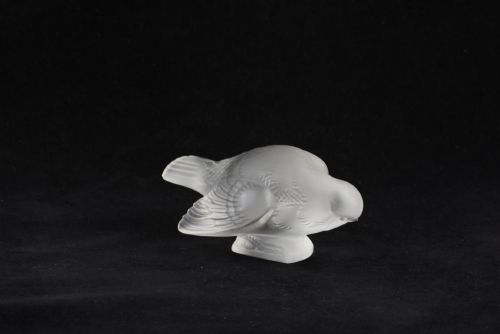
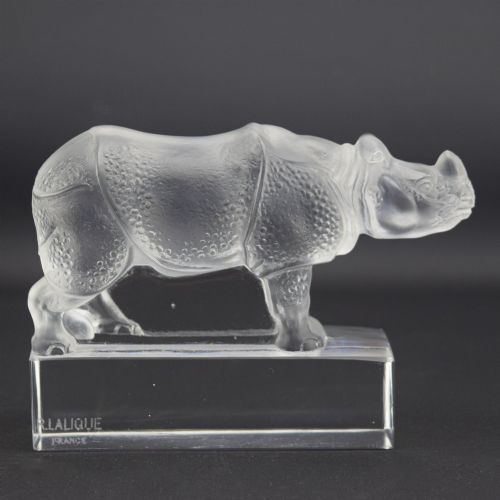
Several fierce rhinoceroses, delicate dragonflies, and watchful greyhounds keep permanent guard over these glass collections.
Quality Variations
Distinctions in quality often rest on the crispness of the mould definition and the depth of the opalescence within the glass. Finer examples display subtle play of light through the material, while lesser pieces appear flat or opaque.
The integration of the glass sculpture with its secondary materials, such as bronze or marble mounts, determines the overall cohesion of the object. Masterful execution shows in the crisp detailing of metal elements and the secure fit of glass to base.
Rene Lalique·Emile Picault·Lucille Sevin·Marius Ernest Sabino·Auguste Moreau
The French Glass Sculpture Glossary
- Opalescent glass
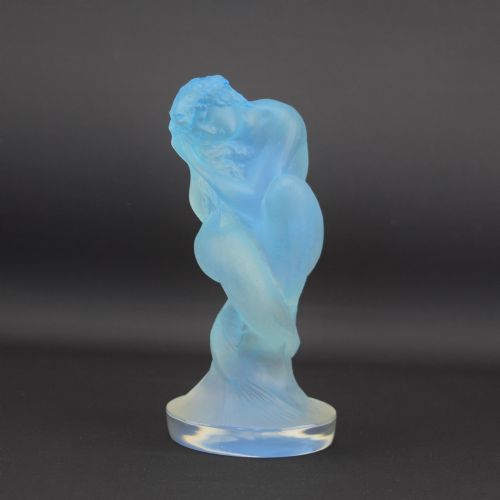
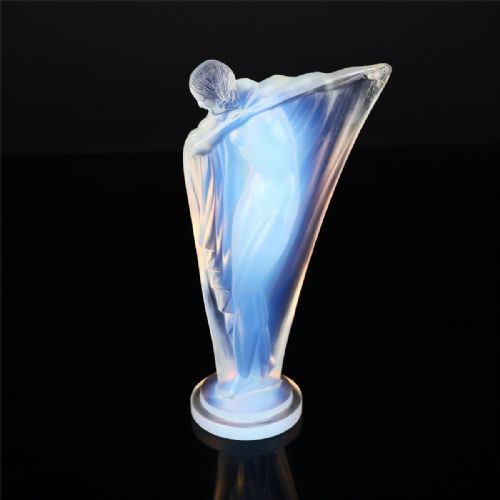
- Glass containing ingredients that cause it to milky-blue scatter light, appearing warm yellow or orange against a dark background and cool blue in transmitted light. This effect adds depth to sculptural subjects like birds and figures.
- Spelter
- An alloy of zinc and lead or copper used widely for figural bases and lamp components in the nineteenth and twentieth centuries. It accepts patination and silvering well, mimicking bronze.
- Car mascot
- A sculptural ornament mounted on the radiator cap of a motor car, particularly popular during the Art Deco period. Many iconic glass designs were originally produced for this automotive purpose.
- Moulded glass
- Glass shaped by pressing molten material into a metal or wooden form to create a specific pattern or relief. It allowed for the commercial production of detailed decorative art objects.
French Glass Sculpture: Frequently Asked Questions
What is a car mascot?
A car mascot is a sculptural ornament that drivers mounted on the radiator caps of luxury automobiles during the early twentieth century. Many celebrated glass artists designed these pieces to catch the sunlight while travelling.
Today, collectors remove them from automobiles to display them on custom illuminated bases or pedestals as independent works of art.
How do I care for glass sculptures?
Keep glass sculptures out of direct, prolonged sunlight to prevent any potential fading of coloured or stained elements. Dust them gently with a soft, dry cloth rather than using harsh chemical cleaners.
Ensure that any attached metal or marble bases are kept dry to protect the patination and stone surfaces from moisture damage.
What distinguishes Art Deco glass?
Art Deco glass relies on stylised symmetry, geometric patterns, and representations of speed, nature, and the human form. The period favoured clear, frosted, and opalescent finishes that highlighted modern industrial design aesthetics.
Objects from this era often integrate mixed media, combining the glass element directly with bronze, spelter, or marble fixtures.
How are periods identified?
Period identification relies on stylistic cues, manufacturing signatures, and the typical materials utilised during specific decades. Art Nouveau pieces feature organic, flowing lines, whereas Art Deco works lean towards clean geometry and stylised natural motifs.
Signatures or moulded marks left by the maker provide definitive proof of the era and origin of the sculpture.