
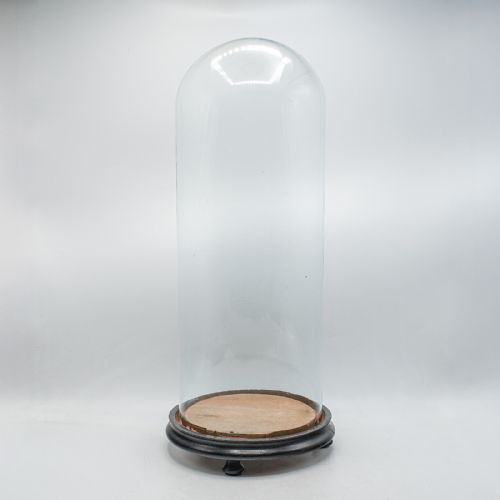


Vintage Glass Bell Jar
When you handle a vintage glass bell jar, you hold a clear vessel designed to protect and display delicate objects.
Vintage Glass Bell Jar
A vintage glass bell jar takes the form of a clear protective cover, frequently called a display dome or cloche, designed to shield delicate specimens, timepieces, and ornaments. These pieces span the Victorian, Edwardian, and mid-century eras, originating from English workshops, French makers, and Swiss horologists.
The most common examples on this page are tall and small Edwardian or Victorian display domes sitting on wooden bases made of oak, beech, or ebonised timber. Alongside these traditional taxidermy and specimen showcases, the selection includes brass lanterns, carriage clock cases, and Atmos clocks encased in glass bell jars.
Buyers seek out a vintage glass bell jar to house cherished collections, botanical specimens, or mechanical clocks while keeping dust away. The objects range from wide nineteenth-century clock domes to slender twentieth-century bell-jar cases housing precision Swiss movements.
How they were made
Makers fashioned the clear covers using hand-blown and moulded glass techniques, resulting in varied wall thickness, occasional bubbles, and distinctive optical distortions. Some specialised lighting and crystal pieces feature diamond-cut detailing worked directly into the heavy glass body.
The protective domes rest on timber bases shaped from oak, beech, pine, and ebonised wood, sometimes lined with velvet or felt to cushion the displayed object. Metal components utilise cast iron, brass, and rhodium plating, particularly evident in the structural frames of French lanterns and Swiss clock housings.
The selection includes pieces spanning the nineteenth century through the 1960s, encompassing display domes, clock cases, lanterns, and garden cloches.
What varies in quality
Quality in a vintage glass bell jar rests upon the clarity and weight of the glass itself, where older hand-blown examples display subtle irregularities that distinguish them from later production. The integrity of the original wooden base, whether simple pine or polished oak, contributes significantly to the overall presence of the piece.
Mechanical and lighting variations set certain specialised items apart, such as precision Swiss clock movements housed beneath dust-free bell jars or heavy cast iron frames on garden cloches. The harmony between the glass cover and its fitted base determines how successfully the ensemble has survived intact over the decades.
Jaeger Le Coultre·Le Coultre
The Vintage Glass Bell Jar Glossary
- Bell jar
- A bell-shaped glass cover used to protect instruments, clocks, or specimens from dust and atmospheric changes. They sit flush upon a matching base.
- Cloche
- A French term for a bell-shaped cover, applied here to glass garden bell jars and indoor display domes alike. These items provide a clear barrier while maintaining visibility.
- Atmos clock
- A mechanical timepiece driven by thermal expansion changes in a gas-filled capsule, frequently housed beneath a specialised glass bell jar case. These Swiss timepieces require no manual winding.
- Ebonised wood
- Timber treated with a dark finish to imitate expensive ebony. Makers frequently used this technique on the circular or oval bases of Victorian display domes.
Vintage Glass Bell Jar: Frequently Asked Questions
What fits under a glass dome?
Victorian and Edwardian bell jars traditionally house taxidermy specimens, botanical collections, and delicate ornaments. Wide and oval variants serve to protect carriage clocks and Mantel clocks.
Today, collectors use these clear vessels to display contemporary sculptures, dried florals, and treasured curiosities while keeping them free from dust.
How do I date an antique dome?
Dating relies heavily on the characteristics of the glass, the timber used for the base, and the style of the enclosed object. Hand-blown glass with distinct pontil marks and heavier wooden bases typically point to Victorian or Edwardian origins.
Mid-century examples often house specialised mechanical movements, such as Swiss Atmos clocks, reflecting later twentieth-century manufacturing methods and materials.
Are wooden bases always original?
Many display domes retain their original turned wooden bases, fashioned from oak, beech, pine, or ebonised timber. These bases often feature internal grooves designed to hold the rim of the glass securely.
Over long periods of use, some glass covers became separated from their original plinths, meaning replacement bases do occasionally occur in the marketplace.
How do I clean antique glass?
Cleaning requires careful handling, particularly with older hand-blown glass that may have thinner sections or historical surface wear. Warm soapy water and a soft cloth are generally sufficient for removing accumulated dust.
Harsh chemical cleaners and abrasive cloths must be avoided to protect both the glass surface and any fitted wooden or fabric elements on the base.