



Vintage Gilt Vanity Stool
These vintage gilt vanity stool designs bring heavy gold leaf and carved wood straight to the dressing room, offering both a seat and a statement piece.
Vintage Gilt Vanity Stool
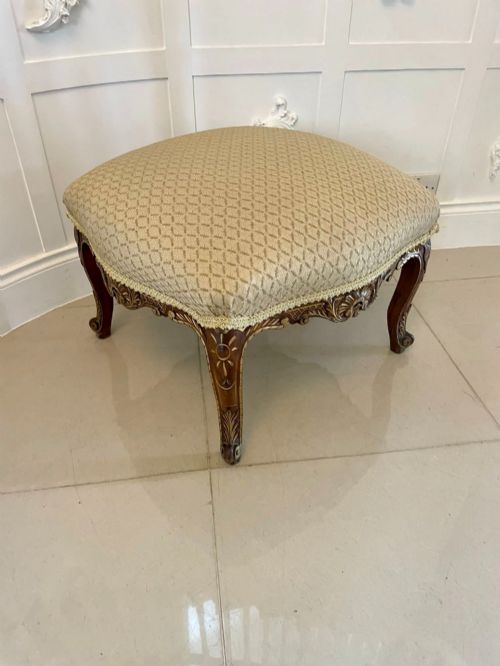
When you search for a vintage gilt vanity stool, you are looking at low seating designed for dressing tables, bedrooms, and boudoirs. The pieces found here span the Victorian era, the nineteenth century, and specific decades from eighteen hundred to eighteen ninety.
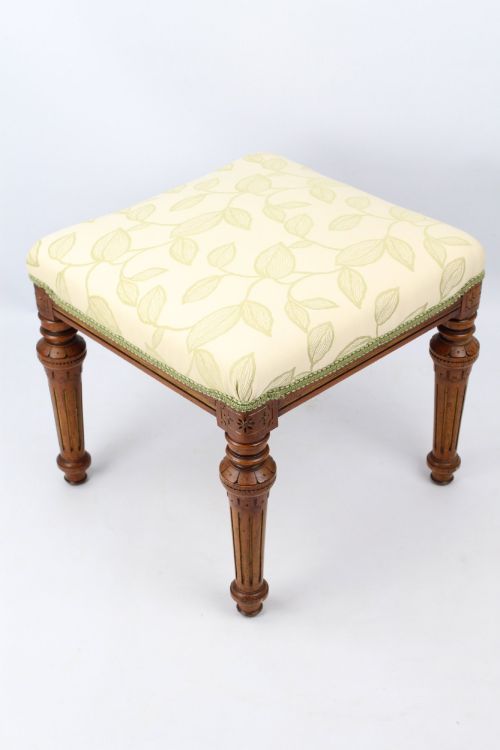
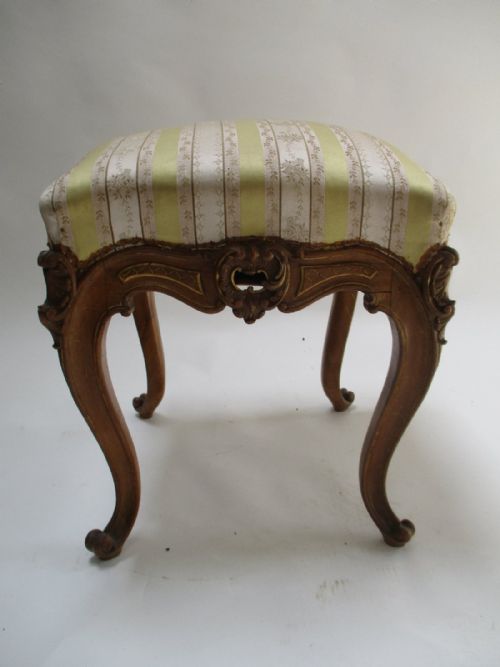
You are most likely to meet Victorian, Louis XVI style, and Gustavian pieces on this page, taking the form of footstools, dressing table stools, and piano stools. They combine low profiles with decorative frames intended to catch the light near a mirror.
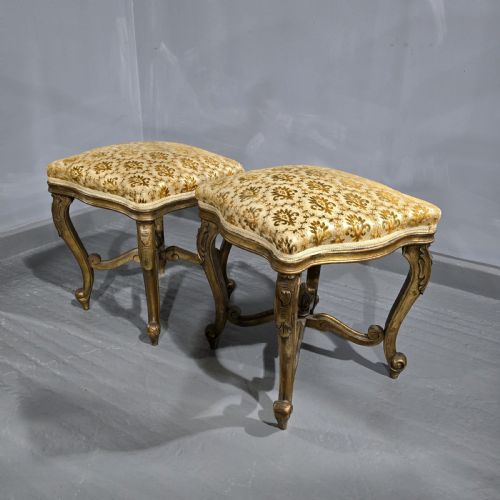
The selection ranges from small oak and walnut frames to grander carved giltwood and parcel gilt structures. Alongside single seats, pairs and duet stools appear in French and Swedish interpretations.
How they were made
These stools rely on solid timber foundations of walnut, oak, and general wood, shaped through carving before receiving their surface finish. Gilding, parcel gilt, and gilt paint transform the wooden frames into metallic surfaces that define the style.
Upholstery completes the construction, employing traditional textiles such as velvet, silk, and general fabric to top the seats. Mechanical elements also feature in specific examples, including the adjustable screw top on empire style piano stools.
Vintage Gilt Vanity Stool Retail Price Guide 2026
Typical asking prices for vintage gilt vanity stool among the pieces listed under this phrase on Sellingantiques today, from the lower quarter to the upper quarter. They describe what is for sale here now, not the wider market.
Materials recorded across the page include giltwood, fabric, velvet, walnut, oak, parcel gilt, silk, and wood.
What varies in quality
The depth and crispness of the hand carving separate standard frames from finer works, particularly where floral or classical motifs adorn the walnut and giltwood. Solid timber construction beneath the gilding provides structural weight and longevity compared to lighter alternatives.
The choice and execution of the surface finish dictate the visual impact, from heavy giltwood to delicate parcel gilt highlights on painted wood. Original textiles and the quality of the underlying upholstery work also influence how closely a piece aligns with its period origins.
The Vintage Gilt Vanity Stool Glossary
- Giltwood
- Wood that has been coated with gold leaf or a gold-coloured finish. This material creates a bright, reflective surface characteristic of formal seating.
- Parcel Gilt
- A technique where only specific raised portions of a wooden object are gilded, leaving the underlying wood or paint visible elsewhere. It provides contrast on carved details.
- Curule stool
- An ancient Roman form of seating featuring a cross-frame shape with curved legs. This X-form appears in classical revival furniture.
- Gustavian
- The Swedish interpretation of French neoclassical design, characterised by lighter proportions and often pale painted finishes. These pieces offer a restrained alternative to heavier French styles.
- Duet stool
- An extended seating form built to accommodate two people at once. These are frequently found in piano stool formats.
Vintage Gilt Vanity Stool: Frequently Asked Questions
Where were vintage gilt vanity stools used?
These stools typically sat in bedrooms, dressing rooms, or music rooms in front of vanity tables and pianos.
Their compact size allowed them to tuck underneath furniture when not in use while providing decorative seating.
How do I identify a Gustavian style stool?
Gustavian pieces display Swedish adaptations of neoclassical design with lighter proportions and pale painted surfaces.
They lean towards restrained carving rather than the heavy ornamentation seen in Baroque revival pieces.
What is a curule stool?
A curule stool is built with a distinctive X-shaped frame and curved legs derived from Roman forms.
This geometry creates a sturdy base that stands out from standard four-legged designs.
Are these stools comfortable for daily use?
The comfort depends on the historic upholstery and the padding depth beneath the silk or velvet top.
Many serve primarily as decorative accents or low dressing seats rather than lounging furniture.
How do I date a nineteenth century gilt stool?
Dating relies on stylistic markers such as Louis XVI revival details, Aesthetic Movement influences, or Victorian walnut frames.
Construction methods and material choices like oak or giltwood help narrow down the production period.