

Vintage Gilded Sconces
Vintage gilded sconces bring shimmering metallic warmth and period illumination to dark corners, spanning French Rococo to mid-century designs.
Vintage Gilded Sconces
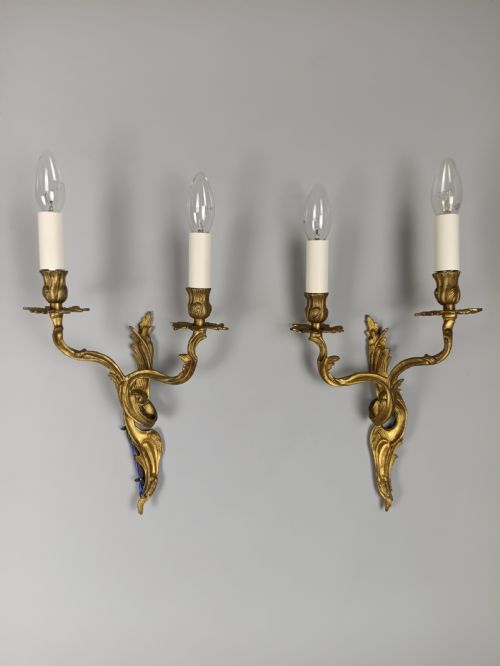
When you search for vintage gilded sconces, you encounter wall-mounted light fittings designed to hold candles or electric bulbs, frequently arranged in pairs or sets. These fixtures distribute ambient light across a room while serving as decorative wall ornaments in their own right.
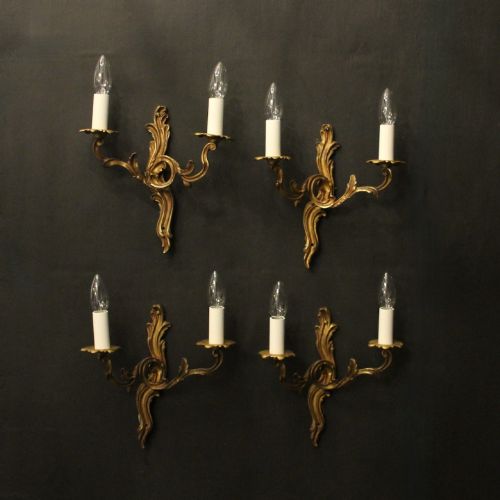
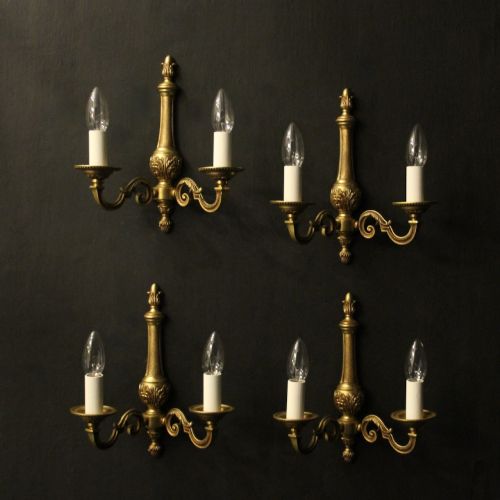
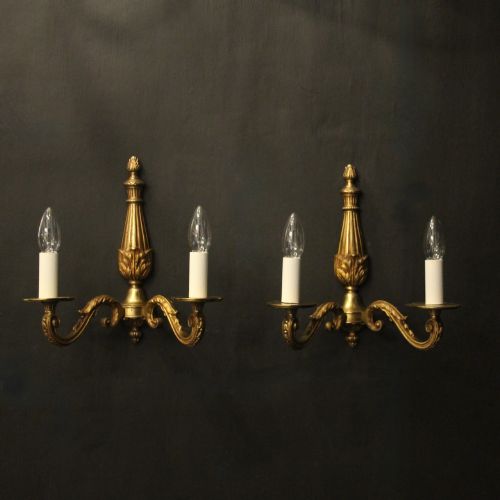
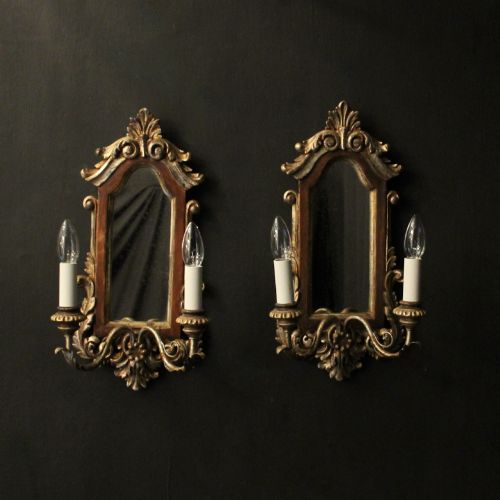
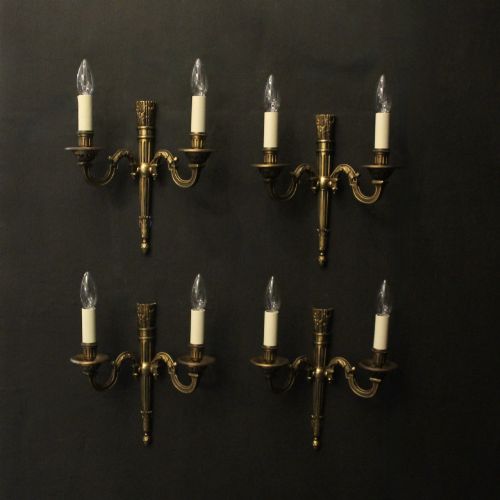
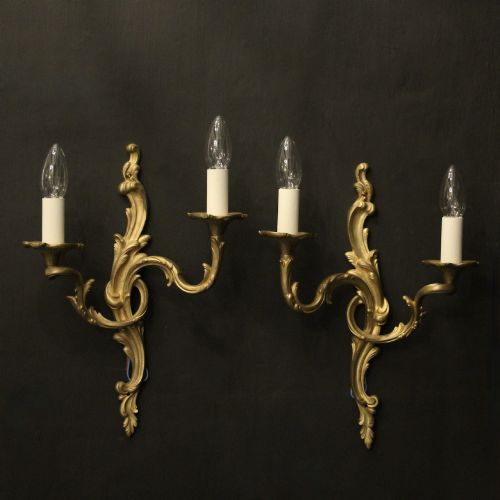
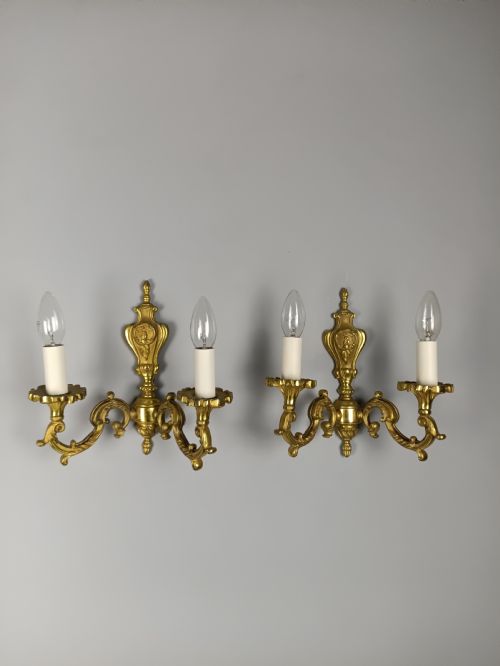
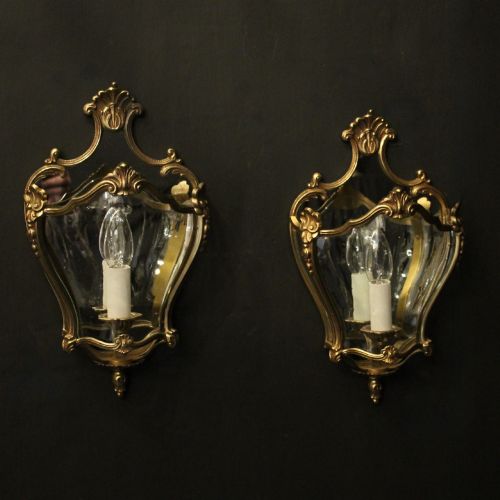
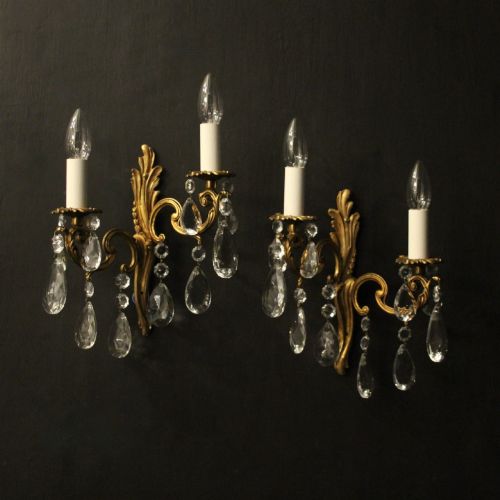
The selections available here lean heavily towards French origins from the early decades of the twentieth century, alongside nineteenth-century examples and Italian pieces. Forms range from twin-arm wall lights and girandoles with mirror backs to single-arm brackets and half-lanterns.
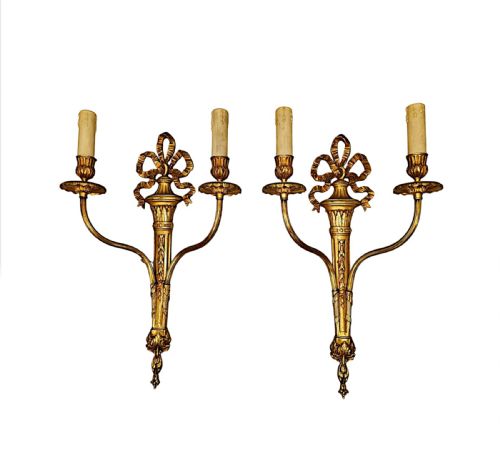
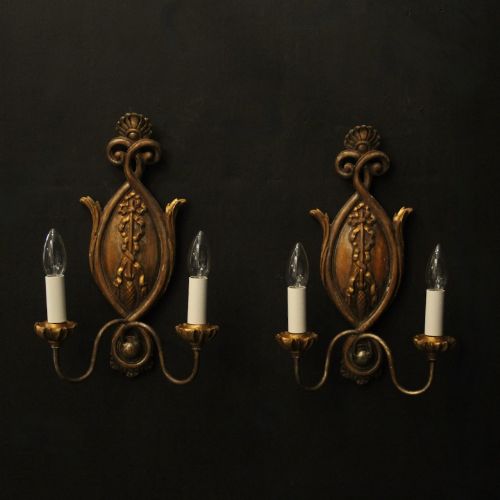
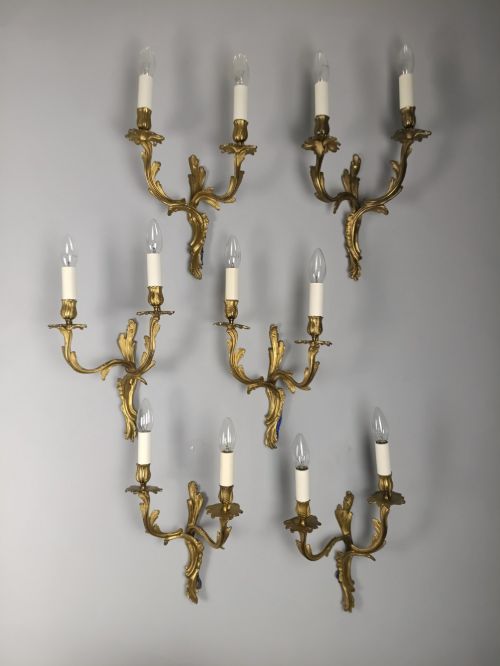
Stylistically, French Rococo, Louis XVI, and Neoclassical influences dominate the listings, often displaying ornate casting work, ribbon motifs, or carved wooden frames. Buyers frequently find matching sets of four or six alongside individual pairs suitable for smaller spaces.
How they were made
The construction of these wall lights relies primarily on metals such as brass, bronze, and ormolu, which provide sturdy foundations for surface gilding. Founders employed techniques like lost-wax casting for bronze components, creating crisp relief details for acanthus leaves and scrolling arms.
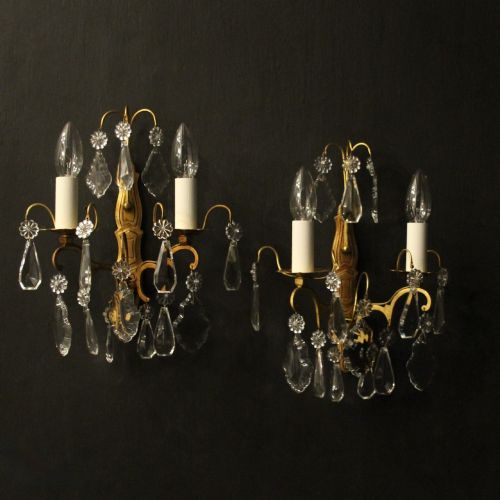
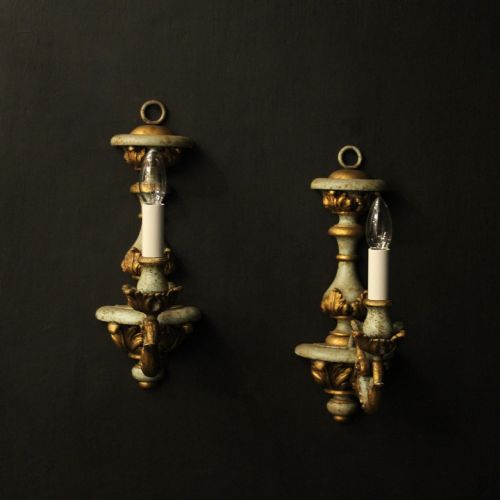
Wood also appears in the form of giltwood, carved and prepared with gesso before the application of gold leaf. Glass and crystal elements complement the metallic structures in certain designs, adding reflective qualities to the assembled fixtures.
Several French pairs incorporate carved ribbon motifs that appear to tie the metallic stems together on the wall.
What varies in quality
Quality in these fixtures rests on the crispness of the original casting or carving and the depth of the surviving gilding. Pieces featuring finely chased bronze or meticulously carved giltwood display superior definition in motifs like ribbons, floral garlands, and rococo scrolls.
The structural integrity of the arms and backplates dictates durability, particularly in multi-armed examples that carry the weight of candles or electrical fittings. Superior execution shows in the seamless assembly of components and the preservation of original surface finishes.
The Vintage Gilded Sconces Glossary
- Ormolu
- Gilded bronze produced through a mercury amalgamation process that leaves a rich, durable golden finish on cast metal objects. This technique was widely employed in fine French decorative arts.
- Girandole
- A decorative wall bracket featuring a mirror backplate that reflects and multiplies the light cast by the candles or lamps. They often incorporate giltwood or gilded bronze frames.
- Giltwood
- Timber, typically lime or pine, that has been carved, coated in gesso, and covered with thin sheets of gold leaf. It forms the basis of many decorative mirrors and wall lights.
- Champlevé
- An enamelwork technique where troughs are dug into a metal surface and filled with vitreous enamel before firing. It appears on nineteenth-century candlesticks and associated hardware.
Vintage Gilded Sconces: Frequently Asked Questions
How do I wire vintage sconces?
Many vintage wall lights require professional rewiring to meet modern electrical safety standards before installation in a home.
A qualified electrician can adapt older fittings to accept contemporary internal wiring without compromising the exterior metal or giltwood structure.
Where should I place sconces?
These wall lights suit flanking positions beside mantelpieces, mirrors, or doorways to create balanced ambient illumination.
Matching sets of four or six work well along larger hallway walls or dining room expanses where consistent lighting is desired.
How do I clean gilded surfaces?
Dusting requires only a soft, dry brush or feather duster to prevent damage to delicate gold leaf or patinated bronze.
Moisture and commercial cleaning chemicals should be avoided entirely to preserve the original metallic finish and surface integrity.
Are these sconces French?
A significant proportion of the listed fixtures originate from France, particularly dating from the 1920s and 1930s.
Italian pieces, including Florentine giltwood girandoles and nineteenth-century examples, also appear alongside mid-century English designs.