





Vintage Gilded Glassware
These vintage gilded glassware pieces bring metallic sheen and rich enamel work to the table, catching the eye with centuries of craft.
Vintage Gilded Glassware
When you search for vintage gilded glassware, you encounter items designed for display, dining, and service from periods spanning the Georgian era through the early twentieth century. The selections available encompass functional vessels alongside purely decorative objects, reflecting diverse European traditions.
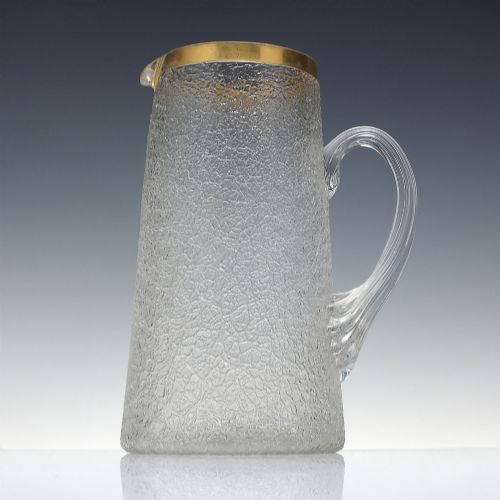
The objects most frequently met on this page include hock glasses, wine services, vases, decanters, and water jugs. These pieces often feature painted floral motifs, heraldic designs, or grapevine decoration executed in gold leaf, enamel, and gilt metal mounts.
The origins of these items stretch across England, France, Germany, Austria, and Bohemia, demonstrating regional preferences in glass colour, such as ruby and blue tones. Whether handling an apothecary jar or a crystal tazza, each form demonstrates the utility and ornamentation favoured by its period.
Materials and Techniques
Makers utilised clear lead crystal, ruby glass, blue glass, and opaline glass as the primary foundations for their work. These material bases were often shaped into vessels, tazzas, and stemware before receiving surface decoration.
Application of gold leaf and enamel paints created the characteristic metallic and polychrome finishes seen across the pieces. Artisans combined these gilded highlights with engraved detailing, ormolu mounts, and raised floral designs to achieve depth and texture.
Vintage Gilded Glassware Retail Price Guide 2026
Typical asking prices for vintage gilded glassware among the pieces listed under this phrase on Sellingantiques today, from the lower quarter to the upper quarter. They describe what is for sale here now, not the wider market.
Listings feature items from the Victorian, Georgian, and Edwardian periods, utilising gold leaf, enamel, ormolu, and lead crystal.
Assessing Quality and Execution
The standard of execution in gilding and enamel work dictates the distinction between ordinary and exceptional examples. Finer pieces display precision in hand-painted heraldic motifs, floral garlands, and grapevine details without blurring or hasty application.
The weight and clarity of the underlying crystal or coloured glass, alongside the integration of ormolu stands and metal mounts, influence the overall character of the object. Superior craftsmanship is evident when the decorative elements complement the form of the glass rather than overwhelm it.
Theresienthal·Saint Louis·Baccarat·Moser·Salviati
The Vintage Gilded Glassware Glossary
- Roemer
- A traditional German or continental wine glass with a large bowl and a cylindrical foot built from stacked prunts. These glasses frequently carry enamelled heraldic or botanical motifs.
- Hock glass
- A tall-stemmed wine glass traditionally used for white wine, often featuring coloured glass bowls and elaborate gilt decoration. The elongated form provides ample space for painted or enamelled ornamentation.
- Ormolu
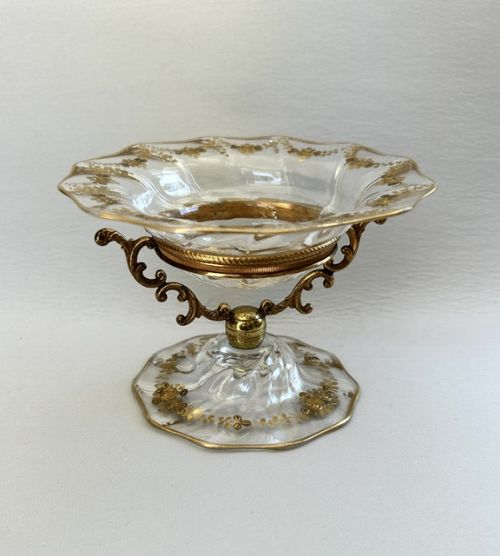
- Gilded bronze mounts applied to glass bodies and stands to add structural support and decorative framing. This technique is particularly common in French decorative objects.
- Opaline glass
- An opaque or translucent glass developed in France, appearing in shades of white or pastel and frequently utilised for vases and apothecary jars with raised floral designs.
- Tazza
- A shallow ornamental cup or plate mounted on a stem and foot, used historically for serving sweets or displaying fruit. In glass form, it showcases extensive rim gilding and surface engraving.
Vintage Gilded Glassware: Frequently Asked Questions
How do I clean gilded glassware?
Wash pieces gently by hand using lukewarm water and a mild soap. Avoid soaking the items or using abrasive cloths that might wear away the gold leaf and enamel.
Dry the glass immediately with a soft, lint-free cloth to maintain the metallic shine and protect any delicate ormolu mounts.
Are these pieces safe for daily use?
Many items serve as decorative display pieces or are intended for special dining occasions rather than heavy daily service. The presence of delicate enamel work and gold leaf requires careful handling.
When using stemware or jugs for entertaining, take care to hand wash them immediately afterwards and store them away from rough surfaces.
What is Historismus?
Historismus refers to the nineteenth-century revival style where makers drew inspiration from earlier artistic periods, particularly the Renaissance and Gothic eras. German and Austrian pieces from this movement often display heraldic motifs and roemer forms.
Recognising this style involves spotting deliberate revivals of historical shapes paired with contemporary enamelling and gilding techniques of the late Victorian period.