





Vintage Geometric Sapphire Ring
A vintage geometric sapphire ring delivers precise architectural lines and deep blue colour, combining structural design with enduring gemstone appeal.
Vintage Geometric Sapphire Ring
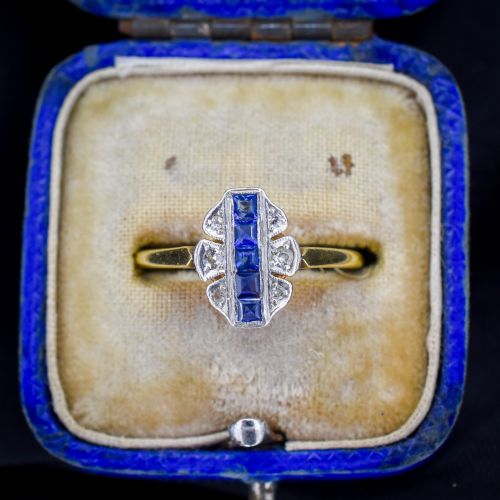
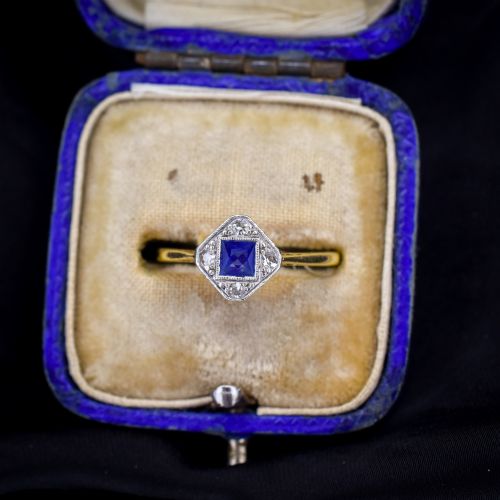
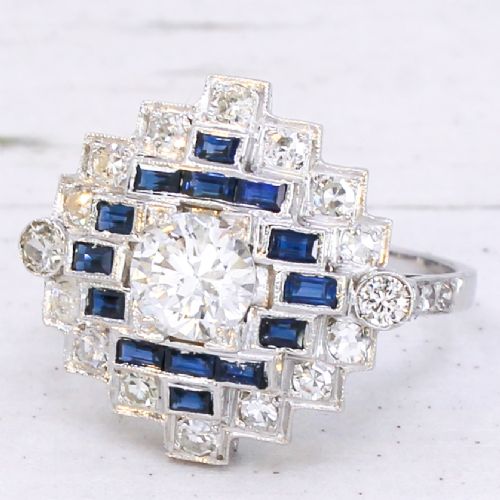
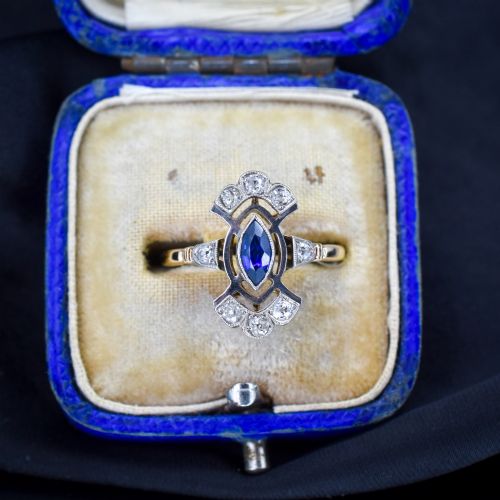
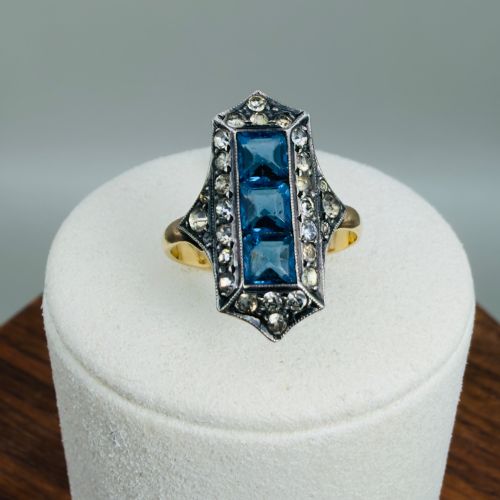
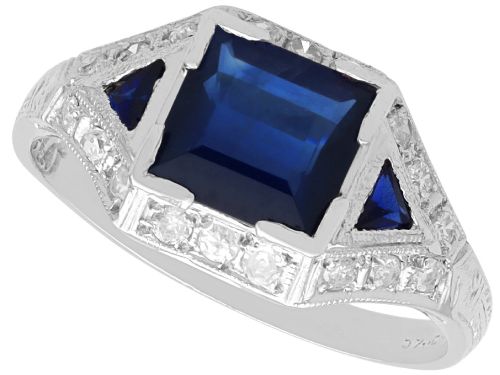
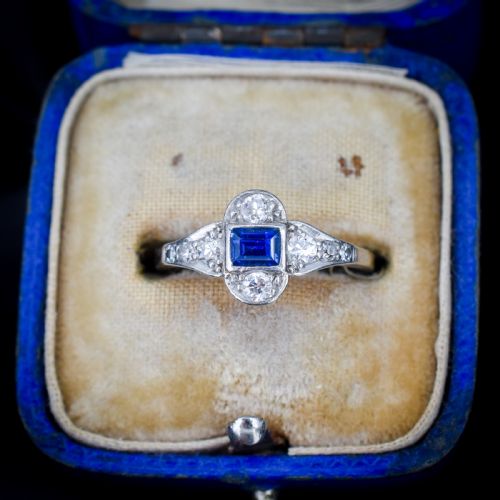
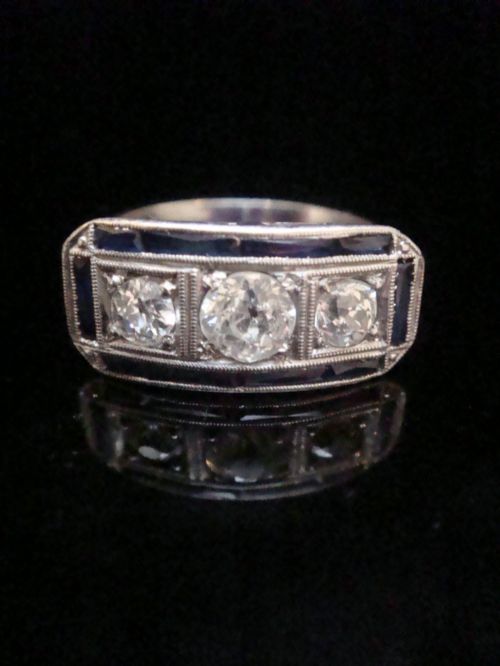
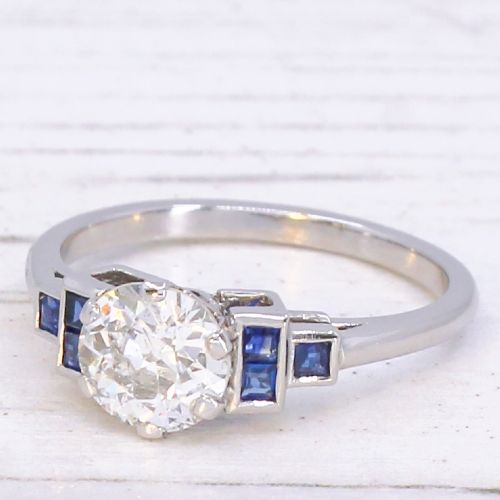
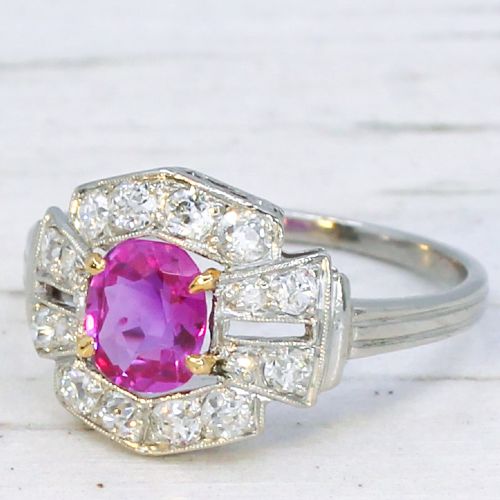
A vintage geometric sapphire ring centres on angular stones and symmetrical arrangements, originating predominantly from the 1920s and 1930s Art Deco period alongside later revivals. Buyers seeking this phrase encounter sharp navette, target, plaque and cluster forms that showcase strong lines and balanced proportions.
The materials span platinum and white gold settings paired with blue or pink sapphires and old cut diamonds. Alongside fine precious metals, variations appear in yellow gold, rose gold, silver and white paste stones.
How They Were Made
Goldsmiths and platinum smiths utilised durable white metals to house stones in flush, channel and detailed cluster settings that emphasised linear symmetry. Calibre cut and baguette cut sapphires were shaped precisely to fit geometric channels alongside brilliant and old cut diamonds.
Combination metals frequently occur, pairing 18ct gold shanks with platinum tops to secure bright diamond and sapphire layouts. Hand-finished details such as millegrain edges define the metalwork framing these angular gemstone clusters.
Vintage Geometric Sapphire Ring Retail Price Guide 2026
Typical asking prices for vintage geometric sapphire ring among the pieces listed under this phrase on Sellingantiques today, from the lower quarter to the upper quarter. They describe what is for sale here now, not the wider market.
Several pieces squeeze more geometric angles into a single finger span than a modern surveyor manages in a morning.
What Varies in Quality
The calibre of the central sapphire dictates overall distinction, ranging from unheated Burmese stones with intense saturation to standard commercial material. Stone matching within calibre cut and baguette layouts also separates standard work from exceptional execution.
Structural integrity in the metalwork influences durability, particularly in delicate pierced platinum galleries and fine claw settings holding complex multi-stone geometric patterns.
The Vintage Geometric Sapphire Ring Glossary
- Navette
- A boat-shaped ring design featuring pointed ends that lengthens visually along the finger. This silhouette remains typical of early twentieth-century cluster rings.
- Calibre cut
- Stones shaped specifically to fit exact geometric channels within a metal setting. This technique requires meticulous hand cutting.
- Millegrain
- A border of tiny raised metal beads decorating the edge of a setting. It softens hard metal lines with subtle texture.
- Target ring
- A circular cluster design featuring concentric rings of contrasting stones around a central gem. The layout creates a distinct bullseye visual effect.
- Old cut diamond
- A hand-faceted diamond cut before modern machine standards, displaying smaller tables and deep pavilions. These stones produce a softer candlelight sparkle.
Vintage Geometric Sapphire Ring: Frequently Asked Questions
How do I wear a geometric sapphire ring daily?
Select a sturdy platinum or 18ct gold setting if you plan regular wear, as these metals withstand daily impact better than silver or softer alloys.
Remove the ring during heavy manual tasks to protect fragile claw settings and prevent scratching the sapphire facets.
What defines an Art Deco sapphire ring?
Art Deco pieces display strict symmetry, sharp angles, and strong geometric motifs influenced by early twentieth-century architecture and design.
They frequently combine platinum with calibre cut blue sapphires and old cut diamonds in flat plaque or cluster silhouettes.
How do I identify platinum from white gold?
Platinum possesses a heavier physical weight and a natural bright white lustre that does not require plating.
White gold appears slightly warmer in tone and often carries hallmarks indicating its specific gold purity standard, such as 18ct.
Are these rings handmade or mass produced?
Period pieces from the 1920s and 1930s typically involve bench-made construction where stones were individually cut and set by hand.
Later vintage revivals may incorporate modern casting techniques while maintaining traditional geometric styling.