





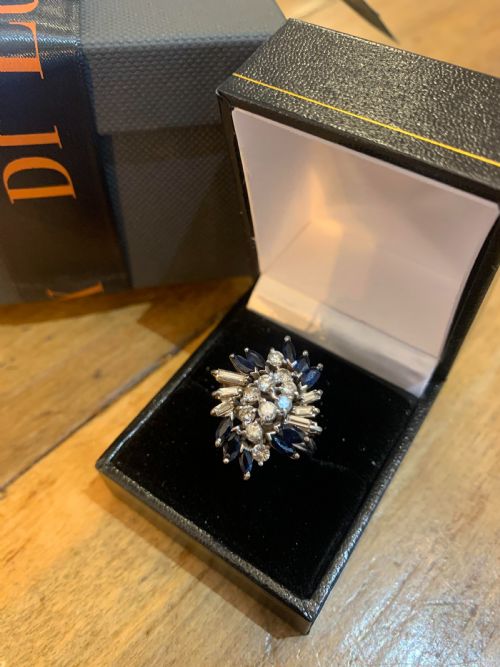


Marquise Sapphire Cluster Ring
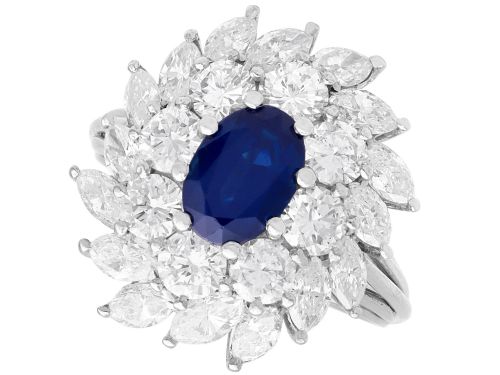
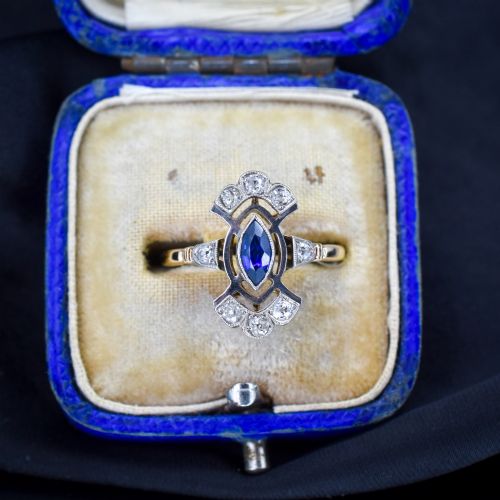
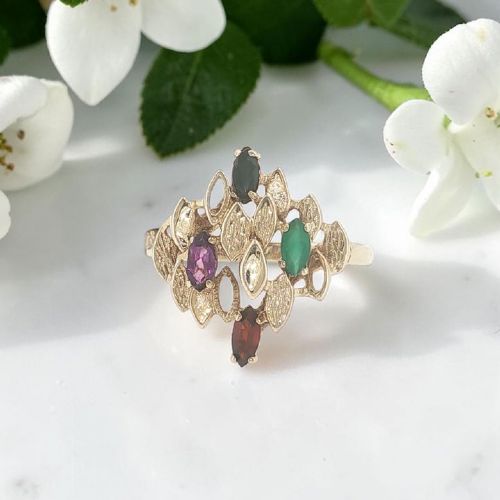
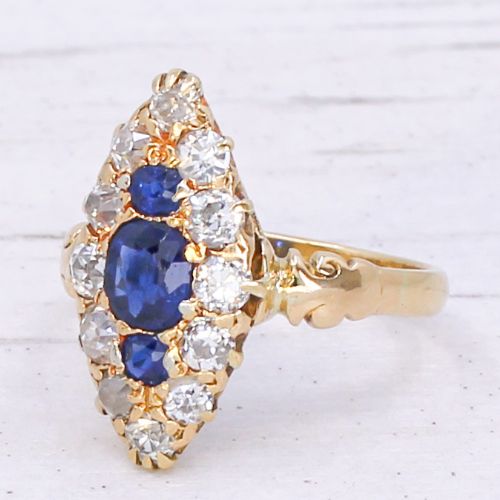
A marquise sapphire cluster ring combines a pointed navette silhouette with deep blue stones, offering exceptional finger coverage and unmistakable period character.
Marquise Sapphire Cluster Ring
A marquise sapphire cluster ring centres on an elongated gemstone arrangement, often styled with stepped shoulders and geometric layouts that define the Art Deco aesthetic. These pieces stretch gracefully along the finger, utilising the navette form to create a bold visual impact.
The selection ranges from delicate Edwardian platinum mountings to robust mid-century cocktail rings, incorporating materials such as yellow gold, white gold, and durable platinum. Blue sapphires take the primary role, framed by sparkling old cut or modern brilliant diamonds.
Buyers will encounter various interpretations spanning from Victorian natural sapphire examples to later twentieth-century iterations. Each piece balances the intense blue of the central stone with contrasting diamond halos and intricate metalwork.
What varies in quality
The distinction between tiers rests upon the saturation and origin of the sapphire, alongside the cut and clarity of the surrounding diamonds. Ceylon stones and natural untreated sapphires command greater attention for their depth of colour.
Structural finesse dictates overall excellence, evident in the crispness of milgrain work, the symmetry of the cluster, and the robust gauge of the platinum or gold shank. Superior examples maintain intact original settings without evidence of thinning or clumsy repairs.
Marquise Sapphire Cluster Ring Retail Price Guide 2026
Typical asking prices for marquise sapphire cluster ring among the pieces listed under this phrase on Sellingantiques today, from the lower quarter to the upper quarter. They describe what is for sale here now, not the wider market.
Early twentieth-century makers designed these elongated navette rings specifically to make fingers appear longer and more elegant.
The Marquise Sapphire Cluster Ring Glossary
- Marquise
- A pointed, boat-shaped gemstone cut with curved sides. This elongated form creates the illusion of greater size on the hand.
- Navette
- French for little ship, this term describes a pointed, spindle-shaped cluster design. It is frequently used interchangeably with marquise.
- Cluster
- An arrangement of smaller gemstones surrounding a larger central stone. This configuration maximises sparkle and visual presence.
- Milgrain
- A decorative border of tiny raised metal beads along the edge of a setting. It adds a refined, textural finish typical of Edwardian and Art Deco jewellery.
- Old cut
- A vintage diamond cutting style characterised by a small table, high crown, and large culet. These stones display a softer, candlelit luminescence compared to modern brilliants.
Marquise Sapphire Cluster Ring: Frequently Asked Questions
How do I wear an antique ring daily?
Living with an antique ring requires mindful care, particularly regarding delicate platinum settings and high-karat gold bands. Removing the ring during heavy manual tasks prevents unnecessary wear.
Regular inspection by a professional jeweler helps ensure the sapphires and diamonds remain secure within their original mountings.
How do I tell Art Deco from Edwardian?
Edwardian rings typically exhibit flowing garland motifs, lace-like platinum work, and softer organic curves. They emphasise lightness and intricate filigree detail.
Art Deco pieces transition into geometric precision, strong symmetry, and sharp lines. The use of calibrated stones and stepped shoulders is common in this later period.
Are these rings made of platinum?
Many period examples utilise platinum, especially during the Edwardian and Art Deco phases when its strength allowed for delicate, wire-like settings. Gold also appears frequently, particularly in yellow or white 18ct variations.
Some later twentieth-century iterations combine different gold alloys with platinum tops to showcase the gemstones effectively.