


Vintage Genre Painting
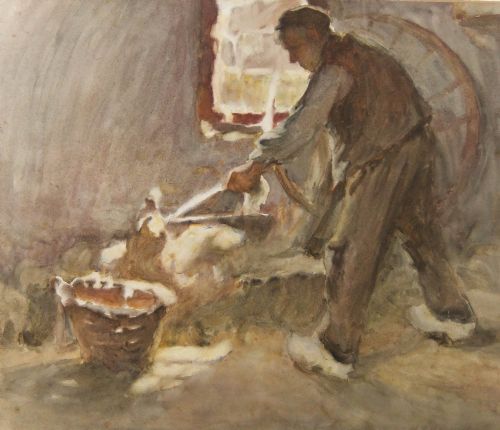
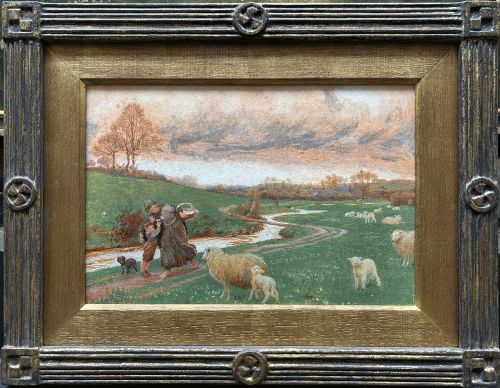
A vintage genre painting records everyday life in oil or watercolour, capturing human moments that appeal to collectors seeking historical narrative.
Vintage Genre Painting
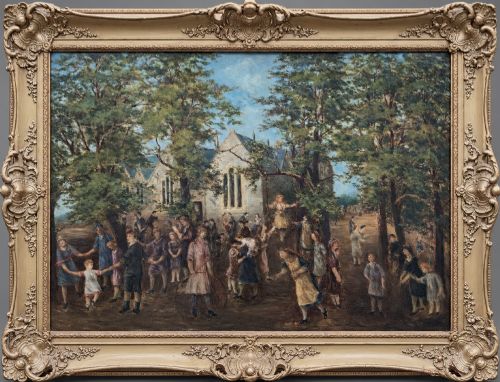
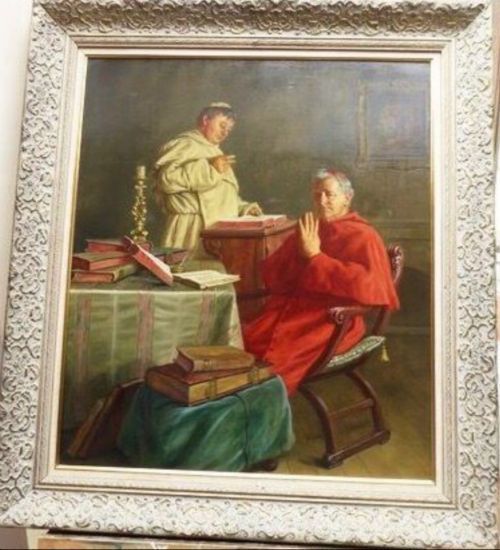
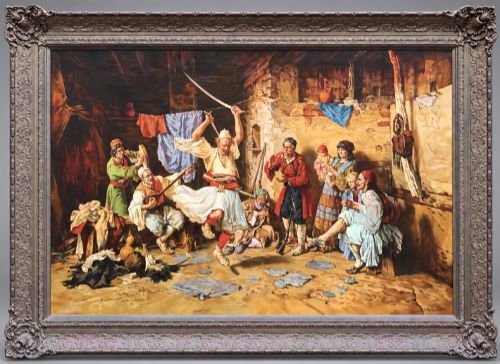
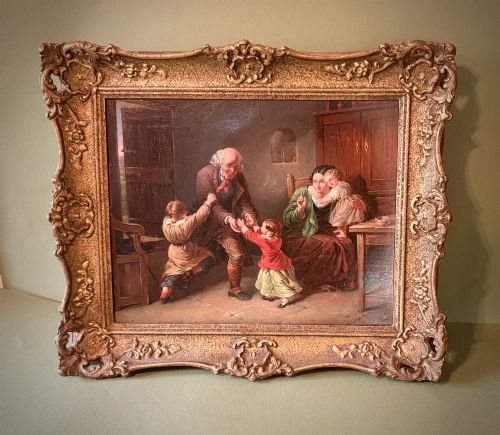
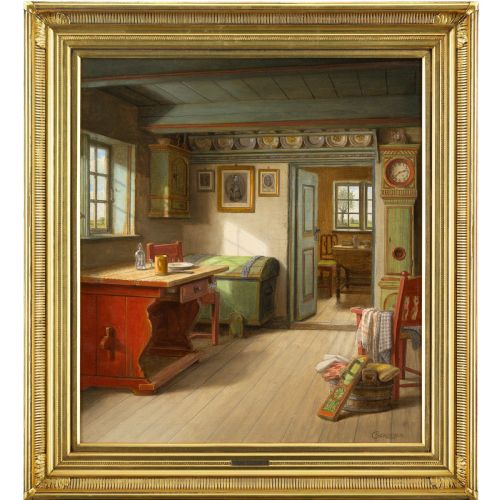
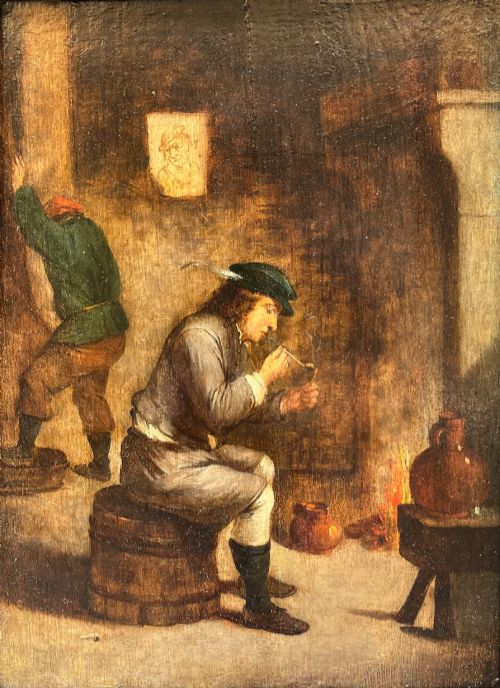
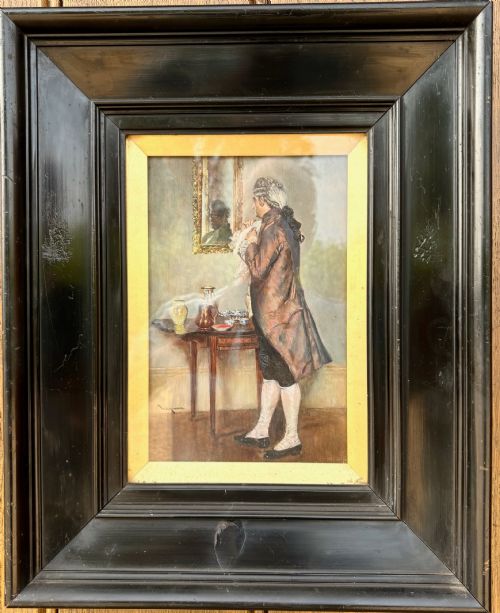
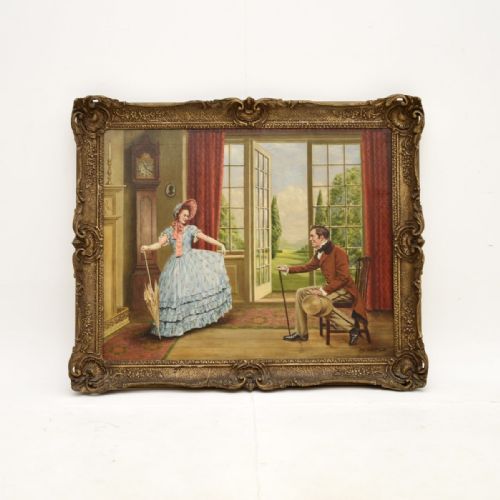
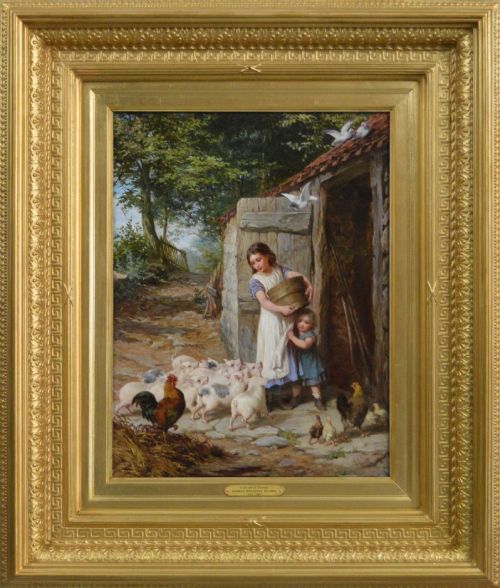
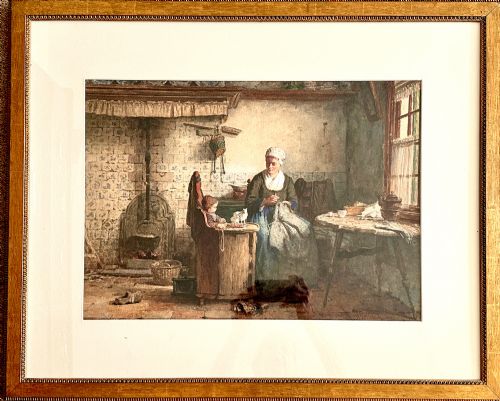
A vintage genre painting depicts scenes of everyday life, ordinary people, and domestic interiors rather than grand historical or mythological subjects. When searching for a vintage genre painting, collectors encounter works spanning from the seventeenth century through the mid-twentieth century, with a strong representation of nineteenth-century Victorian and Edwardian examples.
The subjects range from village fêtes and tavern gatherings to children playing and quiet domestic interiors. These pieces capture the social customs, dress, and domestic habits of past eras through the vision of artists who observed daily existence closely.
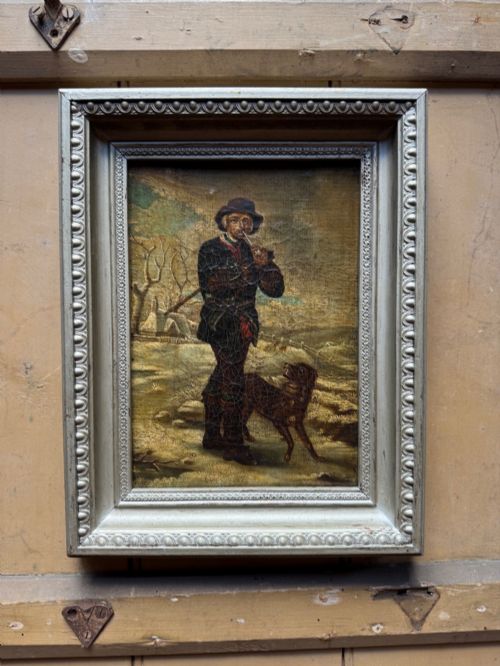
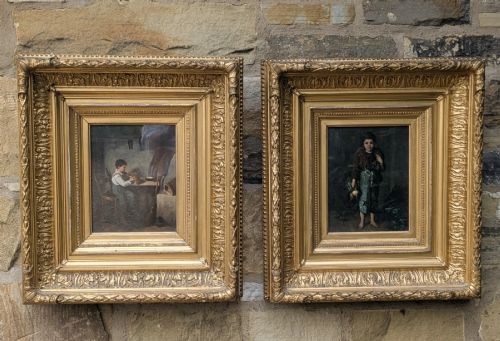
Most pieces on this page appear framed in period wood, gesso, or gilt frames that complement the canvas or panel. The scale varies from intimate cabinet works to large gallery canvases intended as principal room focal points.
Materials and construction
Artists painted these works primarily using oil paint on canvas, wood panels, or artist boards, while others worked in watercolour on paper. Oil paint allowed painters to build rich layers of pigment, creating depth in clothing, interior shadows, and facial expressions.
Canvases were stretched over wooden frames and secured with gesso applied as a preparatory ground before painting. Many works retain their original gilt wood frames, sometimes ornamented with gold leaf mouldings characteristic of their period.
Vintage Genre Painting Retail Price Guide 2026
Typical asking prices for vintage genre painting among the pieces listed under this phrase on Sellingantiques today, from the lower quarter to the upper quarter. They describe what is for sale here now, not the wider market.
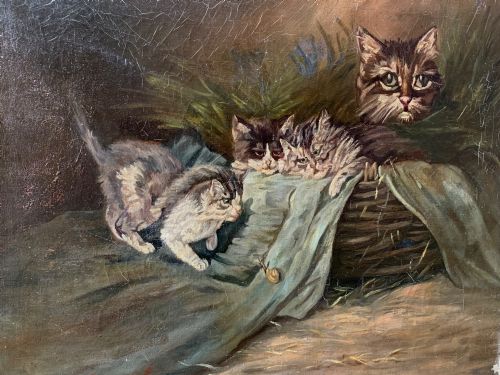
Cats and kittens appear frequently in these domestic scenes, supervising housework and playing with yarn with total indifference to human dignity.
Quality and execution
The quality of a vintage genre painting rests on the artist's command of anatomy, facial expression, and light distribution within the scene. Superior works handle narrative with convincing perspective and subtle tonal variation, whereas weaker pieces rely on stiff figures and formulaic compositions.
Condition plays a part in separating works, particularly the preservation of the original paint surface free from heavy overpainting. The harmony between the painting and its period frame also indicates the care the piece received across generations.
Barent Gael·Ernst Stierhof·Alfred Lyndon Grace·W D Almond·George Augustus Holmes·David Teniers·Frederick Walker·Hendrik Valkenberg·Valdemar Magaard·Alfred Arthur Brunel de Neuville·Paul Ehrenberg·Godfried Schalcken·Albert Ludovici Jnr·Charles Edward Wilson·John Watkins Chapman·John Sanderson Wells·James Kyd·Henry John Yeend King·Léon Joseph Voirin·James Hardy Junior
The Vintage Genre Painting Glossary
- Genre painting
- Depiction of aspects of everyday life by depicting ordinary people engaged in common activities. These works focus on domestic scenes, street life, and social gatherings rather than official portraits.
- Gesso
- A plaster mixture used as a smooth surface for painting or as a base for gilding on wooden frames. It provides a stable ground for oil applications and frame decorations.
- Chiaroscuro
- The use of strong contrasts between light and dark, usually bold contrasts affecting a whole composition. Artists utilised this technique to create theatrical depth in interior scenes.
- Oil on canvas
- A painting medium where pigments are suspended in a drying oil, applied to a stretched woven fabric support. This combination permits rich blending and long-term durability.
- Watercolour painting
- A method where the paints are made of pigments suspended in a water-based solution, typically applied to paper. It yields translucent washes that capture natural light.
Vintage Genre Painting: Frequently Asked Questions
What is a vintage genre painting?
A vintage genre painting is an artwork depicting scenes from everyday life, such as domestic interiors, market squares, or rural labour. These pieces record the social history and human interactions of past centuries.
Artists across Europe and Britain produced these works to document the manners and occupations of ordinary people. They provide an intimate view into historical daily routines.
How do I identify the period?
Period identification relies on the clothing styles, interior furnishings, and framing materials visible in the artwork. Nineteenth-century works often feature structured Victorian dress and heavy gilt frames.
Brushwork techniques and signature styles also point to specific decades. Comparing the subject matter to documented artistic movements helps narrow down the date.
Where were these paintings displayed?
Original owners hung these paintings in domestic parlours, dining rooms, and urban townhouses. They served as conversation pieces and reflections of the owner's cultural interests.
Larger canvases appeared in public exhibitions and salons before entering private homes. Today, they suit traditional living spaces and studies.
How should I care for an oil painting?
Keep oil paintings away from direct sunlight and fluctuating temperatures to prevent canvas warping and paint cracking. Gentle dusting with a soft, dry brush maintains the surface.
Avoid using liquid cleaners or water on the paint surface. Professional conservators should handle any structural repairs or varnish cleaning.