
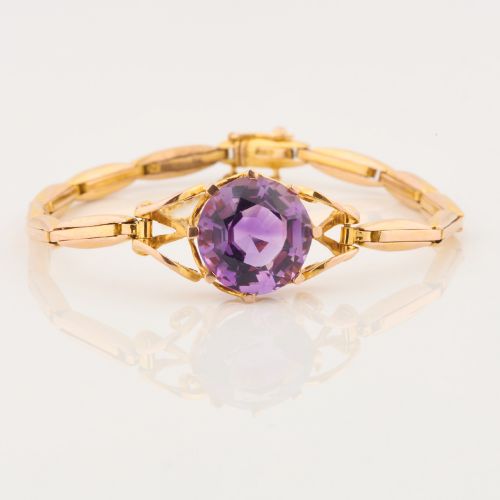
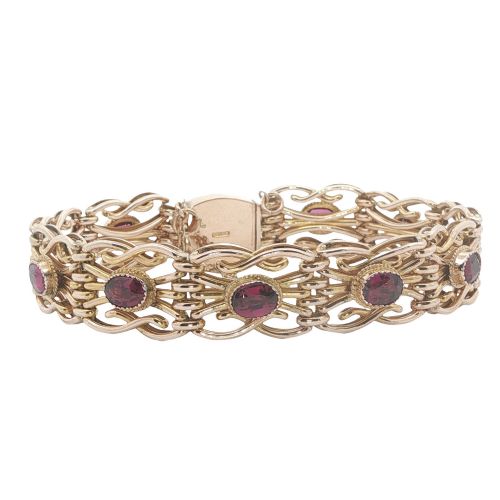
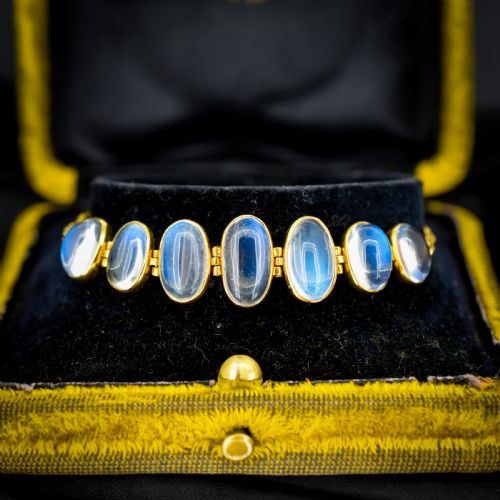


Vintage Gemstone Link Bracelet
A vintage gemstone link bracelet brings together precious metals and colourful stones across periods from Victorian to Mid-Century.
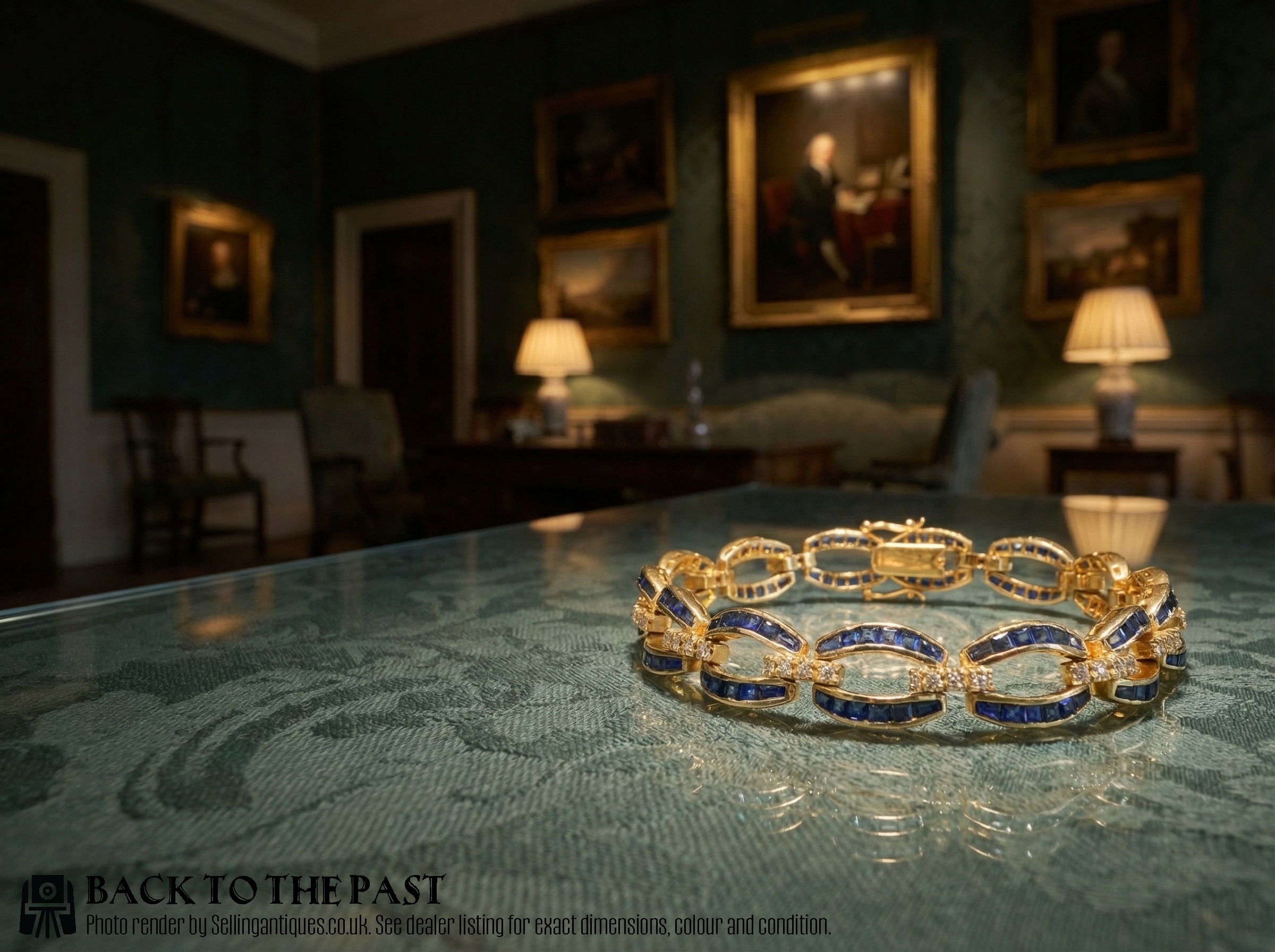
Vintage Gemstone Link Bracelet
A vintage gemstone link bracelet comprises individual articulated sections set with stones, spanning eras from the Victorian period through Edwardian and Art Deco designs to the nineteen-fifties and sixties. Buyers searching for a vintage gemstone link bracelet encounter pieces constructed from connected segments that drape around the wrist.
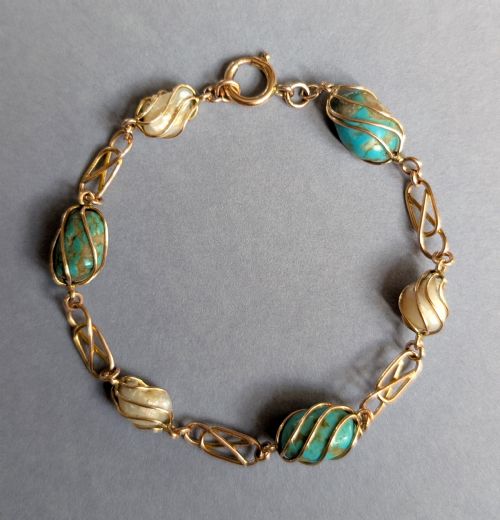
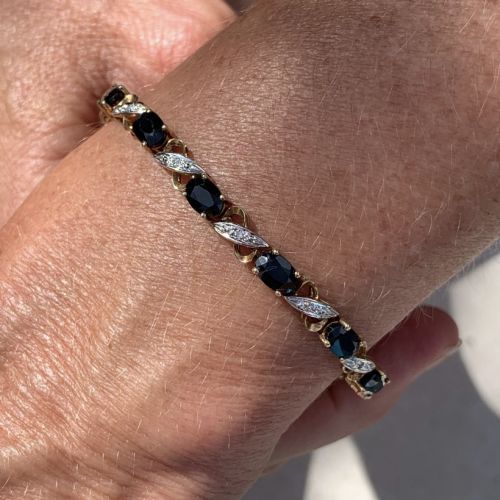
The selections on this page feature precious metals including nine-carat and fifteen-carat gold alongside platinum and silver. Stones range from sapphire, diamond, amethyst and garnet to moonstone, turquoise, opal, aquamarine and pearl.
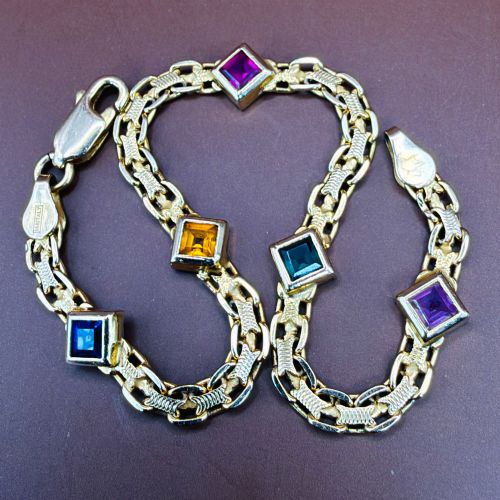
Forms vary from simple rope and gate links to elaborate princess-cut multi-stone arrangements and pierced filigree settings. Pieces date from around eighteen-ninety through the mid-twentieth century.
Materials and construction
Goldsmiths utilised nine-carat, fifteen-carat and eighteen-carat yellow and rose gold alongside platinum and silver as the foundational framework for these articulated assemblies. Metal components were cast, hand-assembled and engraved to secure individual gems.
Stones including sapphires, diamonds, garnets, amethysts, moonstones and pearls were shaped into cushion cuts, princess cuts and cabochons. Jewellers set these gems into collets, bezels and pierced filigree settings designed to catch the light with every movement of the wrist.
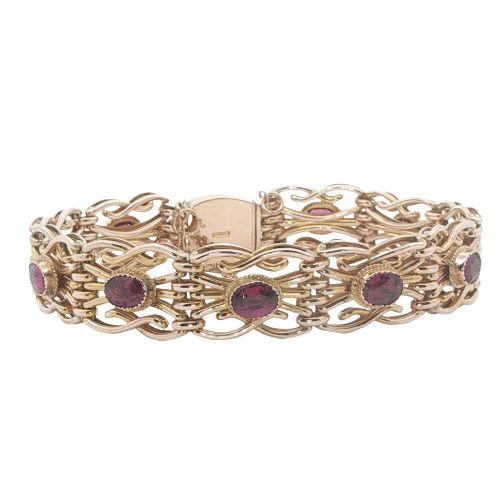
Listings feature nine-carat rose gold combined with almandine garnet across multiple early twentieth-century pieces.
Judging quality in links and stones
Quality rests upon the integrity of the articulation between links, where smooth movement without lateral looseness indicates careful original assembly. Substantial metal weight in the mountings supports the security of the set stones.
Stone selection divides categories, with well-matched natural gems, precise carat weights and clean facet symmetry elevating a piece. The integration of the metalwork, such as delicate hand-pierced filigree or secure claw settings, marks the distinction between standard work and finer production.
The Vintage Gemstone Link Bracelet Glossary
- Link bracelet
- A bracelet constructed from individual metal segments joined by hinges, rings or loops. This design allows the ornament to bend fluidly around the wrist.
- Filigree
- Ornamental work consisting of fine wire soldered together in open patterns. This technique appears frequently in pierced silver and platinum settings.
- Cabochon
- A gemstone shaped and polished with a smooth convex surface rather than faceted. Moonstones and opals often utilise this form to display their internal optical properties.
- Gate link
- A style of bracelet formed from parallel bars connected by vertical links resembling a small gate. Victorian examples frequently incorporate this structure.
- Princess cut
- A square or rectangular gemstone cut with numerous facets to increase brilliance. This shape appears in mid-century multi-stone configurations.
Vintage Gemstone Link Bracelet: Frequently Asked Questions
How do I care for a vintage gemstone link bracelet?
Clean these bracelets gently with a soft cloth and warm soapy water, avoiding harsh chemical dips that damage softer stones like pearls or opals.
Store each piece separately in a lined box to prevent scratching between the metal links and gemstones.
Are these bracelets suitable for daily wear?
Sturdier gold designs from the Victorian and mid-century periods withstand regular wear if checked periodically by a jeweller for loose claws.
Delicate Edwardian filigree or pearl-set pieces require greater care and suit occasional rather than constant daily use.
How do I determine the period of a bracelet?
Examine the metal hallmarks, setting styles and stone cuts, comparing them against known design characteristics from eras like Art Deco or the Edwardian period.
Heavier platinum geometric work points to the nineteen-twenties, while yellow gold gate links suggest late nineteenth-century manufacture.