


Gold Diamond Tennis Bracelet
A gold diamond tennis bracelet brings a flexible line of brilliant stones to the wrist, combining clean sparkle with daily wearability.
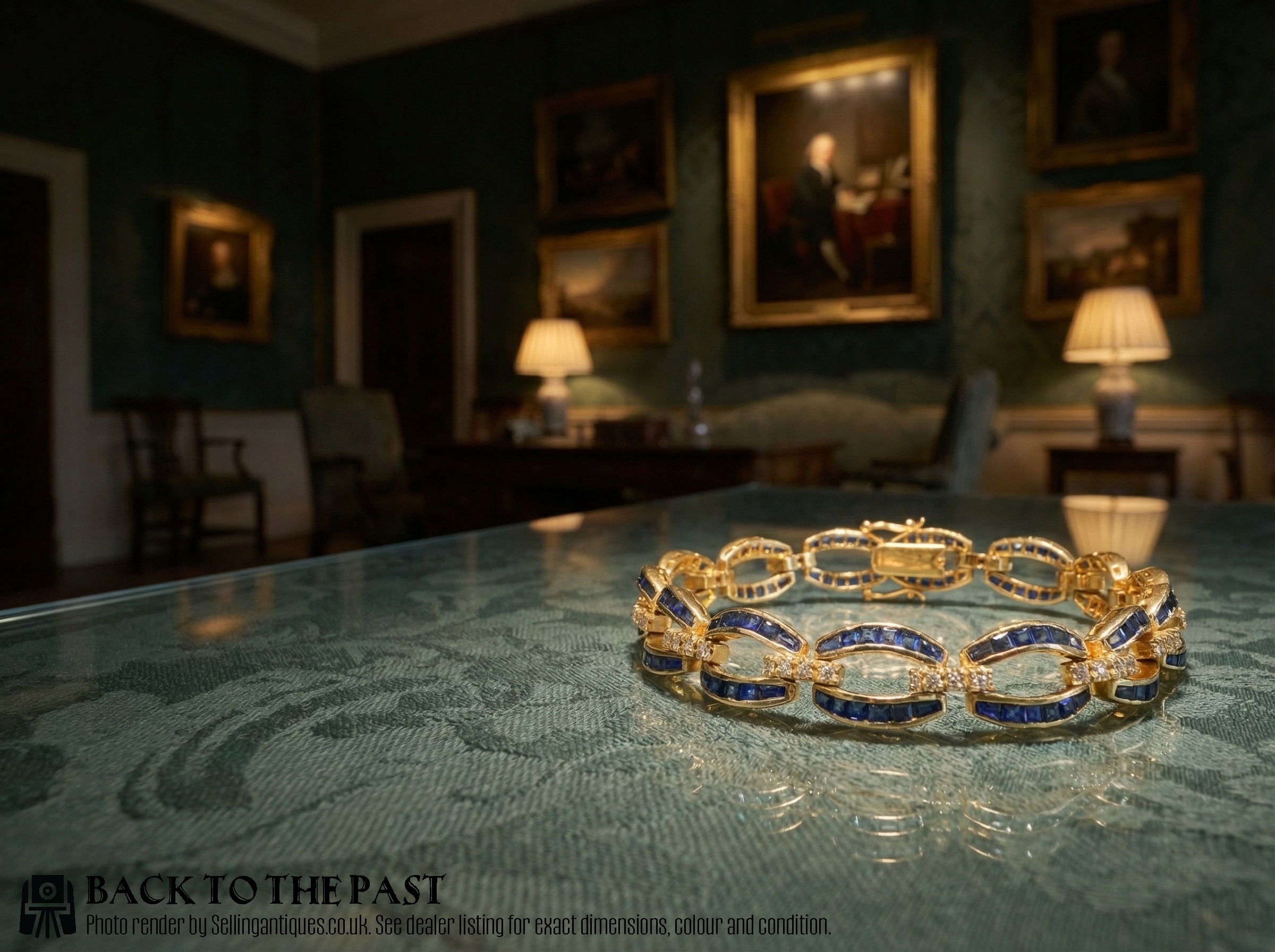
Gold Diamond Tennis Bracelet
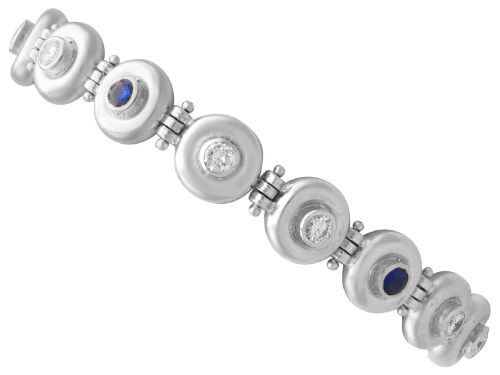
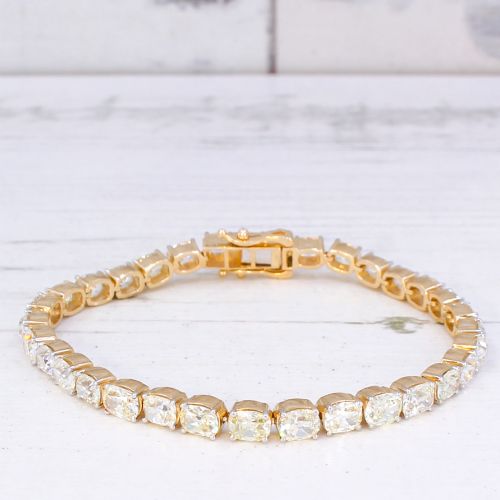
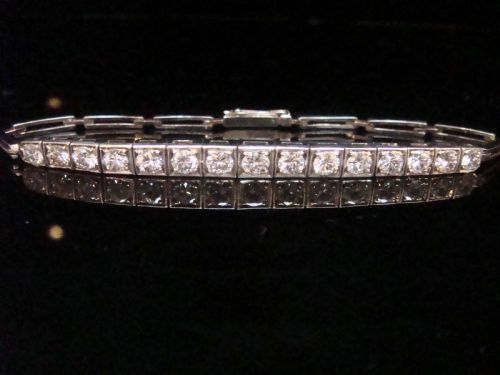
A gold diamond tennis bracelet consists of a continuous flexible line of stones set into precious metal links, designed to move fluidly around the wrist. The pieces seen here span periods from the Victorian era and Edwardian times through to the Art Deco movement and mid-century decades.
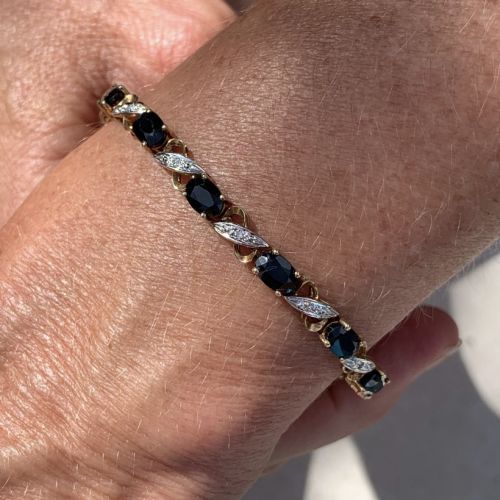
The format appears alongside sapphire, ruby, and turquoise variations set within yellow gold, white gold, rose gold, and silver-topped gold. Most examples follow distinct stylistic traditions such as 1940s Retro and 1960s fine jewellery designs.
Buyers encounter everything from delicate lower-carat gemstone arrangements to heavy diamond-focused line bracelets featuring old mine cuts and brilliant cuts. The construction balances durability with high-carat visual impact for everyday elegance.
Materials and Construction
Goldsmiths constructed these bracelets using high-purity precious metals including nine-carat and eighteen-carat yellow, white, and rose gold, occasionally utilising silver top layers in Victorian work to brighten the stone settings. Individual links connect securely to maintain flexibility while supporting the weight of the gems.
Setting techniques rely heavily on close collet settings and individual claws that hold diamonds and coloured stones firmly in line. Master jewellers matched stone sizes meticulously across the length of the bracelet to ensure a uniform display of light.
Materials recorded across the inventory include yellow gold, white gold, rose gold, silver, diamonds, sapphires, rubies, and turquoise.
Markers of Quality and Craftsmanship
Quality separates along the precision of stone matching and the integrity of the articulating joints between links. Superior pieces maintain consistent colour and clarity across numerous individual gems, whereas standard examples show greater variance in stone uniformity.
The weight of the gold mount and the crispness of the setting work indicate the skill of the original workshop. Heavier mountings and secure, hand-finished settings ensure the bracelet withstands regular movement without slackening in the joints.
The Gold Diamond Tennis Bracelet Glossary
- Tennis bracelet
- A flexible line bracelet set with a continuous row of close-set diamonds or gemstones. The term gained widespread currency in the later twentieth century.
- Old mine cut
- An early diamond cut characterised by a near-square girdle, high crown, and large culet facet. This shape reflects candlelight warmly and defines pieces from the Victorian and Edwardian periods.
- Collet setting
- A metal collar that encircles the girdle of a stone and holds it securely in place. It represents a traditional method favoured in antique jewellery.
- Brilliant cut
- A modern round stone cut with fifty-eight facets engineered to maximise light return. It appears frequently in mid-century and later line bracelets.
Gold Diamond Tennis Bracelet: Frequently Asked Questions
Can I wear a gold diamond tennis bracelet every day?
These flexible line bracelets suit daily wear due to their secure link construction and durable metal settings. Proper secure clasps and well-maintained claws ensure the piece withstands regular movement on the wrist.
Owners should still remove the jewellery during strenuous physical activities or manual work to protect the gold mounts and prevent stone loss.
What is the difference between old mine cut and brilliant cut stones?
Old mine cut diamonds display a hand-cut, pillow-like shape with smaller tables and deeper pavilions typical of nineteenth-century work. Modern brilliant cut stones feature geometric symmetry designed to maximise contemporary sparkle.
Both styles alter the overall character of the bracelet, giving older Victorian and Edwardian examples a softer glow compared to mid-century pieces.
How do I determine the period of a line bracelet?
Dating relies on examining the cut of the diamonds, the colour and purity marks of the gold, and the assembly of the articulating links. Victorian and Edwardian pieces often feature handcrafted details and silver-topped gold, while 1960s examples display machine precision and white gold.
Matching the stylistic markers of Art Deco or Retro periods helps narrow down the decade of manufacture.
Are coloured gemstones common in tennis bracelets?
Many period pieces incorporate natural sapphires, rubies, or turquoise alongside diamonds in alternating or multi-stone patterns. These coloured gems reflect the fashionable palettes of the Victorian, Edwardian, and mid-century eras.
Such combinations add distinct colour contrast to the standard all-diamond line bracelet format.