

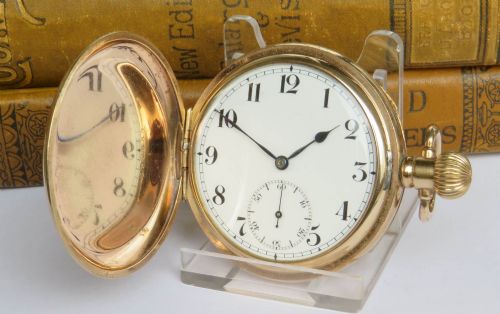
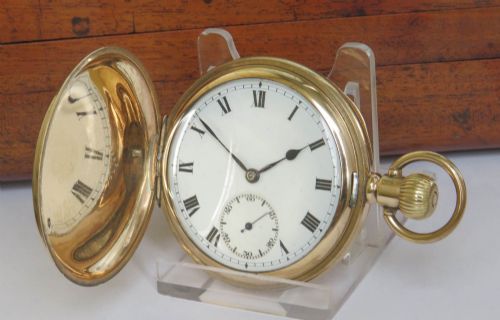
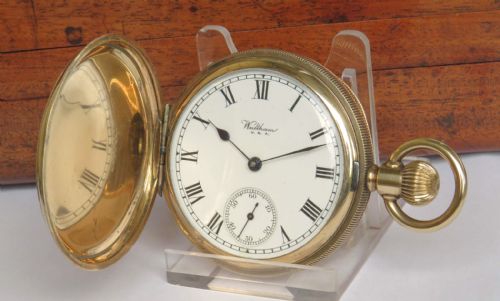
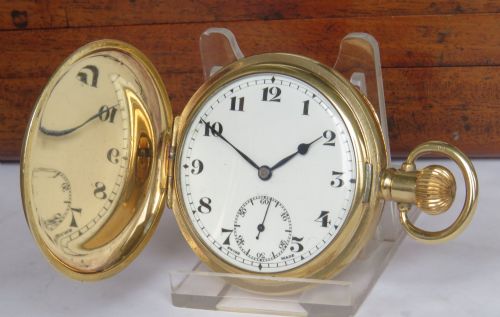


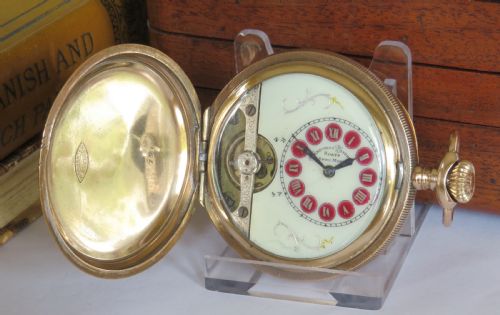


Vintage Full Hunter
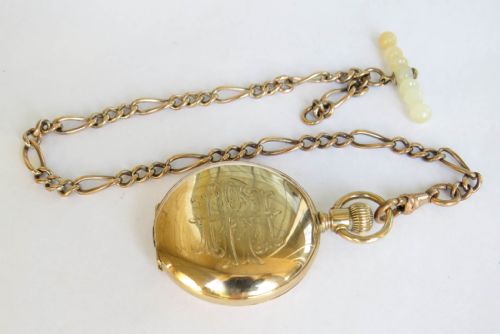
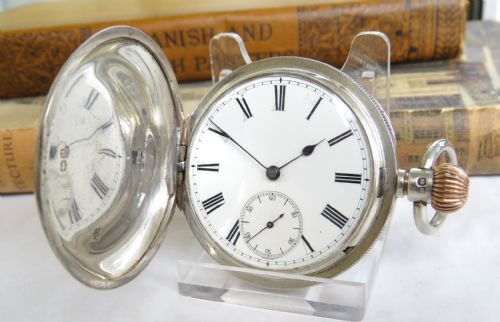
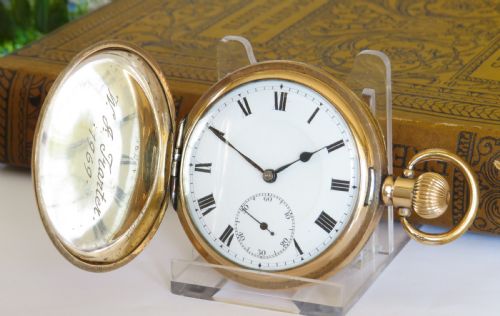
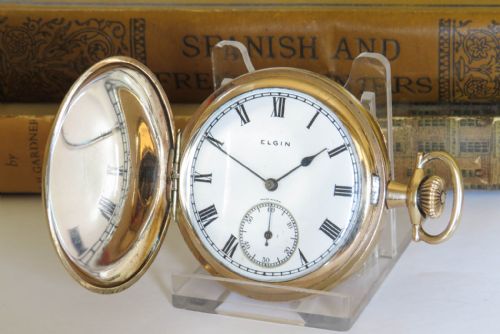
These vintage full hunter pocket watches combine enclosed metal covers with precise mechanical movements, offering timeless pocket timekeeping.
Vintage Full Hunter
The selection here encompasses various origins, including Swiss workshops alongside British makers like Thomas Russell. Enclosed cases dominate the offerings, occasionally accompanied by fob watches and complicated repeater mechanisms designed for audible time checks.
Materials and construction
Watchmakers utilised precious metals including eighteen-carat gold, fourteen-carat yellow gold, and solid silver to fabricate durable outer cases. Gold filled metal, gold plate, and steel also appear frequently, offering robust housing alongside polished enamel dials and protective glass crystals.
Internal mechanisms rely on intricate brass and steel gear trains, encompassing specialised formats such as fusee movements, five-minute repeaters, and button-wind systems. Skilled artisans engraved exterior covers, fitted spring hinges, and adjusted delicate balance wheels to ensure reliable timekeeping.
Vintage Full Hunter Retail Price Guide 2026
Typical asking prices for vintage full hunter among the pieces listed under this phrase on Sellingantiques today, from the lower quarter to the upper quarter. They describe what is for sale here now, not the wider market.
One silver hunter carries a special bravery award inscription, recording a moment of distinct historical heroism.
Judging quality in enclosed timepieces
Quality differentiates standard production pieces from exceptional horological achievements based on the complexity of the internal movement. Simple button-wind calibres contrast with sophisticated mechanisms like five-minute repeaters and fusee escapements produced by skilled master watchmakers.
Material choice elevates a piece, moving from gold-plated or steel alloys up to heavy eighteen-carat gold cases with fine enamel dials. The crispness of exterior engine turning, the prestige of the maker, and the overall integrity of the spring-loaded hunter cover further establish the tier of the watch.
Thomas Russell·Waltham·Elgin·Longines·Urania·Limit·Hebdomas Patent·Lonville·Corgémont·J Lyndsey·J Dauer Geneve
The Vintage Full Hunter Glossary
- Full hunter
- A pocket watch featuring a protective metal spring-cover that completely encloses and shields the dial face. Pressing the crown button typically releases the spring mechanism to reveal the time.
- Fusee
- A conical pulley device connected to the mainspring by a chain or cord, designed to equalise the torque as the spring unwinds. This traditional mechanism improves timekeeping consistency in older pieces.
- Repeater
- A complicated mechanical movement that chimes the hours, quarters, or minutes on demand when a slide or button is activated. Such watches were particularly useful for telling time in the dark.
- Verge escapement
- An early type of escapement mechanism utilising a crown wheel and a vertical rod with pallets. It represents traditional watchmaking techniques found in older nineteenth-century pieces.
- Gold filled
- A manufacturing method where a layer of gold is mechanically bonded to a base metal core. This technique provided the appearance and durability of solid gold at a lower production cost.
Vintage Full Hunter: Frequently Asked Questions
What is a full hunter pocket watch?
A full hunter pocket watch is a timepiece enclosed by a hinged metal cover that protects the glass crystal and dial from damage. The cover springs open when the crown is depressed.
These watches offer a sleek, rounded profile when closed, concealing the dial until time checks are required.
How do I wind an antique pocket watch?
Most pieces utilise a modern button-wind system where you rotate the crown at the top of the watch to tension the mainspring. Older or specific historical movements may occasionally require a separate key.
Take care not to overwind the mechanism, stopping gently as soon as resistance is felt to protect the internal gear train.
How do repeater watches work?
Repeater watches incorporate complex mechanical complications that sound the time audibly using tiny internal gongs and hammers. Activating the slide or button sets the gear train in motion to strike the hours and minutes.
This intricate feature allowed historical owners to check the time in darkness without looking at the dial.
What materials were used for these watches?
Casework was fashioned from a variety of metals, ranging from solid eighteen-carat and fourteen-carat gold to sterling silver, gold plate, gold filled metal, and steel. Dials typically feature white enamel with painted numerals beneath protective glass crystals.
Precious metal cases often display historical hallmarks or maker marks stamped inside the inner dust covers.