





Vintage Fuel Bin
A vintage fuel bin brings honest utility and warmth to a hearth, offering a handsome vessel for logs, peat or coal.
Vintage Fuel Bin
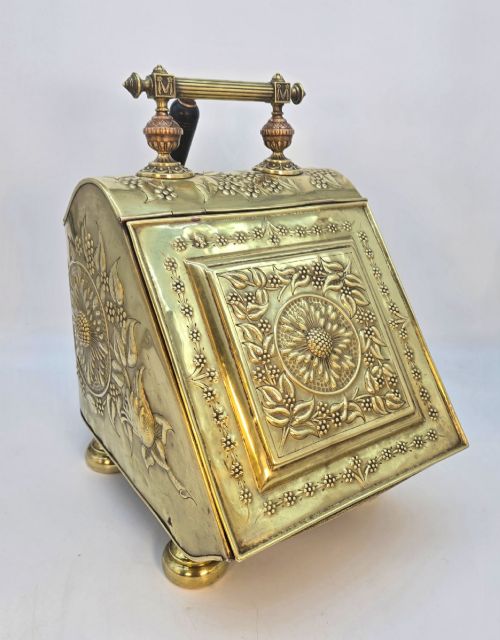
A vintage fuel bin serves as a practical fireside repository for solid fuel, taking the form of boxes, buckets, scuttles and purdoniums. These pieces combine utilitarian purpose with period decorative craft, designed to keep coal, logs and peat close to the fire.
The selections available range from sturdy oak and mahogany boxes to hammered copper and brass buckets. Pieces date across the nineteenth century, the Edwardian era and the turn of the twentieth century, reflecting the prevailing design movements of their respective decades.
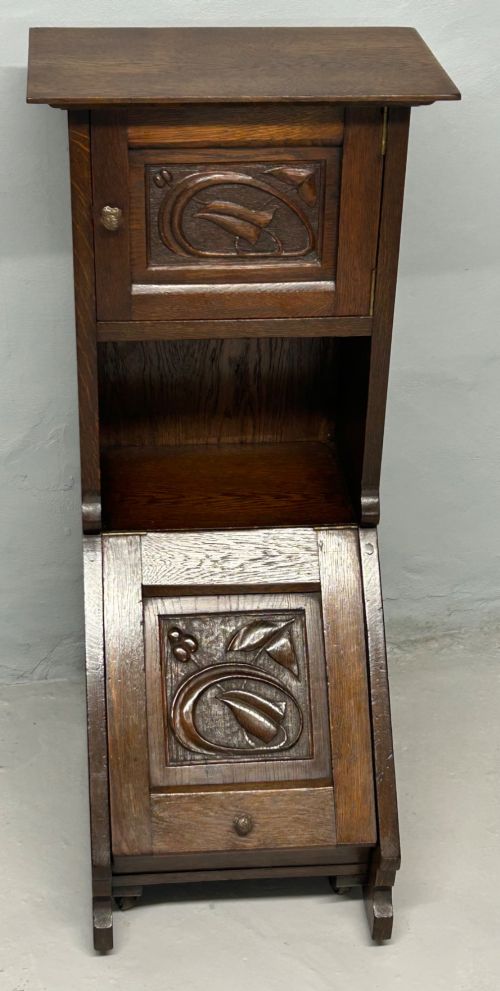
Buyers encounter regional and stylistic variations, including coopered peat buckets, carved wooden cabinets with fall fronts, and metal scuttles embellished in Arts and Crafts or Art Nouveau idioms. Each form addresses the domestic requirement to store fuel cleanly beside the hearth.
How they were made
Timber bins utilise solid woods such as oak, mahogany, walnut and pine, frequently shaped through traditional cabinet-making methods including carving, panel construction and dovetailing. Coopered examples employ tightly fitted wooden staves bound with metal hoops to hold peat or logs.
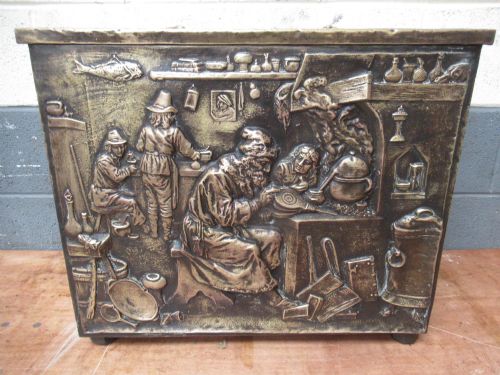
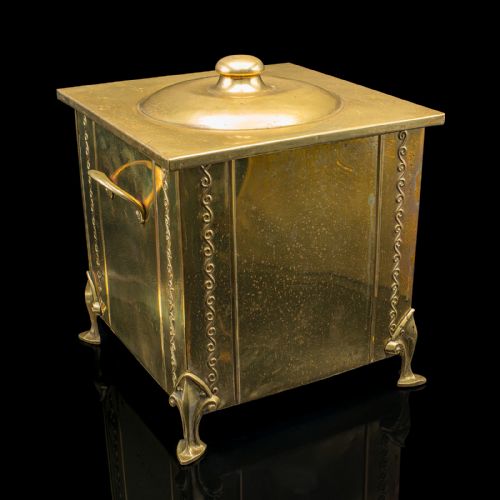
Metal vessels rely upon brass and copper sheet, worked by hand or machine to create bodies that are often embossed, panelled or mounted with ormolu. Iron provides structural reinforcement and fittings, while applied copper panels frequently display characteristic Arts and Crafts motifs.
Vintage Fuel Bin Retail Price Guide 2026
Typical asking prices for vintage fuel bin among the pieces listed under this phrase on Sellingantiques today, from the lower quarter to the upper quarter. They describe what is for sale here now, not the wider market.
Period styles represented include Victorian, Edwardian, Arts and Crafts, Art Nouveau, Aesthetic Movement and French Provincial.
What varies in quality
Quality rests in the integrity of construction, the thickness of the metal, and the quality of the timber selection. Superior examples display thoughtful joinery, robust metal gauge, and well-executed decorative carving or metalwork rather than purely thin plating.
The distinction between ordinary utility items and finer pieces lies in the articulation of the style, whether through the restrained elegance of an Aesthetic period pine store or the confident hand-hammered panels of an Arts and Crafts purdonium.
The Vintage Fuel Bin Glossary
- Purdonium
- A specialised coal box featuring a sloping front door or a tip-out hopper mechanism designed for easy fuel retrieval. It usually includes an interior metal liner to contain dust.
- Coopered
- Constructed from curved wooden staves assembled edge-to-edge and bound by metal bands, much like a traditional cask or bucket. This technique suits vessels meant to hold peat or logs.
- Scuttle
- A metal bucket or container equipped with a swinging handle and often a lip or spout for pouring fuel onto the fire. Copper and brass versions frequently feature embossed decoration.
- Ormolu
- Gilt bronze mounts applied to furniture and boxes for decorative accent. It adds a refined metallic contrast to wooden coal cabinets.
- Aesthetic Movement
- A late nineteenth-century design style emphasising decorative beauty and craftsmanship over strict utility. Pieces from this period often display clean lines and thoughtful material combinations.
Vintage Fuel Bin: Frequently Asked Questions
What is a purdonium?
A purdonium is a dedicated coal box fitted with a sloping drop-front or a pivoting hopper mechanism. This design allows for tidy access to fuel while concealing the contents from view.
Most examples contain a removable metal liner that catches coal dust and debris, protecting the wooden exterior from dirt and moisture.
Are these bins still practical for modern fires?
These bins function as effectively today as they did in the nineteenth and early twentieth centuries for holding logs, kindling or coal. Their historical construction handles everyday domestic use without difficulty.
Using the original metal liners ensures that modern fuel storage remains clean and contained beside an active hearth.
How do I date a fuel bin?
Dating relies upon observing the combination of materials, joinery techniques and stylistic motifs. Arts and Crafts and Art Nouveau pieces display characteristic hand-beaten copper panels and organic lines typical of around nineteen hundred.
Victorian and Edwardian wooden boxes often feature period-specific carving, brass handle designs and construction methods that align with documented eras of furniture production.