


Vintage Frosted Globe Lamp
A vintage frosted globe lamp combines soft ambient diffusion with the striking geometric forms of the early twentieth century.
Vintage Frosted Globe Lamp
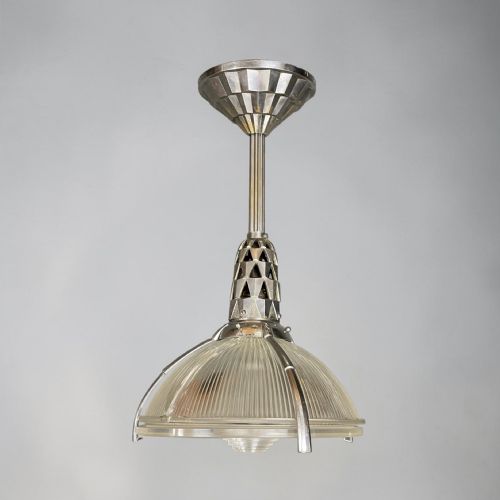
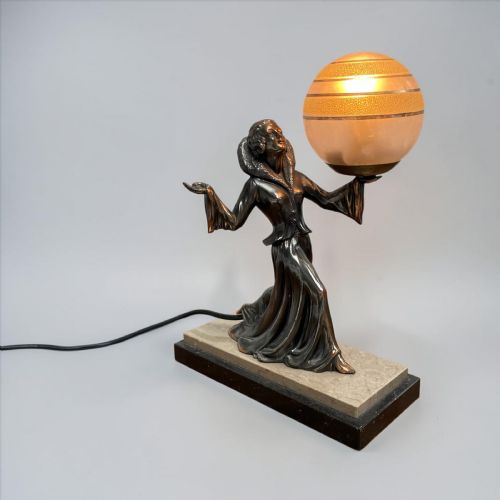
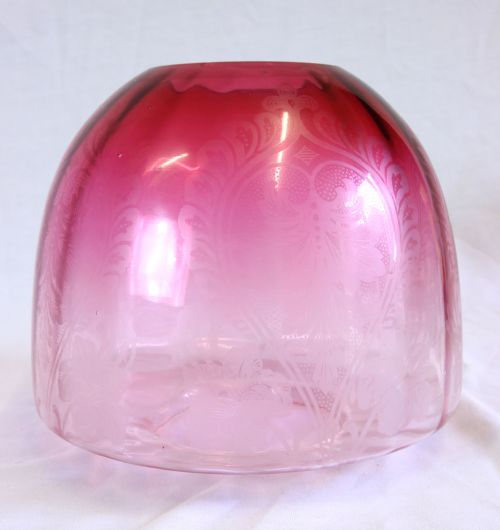
A vintage frosted globe lamp brings together spherical glass shades and bases spanning the Victorian era through the Edwardian period and into Art Deco design. These pieces appear as table lamps, ceiling fixtures, and figural sculptures featuring glass globes.
The selection centres heavily on Art Deco creations from the 1920s and 1930s, alongside nineteenth-century oil lamps and Victorian glass shades. Buyers will find pendant lights, ceiling globes, and table lighting in varied metals and stones.
How they were made
Makers utilised moulded, etched, or opaline glass to form the characteristic frosted globes that soften the light source. These glass elements sit within or suspend from mounts created from brass, bronze, chrome, and patinated metal.
Many structural bases incorporate heavy materials like marble and granite to provide stability for taller table lamps and figural sculptures. Metal components show casting and patination techniques typical of late nineteenth and early twentieth-century workshops.
Materials recorded across the inventory include brass, bronze, chrome, marble, granite, and various forms of glass.
What varies in quality
The standard of materials dictates the upper tier, seen in solid bronze figures, genuine marble bases, and heavy crystal or opaline glass globes rather than lighter pressed alloys. Superior pieces display crisp casting detail in figural mounts and precise etching on the glass.
Design integrity and proportion separate standard utilitarian lighting from works attributed to notable makers or specific artistic movements. The integration of the frosted globe with its original mounting hardware preserves the complete sculptural intent of the piece.
Émile-Jacques Ruhlmann·Harrods·Messengers
The Vintage Frosted Globe Lamp Glossary
- Frosted glass
- Glass treated by acid-etching or sandblasting to create a textured, opaque surface that diffuses light. This technique softens harsh glares while highlighting surface patterns.
- Opaline glass
- A pale, semi-translucent glass that gained popularity for its milky appearance. It diffuses light evenly across spherical lamp shades.
- Spelter
- A zinc alloy frequently used as a cost-effective substitute for bronze in decorative figures and lamp bases. It takes patination well to simulate heavier metals.
Vintage Frosted Globe Lamp: Frequently Asked Questions
How do I clean a frosted glass globe?
Wash the glass gently using warm water and a mild dish soap to remove dust without damaging the textured surface. Avoid harsh chemical cleaners that can alter the frosted finish.
Dry the globe thoroughly with a soft lint-free cloth before reattaching it to the lamp mount to prevent water spots.
Can these old lamps take modern bulbs?
Many vintage lamps accommodate modern LED bulbs provided the wattage matches the historical wiring capacity. It is wise to consult a qualified electrician to inspect older fittings.
Ensure the bulb size fits comfortably inside the frosted globe without touching the inner glass surface directly.
How do I date an Art Deco lamp?
Examine the materials and motifs, as pieces from the 1920s and 1930s frequently employ chrome, marble, and stylised figural elements like dancers or animals. Geometric symmetry and streamlined shapes are strong indicators of this era.
Maker signatures or foundry marks stamped onto the metal base often provide a precise decade of production.
Were these ceiling globes originally oil lamps?
Ceiling globes and pendant lights were manufactured specifically for electrical systems during the Art Deco period. In contrast, Victorian oil lamps were later converted to electricity as domestic power became widespread.
Inspect the burner or mounting collar to determine whether the piece began as a liquid-fuel burner or an electric fixture.