






Vintage French Wall Plate
These vintage french wall plate examples cover glazed earthenware dishes, decorative plaques and framed paper plates from periods spanning the eighteenth to the twentieth centuries.
Vintage French Wall Plate
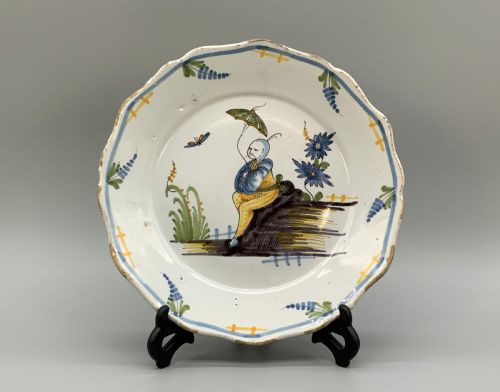
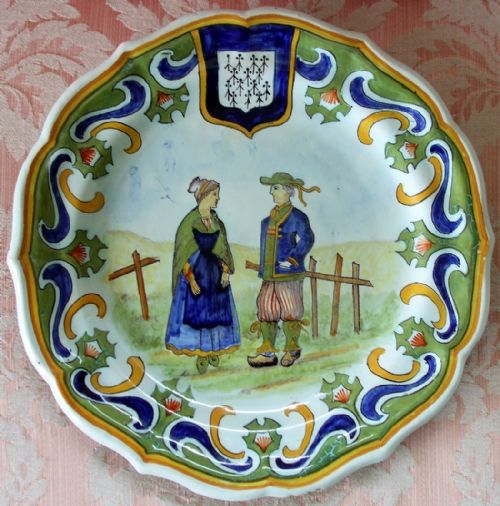
When you search for vintage french wall plate options, you find a collection that extends beyond simple ceramics to encompass faience dishes, tin-glazed earthenware chargers and framed paper plates. The selection includes eighteenth-century faience pieces from centres such as Quimper, Lille and Desvres, alongside decorative plaques and framed graphic plates.
The ceramic dishes often feature traditional hand-painted motifs in manganese, yellow or blue, depicting regional scenes and historical subjects. Other items in this category comprise printed commemorative plaques and framed sets of eighteenth-century book plates, reflecting diverse wall decoration traditions across France.
Materials and construction
The earthenwares rely on traditional tin-glazing techniques, resulting in opaque white surfaces that accept hand-painted mineral pigments like manganese and yellow. Potters shaped these bodies locally in workshops across regions such as Brittany and northern France during the eighteenth and nineteenth centuries.
Framed paper plates utilise historic book illustrations mounted securely behind protective glazing, often within simple timber or gilt mouldings. The physical manufacture combines ceramic firing methods with period paper conservation and framing practices.
Vintage French Wall Plate Retail Price Guide 2026
Typical asking prices for vintage french wall plate among the pieces listed under this phrase on Sellingantiques today, from the lower quarter to the upper quarter. They describe what is for sale here now, not the wider market.
Listings feature eighteenth and nineteenth-century French ceramics, including faience bowls, chargers and decorative plaques from regional potteries.
Quality differences
Hand-painted precision distinguishes superior faience dishes from standard production items, visible in the control of the brushwork and the clarity of the manganese or polychrome pigments. Crisp detailing on tin-glazed earthenware surfaces and well-preserved painted inscriptions indicate higher tier regional manufacture.
For framed paper plates and printed plaques, the sharpness of the original impression and the integrity of the paper dictate the standard. Condition of the glaze, minimal restoration and crisp execution separate finer examples from routine decorative pieces.
Quimper·Lille·Desvres·Charles Paillasson
The Vintage French Wall Plate Glossary
- Faience
- Tin-glazed earthenware produced in France, typically featuring hand-painted decoration over an opaque white enamel glaze. This technique defines much of the regional pottery found on these walls.
- Charger
- A large decorative plate intended for display rather than table service. These substantial earthenware dishes often hang from walls using pierced footrings or wire attachments.
- Manganese
- A dark purple-brown mineral pigment used historically in ceramic decoration. It provides the characteristic warm linear tones seen on early French earthenware dishes.
- Plaque
- A flat decorative panel designed for wall hanging, executed in ceramic, metal or wood. Examples range from commemorative metal stampings to painted earthenware tablets.
Vintage French Wall Plate: Frequently Asked Questions
How do I hang a heavy ceramic plate safely?
Use a spring-loaded brass plate hanger that distributes weight evenly across the rim without stressing the ceramic body. Ensure the wall fixing engages directly into masonry or uses a secure cavity anchor.
Check the tightness of the spring clips periodically to maintain a firm grip on the earthenware edge during seasonal temperature shifts.
What is the difference between faience and porcelain?
Faience uses a porous earthenware body covered in an opaque tin glaze, whereas true porcelain possesses a vitrified, non-porous white paste fired at higher temperatures. French faience dishes display softer body edges and heavier construction than hard-paste porcelain.
The tin glaze on faience accepts hand-painted mineral colours directly onto the unfired surface before a single main kiln firing.
How do I date an old French ceramic plate?
Examine the composition of the ceramic body, the characteristics of the tin glaze, and the style of the hand-painted brushwork. Pigments like manganese often point towards eighteenth-century regional palettes.
Maker marks on the reverse, where present, provide direct references to active pottery periods in centres like Quimper or Desvres.