

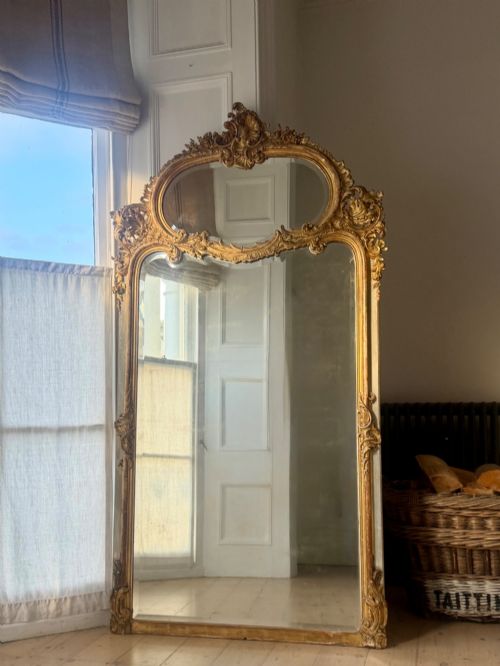
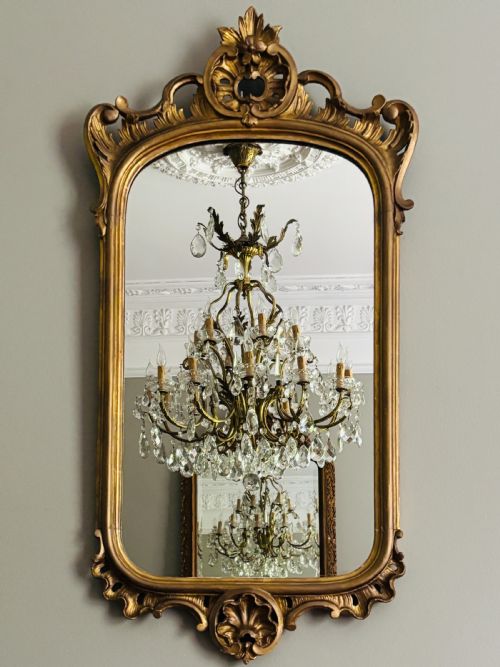
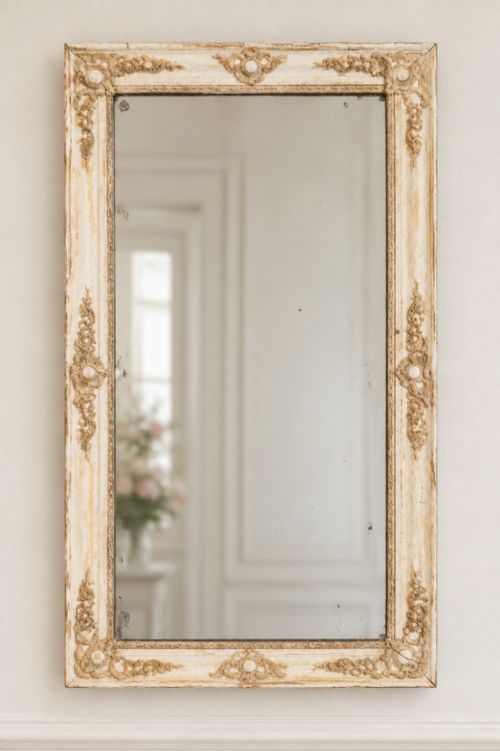
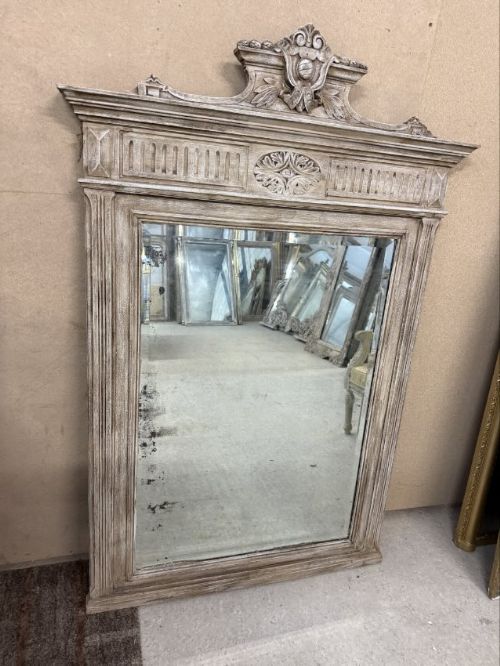
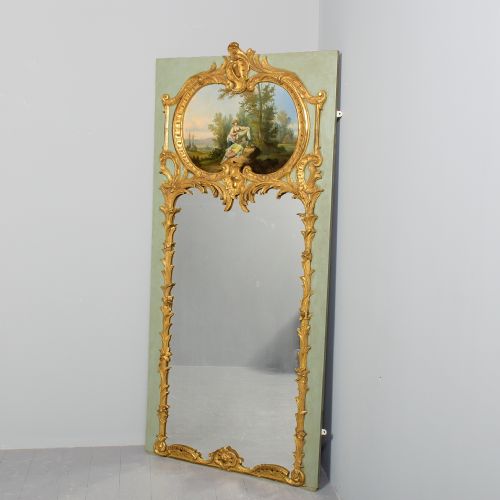


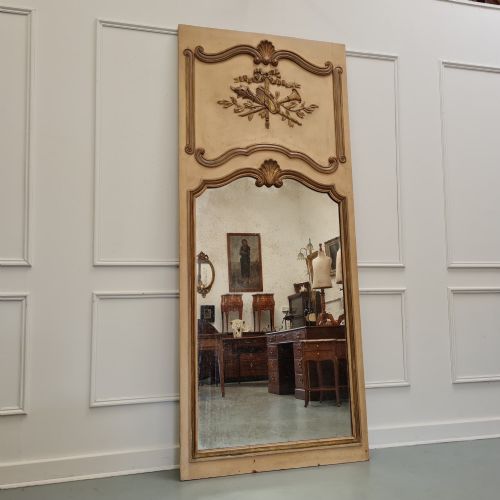

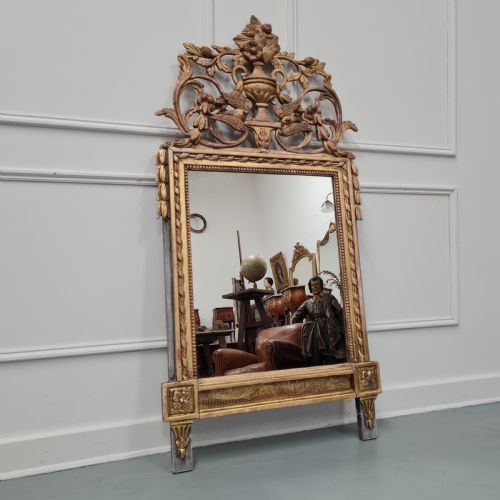


Vintage French Trumeau Mirror
A vintage french trumeau mirror combines architectural wood panels with inset oil paintings and glass, bringing classic chateau elegance to modern interiors.
Vintage French Trumeau Mirror
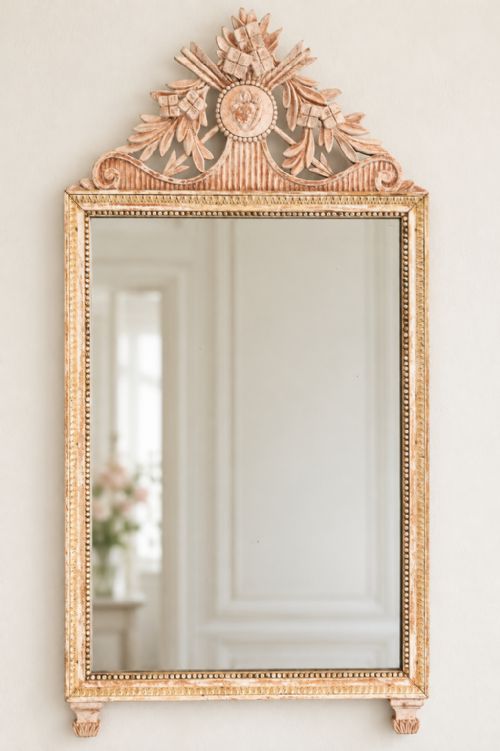
A vintage french trumeau mirror functions as an architectural wall piece, integrating a painted or carved wooden panel directly above the glass plate. These items stem from periods such as the nineteenth century up to the nineteen-thirties, drawing on designs like Louis XVI Style and French Chateau aesthetics.
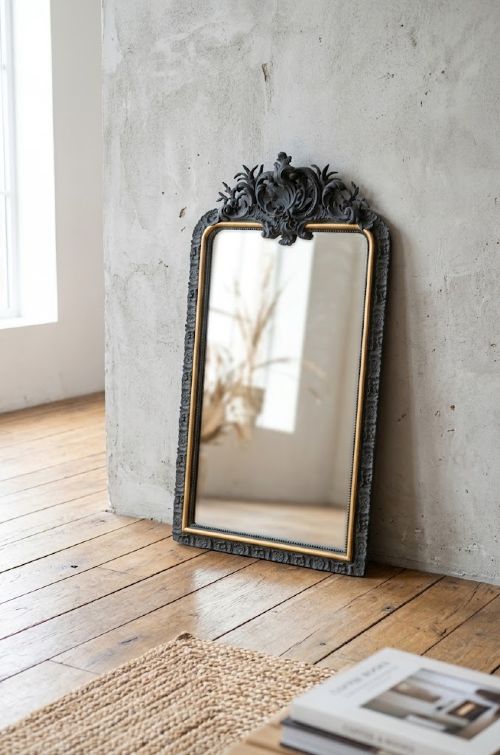
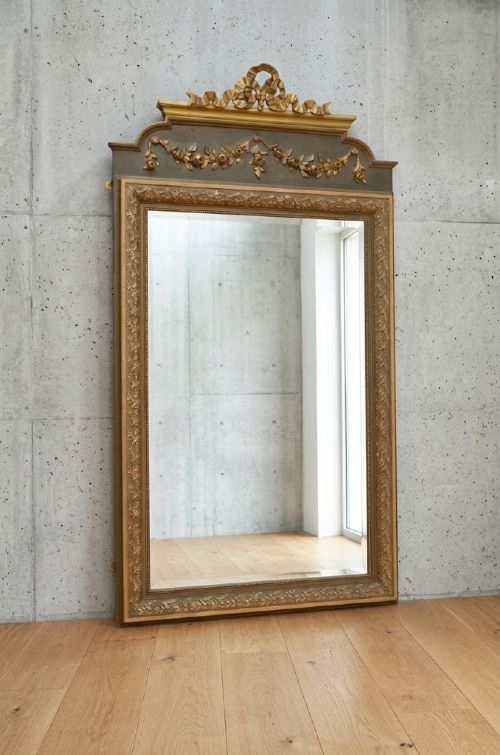
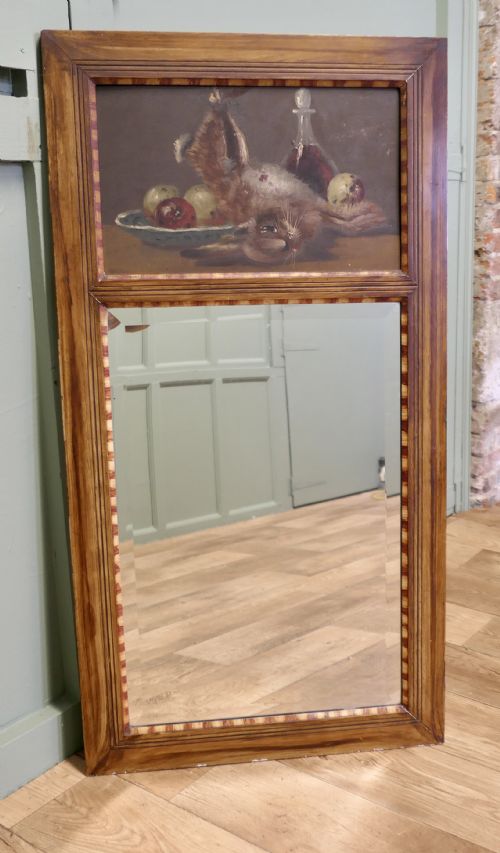
The most frequent version encountered on this page is a tall pier mirror or wall mirror featuring painted wood and gilded details. Such pieces often incorporate an integral oil painting or canvas section within the upper wooden frame.
Originating primarily from French provincial and country traditions, these mirrors served grand salons and intimate chambers alike. Their distinct composition allows them to anchor a room while reflecting natural light through aged glass.
How they were made
Carved wood and gesso form the structural base of these mirrors, providing the foundation for intricate ornamentation. Artisans applied layers of paint, gold leaf, and parcel gilding over the timber to achieve the desired rich surface finish.
Panels frequently contain an inset canvas bearing an oil painting or religious scene, integrated into the wooden architecture above the mirror glass. The glass plates themselves show the characteristic softness and minor imperfections of period manufacture.
Vintage French Trumeau Mirror Retail Price Guide 2026
Typical asking prices for vintage french trumeau mirror among the pieces listed under this phrase on Sellingantiques today, from the lower quarter to the upper quarter. They describe what is for sale here now, not the wider market.
Listings feature periods spanning from the eighteenth century through the nineteen-thirties, utilising materials such as giltwood, gesso, canvas, and painted wood.
What varies in quality
The refinement of the carved wood and gesso ornamentation dictates the primary tier of craftsmanship in these pieces. Finer examples display crisp detail in motifs such as ribbon crests and architectural mouldings, whereas simpler country versions rely on robust painted surfaces.
The integration and artistry of the upper oil painting or canvas panel significantly influence the overall character of the piece. Original paintwork and undisturbed gilding preserve the historical integrity more effectively than later surface renewals.
The Vintage French Trumeau Mirror Glossary
- Trumeau
- An architectural wall panel, often containing a mirror plate and an upper painting or carved decoration. It was traditionally fitted into the panelling between windows or above a fireplace.
- Pier mirror
- A tall mirror designed specifically to hang on the narrow section of wall between two windows. These pieces frequently reach impressive heights to maximise light reflection in a room.
- Gesso
- A plaster-like mixture applied to wood surfaces to create a smooth base for gilding and carving. It allows artisans to shape intricate relief details before applying gold leaf or paint.
- Parcel gilt
- A decoration technique where selected areas of an object are highlighted with gold leaf while the rest remains painted or exposed wood. This creates a subtle contrast between the gilded motifs and the base colour.
- Overmantle mirror
- A wide mirror designed to sit directly above a fireplace mantelpiece. They often share the decorative motifs and proportions found in larger architectural wall fixtures.
Vintage French Trumeau Mirror: Frequently Asked Questions
Where should I hang a trumeau mirror?
These tall mirrors suit placement above a mantelpiece or on a substantial living room wall where their vertical proportions can command the space. Their architectural presence also functions effectively in grand hallways or dining rooms.
Ensure the wall construction supports the weight of the carved wood and glass. Positioning them opposite windows maximises the reflection of natural light throughout the room.
How do I clean the original glass?
Use a soft, dry microfibre cloth to gently remove dust from the glass surface and the surrounding gilded wood frame. Avoid harsh chemical cleaners that might damage aged silvering or surrounding paint.
Apply any mild glass cleaner sparingly to the cloth rather than directly onto the mirror. This prevents moisture from seeping behind the plate and harming the historic backing.
What is an integral oil painting?
An integral oil painting is a canvas artwork built directly into the upper wooden panel of the trumeau mirror. These paintings often depict pastoral scenes, architectural landscapes, or religious subjects.
Unlike removable art, this panel is fixed as part of the mirror's structural composition. It creates a unified decorative scheme designed to complement the room's interior architecture.
How do I identify a nineteenth-century piece?
Nineteenth-century examples frequently exhibit hand-carved wood beneath layers of gesso, paired with heavy glass plates showing period characteristics. Stylistic clues include Louis XV Rococo curves, Louis XVI symmetry, or simpler French Country painted finishes.
Examine the backboards and joining techniques for signs of age, such as handmade fixings and oxidized metals. Original painted surfaces and patinated gilding also indicate long-term historical authenticity.