




Vintage French Timekeeper
These vintage french timekeeper pieces combine brass, marble, and glass to measure hours with mechanical precision.
Vintage French Timekeeper
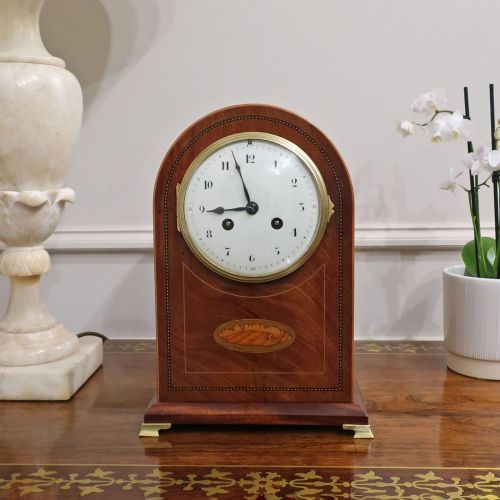
A vintage french timekeeper brings mechanical precision and nineteenth-century design into domestic spaces through clocks and carriage clocks. These objects range from compact travel timepieces in metal cases to heavy decorative mantel pieces housed in marble.
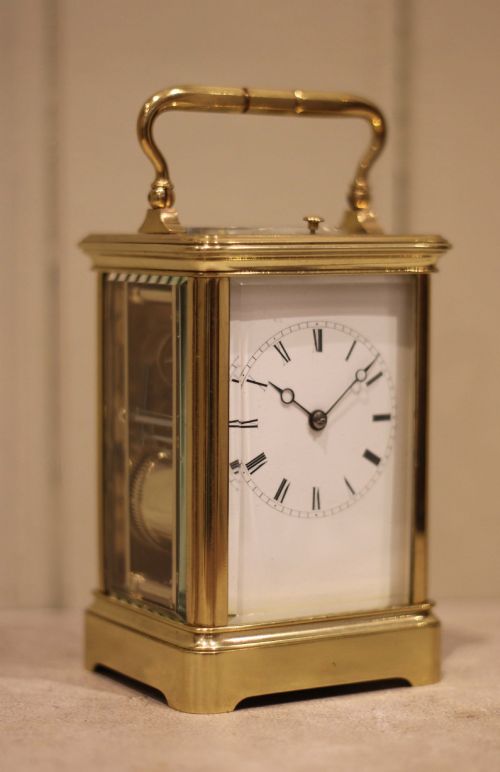
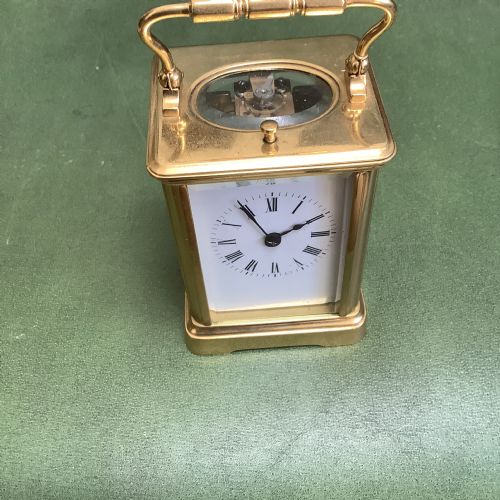
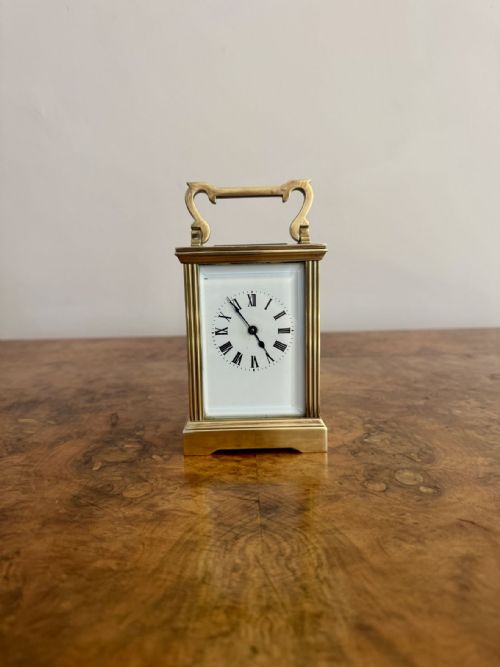
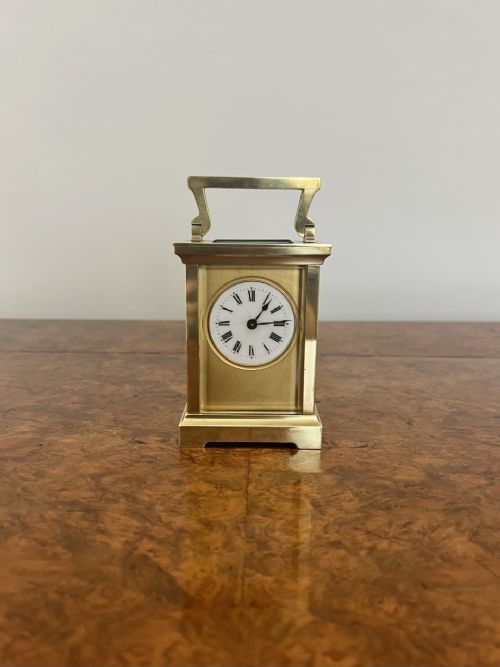
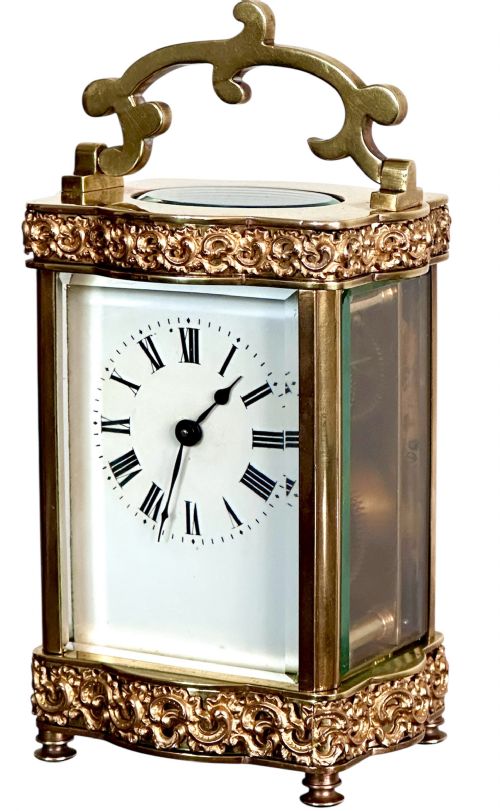
Carriage clocks dominate the selections found here, frequently displaying polished brass frames and glass panels that reveal the interior mechanism. Alongside these portable designs, larger architectural mantel pieces utilise contrasting stone and bronze materials.
Materials and construction methods
Metals form the structural backbone of these objects, with brass, gilt bronze, and steel providing durable frames for intricate movements. Glass panels allow visual access to the escapement, while enamel dials present clear numerical markers.
Decorative stonework appears in heavy marble mantel pieces, utilising natural veining to create substantial architectural presence. Metalwork often receives surface treatments such as gilding or detailed engraving across the exterior housing.
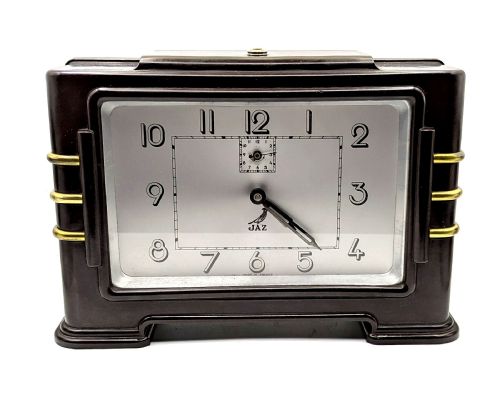
The material palette relies heavily on brass, glass, and marble, supplemented by gilt bronze, silver gilt, and bakelite.
Distinctions in construction and execution
Superior examples demonstrate meticulous hand engraving across metal surfaces and robust mechanical movements capable of striking or repeating functions. Lesser versions rely on plain cast housings with minimal surface decoration and standard time-only movements.
The integration of materials also indicates distinction, where fitted glass panels and solid marble bodies display greater weight and stability than lighter composite alternatives.
Pickford of London·Brunelot·Duverdrey & Bloquel·Delépine-Barrois·Bishop·Dwerrihouse & Bell·Bourdin, Paris·Garrard & Co·Richard & Co Paris·Jaz
The Vintage French Timekeeper Glossary
- Carriage clock
- A portable timekeeper originally designed for travelling, featuring a protective metal and glass case with a folding handle on top.
- Mantel clock
- A domestic timekeeper built to stand flat on a fireplace shelf, constructed from heavy materials such as marble, bronze, or wood.
- Striking
- A mechanical function that causes the clock to sound the hours or half-hours automatically using gongs or bells.
- Repeating
- A complication that allows the timekeeper to repeat the last struck hour on demand via a button or cord.
- Gilt brass
- Base metal treated with a thin layer of gold to give a bright, reflective finish across the exterior case.
Vintage French Timekeeper: Frequently Asked Questions
What is a carriage clock?
A carriage clock is a portable mechanical timekeeper housed in a brass and glass case, fitted with a small handle on top for travel.
Nineteenth-century travellers used these devices on journeys, relying on their robust spring-driven movements to maintain accuracy away from home.
How do repeating clocks work?
Repeating timekeepers contain an additional gear train that chimes the most recent hour when a button or lever is pressed.
This mechanism allowed owners to check the time in darkness without needing to light a candle.
Where were these clocks made?
Many of these timekeepers originate from French workshops and makers, often bearing signatures on the enamel dials or internal plates.
London retailers also imported and retailed these movements, sometimes adding their own business names to the dial face.
How should I care for a mechanical clock?
Mechanical timekeepers require a stable surface away from direct heat and moisture to protect the internal brass gears and glass panels.
Regular winding according to the movement type keeps the spring tension balanced and ensures consistent timekeeping.