
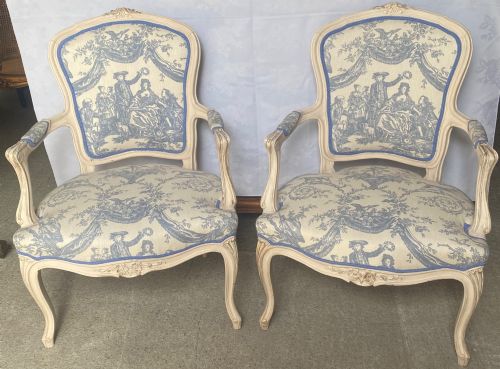
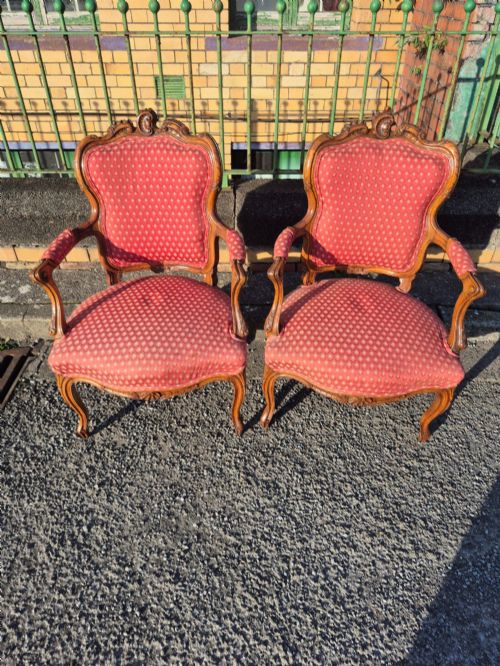
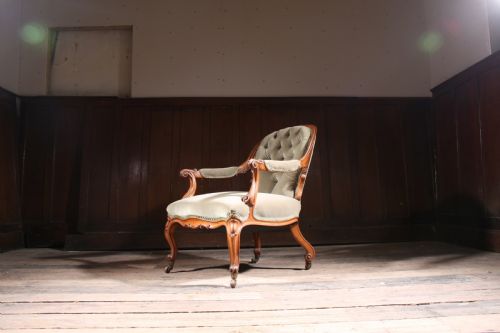
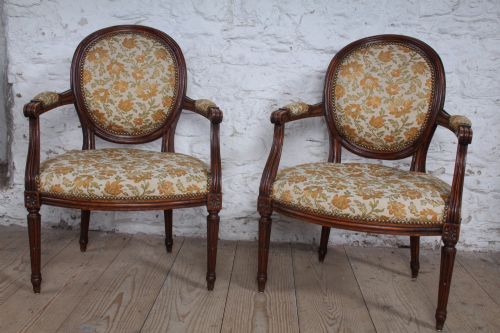
Vintage French Style Chairs
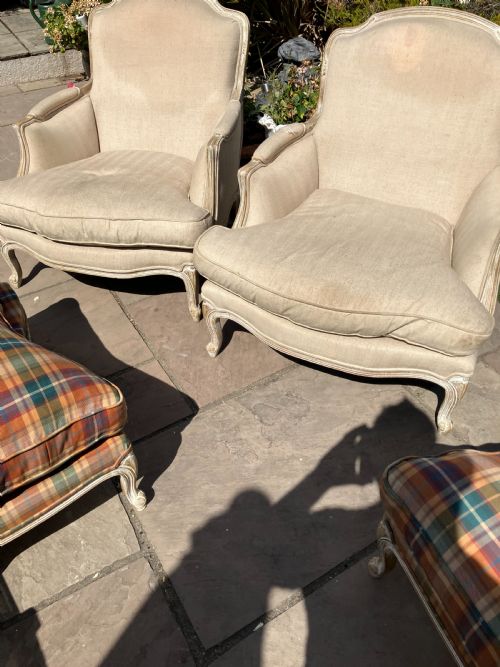
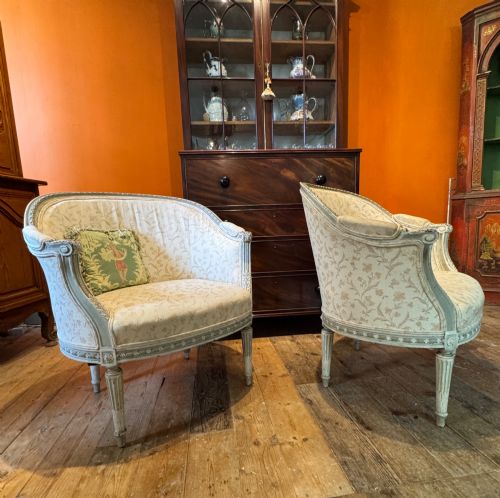
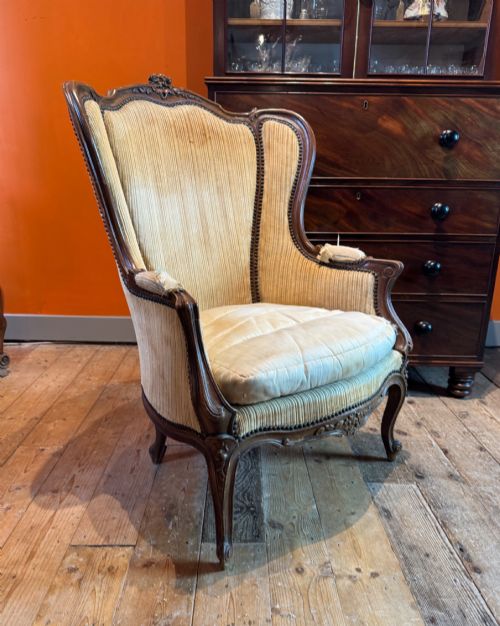
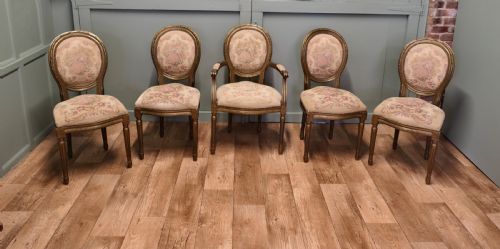
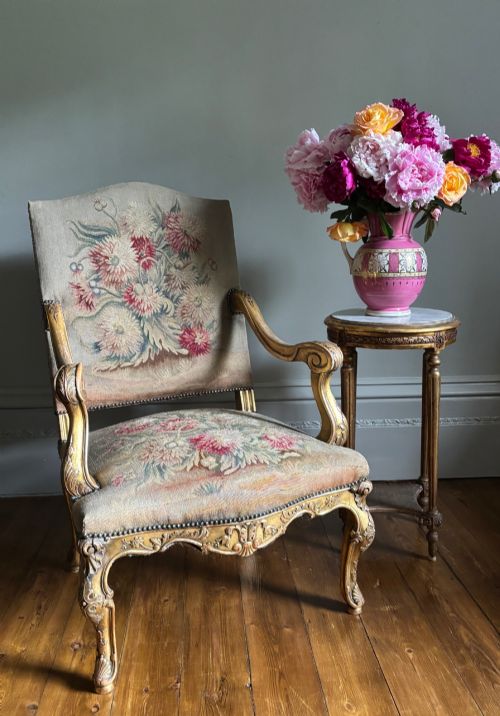
These vintage french style chairs bring continental elegance to a room through carved timber, gilt finishes and classic upholstered forms.
Vintage French Style Chairs
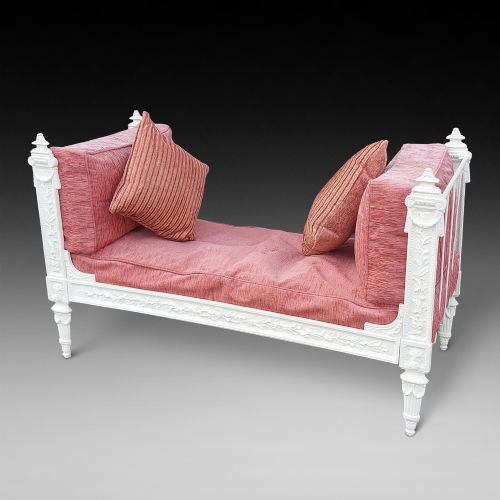
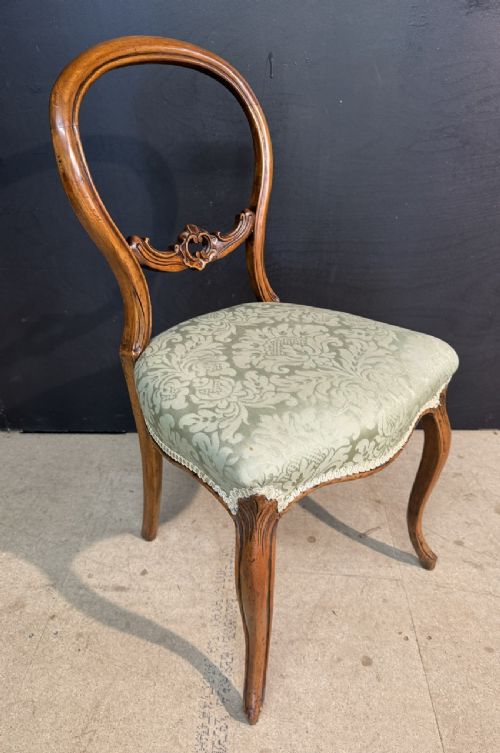
When you search for vintage french style chairs, you encounter seating built across the nineteenth and twentieth centuries that draws on historical court aesthetics. The selection spans armchairs, salon chairs, dining chairs and daybeds reflecting periods from the Victorian era up through nineteen sixty.
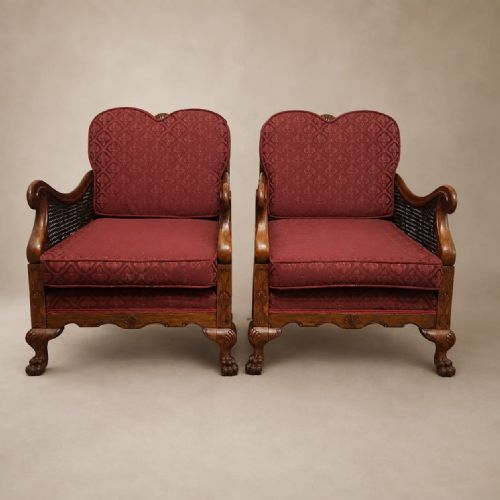
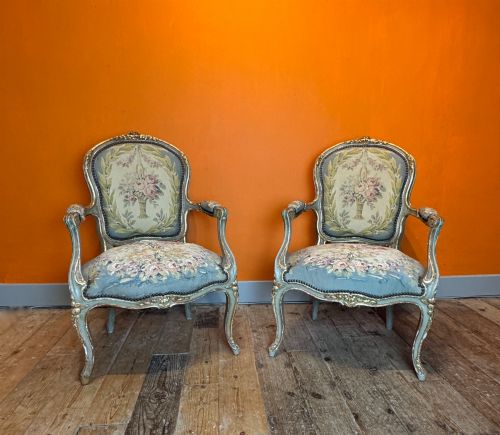
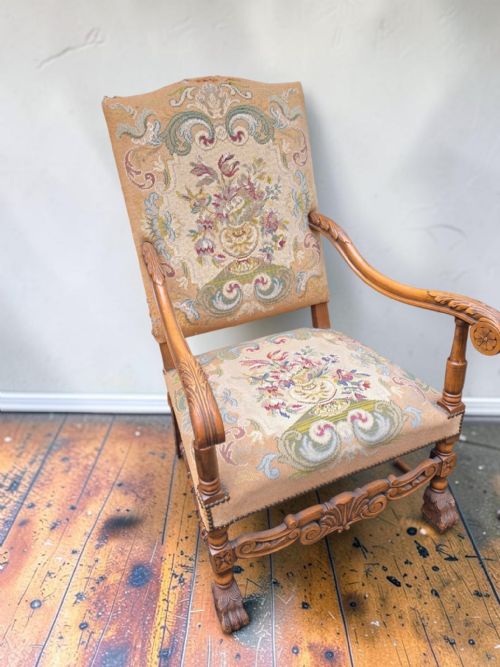
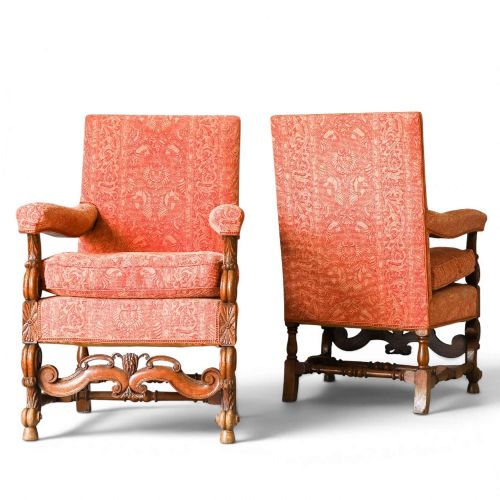
Most pieces on this page channel specific continental design vocabularies like Louis XV, Louis XVI and Regence styles. You find carved walnut, giltwood and painted timber frames paired with cane work, velvet, fabric and tapestry upholstery.
How they were made
Maker workshops relied heavily on solid hardwoods such as walnut, oak, mahogany and beech to construct resilient frames. Artisans shaped these timbers with intricate hand carvings, cabriole legs and applied gilt finish or original paint.
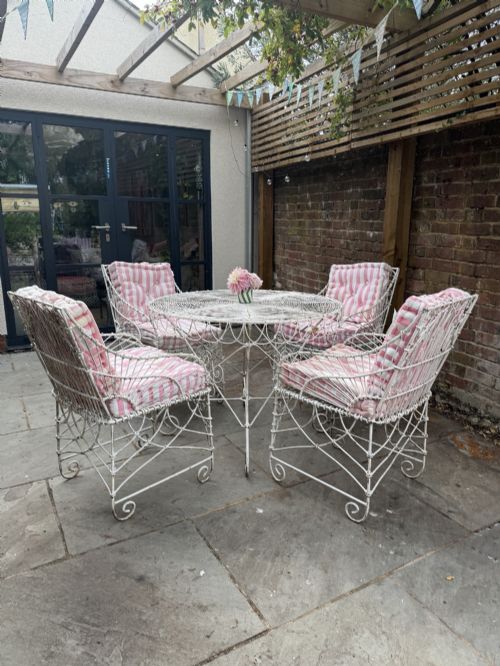
Upholstery methods utilised traditional stuffing techniques, securing materials like velvet, tapestry, and split cane to support structures. Metal elements such as brass mounts, cast iron and wrought iron also appear on specific bistro and garden sets.
Codina made bentwood bistro chairs around nineteen hundred, proving that French style can also swing into a Parisian café.
What varies in quality
The standard of a piece rests largely on the crispness and depth of the timber carving on the frame. High quality examples display sharply defined scrollwork, acanthus leaves and fluting executed by skilled hands rather than mechanical routers.
Another differentiator is the integrity of the structural joinery and the preservation of original finishes like gilding or paint. Chairs retain higher integrity when original cane work, tapestry or fabric upholstery remains intact alongside robust hardwood frames.
The Vintage French Style Chairs Glossary
- Bergere
- An enclosed upholstered armchair with wooden framing and typically a cane or upholstered back and sides.
- Fauteuil
- An open armchair with wooden arms and upholstered back and seat, originating in seventeenth-century France.
- Cabriole leg
- A furniture leg that curves outward at the knee and tapers inward to an ankle, common in classical furniture design.
- Giltwood
- Timber that has been coated with a thin layer of gold leaf or gilt finish for decorative display.
- Caned
- A seating panel woven from thin strips of rattan or cane material, offering flexible support.
Vintage French Style Chairs: Frequently Asked Questions
How do I identify a Louis XV style chair?
Look for pronounced cabriole legs, asymmetrical floral carvings and flowing serpentine lines along the wooden frame. These elements define the rococo revival aesthetic common in nineteenth-century French seating.
The absence of straight lines and the presence of cartouche-shaped backs further distinguish this style from later neoclassical revivals.
Where should I place a salon chair?
Salon chairs work well in living rooms, bedrooms or hallways where space allows for an accent piece rather than primary seating. Their decorative carving and upholstered backs invite placement away from walls.
They pair effectively with small desks, vanities or alongside larger settees to create a coherent conversation area.
Are cane seats durable for daily use?
Split cane panels offer surprising strength and flexibility when tensioned correctly across a wooden frame. They provide breathable support suitable for occasional dining or lounge seating.
Care involves keeping the cane hydrated in very dry rooms to prevent snapping and avoiding excessive weight loads.
What is the difference between giltwood and painted frames?
Giltwood frames feature an applied layer of gold leaf or metallic finish that catches the light and offers a bright, opulent surface. Painted frames utilise pigments, often in muted tones, sometimes distressed to show underlying wood.
Both finishes protect the underlying beech, walnut or oak while establishing different interior moods.