
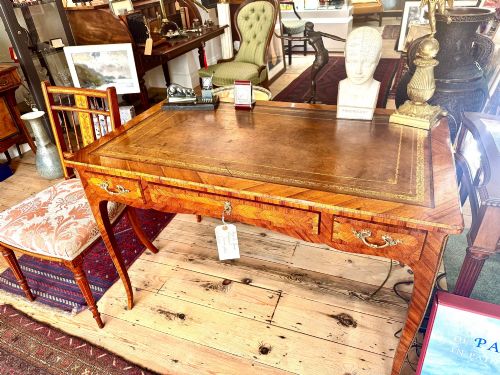
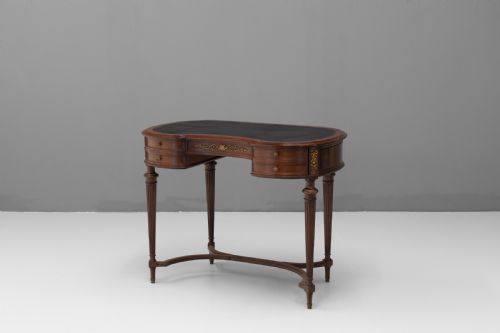

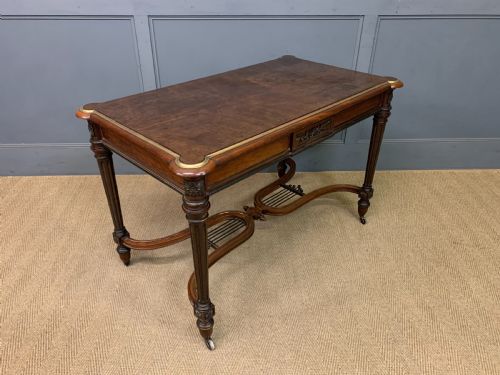
Vintage French Study Table
A vintage french study table brings the elegance of nineteenth century writing rooms into a modern home.
Vintage French Study Table
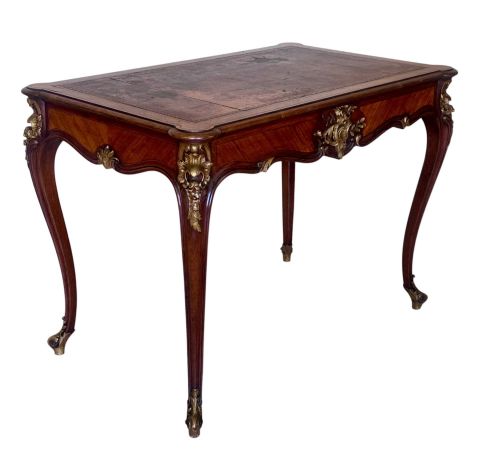
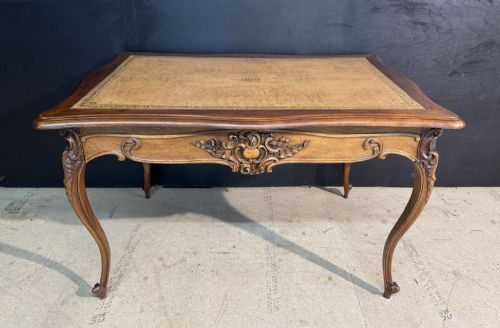
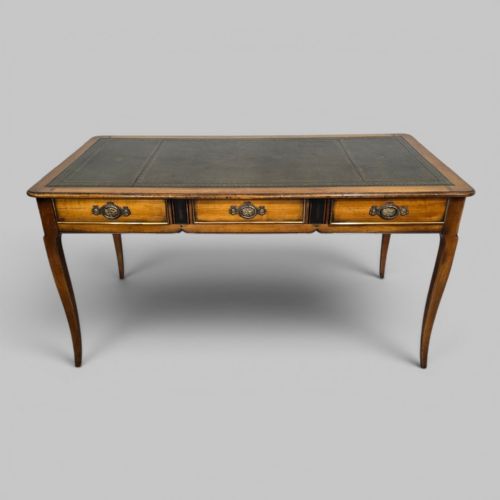
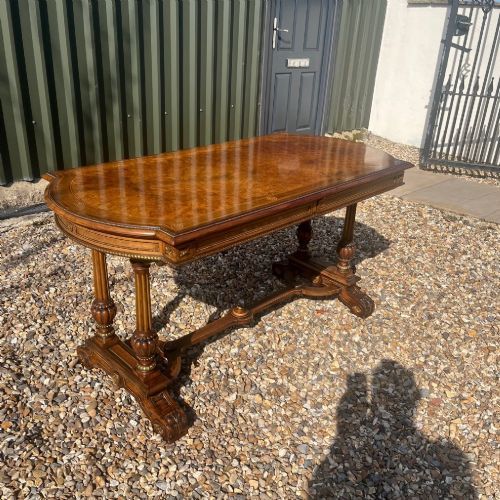
A vintage french study table encompasses writing desks, bureau plat tables, and library tables originating from various nineteenth and early twentieth century periods. Buyers seek these pieces for their refined proportions, fitted leather writing surfaces, and integration into domestic or professional workspaces.
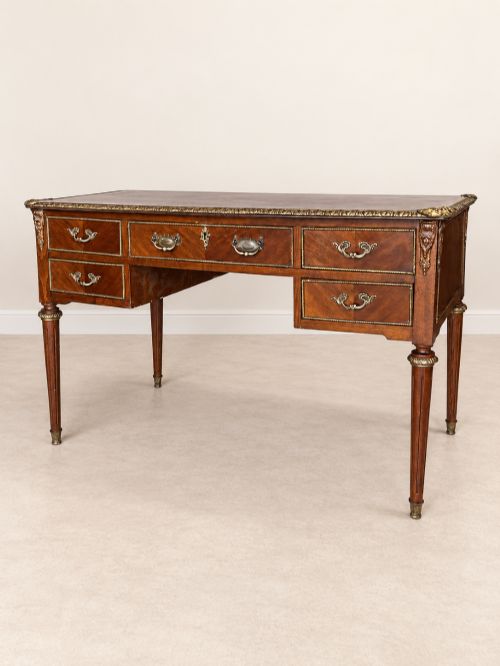
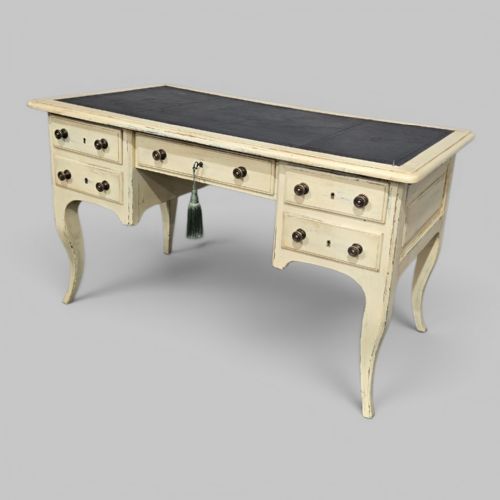
The selections available on this page lean heavily towards nineteenth century examples, alongside Art Deco creations from the nineteen thirties. Forms range from compact ladies desks and painted kneehole variants to large partners library tables and architectural writing desks.
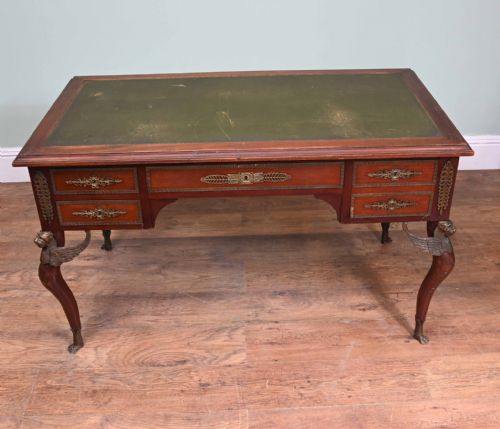
Stylistic influences span Louis XV and Louis XVI revivals, French Empire, and French Provincial designs. Walnut, mahogany, kingwood, and rosewood dominate the structural choices, often paired with brass or ormolu mounts.
Materials and Construction Techniques
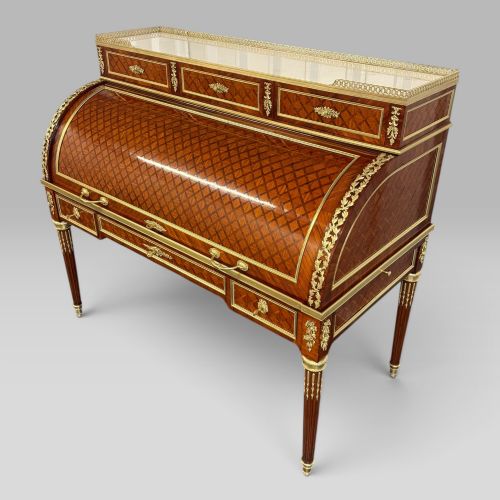
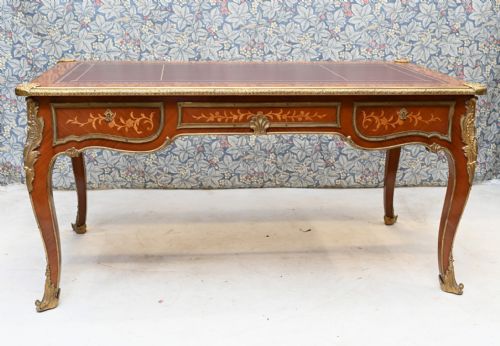
Cabinetmakers utilised dense hardwoods such as mahogany, walnut, kingwood, and rosewood as foundational timber for frames and surfaces. Parquetry and marquetry inlay techniques create geometric or floral patterns across tabletops and drawer fronts.
Cast ormolu, gilt bronze, and brass mounts edge drawers, frame leather panels, and accent cabriole or tapered legs. Leather inserts, frequently gold tooled, provide the traditional writing surface across bureau plat and pedestal desk variations.
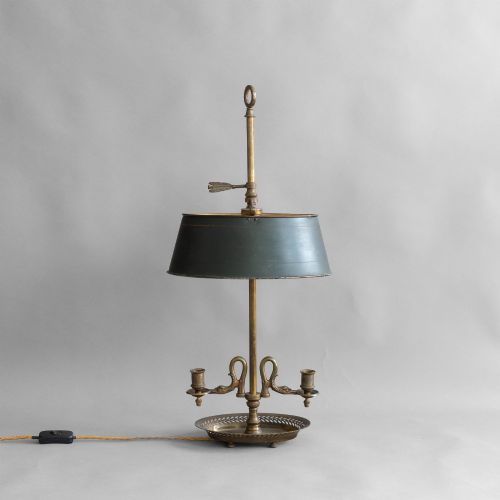
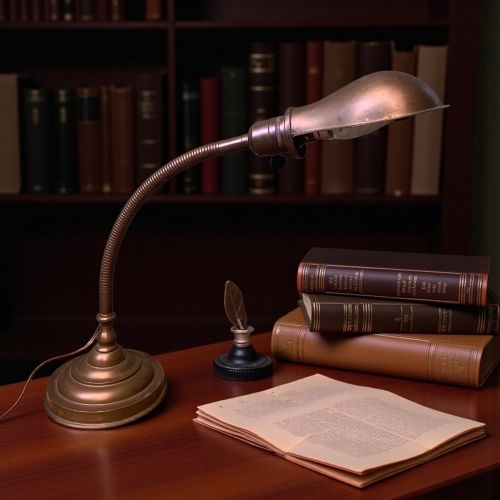
Object types include bureau plat tables, partner desks, library tables, and specialised desk lamps.
Distinctions in Quality and Execution
The refinement of the ormolu and brass mounts separates standard items from exceptional pieces, as finely chased bronze work reflects superior workshop output. The complexity of the timber veneers, particularly intricate parquetry and matched wood grain, indicates the level of craftsmanship invested by the maker.
Structural integrity relies on the quality of the primary hardwoods and secondary timbers used within drawer construction and interior framing. Original leather inserts with intact tooling and well preserved patination command greater appreciation than later replacements.
CH. Jeanselme and Co·Étienne Kohlmann·Maurice Dufrêne·Eileen Grey
The Vintage French Study Table Glossary
- Bureau plat
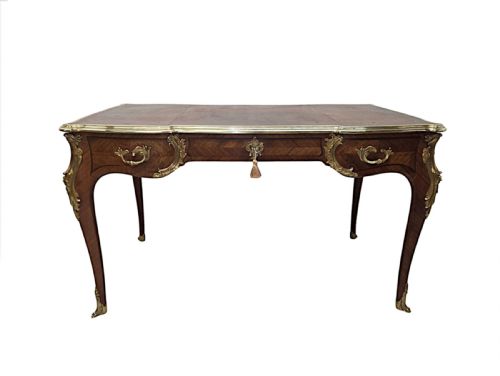
- A freestanding double sided writing table featuring drawers along the frieze. This form emerged in France and typically stands on slender cabriole or tapered legs.
- Ormolu
- Gilded bronze mounts applied to furniture edges, corners, and feet for decorative effect. The technique involves applying a gold amalgam to cast bronze.
- Parquetry
- Geometric wood mosaic work used to create patterned surfaces on tabletops and drawer fronts. Cabinetmakers arrange contrasting veneers in precise repeats.
- Kingwood
- A dense, heavily figured exotic timber utilised for high quality cabinetmaking and decorative veneers. It displays rich brown tones with darker striping.
- Partners desk
- A large freestanding desk designed for two people to work opposite each other, featuring drawers on both longitudinal sides.
Vintage French Study Table: Frequently Asked Questions
What is a bureau plat?
A bureau plat is a traditional freestanding writing table with a finished back and frieze drawers. It stands away from the wall to serve as the centrepiece of a study.
These tables usually feature a leather insert on top and decorative bronze or brass mounts along the frame and legs.
How do I identify Louis XVI style?
Louis XVI style furniture relies on straight lines, classical symmetry, and architectural restraint. Look for fluted tapered legs and subtle geometric carvings.
This aesthetic contrasts with the curving, asymmetric lines of earlier Louis XV and Rococo designs.
Are these desks suitable for daily work?
Many vintage study tables provide ample surface area and sturdy construction for modern writing and computer work. Their generous kneehole clearances and drawer capacities accommodate contemporary needs.
Care should be taken with antique leather writing surfaces by using blotters or desk pads for heavy writing.
What is ormolu?
Ormolu refers to gilded bronze decorative mounts applied to furniture. Artisans cast and chase the bronze before applying gold leaf or amalgam.
These metallic accents highlight the corners, aprons, and legs of fine nineteenth century desks.