


Vintage French River Painting
A vintage french river painting captures the light and water of rural waterways and city quays across distinct periods.
Vintage French River Painting
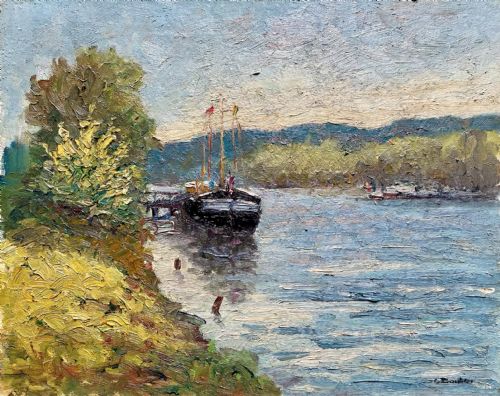
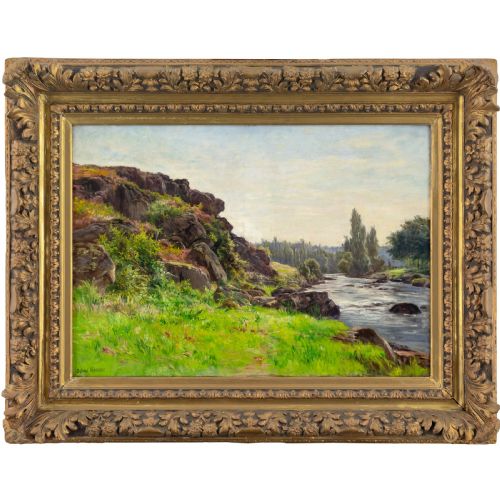
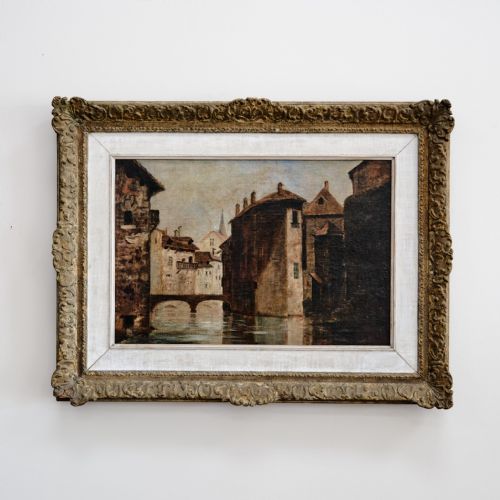
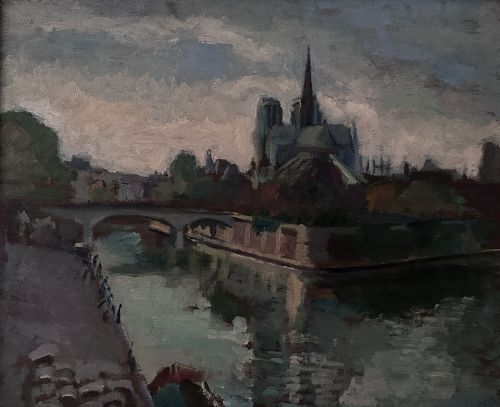
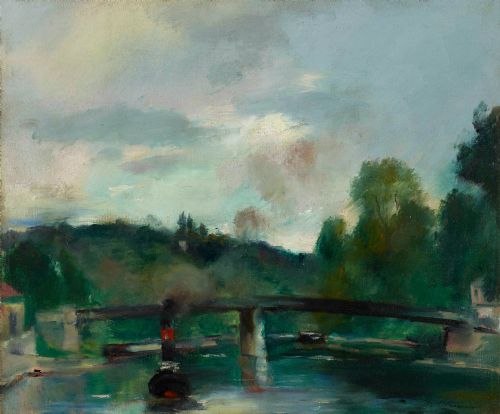
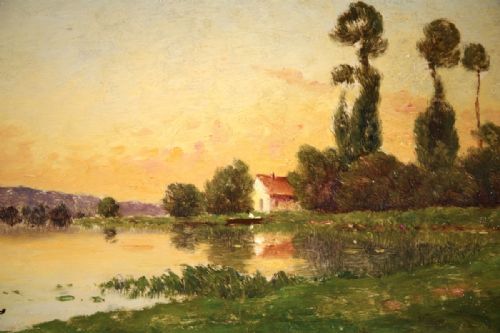
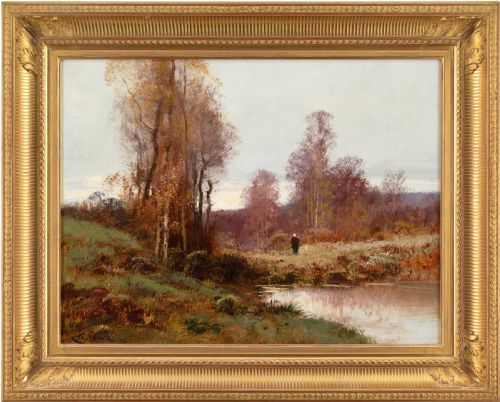
A vintage french river painting represents landscapes, bridges, and banks along waterways such as the Seine, the Loire, and various canals. Buyers look to vintage french river painting examples for atmospheric depictions of water, foliage, and historic architecture. The selection spans the nineteenth century through the mid-twentieth century, capturing changing movements from Barbizon realism to Post-Impressionism.
Most works on offer utilise oil on canvas or oil on panel, though watercolours and pastels also appear. Subjects range from rural pastoral scenes with washerwomen and bargemen to urban Parisian vistas featuring Notre Dame and various bridges. Artists record specific locations from Normandy to Provence, providing a visual record of French topography through diverse artistic lenses.
How They Were Made
Painters applied oil paint to stretched canvas or wooden panels, frequently working plein air to capture immediate atmospheric effects. Support structures commonly include wood frames supplemented by gesso and gold leaf accents.
Watercolour and pastel works utilise paper supports to achieve lighter, translucent effects. Artists built compositions through layered brushwork, balancing dense pigment application with thinned washes of oil or water.
Listings feature works spanning the nineteenth century to the mid-twentieth century, executed in oil, watercolour, and pastel.
What Varies in Quality
Quality rests upon the confidence of the brushwork and the artist's ability to render light reflecting on water. Superior examples demonstrate a coherent palette and spatial depth that draw the viewer into the landscape.
Compositional balance distinguishes masterworks from standard topographical records. Strong handling of pigment and harmonious tonal relationships elevate certain canvases above routine decorative pieces.
Gabriel Mathieu·Henri Ottmann·Charles Clair·Henri Jaques Delpy·Alexandre Le Bihan·Mario Pinetti·Gabriel Dauchot·Ron Folland·William Grant Murray·Armand Guillaumin·Edmond Defonte·Noel Harry Leaver·Antoine Bouvard·Pierre Peltier·Adolphe Gumery·Henri Therme·Charles Edmond Rene His·Charles Eyres Simmons·Lamorna Birch
The Vintage French River Painting Glossary
- Barbizon School
- A nineteenth-century French art movement focusing on realism in landscape painting, emphasising direct observation of nature. Painters gathered in the village of Barbizon near the Fontainebleau Forest.
- Post-Impressionism
- A French art movement that developed from Impressionism, extending its limitations while retaining its use of vivid colours and thick application of paint. Artists emphasised symbolic content and geometric forms.
- Plein air
- The act of painting outdoors, allowing artists to directly observe the landscape and changing natural light. This technique became central to Impressionist and Barbizon practices.
- Gesso
- A primer mixture consisting of a binder mixed with chalk, gypsum, or pigment used to prepare wood panels or canvas surfaces for painting. It provides a smooth, stable ground for oil paint.
- Oil on canvas
- A painting technique where pigmented oil is applied to stretched woven fabric, typically linen or cotton. This combination offers flexibility and durability for complex compositions.
Vintage French River Painting: Frequently Asked Questions
What subjects do these paintings show?
These artworks depict rural riverbanks, barges, bridges, and city quays along French waterways. Scenes range from quiet pastoral settings with washerwomen to bustling urban views of Paris.
Artists record specific locations including the Seine, the Loire, and various canals. The imagery reflects changing French landscapes from the nineteenth century into the mid-twentieth century.
How do I care for an oil painting?
Keep canvases away from direct sunlight and extreme temperature fluctuations to prevent cracking of the paint layer. Dust the surface gently with a soft, dry brush without applying pressure.
Avoid using liquid cleaners or water on the painted surface. Professional conservators should handle any deep cleaning or canvas repairs.
What is the Barbizon School?
The Barbizon School refers to nineteenth-century French painters who worked together near the Fontainebleau Forest. They championed realism and painted landscapes directly from nature.
Their focus on natural light and everyday scenery paved the way for Impressionism. Works from this tradition emphasise earthy tones and atmospheric depth.
How do I identify the period of a work?
Style, subject matter, and framing materials offer clues to a painting's era of creation. Barbizon and early Impressionist works often display muted palettes or broken brushwork characteristic of the nineteenth century.
Mid-century pieces frequently adopt brighter hues and looser gestural marks. Signatures and stretcher construction also help establish a timeline.