



Vintage French Prep Table
A vintage french prep table brings utilitarian charm to a kitchen, offering solid timber surfaces and practical proportions built for daily work.
Vintage French Prep Table
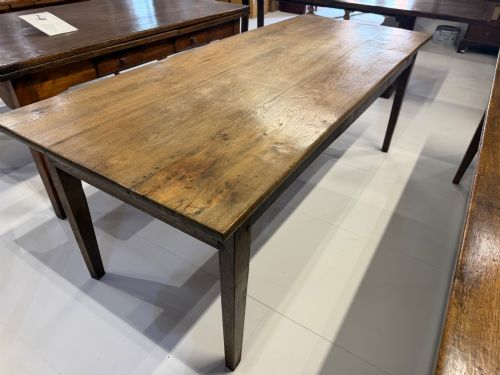
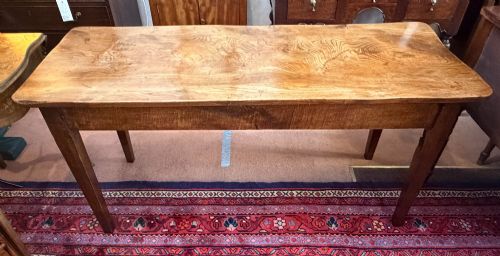
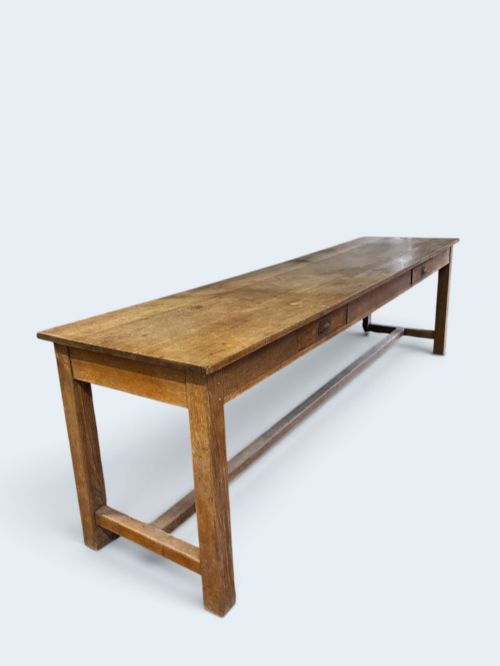
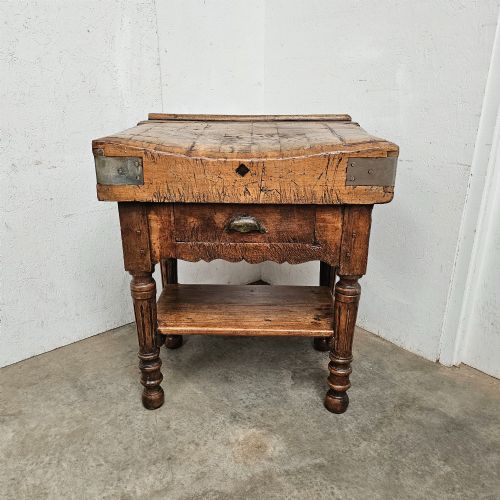
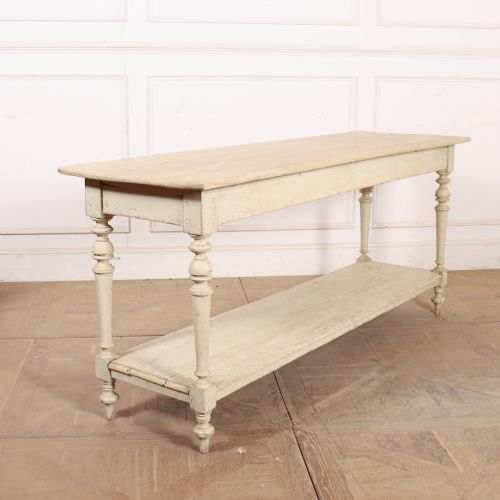
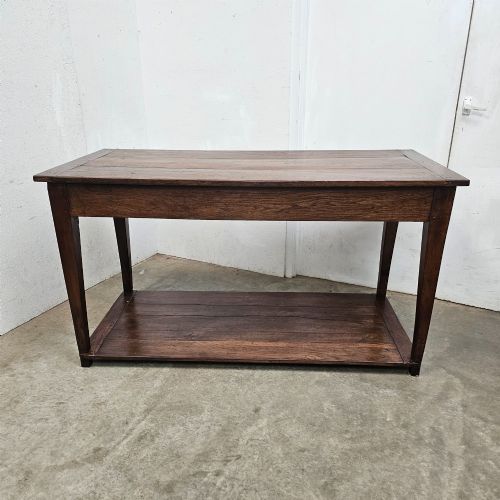
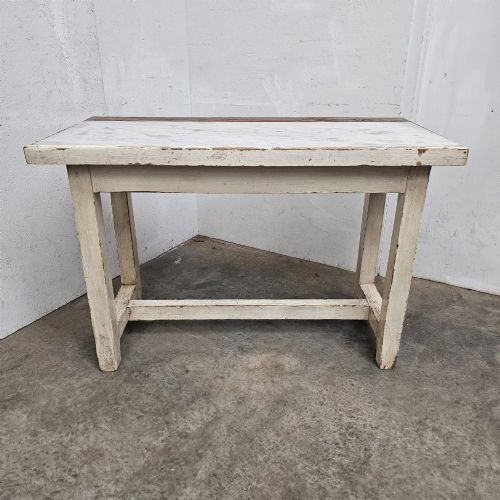
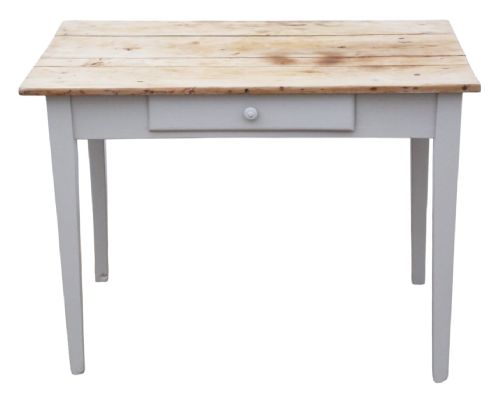
A vintage french prep table is a heavy-duty working surface designed for culinary tasks, textiles, or trades, found in forms such as butchers blocks, drapers tables, and patisserie displays. These pieces originate from domestic and commercial settings across the nineteenth and early twentieth centuries, reflecting regional styles including French provincial and rustic farmhouse. The version most commonly met on this page is the nineteenth-century pine or oak drapers table or butchers block, often featuring scrubbed timber tops, drawers, or two-tier storage.
Makers working in this tradition utilised durable local timbers suited to heavy labour, creating items that transitioned easily from workshops and shops into domestic kitchens and dining spaces. The selection includes trestle tables, console tables, and kitchen islands spanning periods from eighteen sixty to the nineteen thirties. Buyers searching for this phrase seek genuine utility combined with patinated surfaces accrued through decades of active use.
How they were made
Construction relies on solid hardwoods and softwoods such as oak, pine, beech, elm, and sycamore, joined to withstand rigorous daily pressure. Many tables pair scrubbed timber tops with painted or polished bases, sometimes incorporating brass, iron, or bronze mounts for structural strength.
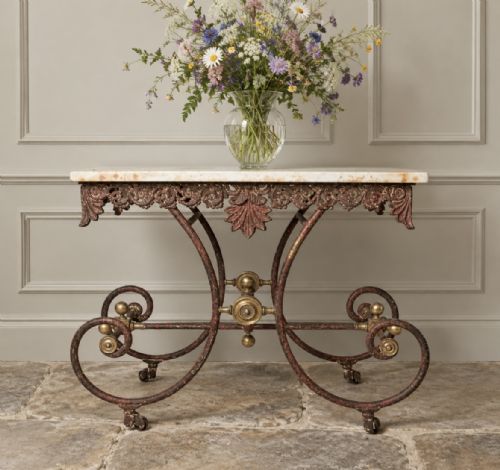
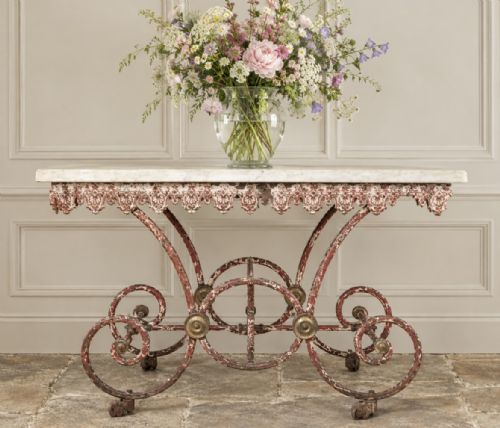
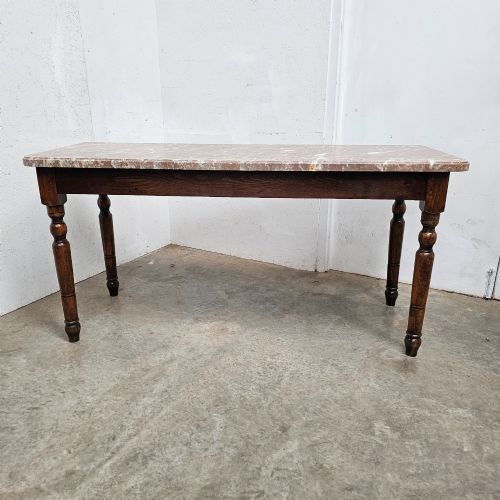
Specialised surfaces distinguish specific functional types, notably thick marble slabs set onto iron or wooden frames for pastry and charcuterie work, alongside massive end-grain chopping blocks. Workmanship prioritises sturdiness over ornamentation, resulting in functional stretchers, potboards, drawers, and decorative yet utilitarian bases.
Listings feature nineteen-century pine, oak, and beech pieces alongside marble-topped iron frames from the nineteen twenties.
What varies in quality
Quality rests in the integrity of the original materials and the degree of honest wear preserved across the timber and stone surfaces. Tables retaining their deep, unblemished structural timbers and original painted finishes sit at the upper end of the scale.
The sophistication of the base construction, from simple tapered legs to complex trestle frames and decorative turnings, distinguishes standard utility pieces from exceptional workshop examples. Proportion and scale also dictate worth, particularly where monumental lengths or specialised configurations like multi-tiered florists tables and signed butchers blocks are concerned.
Trussant & Cie·Hennes France
The Vintage French Prep Table Glossary
- Drapers table
- A long, narrow table traditionally used in fabric shops for measuring and cutting cloth, characterised by lower shelves or multiple drawers. These pieces now serve well as kitchen islands.
- Butchers block
- A thick, heavy wooden block designed for meat preparation, usually constructed from end-grain timber to resist chopping marks. They often stand on dedicated wooden or iron bases.
- Scrub-top
- A wooden table top cleaned repeatedly with water and scrubbing brushes, resulting in a pale, weathered surface. This texture shows the grain clearly.
- Patisserie table
- A display or work table featuring a smooth marble top intended for rolling pastry and keeping ingredients cool. Iron or wooden bases provide robust support.
- Trestle table
- A table structure where the top rests on two or more supporting frames rather than four legs. This design offers stability and legroom.
- Potboard
- An open slatted lower shelf fitted between the legs of a table, historically used for storing heavy pots and pans. It ties the lower legs together for extra rigidity.
Vintage French Prep Table: Frequently Asked Questions
How were drapers tables used originally?
Drapers tables served in textile shops for folding and measuring bolts of fabric. Their long proportions and lower shelves kept inventory organised and accessible.
Today, those same shelves and narrow widths make them ideal kitchen islands or side tables in domestic spaces.
Can I use a marble top table for cooking?
Marble surfaces provide a naturally cool area ideal for pastry making, dough kneading, and food preparation. French patisserie and charcuterie tables were built specifically for this purpose.
Care should be taken with acidic ingredients, which can etch unsealed stone over time.
What is the difference between a prep table and a dining table?
Prep tables were designed for active work, featuring thick chopping surfaces, lower potboards, drawers, or heavy-duty stone slabs. They often stand slightly higher or feature narrower proportions than standard dining furniture.
Many examples now function comfortably as kitchen dining tables due to their generous sizing.
How do I care for a scrubbed timber top?
Scrubbed pine and oak benefit from gentle cleaning with mild soap and warm water, followed by thorough drying. Avoiding excessive moisture prevents the historic timber from warping.
Applying occasional natural oils or wax helps protect the dry wood grain without losing its authentic matte finish.