


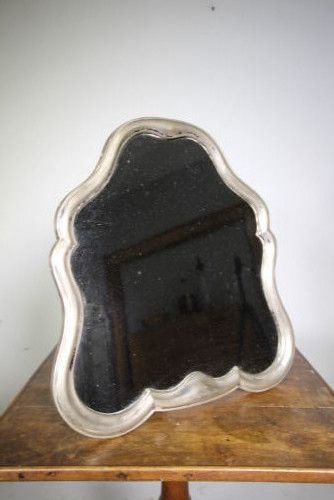
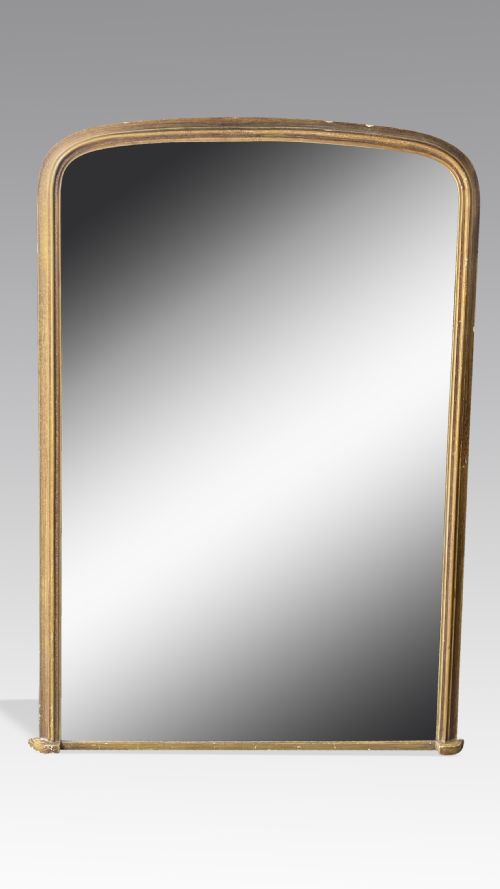
Vintage French Mantel Mirror
A vintage french mantel mirror brings scale and reflection to a room, grounding a hearth with architectural presence.
Vintage French Mantel Mirror
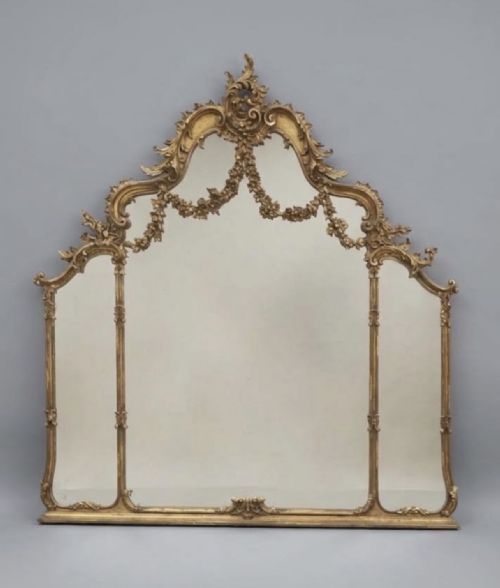
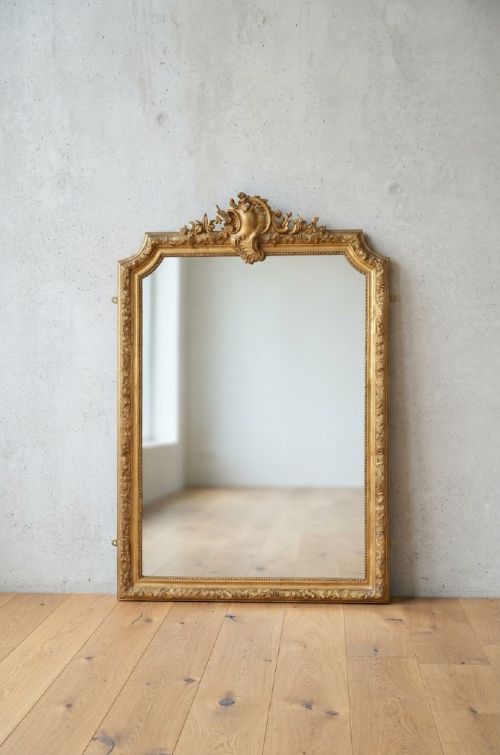
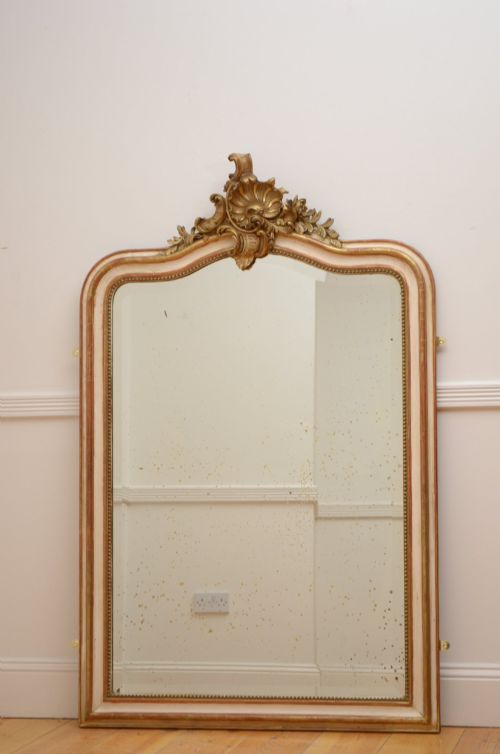
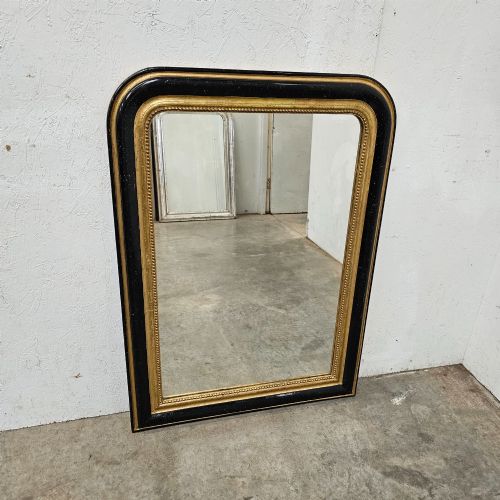
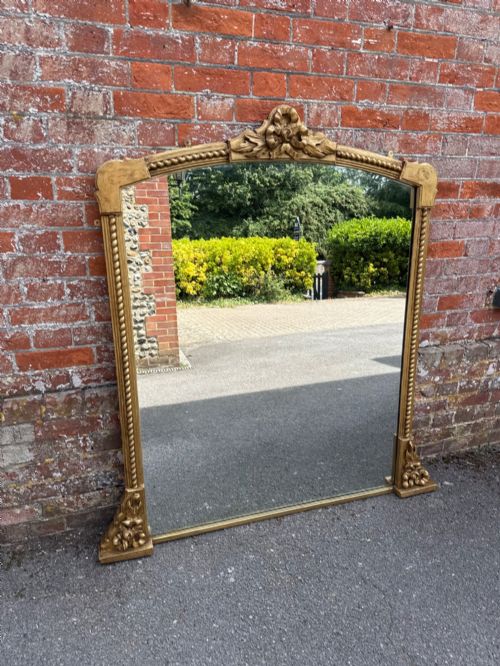
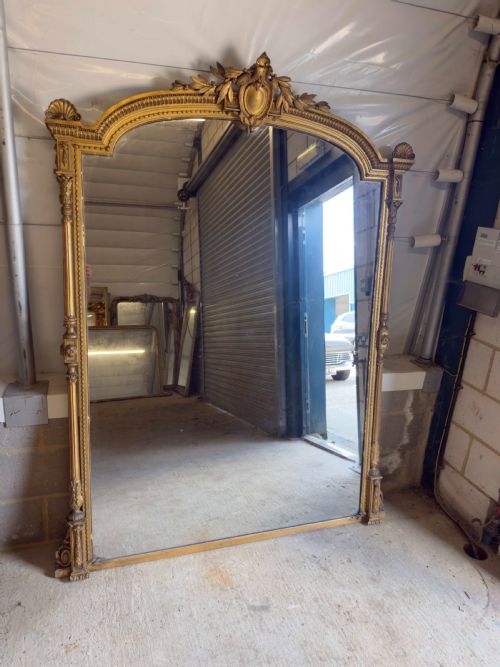
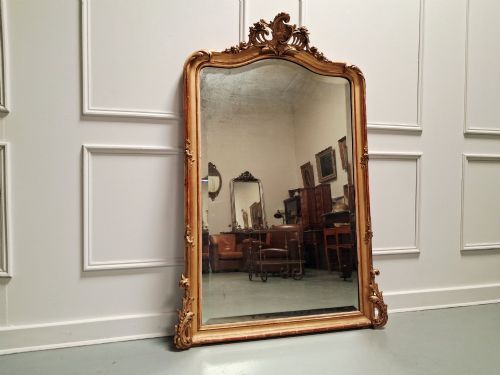
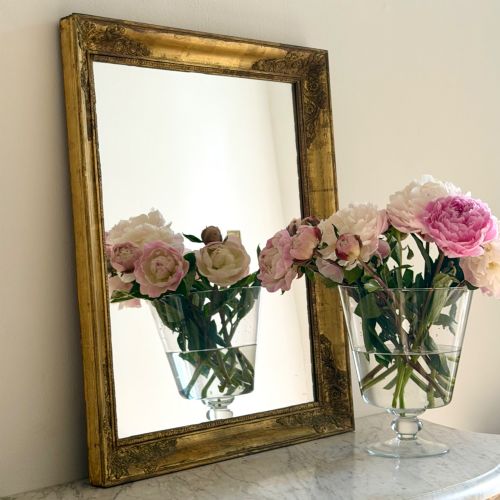
A vintage french mantel mirror sits horizontally or vertically above a fireplace, anchoring the interior with historical weight. These pieces range from restrained Louis Philippe rectangular formats with rounded upper corners to highly ornate Rococo Revival designs featuring elaborate crests and scrolls.
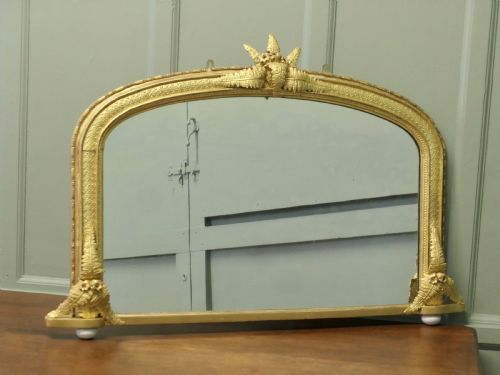
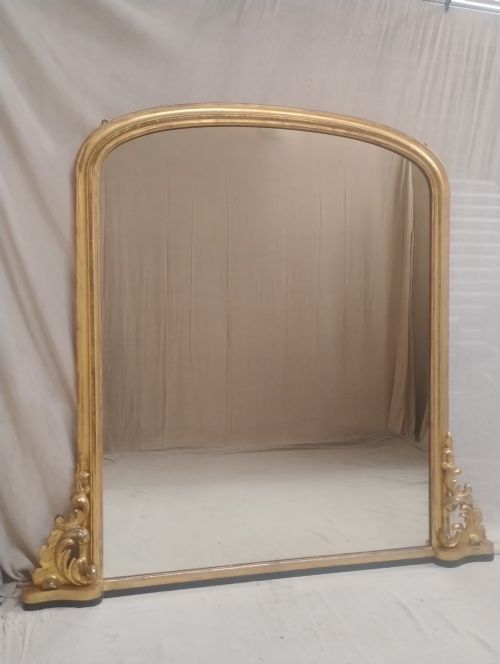
The pieces on this page span the eighteenth, nineteenth, and early twentieth centuries, drawing heavily on French chateau and provincial aesthetics. Buyers encounter large overmantel proportions built specifically to sit low upon a chimney breast, reflecting light across the floorboards.
Makers and artisans of the period constructed these looking glasses to expand the visual volume of smaller salons and grand reception rooms alike. The enduring appeal lies in the proportion between the frame and the reflective plate, designed to draw the eye upward.
How they were made
Carved wood and moulded gesso form the primary structural foundations for the ornate frames, providing a stable base for subsequent surface treatments. Artisans applied layers of gold leaf or silver leaf over the gesso preparation, burnishing the metal to achieve a luminous finish.
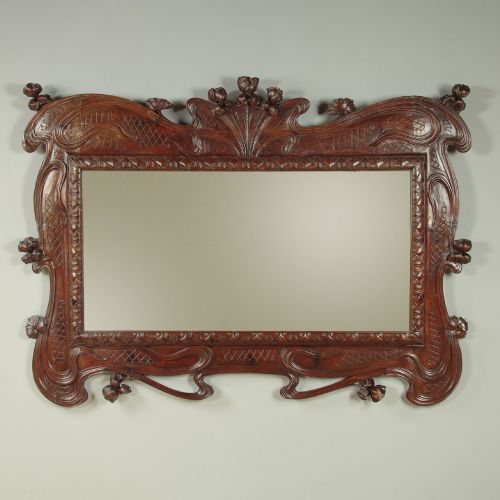
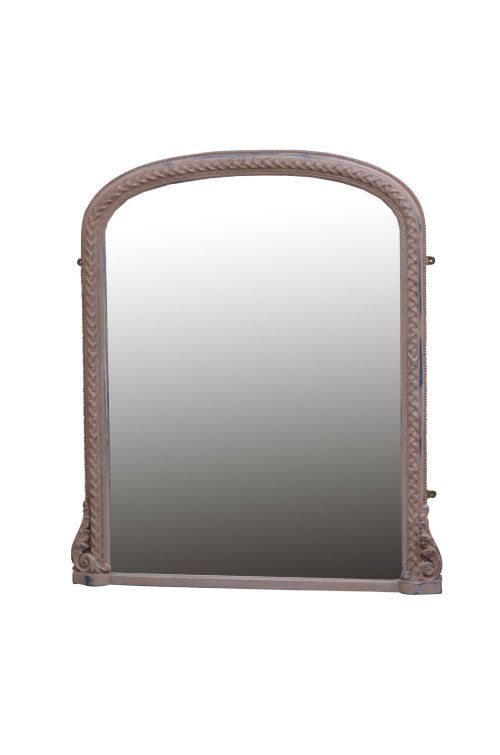
Certain examples utilise solid walnut or oak, displaying natural grain patterns or historical painted palettes in layered tones. Early mirror plates consist of mercury glass or vintage silvered glass, held within the rebate by traditional wooden backs.
Listings feature periods ranging from the 18th century through to the 1920s, constructed in giltwood, gesso, and painted wood.
What varies in quality
The crispness of the hand-carved detail distinguishes superior examples from standard production, particularly where gesso enrichment meets the wooden substrate. Deeply undercut foliage, scrolls, and crestings demonstrate the hand of a skilled carver rather than a simplified moulded casting.
The integrity of the original mercury plate or silvered mirror glass alters the character of the reflection, with authentic ageing showing characteristic oxidation spots. Furthermore, the retention of original gilding without excessive modern intervention preserves the visual depth of the piece.
The Vintage French Mantel Mirror Glossary
- Overmantel mirror
- A large wall-hanging or mantel-resting looking glass specifically proportioned to sit above a fireplace opening. These items typically feature wide horizontal dimensions or tall arched tops.
- Gesso
- A plaster-like mixture applied to wooden frames as a smooth base for gilding or painting. Artisans carved intricate relief details directly into this material once dry.
- Louis Philippe
- A mid-nineteenth-century French style characterised by understated elegance, clean rectangular lines, and gently rounded upper corners. These frames rely on proportion rather than heavy ornamentation.
- Mercury plate
- An early form of mirror glass manufactured using a tin and mercury amalgam before the introduction of modern chemical silvering. It produces a mottled, deep reflection with characteristic dark speckling.
- Trumeau
- A decorative wall mirror combined with a painted panel or carved artwork within a single integrated wooden frame. They were traditionally mounted above mantelpieces or between windows.
Vintage French Mantel Mirror: Frequently Asked Questions
How do I hang a heavy overmantel mirror safely?
Secure the heavy wooden frame directly into wall studs using appropriate steel brackets and fixings suited to the weight of the piece. Many large examples rest primarily on the mantel shelf itself while being anchored to the wall for stability.
Ensure the hanging wire or integrated D-rings match the substantial load of carved wood, gesso, and thick glass.
How should I clean antique mirror glass?
Wipe the glass gently with a soft microfibre cloth slightly dampened with distilled water or a mild, ammonia-free cleaning solution. Avoid spraying liquids directly onto the surface to prevent moisture seeping behind the antique silvering or mercury plate.
Take care near the edges where the historic silvering is most vulnerable to flaking or damp degradation.
Can these mirrors stand on a mantel without hanging?
Many overmantel mirrors are constructed with sufficient depth and flat bottom edges to rest securely upon a sturdy wooden mantelpiece. Wall anchoring remains essential regardless of how much weight rests on the shelf to prevent tipping.
Check that the centre of gravity leans safely back toward the wall surface before leaving the piece unsupported.