
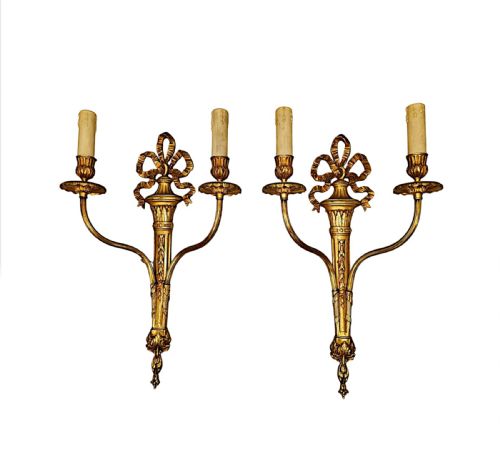
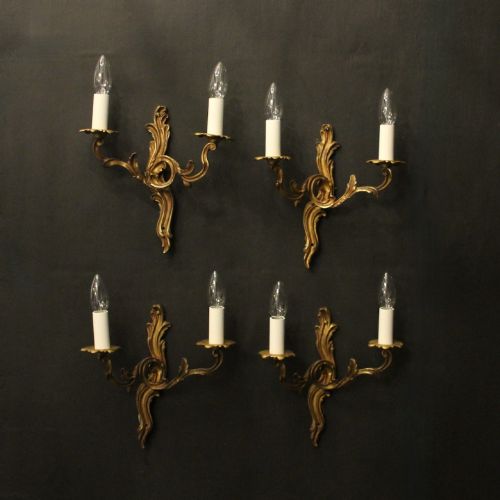

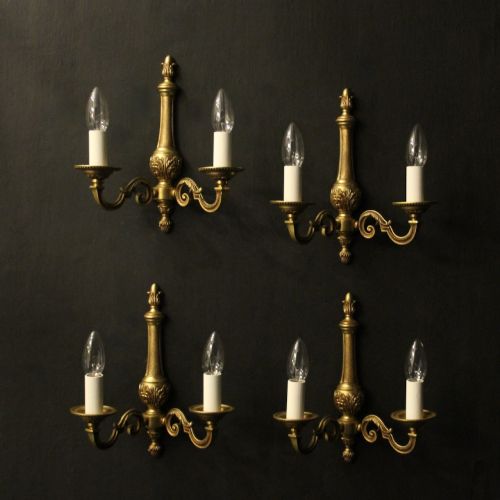
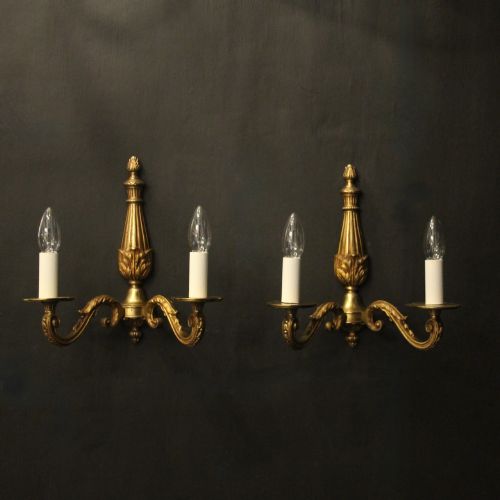
Vintage French Lighting Sconces
Vintage french lighting sconces bring warmth and decorative focus to a room, offering metal and glass forms shaped in classic European styles.
Vintage French Lighting Sconces
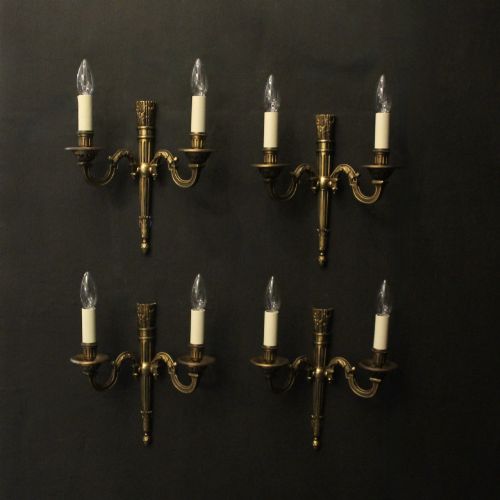
Vintage french lighting sconces encompass wall-mounted fixtures designed to illuminate interiors through candle power or electricity, taking the form of twin-arm lights, single-arm lights, and half-lanterns. When searching this phrase, a buyer encounters wall lights, wall sconces, candlesticks, and girandoles spanning the nineteenth century up through the nineteen-thirties.
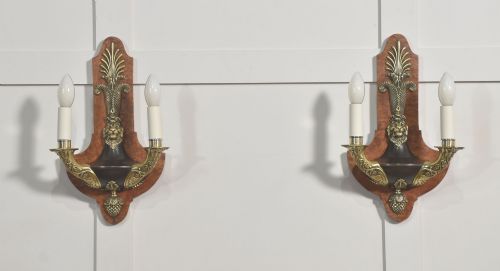
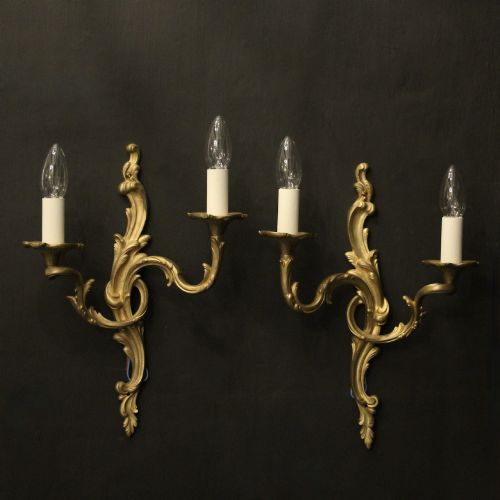
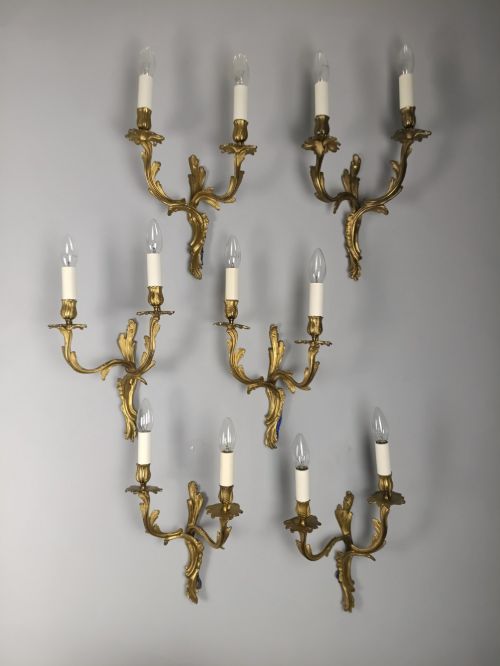
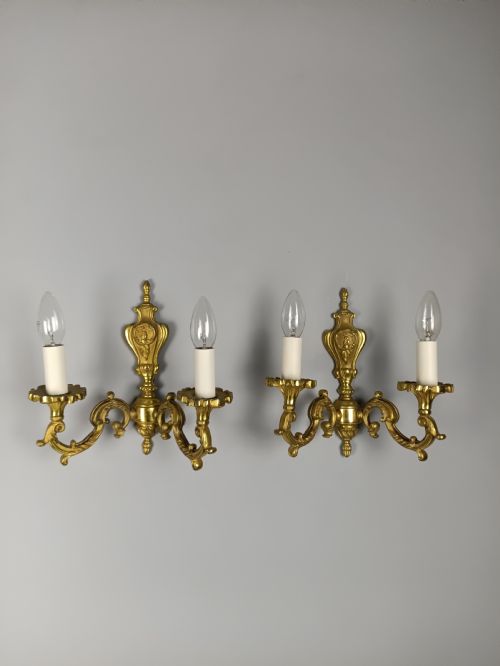
The pieces appearing on this page lean heavily toward the early decades of the twentieth century, particularly nineteen-twenty and nineteen-thirty, alongside nineteenth-century examples. Common stylistic vocabularies include French Rococo, Louis XVI, Empire, and French Chateau aesthetics, often featuring paired arrangements and sets of four or six.
Materials and construction
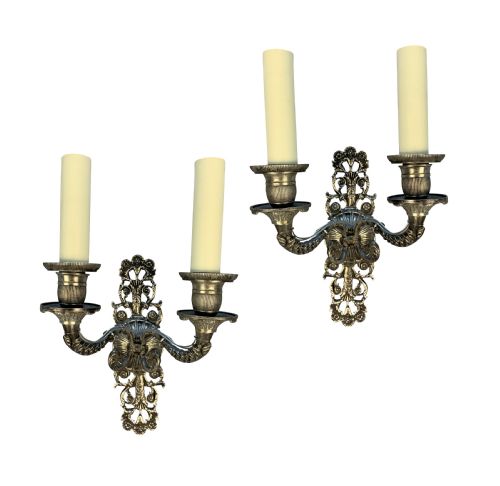
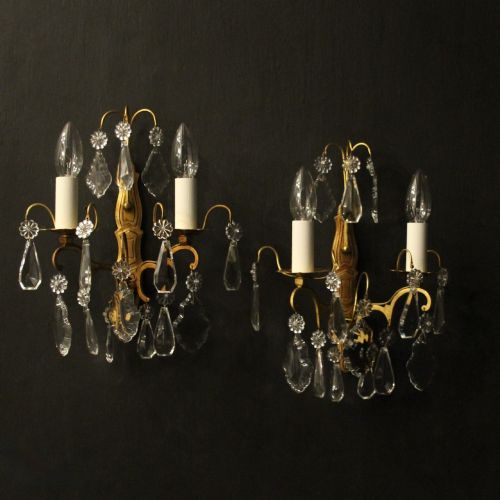
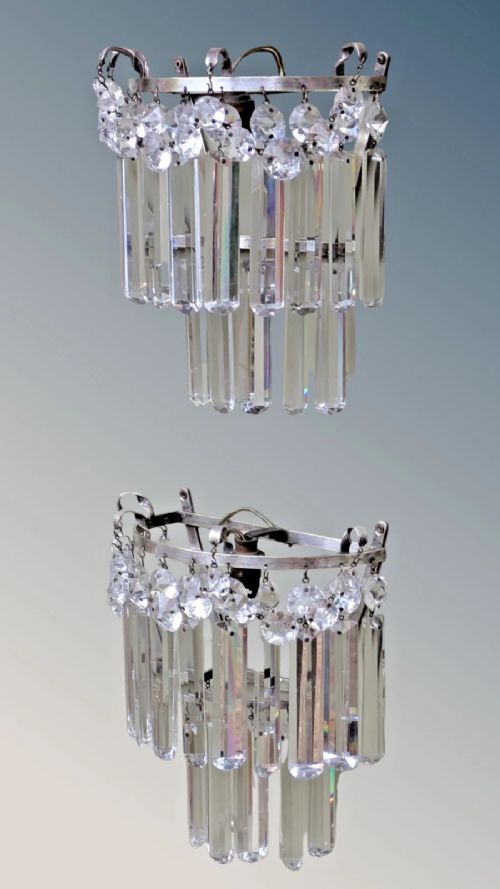
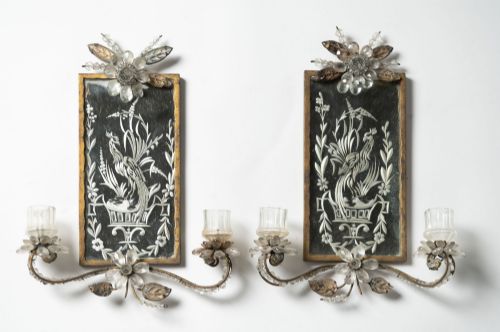
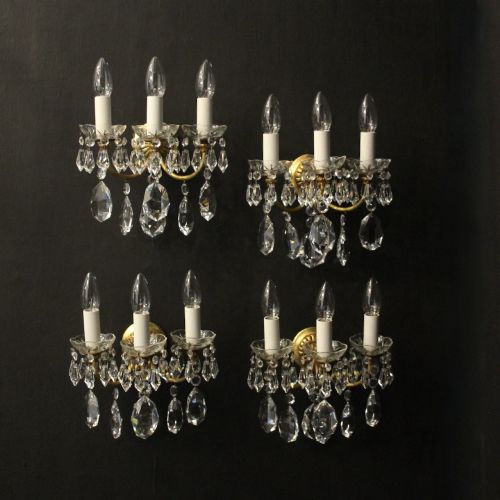
Construction relies upon metals such as brass, gilt brass, gilded bronze, ormolu, and silvered bronze, frequently shaped into twin-arm or triple-arm configurations. Makers also employed cut crystal, porcelain flowers, burr walnut, and carved giltwood to build elaborate decorative frames and backplates.
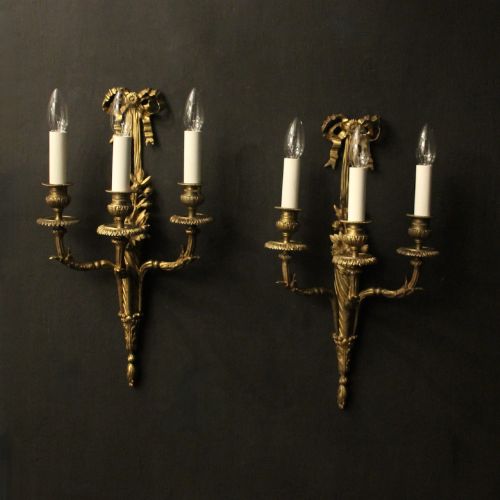
Surface treatments range from gilding and silver plating to painted toleware, while structural designs incorporate ribbon motifs, cherub figures, and convex glass panels. These techniques combine to create decorative wall fixtures intended for formal interiors.
Listings feature periods from the nineteenth century through nineteen-thirty, utilising brass, gilt bronze, cut crystal, and toleware.
Evaluating quality and execution
Quality rests in the crispness of the metal casting and the depth of the gilding or ormolu finish, where sharper detail in decorative motifs like ribbons and cherubs signals superior work. The integration of cut crystal drops and the weight of the bronze or brass framework distinguish finer examples from standard production.
The cohesion of the design, such as matched sets of four or six pieces with uniform patination, elevates a pair or set. Pieces by documented makers like Casier or Maison Baguès demonstrate higher standards of workshop execution and stylistic adherence to French Empire or Rococo traditions.
Casier·Maison Baguès
The Vintage French Lighting Sconces Glossary
- Ormolu
- Gilded bronze produced by applying a mercury and gold amalgam to a bronze base, commonly found on nineteenth-century and early twentieth-century wall lights. This technique creates a rich, durable surface lustre.
- Girandole
- An ornamental branched candlestick or light fixture, frequently incorporating a wall mirror to reflect illumination. These pieces often feature carved giltwood frames.
- Toleware
- Painted or lacquered sheet metal utilised for decorative items such as wall lanterns and sconces. It provides a distinct matte or semi-gloss coloured surface.
- Louis XVI
- A neoclassical design style characterised by straight lines, symmetry, and classical motifs like ribbons and urns. This aesthetic appears frequently in twentieth-century French wall lights.
Vintage French Lighting Sconces: Frequently Asked Questions
How do I wire vintage french lighting sconces?
Most vintage wall lights accommodate modern electrical wiring by running a cord through the existing backplate or arm channel. A qualified electrician can adapt these fixtures safely for contemporary wall circuits.
Care should be taken to preserve the original metal finish and patination during the rewiring process.
What styles are common in vintage french lighting sconces?
The prevalent styles draw from French Rococo, Empire, and Louis XVI traditions, showcasing ornate metal casting and symmetrical arm arrangements. These designs reflect historical European interior aesthetics.
Other variations include girandoles with mirrors and cherub wall sconces adorned with porcelain flowers.
How do I clean gilded bronze wall lights?
Dusting with a soft, dry cloth is the primary method for maintaining gilded bronze and ormolu surfaces without abrasive cleaning agents. Moisture and harsh chemicals can damage historic gilding.
Crystal components may be wiped gently with a mild glass cleaner applied to a cloth rather than sprayed directly onto the metal.