


Gold Metal Wall Appliques
Gold metal wall appliques bring warmth and period illumination to interiors through gilded bronze, brass, and crystal fixtures.
Gold Metal Wall Appliques
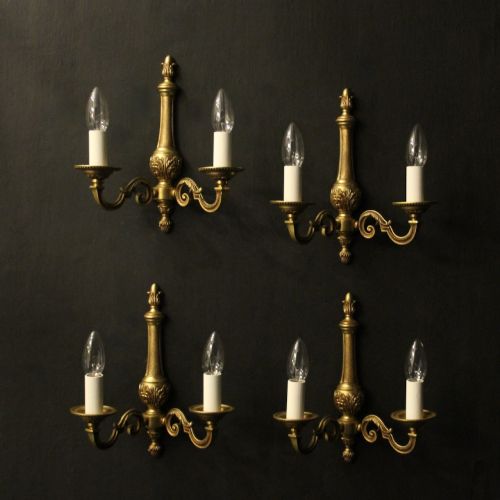
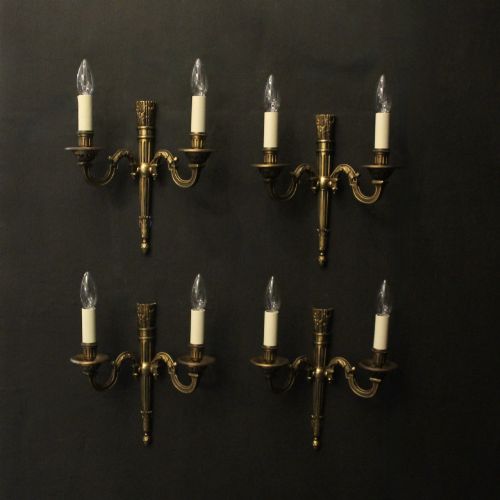
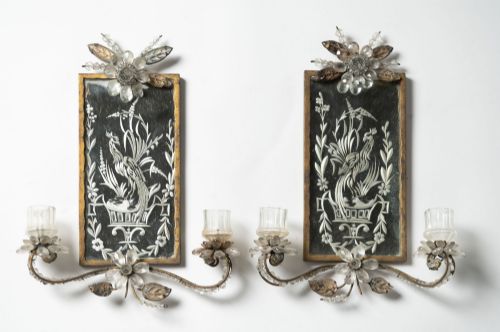
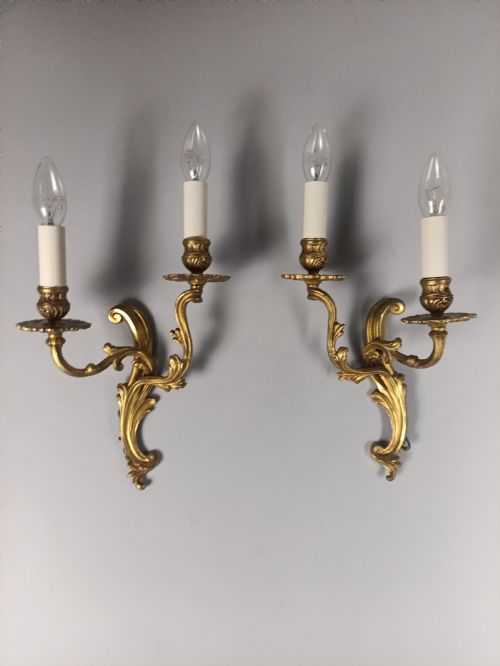
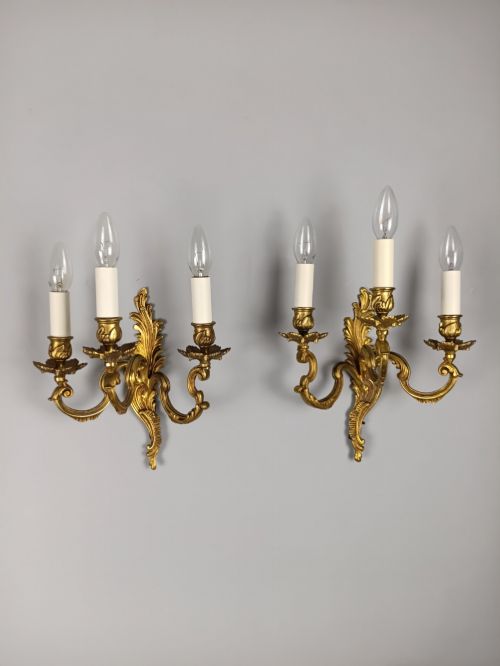
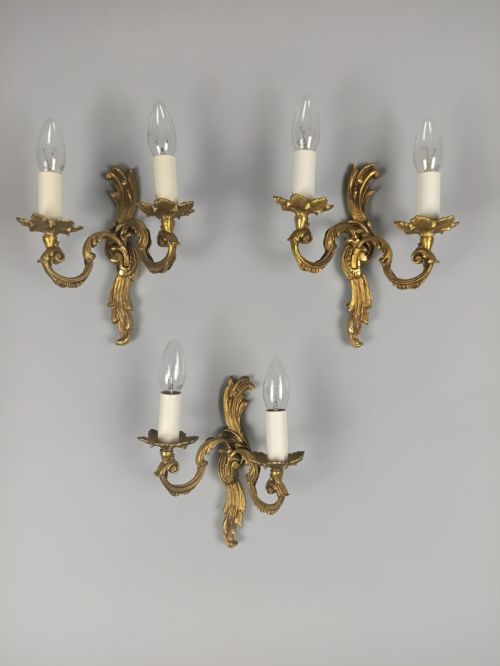
Gold metal wall appliques encompass wall lights, wall sconces, and multi-armed lighting fixtures designed to mount directly onto vertical surfaces. Buyers searching this phrase will find a high concentration of French wall lights alongside Italian examples.
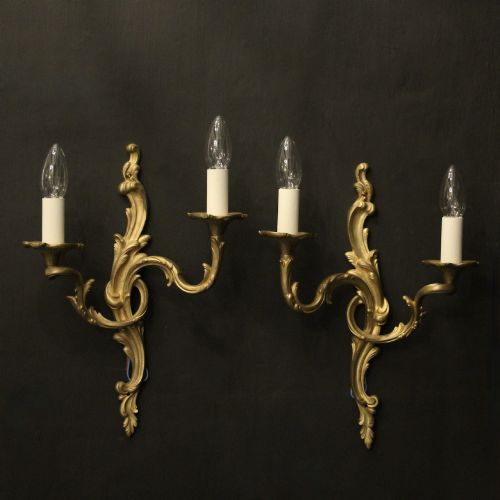
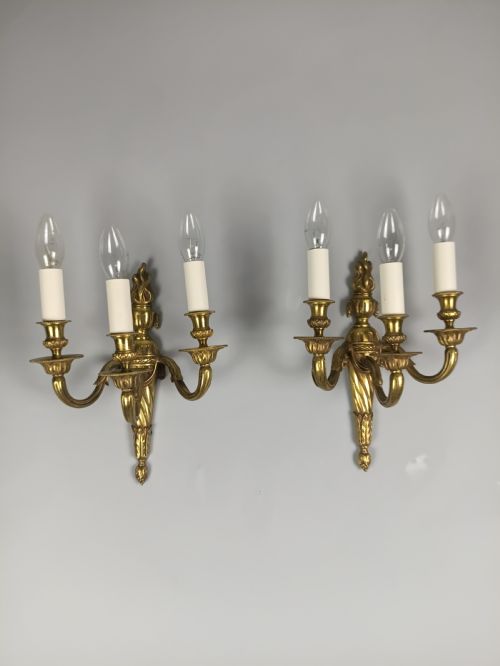
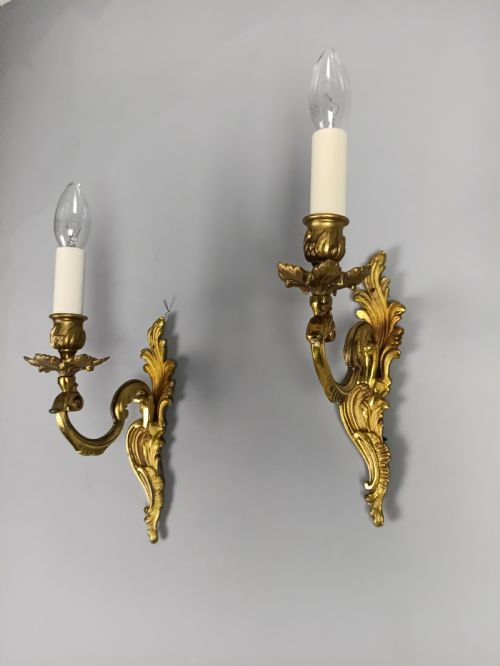
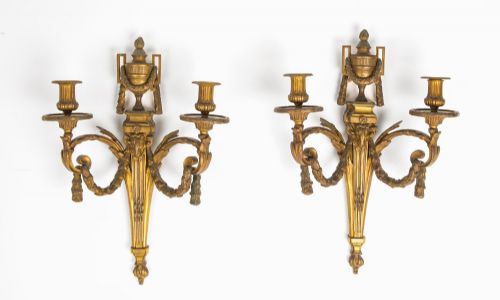
The selections span from the late nineteenth century through the 1930s, heavily featuring styles such as French Rococo, Empire, Louis XVI, and Neo-Classical. Pairs and larger sets dominate the forms available for interior schemes.
How they were made
Maker workshops utilised foundational base metals including brass, bronze, wrought iron, and toleware, shaping them through casting and fabrication. These structures received surface applications of gilding, gold paint, or ormolu finish to achieve the desired metallic lustre.
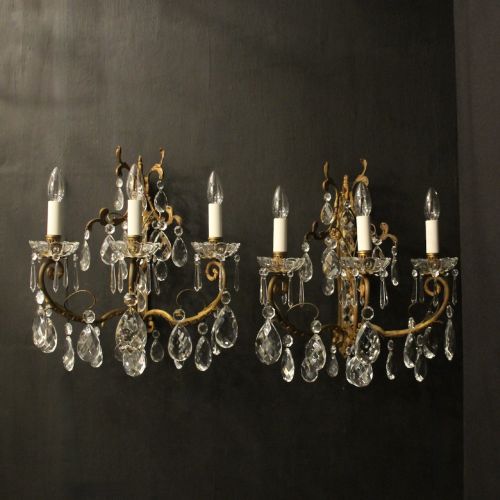
Many designs incorporate transparent elements such as crystal or glass drops and panels to catch and refract the illumination. Construction methods rely on mechanical joints, screws, and mounts appropriate for supporting multi-arm configurations safely on walls.
Listings feature periods spanning from the late nineteenth century through the 1930s, with a strong presence of 1920s French production.
What varies in quality
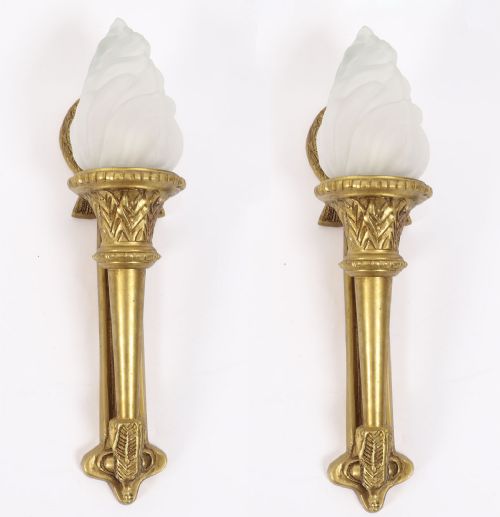
The refinement of the casting and chiselling defines the upper tiers of these wall lights, particularly seen in bronze and ormolu mounts with crisp detailing like ram's head masks or flaming torch motifs. Heavier gauge metals and substantial mounting plates separate robust, enduring fixtures from lighter commercial alternatives.
The integrity and depth of the original gilding or fire-gilt finish heavily influence the visual character and authenticity of an antique piece. Well-preserved crystal components and matching original arms also elevate the overall standard of a set.
Maison Baguès
The Gold Metal Wall Appliques Glossary
- Ormolu
- Finely ground high-carat gold applied to a bronze base using a mercury amalgamation technique, or more broadly, high-quality cast bronze with a golden finish. It creates a rich, warm metallic surface found on fine antique mounts.
- Gilt Bronze
- Bronze metal that has been coated with a layer of gold leaf or gilt finish. This material provides both structural durability and a decorative golden sheen.
- Wall Sconce
- A decorative wall-mounted lighting fixture designed to hold candles or electric lamps. They project outwards to cast ambient light across a room.
- Rococo
- An ornate, asymmetrical design style characterised by C-scrolls, plant motifs, and naturalistic shell forms. It is prevalent in mid-eighteenth-century revivals through the periods seen here.
- Empire
- A Neoclassical style drawing on ancient Roman, Greek, and Egyptian motifs, defined by symmetry, military emblems, and classical restraint. It emerged during the early nineteenth century and influenced later reproductions.
Gold Metal Wall Appliques: Frequently Asked Questions
How do I wire antique wall appliques?
Most vintage and antique wall lights require professional rewiring to meet modern safety standards and accommodate contemporary electrical bulbs. An electrician can easily adapt internal channels or backplates for secure wall installation.
Because many pieces originate from the early twentieth century or earlier, retaining original sockets depends on individual condition and preference. Modern insulating materials are typically integrated discreetly behind the backplate during installation.
Are these wall lights electrified?
Listings include fixtures that have been converted for electricity alongside items originally wired or adapted in the past. Buyers should examine individual descriptions to confirm current wiring setups.
Some examples retain historic candle tubes or drip pans that mimic traditional lighting methods even when electrified. Conversion details vary by dealer and piece.
How do I identify Louis XVI style appliques?
Louis XVI style wall appliques feature straight lines, classical symmetry, urns, swags, and architectural motifs rather than the fluid asymmetry of Rococo design. Common decorative elements include flaming torches, ribbons, and classical masks.
This aesthetic reflects an eighteenth-century revival popular in later nineteenth and early twentieth-century manufacturing. The structured geometry makes them straightforward to distinguish from earlier curved styles.