
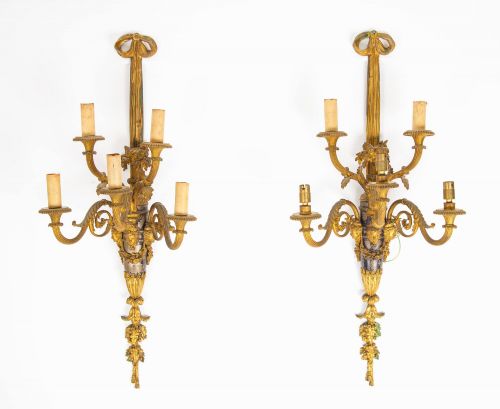
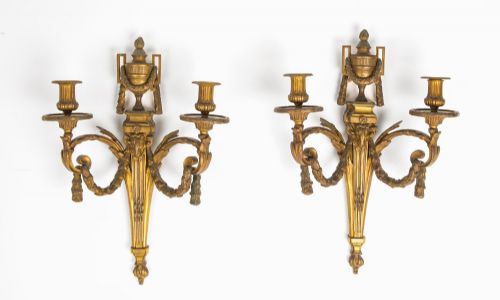
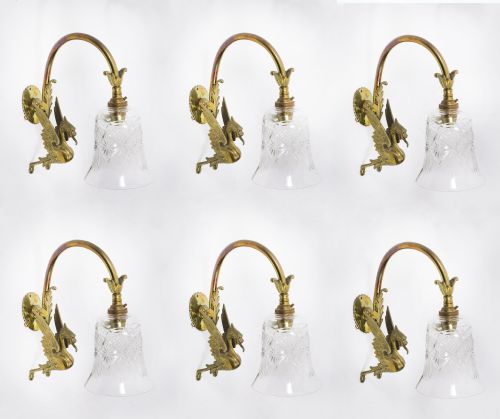

Neoclassical Bronze Wall Lights
Neoclassical bronze wall lights bring formal symmetry and classical ornament to a room through cast metal and gilded surfaces.
Neoclassical Bronze Wall Lights
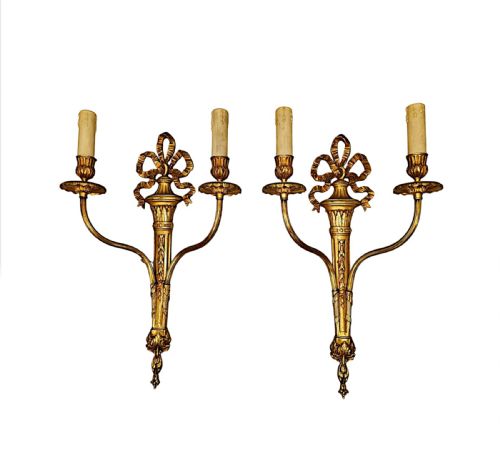
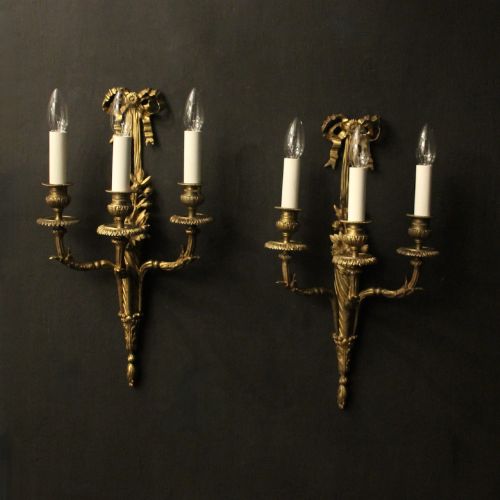
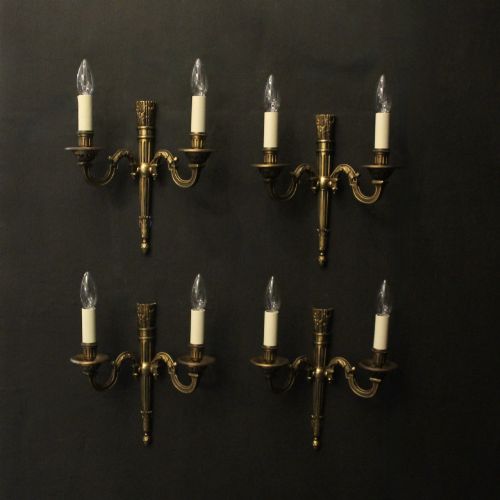
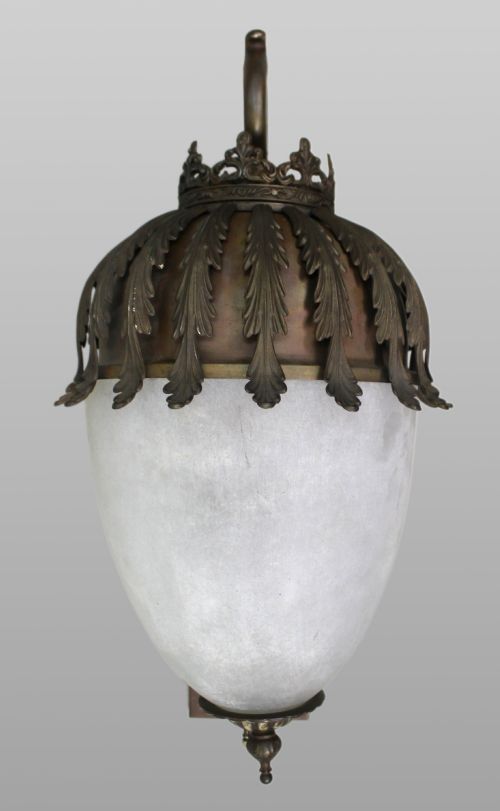
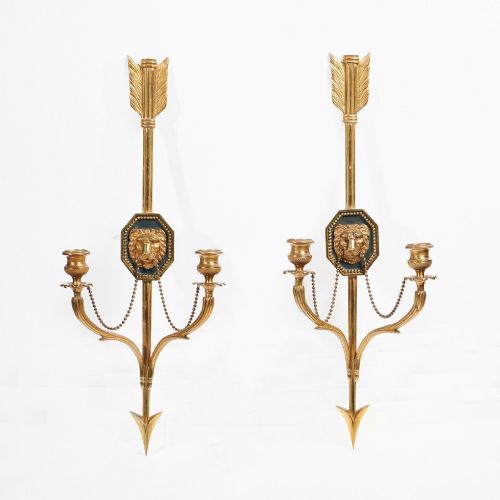
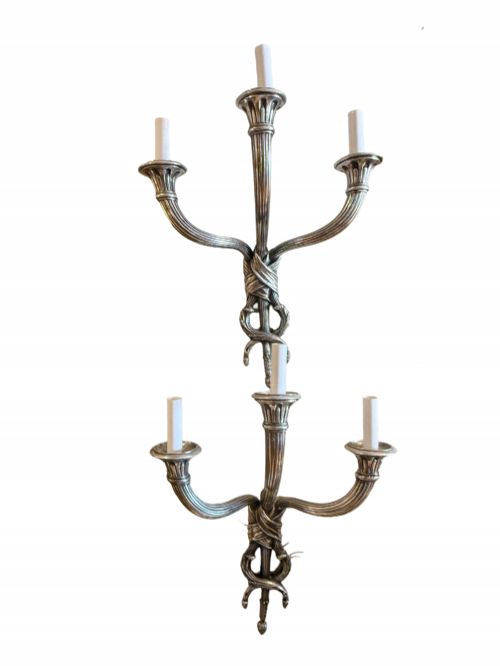
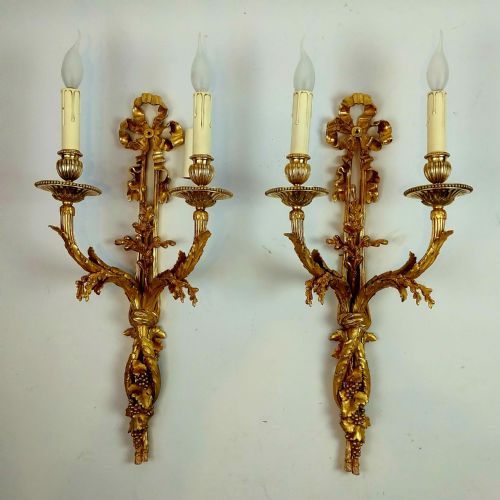
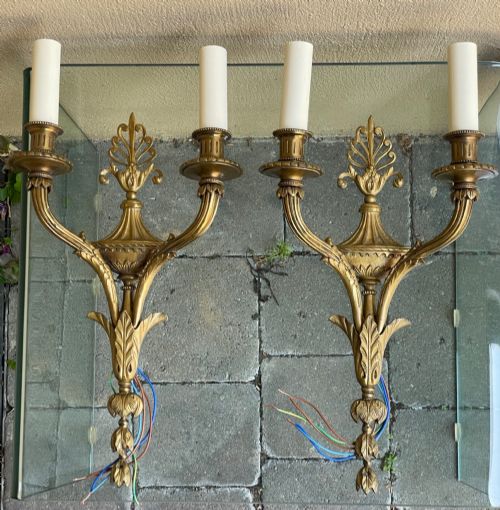
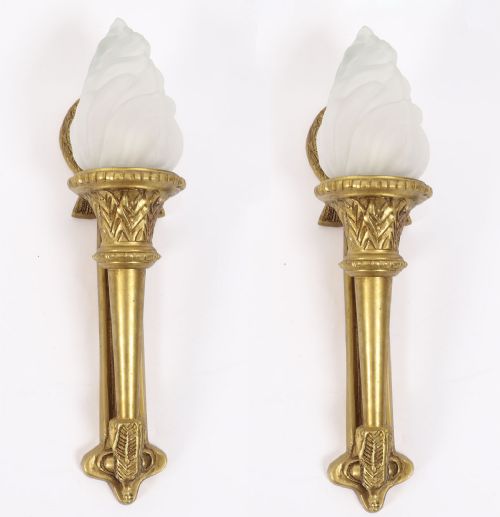
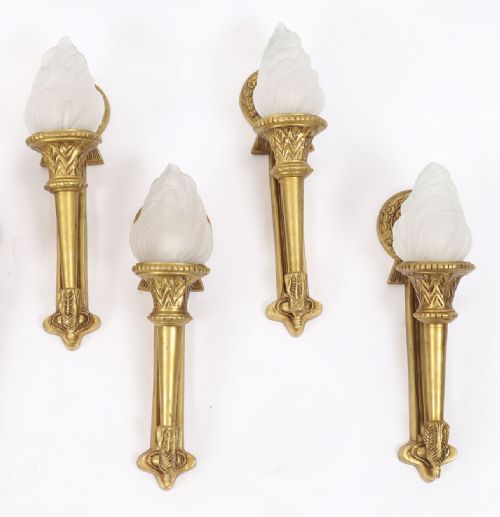
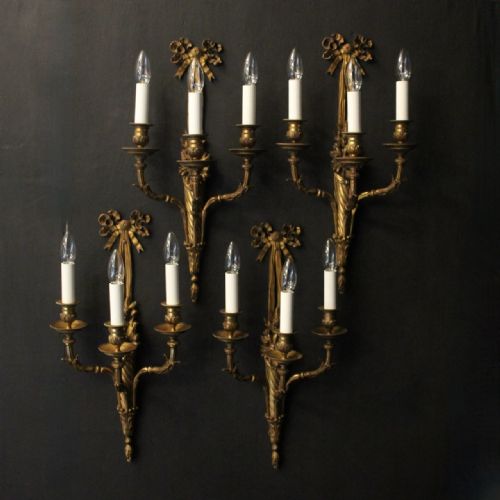
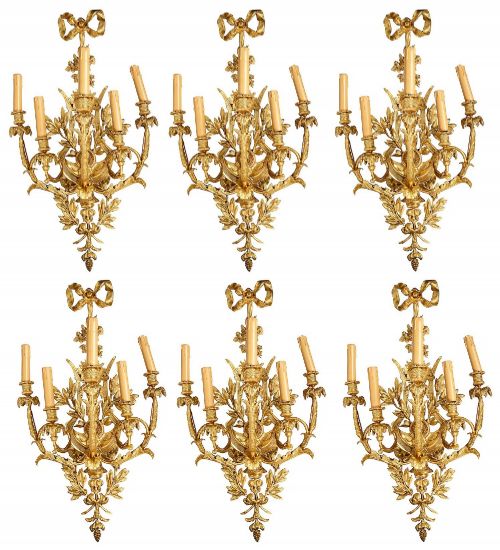
Neoclassical bronze wall lights comprise wall-mounted sconces, lanterns, and brackets designed in revivalist styles referencing classical antiquity. When searching for neoclassical bronze wall lights, buyers encounter French Empire, Louis XVI, Adam, and Italian Grand Tour designs executed in cast bronze, brass, and ormolu. Pairs and sets of four or six pieces dominate the selection, frequently incorporating multiple candle arms or frosted glass elements.
French workshops and makers such as Henri Vian and Maison Baguès produced many of the surviving examples found today. These lighting fixtures span the nineteenth and early twentieth centuries, reflecting enduring design revivals across European capitals. The standard form mounts flush to the wall, projecting arms cast with urns, torches, ram's head masks, and acanthus foliage.
What varies in quality
The depth and preservation of the mercury gilding or ormolu finish dictate the visual authority of the fixture. Heavy gauge metal work that retains solid weight and secure arm joints represents the upper tier of manufacture.
Listings feature 19th-century, Regency, and 1920s pieces created in gilt bronze, brass, ormolu, and frosted glass.
Henri Vian·Maison Baguès
The Neoclassical Bronze Wall Lights Glossary
- Ormolu
- Finely chopped high-zinc brass applied to bronze objects through mercury gilding. This technique produces a rich golden finish characteristic of French luxury items.
- Applique
- A wall-mounted light fixture designed to hold candles or electric bulbs. The term is frequently used interchangeably with wall sconce.
- Empire Style
- A neoclassical design movement originating in early nineteenth-century France. It draws heavily on Roman imperial motifs including sphinxes, laurel wreaths, and torches.
- Adam Style
- An eighteenth-century neoclassical British design vocabulary developed by the Adam brothers. It translates classical architectural elements into lighter, highly symmetrical interior ornaments.
- Patinated Bronze
- Bronze treated with chemical solutions to darken the surface tone. This contrasts against brighter gilded elements on neoclassical wall brackets.
Neoclassical Bronze Wall Lights: Frequently Asked Questions
How do I wire antique wall lights?
Electricians adapt these fixtures by running modern internal wiring through the original hollow cast bronze arms and backplates.
Most pieces accommodate small candelabra base lamp holders discreetly concealed within the original drip pans or glass shades.
What periods do these wall lights date from?
The inventory spans the nineteenth century through the 1930s, encompassing both original period manufacture and later revival pieces.
Nineteenth-century examples often display heavy fire gilding, while 1920s and 1930s pieces frequently reflect Maison Baguès production.
Are these fixtures sold in pairs?
Many listings offer matched pairs or larger sets of four and six units intended for balanced room placement.
Single sconces also appear for narrow wall spaces or hallway installations.
How do I clean gilded bronze?
Dust surfaces gently with a soft dry brush to prevent accumulation in the recessed chased details.
Avoid chemical polishes that strip the fragile ormolu or mercury gilding layers from the bronze base.