





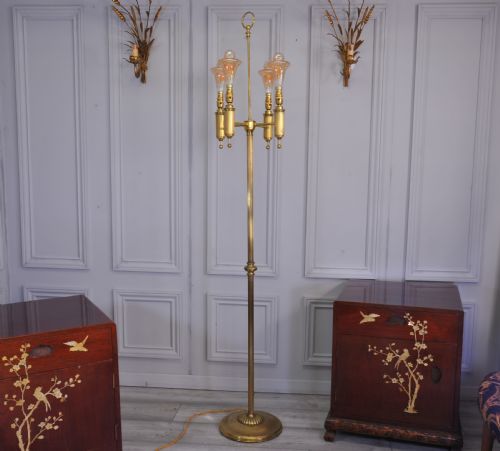

Vintage French Floor Light
A vintage french floor light brings sculptural height and warm illumination into a room, spanning eras from opulent giltwood to industrial brass.
Vintage French Floor Light
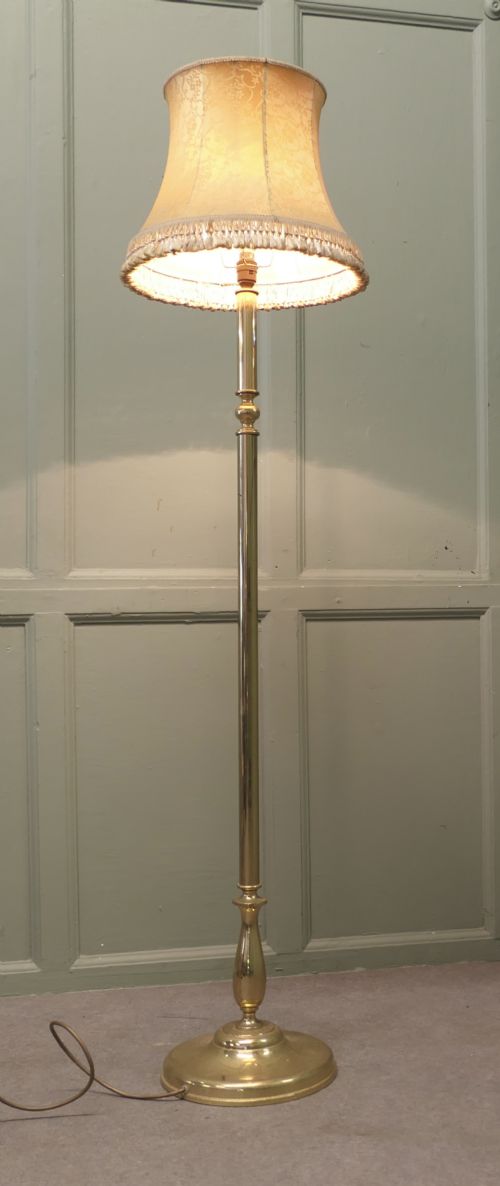
When searching for a vintage french floor light, buyers encounter tall vertical fixtures designed to provide ambient or task illumination. These pieces range from substantial 19th Century standard lamps to slender 1920s examples and later mid-century designs.
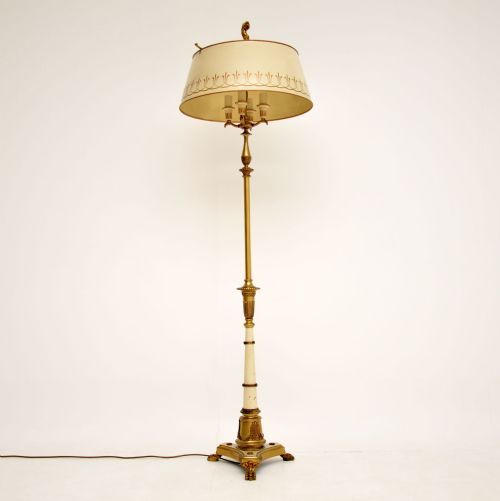
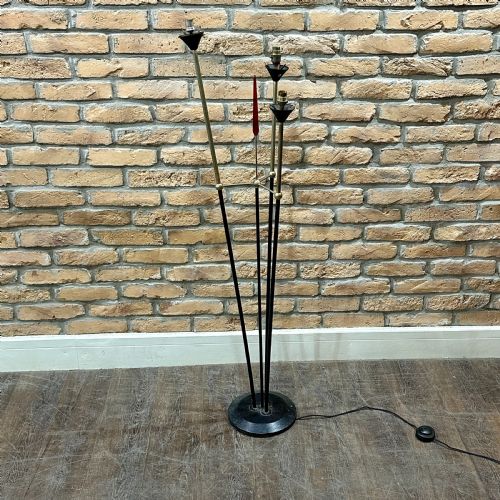
The selections on this page draw upon traditional forms such as bouillotte lamps, neoclassical columns, and carved wooden standards. Alongside conventional floor lamps, the inventory incorporates converted candlesticks and tall candelabra stands adapted for electrical use.
Origins span distinct historical periods including the Victorian era, Edwardian period, and the interwar years of the 1920s and 1930s. Stylistic influences lean heavily toward French Chateau, Neoclassical, and Hollywood Regency aesthetics.
How they were made
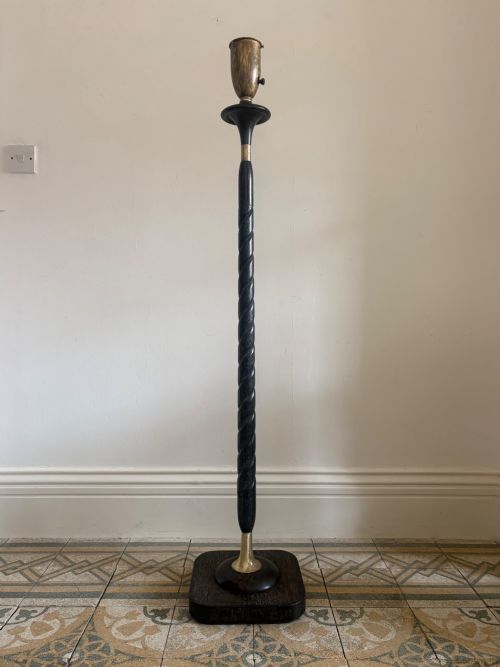
Construction relies upon traditional metalworking and woodworking techniques applied to durable raw materials. Cast brass, bronze, and ormolu provide structural rigidity for metal standards, while hardwoods form carved giltwood and ebonised barley twist shafts.
Decorative detailing incorporates hand-carved wood elements, applied gilding, and inset materials like onyx and marble. Metal components frequently feature patinated finishes, casting, and adjustable mechanisms for directing illumination.
Fabric shades and glass elements complement the solid bases to complete the assembled light fixtures.
Vintage French Floor Light Retail Price Guide 2026
Typical asking prices for vintage french floor light among the pieces listed under this phrase on Sellingantiques today, from the lower quarter to the upper quarter. They describe what is for sale here now, not the wider market.
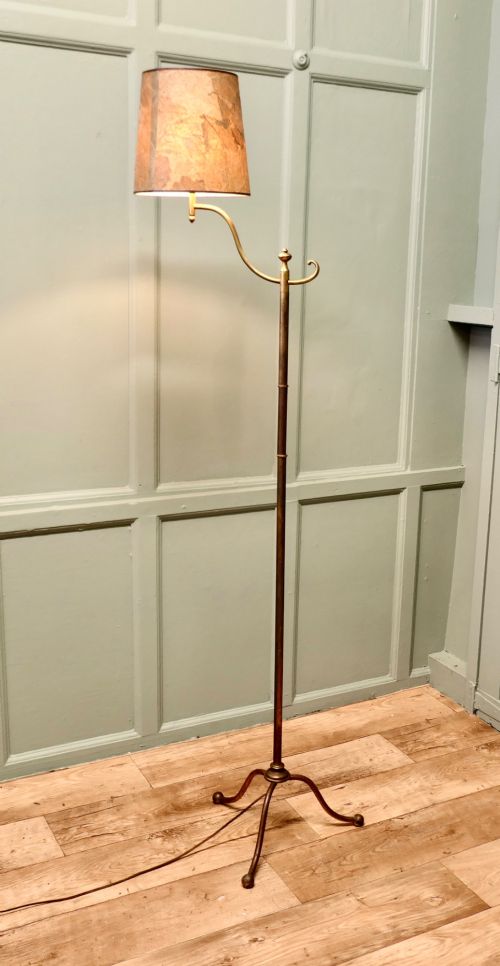
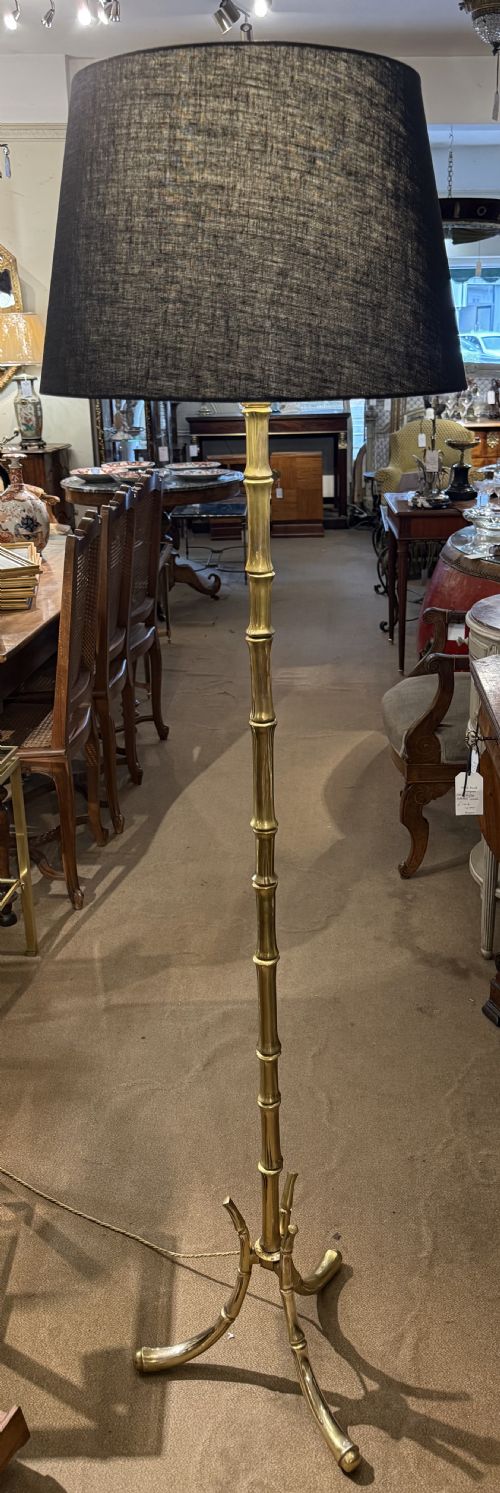
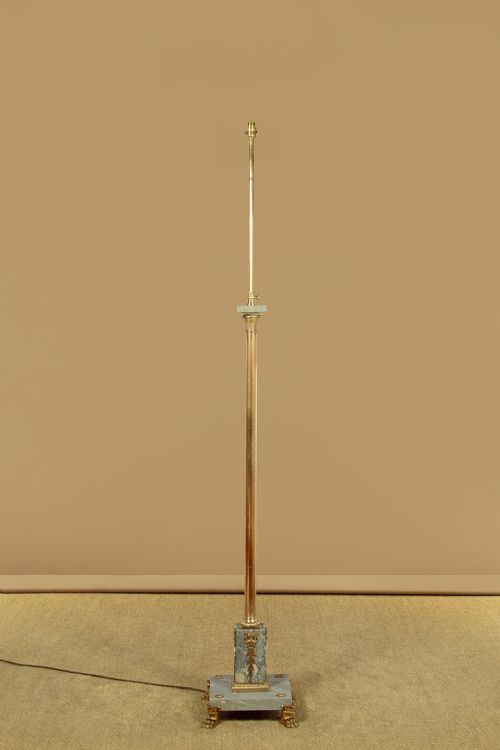
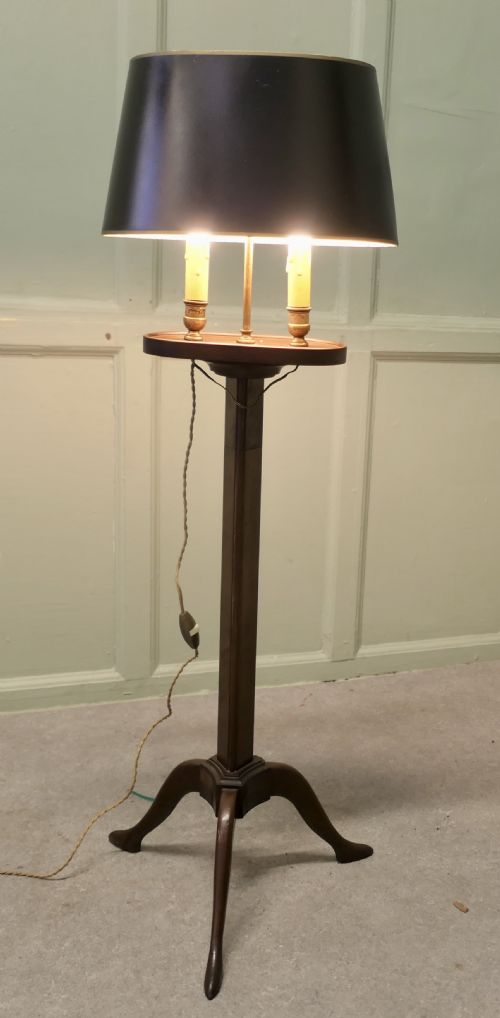
Standard lamp forms range from neoclassical columns and bouillotte designs to ebonised barley twist shafts.
What varies in quality
The standard of craftsmanship separates standard production pieces from finer examples. Superior items display crisp casting in brass and ormolu, alongside deeply relief-carved giltwood and carefully turned wooden columns.
Material selection dictates the overall presence of the object, with dense marbles, genuine onyx, and heavy cast metals providing a solid foundation compared to lighter substitute materials.
The integrity of decorative surfaces, from preserved original gilding to patinated bronze, defines the visual execution of each piece.
Maison Bagues·Rene Mathieu
The Vintage French Floor Light Glossary
- Bouillotte lamp
- A traditional French table or floor light featuring a central shaft and adjustable shades, originally designed for card games. These typically incorporate multiple candle arms or bulb fittings.
- Standard lamp
- A traditional British term for a floor lamp, describing a tall vertical post mounted on a weighted base to support an elevated light source. They serve as primary freestanding room illumination.
- Ormolu
- Gilt bronze mounted on decorative objects and furniture, created by applying a finely ground high-carat gold mercury amalgam to a bronze base. This technique achieved a rich metallic lustre popular in French decorative arts.
- Barley twist
- A spiral turning technique applied to wooden furniture legs and lamp columns, creating a helical twist resembling a column of barley sugar. It enjoyed significant popularity during various revival periods.
- Neoclassical
- A style rooted in the art and architecture of classical antiquity, characterised by symmetry, straight lines, and classical motifs such as urns, fluting, and acanthus leaves.
Vintage French Floor Light: Frequently Asked Questions
How do I identify a true period french floor lamp?
Examine the construction methods, materials, and wiring housing used in the standard. Older pieces from the nineteenth century or early twentieth century often show traditional hand-casting, heavy brass components, and aged patination rather than modern uniform manufacturing.
Check for stylistic markers associated with specific eras, such as neoclassical columns or art deco geometric lines. Maker marks and stamps on the metal base can also confirm the origin.
What is a bouillotte lamp used for?
Bouillotte lights were originally created to illuminate card games played on French bouillotte tables. Their adjustable shades allowed players to raise or lower the metal shade to block glare from the candles.
Today, these fixtures function effectively as reading lights or accent pieces in studies and sitting rooms. The twin arm designs provide focused downward illumination.
Are these lamps converted from old candlesticks?
Many taller floor fixtures and standard lamps began life as large wooden or metal candlesticks and candle stands before receiving electrical wiring later in their lifespan. This practice preserves antique forms while updating them for modern domestic use.
Conversions often integrate discreet wiring channels through the central wooden or metal shaft. This allows the piece to retain its decorative candlestand silhouette.
How should I style a giltwood standard lamp?
Giltwood standards work well as focal points in traditional drawing rooms or to add warmth to minimalist contemporary spaces. Their carved wooden surfaces reflect ambient light and pair naturally with neutral or rich fabric lampshades.
Position the lamp beside seating areas or in corners where the vertical height draws the eye upward. Ensure the scale of the shade matches the substantial presence of the gilded base.