


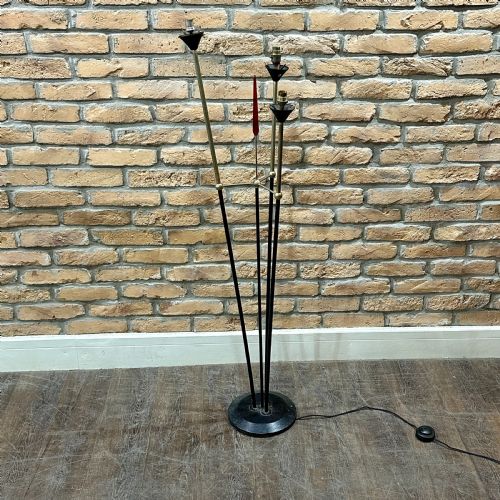


Black Metal Standing Light
A black metal standing light brings height and dark architectural form to a room, spanning Victorian utilitarian ironwork to mid-century design.
Black Metal Standing Light
When you search for a black metal standing light, you encounter tall illumination pieces designed to anchor a corner or stand beside seating. The selection ranges from floor lamps and standard lamps to towering lantern stands and telescopic oil lamps.
The versions you meet most frequently on this page date from the Victorian period through to the mid-twentieth century. They combine practical height adjustment with heavy bases designed to support heavy fittings or fabric shades.
Alongside standard floor-standing lighting, the evidence includes related tall forms such as heavy iron candlesticks and candelabras. These share the same dark metallic palette and structural presence in a room.
How they were made
Makers utilised wrought iron and cast iron as the primary structural metals for these tall stands, shaping them through blacksmithing and foundational casting. Steel and enamelled steel appear alongside these heavier irons in later twentieth-century pieces.
Adjustable mechanisms and telescopic sections allow sections of the metal shaft to slide and lock into place. Brass components often accent the dark iron frames, while fabric and occasionally hardwood integrate into the supporting structures.
Black Metal Standing Light Retail Price Guide 2026
Typical asking prices for black metal standing light among the pieces listed under this phrase on Sellingantiques today, from the lower quarter to the upper quarter. They describe what is for sale here now, not the wider market.
Soldiers in the trenches repurposed discarded metal into delicate candlesticks.
What varies in quality
Quality rests in the integrity of the blacksmith's handiwork and the robustness of the telescopic or adjustable mechanisms. Heavier gauge ironwork and smoothly functioning screw keys or pins distinguish finer utilitarian pieces from simpler production.
The sophistication of the period style, from stark Gothic or Victorian Country utility to flowing Art Nouveau lines, dictates the artistic ambition of the metalwork. Balance and stability in a tall stand remain paramount regardless of the decorative vocabulary.
RENE MATHIEU·Hugo Berger
The Black Metal Standing Light Glossary
- Telescopic
- A shaft constructed in nested sections that slide inside one another to alter the overall height of the light. This mechanism allows a standard lamp to adapt to different ceiling heights and seating arrangements.
- Standard lamp
- A heavy floor-standing lighting fixture designed to hold a bulb and shade at eye level. These pieces typically feature a weighted base to prevent tipping.
- Wrought iron
- Iron that has been heated and hammered by hand into shape, leaving subtle tool marks on the surface. This material forms the durable backbone of many period floor lamps.
- Trench art
- Decorative or utilitarian objects fashioned by soldiers or civilians from war debris and scrap metal. These pieces often date from the early twentieth century.
- Standard
- The vertical metal pole or shaft that supports the upper lighting fixture of a floor lamp. Its thickness and material determine the overall rigidity of the stand.
Black Metal Standing Light: Frequently Asked Questions
What is a standard lamp?
A standard lamp is a tall floor-standing lighting fixture designed to hold a bulb and shade above furniture. They provide ambient illumination without needing table space.
In period pieces, these stands often feature heavy iron or steel shafts with adjustable arms to direct the light.
How do telescopic floor lamps work?
Telescopic lamps use nested metal shafts that slide vertically and lock at different heights with a screw key or pin. This lets you raise or lower the light source.
Victorian and Edwardian makers used this clever engineering to make utilitarian lighting adaptable for reading or general room illumination.
Are these lamps electrified?
Many period floor stands retain or have been adapted with electric wiring for modern use, while others began life as oil lamps or candle stands.
When buying antique lighting, check the internal wiring and fittings to ensure they meet current safety standards for your home.