




Vintage French Decorative Clock
A vintage french decorative clock brings ornate craftsmanship and historical elegance to a mantelpiece, offering both reliable timekeeping and striking interior presence.
Vintage French Decorative Clock
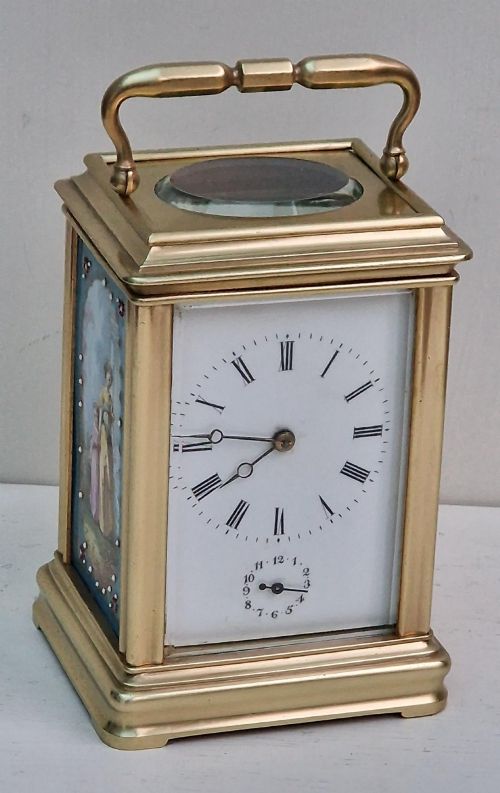
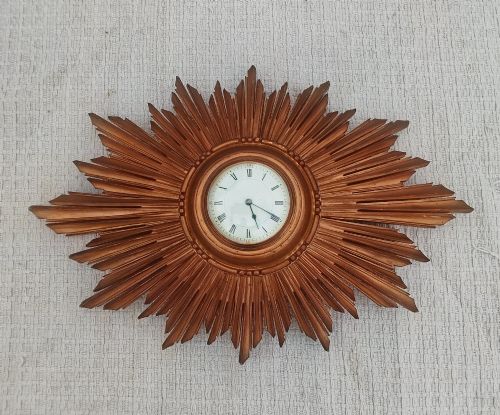
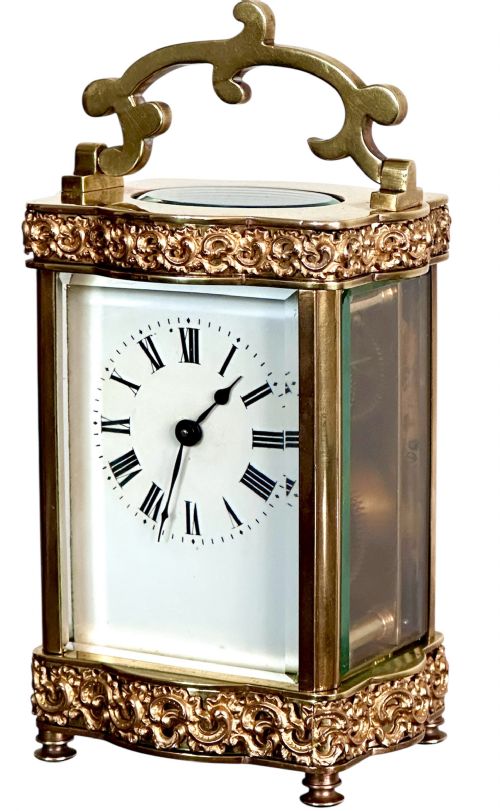
A vintage french decorative clock encompasses a wide variety of timepieces designed for visual impact, ranging from portable carriage clocks to grand mantel and wall models. Buyers seeking these items will find pieces primarily originating from the nineteenth century through the early twentieth century, reflecting distinct historical periods of design.
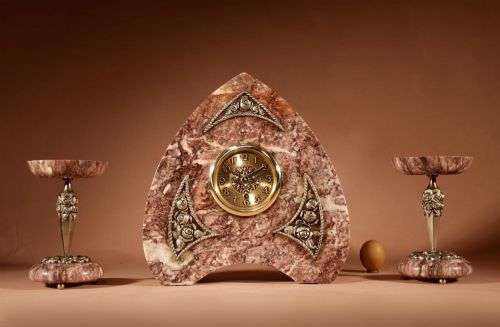
Originating predominantly from French workshops and makers, these clocks often appear alongside matching garnitures or mounted on dedicated brackets. The assortment balances intricate metalwork with architectural marble and wood cases to suit varied interior spaces.
Materials and construction methods
Gilt bronze, ormolu, and brass form the structural and decorative core for many cases, often combined with champlevé enamel or painted porcelain panels. Artisans shaped these metals through casting and chasing before applying fire gilding or polishing.
Marble, onyx, and glass feature prominently in heavier mantel and crystal regulator designs, providing substantial plinths and protective enclosures. Wood cases utilise techniques like giltwood carving, faux tortoiseshell, and Boulle marquetry to achieve rich surface textures.
Distinctions in craftsmanship and execution
The depth and crispness of hand-engraving across the bronze case and dial panels separate standard production pieces from exceptional works. Fine examples exhibit meticulous detailing on frets, columns, and filigree masks without soft edges or shallow casting lines.
The complexity of the internal movement and the integration of repeater mechanisms or enamel painting dictate the tier of execution. Heavier solid metal housings and fully restored original escapements reflect higher grade manufacturing by established horologists.
Duverdrey & Bloquel·Delépine-Barrois·Paul Garnier·Perivale of England·Payne London
The Vintage French Decorative Clock Glossary
- Carriage clock
- A small, portable spring-driven timepiece originally designed for travel, typically fitted with a carrying handle and glass sides. Many examples feature detailed brass framing and enamel dials.
- Garniture
- A set of matching ornamental objects, usually comprising a central clock flanked by two matching vases or candelabra. These sets were designed to sit harmoniously on a mantelpiece.
- Ormolu
- Finely chopped high-karat gold applied to a bronze base using a mercury amalgamation technique. It gives decorative metalwork a deep, enduring golden lustre.
- Boulle
- A form of marquetry consisting of tortoiseshell and brass inlay developed in France. It creates a contrasting, ornate patterned surface popular on luxury furniture and clock cases.
- Champlevé
- An enamelling technique where troughs are dug into a metal surface and filled with vitreous enamel paste before firing. This creates colourful decorative patterns flush with the metal.
Vintage French Decorative Clock: Frequently Asked Questions
How do I wind a mechanical carriage clock?
Most mechanical models use a specialised key inserted into the winding arbours located on the backplate. Turn the key gently until firm resistance indicates the mainspring is fully wound.
Avoid over-winding the mechanism, as this can strain the internal spring. Ensure the clock is placed on a stable, level surface for consistent operation.
What is a crystal regulator clock?
A crystal regulator is a mantel clock encased in glass panels set within a brass or gilt bronze frame. This design allows light to pass through and exposes the pendulum and movement.
Originating in the nineteenth century, these pieces showcase the precision of French mechanical engineering while serving as transparent decorative objects.
What distinguishes an Art Deco clock from Victorian styles?
Art Deco clocks, emerging around the 1920s, favour geometric symmetry, streamlined marble shapes, and simplified modern ornamentation. They often incorporate contrasting dark and light materials.
Victorian clocks lean towards heavier revival styles, featuring elaborate rococo scrolls, rich champlevé enamel, and ornate figurative bronzes that recall earlier monarchical eras.