
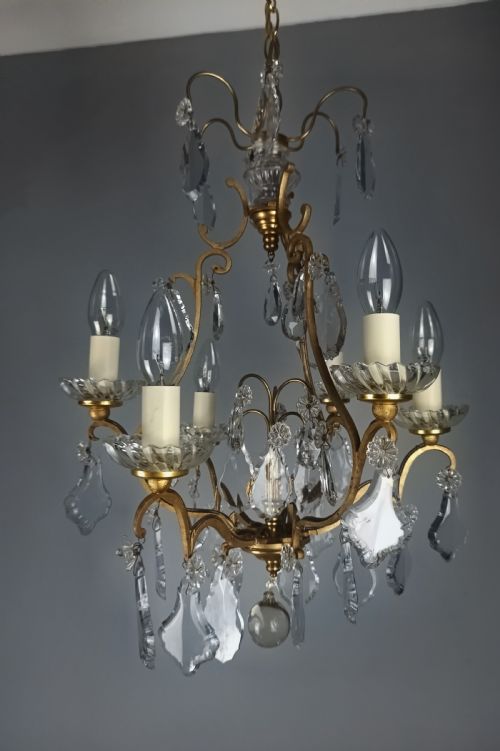
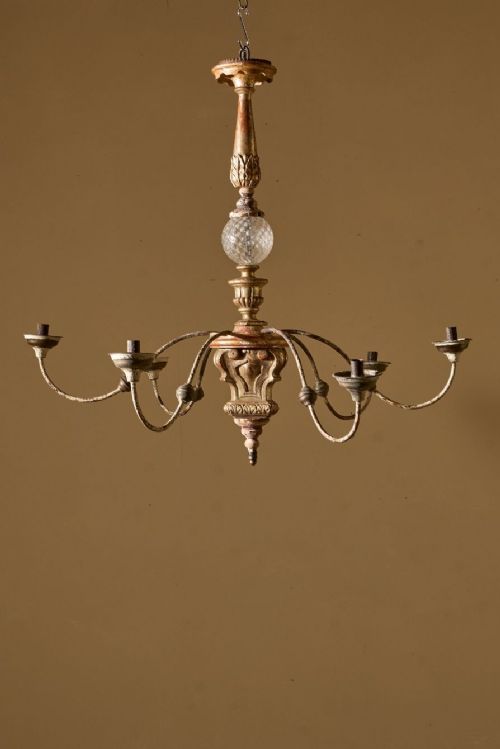
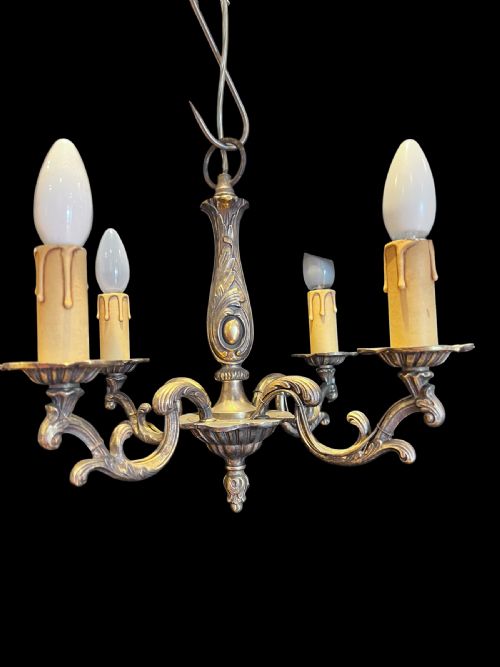
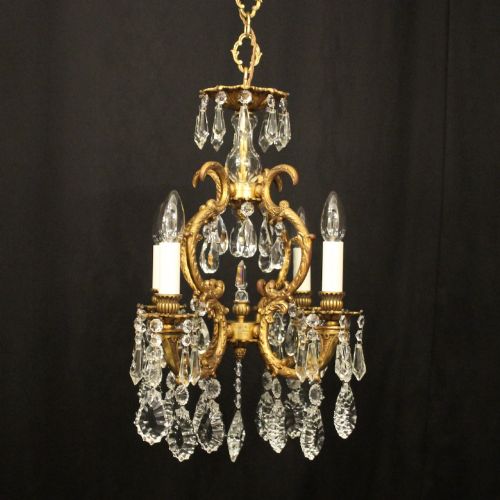

Vintage French Ceiling Light
A vintage french ceiling light brings dramatic illumination overhead, combining cut glass, gilt metal, and classic forms to anchor a room.
Vintage French Ceiling Light
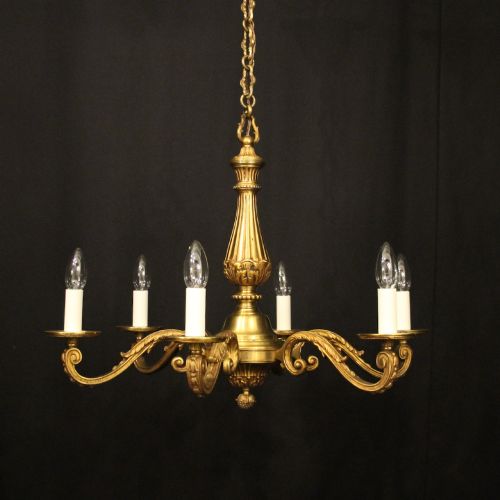
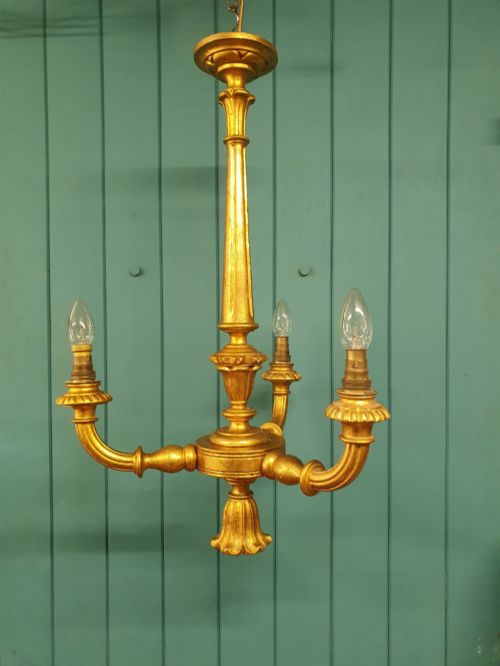
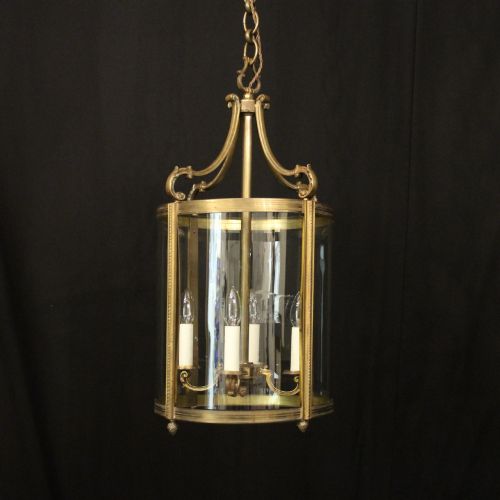
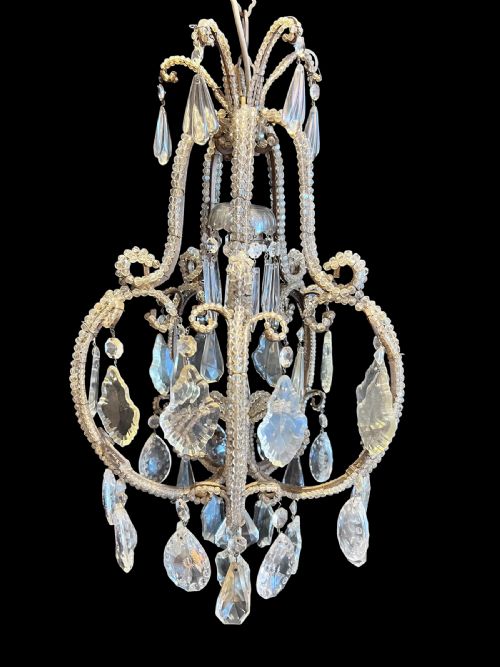
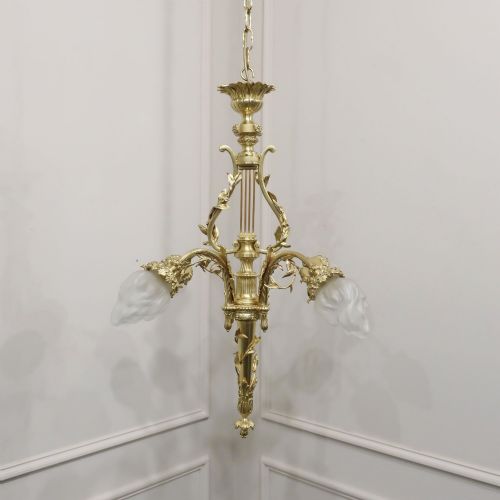
A vintage french ceiling light covers a wide range of hanging illumination, including multi-arm chandeliers, hall lanterns, and glass pendants. Buyers seeking a vintage french ceiling light will find fixtures originating from the nineteenth century through the Art Deco era.
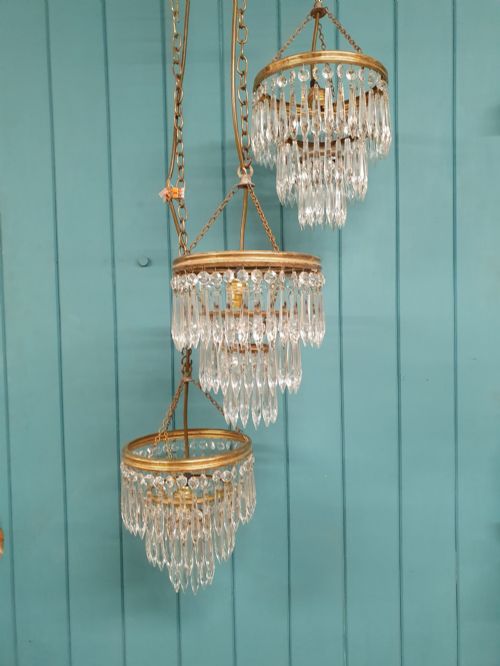
The selections most commonly met on this page date from the 1920s and 1930s, alongside nineteenth-century examples. Forms span from simple glass globes and lanterns to elaborate tent and waterfall crystal configurations.
Stylistic influences range from French Empire and Neoclassical to Rococo Revival and Mid-Century Modern. These pieces hang from ceilings to provide central or accent illumination in domestic spaces.
How they were made
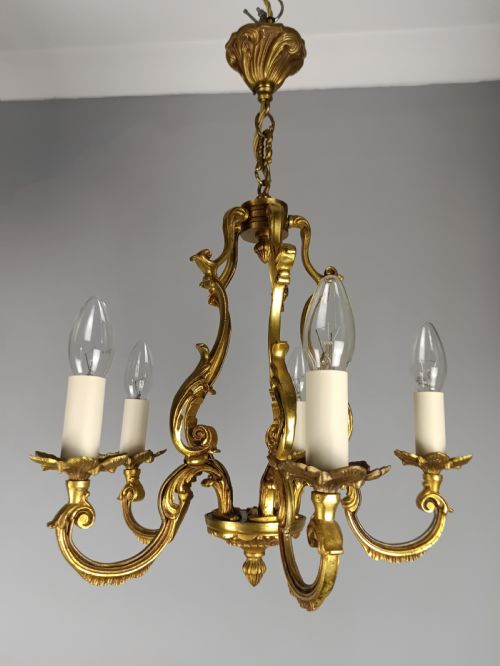
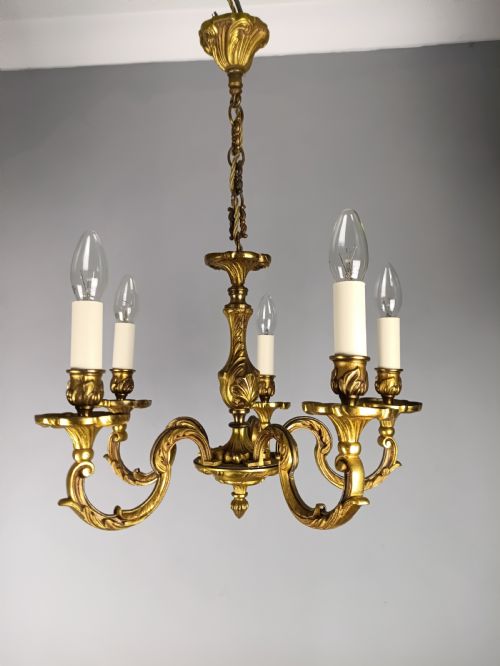
Metalworking formed the structural backbone of these fixtures, utilising cast brass, bronze, copper, and spelter finished with gilding or dark patination. Artisans shaped these metals into detailed frames, arms, and decorative mounts such as cherubs, leaves, and lyres.
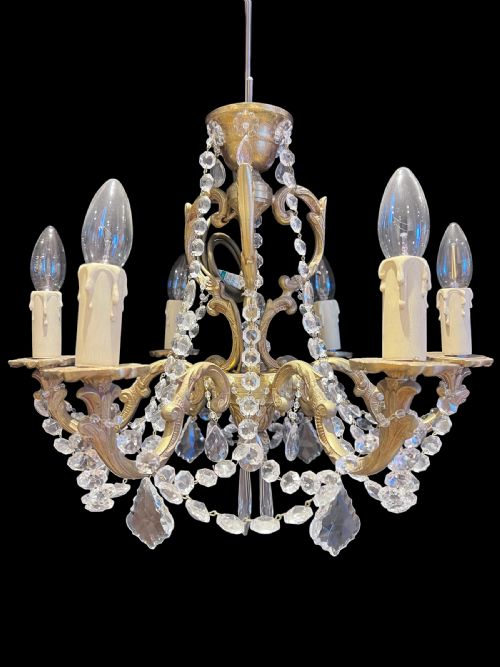
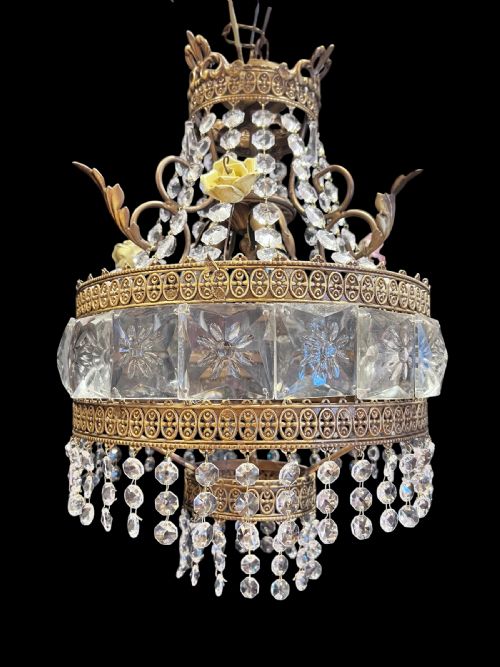
Glass and crystal components defined the visual brilliance, incorporating cut glass drops, lustres, beads, and etched glass shades. Components were assembled by hand, suspending crystal spikes and pendants from metal frames to refract light.
Vintage French Ceiling Light Retail Price Guide 2026
Typical asking prices for vintage french ceiling light among the pieces listed under this phrase on Sellingantiques today, from the lower quarter to the upper quarter. They describe what is for sale here now, not the wider market.
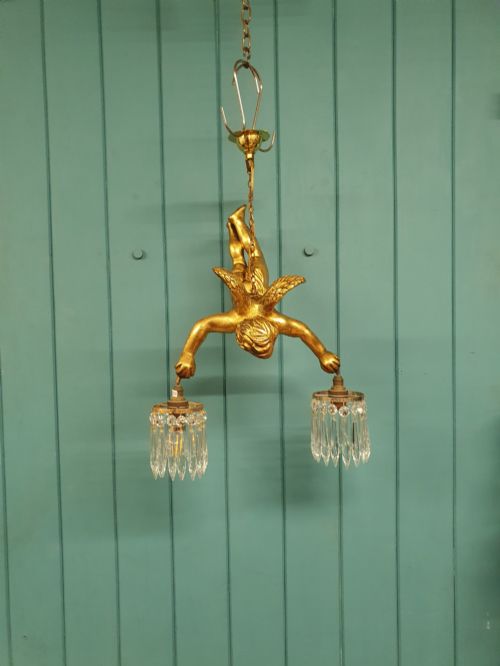
Several chandeliers feature winged bronze cherubs keeping a silent vigil over the room while clutching glass crystal spikes.
What varies in quality
The depth of metal casting and the precision of gilding separate standard production from finer work. Heavier bronze and brass frames with crisp, hand-chased details show superior craftsmanship compared to simpler stamped metal structures.
The grade and cut of the glass create distinct visual differences across pieces. High-quality fixtures use heavy, hand-cut crystal and deeply etched shades that catch and reflect light with greater clarity than plain pressed glass.
The Vintage French Ceiling Light Glossary
- Chandelier
- A branched hanging light fixture designed to hold multiple bulbs or candles. These units distribute illumination across a larger interior space.
- Hall lantern
- An enclosed hanging light, often glazed with glass panels, positioned in entryways or corridors. They protect the light source from drafts while directing illumination downward.
- Tent and waterfall
- A chandelier style where strings of crystal beads form an upper triangular tent shape that flows down into a cascading drop. This arrangement maximises crystal density and light refraction.
- Cut glass
- Glass decorated by grinding facets or patterns into the surface using a wheel. This technique enhances the sparkle of crystal elements.
- Gilt bronze
- Bronze metal coated with a thin layer of gold or gold-coloured alloy. Also known as ormolu, this finish provides a durable, lustrous surface on decorative mounts.
Vintage French Ceiling Light: Frequently Asked Questions
How do I hang a heavy chandelier safely?
Heavy fixtures require direct attachment to a ceiling joist or a reinforced steel support box capable of holding the total weight. Professional electrical installation ensures the structural anchor supports the load securely.
Wiring must connect safely to the household supply, allowing the weight of the metal frame and crystal elements to hang entirely from the mounting hardware rather than the electrical cord.
What rooms suit a hall lantern?
Hall lanterns work well in narrow entryways, stairwells, and corridors where a flush or semi-flush drop provides adequate clearance below. Their enclosed design contains the light source within a compact footprint.
They also function effectively in small vestibules or above kitchen islands where focused downward illumination is practical.
How do I clean crystal drops?
Crystal elements require gentle cleaning with a mild solution of warm water and appropriate cleaner applied with a soft cloth. Individual pieces can be wiped carefully while attached or removed for thorough washing.
Harsh chemicals and abrasive materials damage the metal gilding and scratch the surface of cut glass, so gentle handling preserves the finish.
What is the difference between Empire and Neoclassical styles?
Empire style draws on Napoleonic military and classical Roman motifs, featuring heavier proportions, laurel wreaths, and tent structures hung with crystal. Neoclassical design emphasises lighter, restrained geometric lines, urns, and symmetry.
Both draw inspiration from antiquity, but Empire pieces tend to display more assertive ornamentation and military-inspired details.