




Vintage Framed Needlepoint
Vintage framed needlepoint brings historic textile art to your walls, offering tactile depictions of portraits, landscapes and birds stitched by hand centuries ago.
Vintage Framed Needlepoint
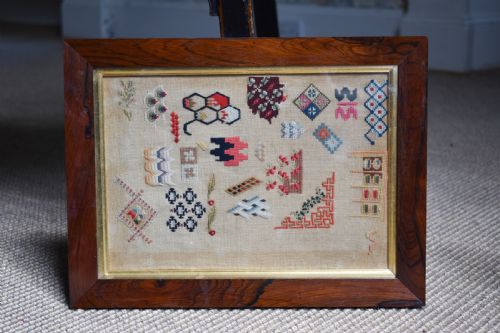
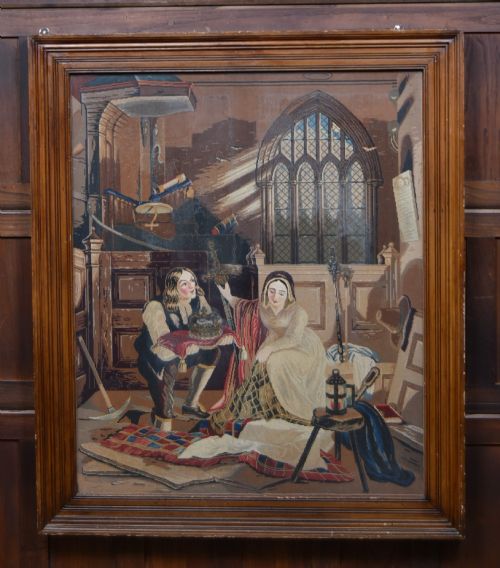
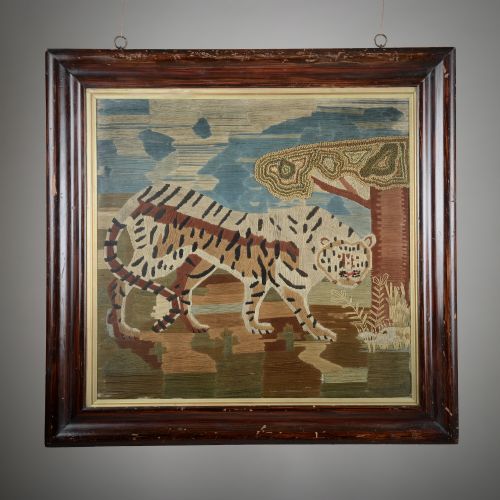
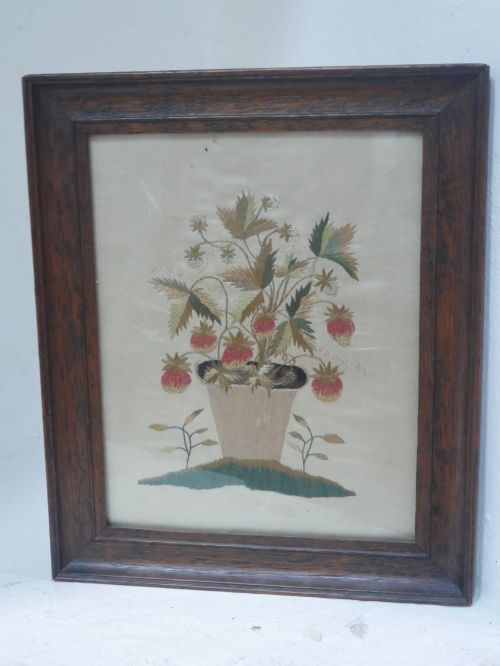
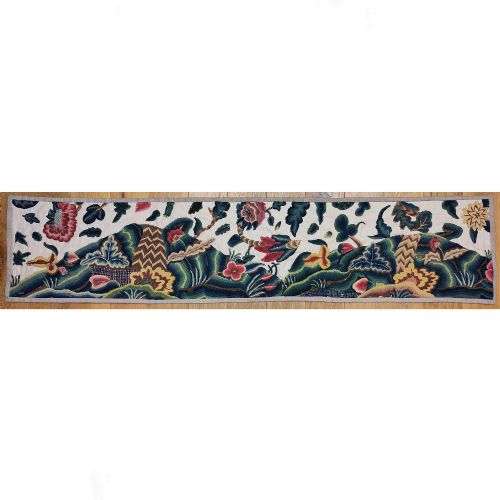
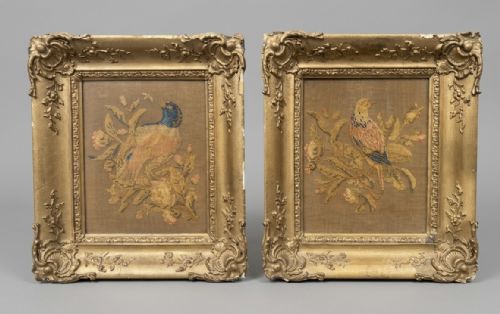
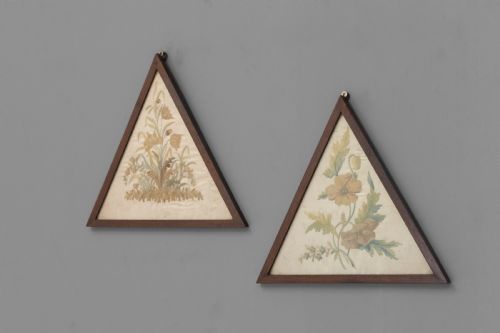
When you search for vintage framed needlepoint, you encounter stitched textile art that spans several centuries of domestic and professional handwork. The selection on this page ranges from early seventeenth-century crewelwork panels and band samplers to nineteenth-century pictorial woolworks, folk art samplers and twentieth-century depictions of birds and landscapes.
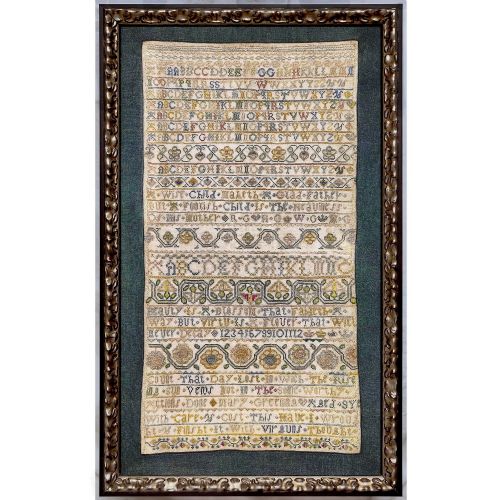
The objects take many forms, including framed wall art, needlework pictures, embroidered panels and samplers worked by young makers like Mary Greening and Margaret Ann Blackow. Materials typically include wool, silk and linen stitched onto canvas or linen grounds, housed behind glass within wooden frames such as walnut, mahogany and giltwood.
How they were made
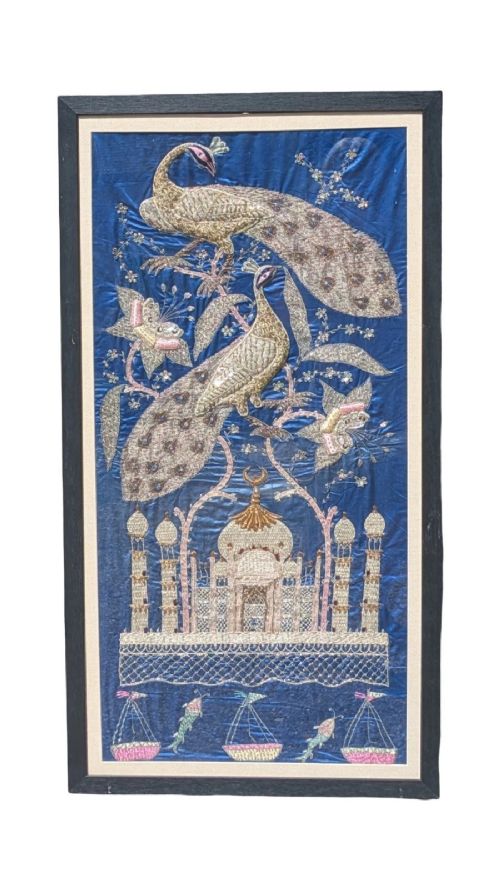
Maker execution relied on hand-stitched techniques using natural threads like wool, silk and linen on woven foundations. Artisans employed various embroidery methods including crewelwork, beadwork, gros-point and petit-point to build up detailed pictorial surfaces.
Framing played a crucial role in preservation, enclosing the fragile textiles behind protective glass within timber surrounds like birds-eye maple, walnut and gilt frames. Stretchers and frames provided structural support to keep the tensioned fabric stable over centuries.
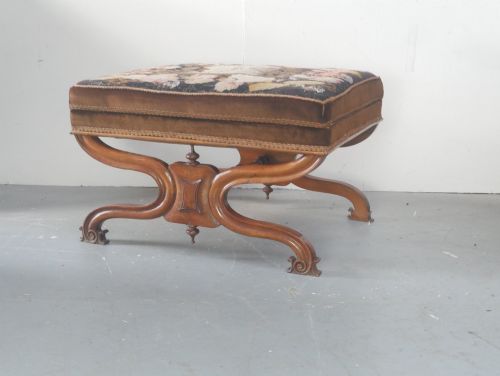
Object forms recorded in the inventory include wall art, samplers, cushion covers, upholstered armchairs and tapestry frames.
What varies in quality
The distinction between ordinary and exceptional examples rests upon the precision of the stitch work and the complexity of the pictorial composition. Fine pieces demonstrate disciplined tension, subtle colour gradation and accomplished draughtsmanship in wool or silk.
Materials and historical provenance further elevate the standing of a piece, particularly when worked on early linen grounds or signed and dated by the maker. The condition of the textile fibres and the originality of the accompanying frame contribute significantly to the overall integrity of the survival.
The Vintage Framed Needlepoint Glossary
- Sampler
- A piece of needlework produced as a demonstration or test of skill, often featuring alphabets, numbers and motifs. These educational exercises were commonly worked by young girls.
- Crewelwork
- Embroidery executed with fine two-ply worsted wool on linen or cotton fabrics. This technique produces textured, flowing designs often seen in seventeenth-century English panels.
- Woolie
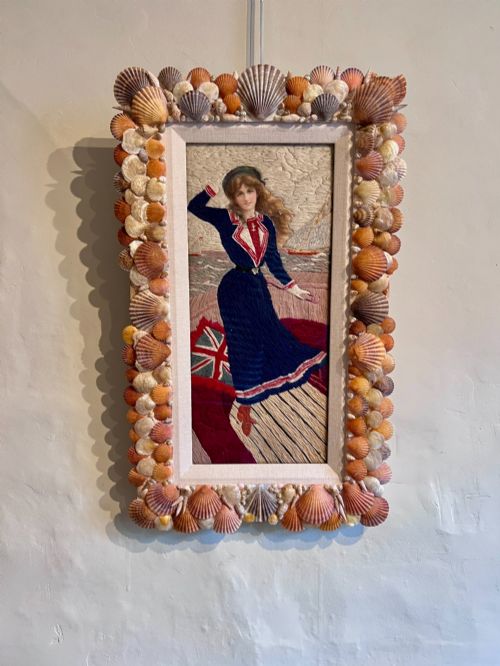
- A pictorial embroidery created by nineteenth-century sailors using coloured wool yarns. They frequently depict maritime scenes or naval vessels.
- Gros-point
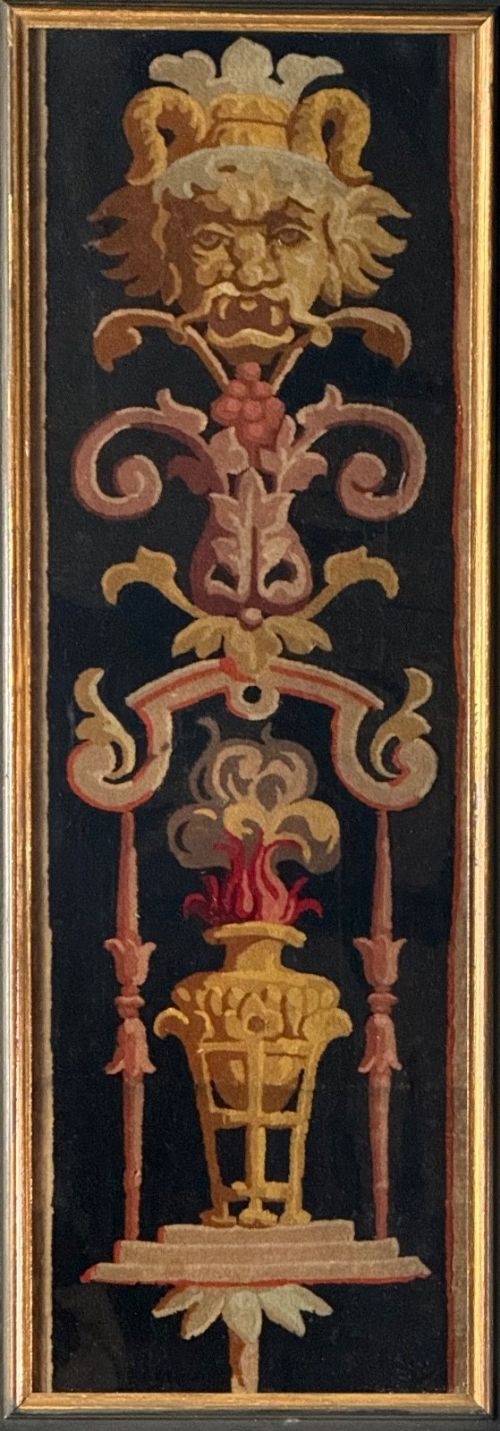
- A counted-thread embroidery stitch worked on canvas that creates a bold, durable texture. It is commonly utilised for covering larger background areas in tapestries.
- Band sampler
- An early form of sampler featuring horizontal bands of diverse decorative patterns. They served as permanent pattern references for the embroiderer.
Vintage Framed Needlepoint: Frequently Asked Questions
How old are these needlepoint pictures?
The pieces span multiple historical eras, with surviving examples dating from the seventeenth century through to the early twentieth century. Many items carry specific period attributions ranging from Stuart and Georgian to Victorian and Edwardian epochs.
Individual pieces often reveal their age through the style of lettering, costume depiction in portraits, or documented maker signatures and dates. Material analysis of the underlying linen and wool yarns further assists in confirming historical periods.
How should I hang needlepoint art?
Needlepoint pictures require placement away from direct sunlight to prevent the fading of natural wool and silk threads. Maintaining stable room humidity protects the fragile organic textiles and their wooden frames.
Because most period pieces feature protective glass, standard picture hooks attached to secure wall studs provide adequate support for the weight of the timber frames.
What is the difference between a sampler and a picture?
A sampler functions primarily as a repository of stitches, alphabets and decorative motifs executed to demonstrate technical proficiency. They frequently record the name and age of the maker alongside dates.
A needlepoint picture focuses on a pictorial scene, such as a landscape, portrait or architectural subject, designed specifically as a finished decorative artwork for display.