
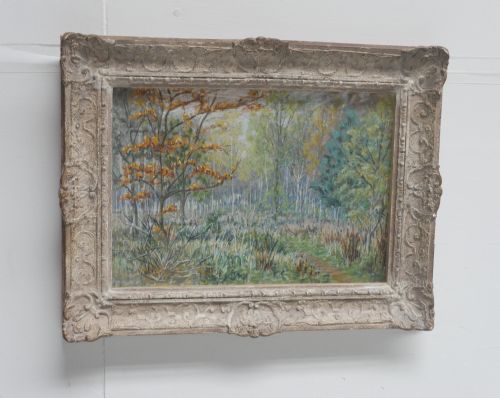
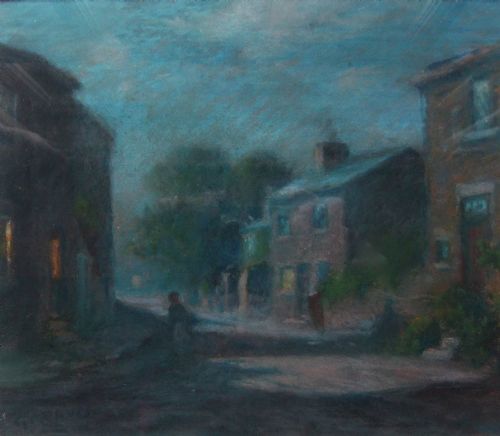


Vintage Framed Landscape Drawing
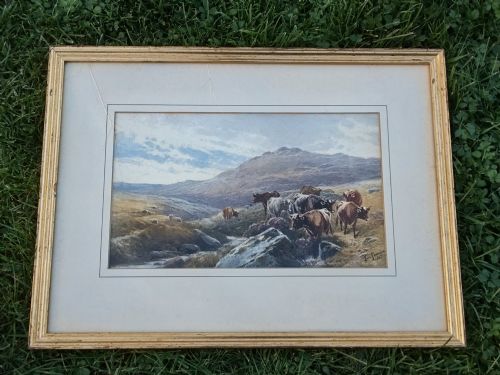
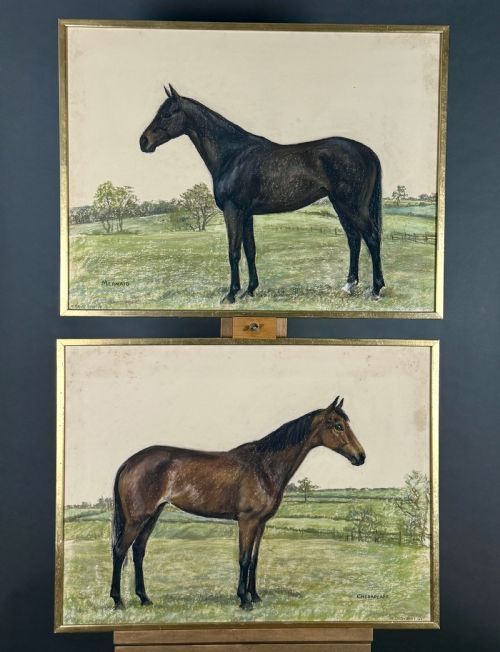
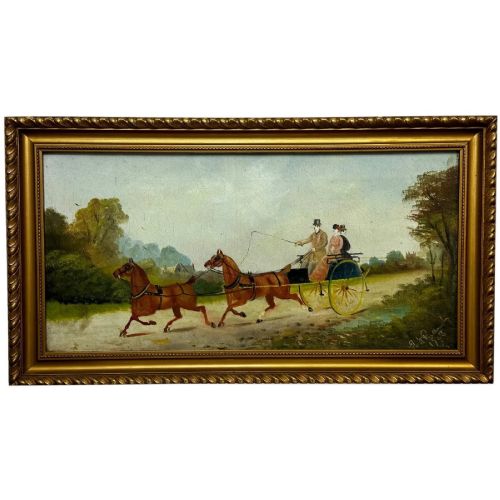
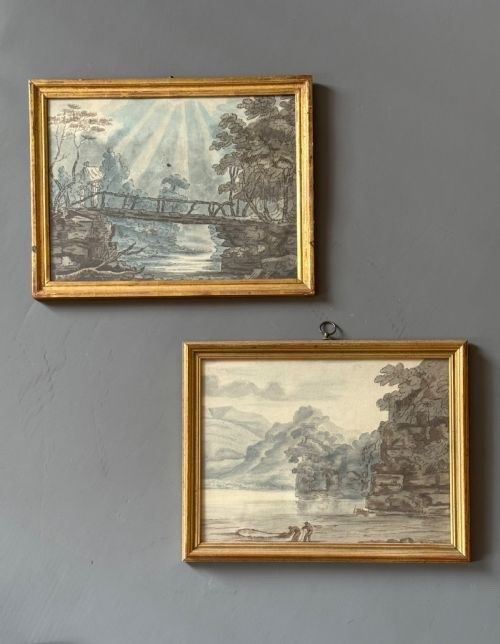
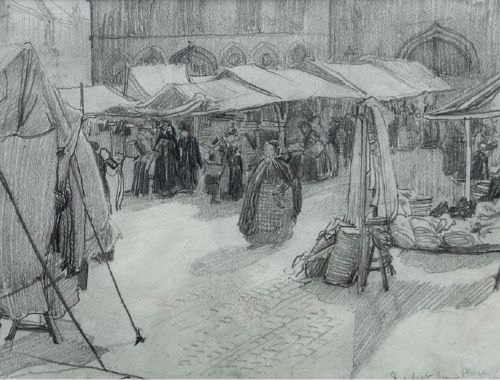
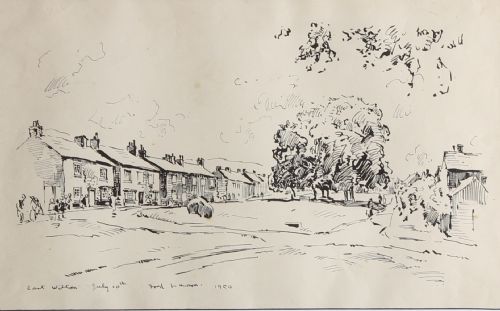
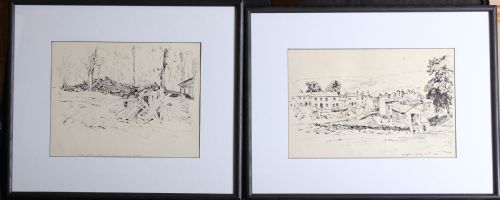
A vintage framed landscape drawing captures fields, rivers and old streets on paper, preserved behind glass in wood.
Vintage Framed Landscape Drawing
A vintage framed landscape drawing brings paper views of countryside scenes, townscapes and waterways into a room.
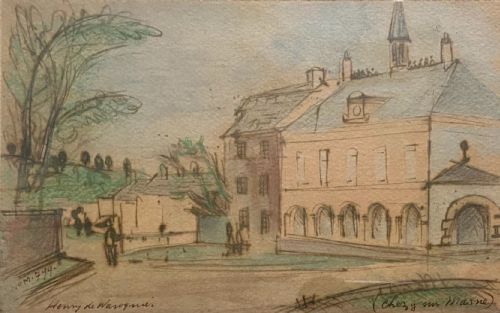
The version most commonly met on this page combines pencil, ink or pastel on paper, enclosed in a wooden frame with glass.
Makers and artists range from the English School to mid-century British practitioners working across the twentieth century.
How they were made
Works utilise dry or liquid mediums applied directly to paper sheets, using pencil, charcoal, pastel, ink or watercolour.
Enclosures rely on wood frames, frequently gilt or burr timber, protecting delicate surfaces beneath fitted glass sheets.
Listings span the nineteenth century through the mid-twentieth century, featuring paper, ink, pastel and watercolour.
What varies in quality
Draftsmanship and control of the medium separate standard studies from works with assured line and atmospheric depth.
Condition of the paper and integrity of the original framing determine the preservation of each landscape over time.
Henry Percy Huggill·Fred Lawson·Henry de Waroquier·William Greaves·John Hobson Nicholson·J W Hogley·Samuel Henry Alken·Eduard Leon Cortes·Berthe des Clayes·John Lovibond and Sons·Yves Brayer·George De Paris·Henry H Parker
The Vintage Framed Landscape Drawing Glossary
- Pastel
- A dry drawing medium composed of powdered pigment and a binder, producing rich, velvety coloured surfaces.
- Gilt wood
- Timber frames coated in a thin layer of gold leaf or metallic paint, adding reflective warmth to the border.
- English School
- A classification for artists trained or working within British traditions across specific historical periods.
- Watercolour
- A paint method using water-soluble pigments that create translucent washes across textured paper.
Vintage Framed Landscape Drawing: Frequently Asked Questions
How do I hang a framed drawing?
Select an interior wall away from direct sunlight to prevent the paper and pigments from fading over the years.
Secure the frame using appropriate wall fixings suited to the weight of the wood and glass.
Can I remove the drawing from its frame?
Opening vintage frames risks damaging fragile paper and disturbing historic mount boards that protect the artwork.
Keep the piece intact within its original setting to preserve its period character and physical integrity.
What is the difference between pastel and watercolour?
Pastel uses dry pigment sticks that leave a soft, powdery texture on the surface of the paper.
Watercolour employs wet fluid washes that soak into the fibres to create transparent layers of colour.
How do I identify the period of a drawing?
Examine the style of the landscape subject, the materials of the frame and any signatures recorded on the work.
Paper types and backing boards often provide additional clues regarding the decade of creation.