
Vintage Footstool
A vintage footstool brings low, practical seating and period character to a room, spanning styles from country elm to carved walnut.
Vintage Footstool
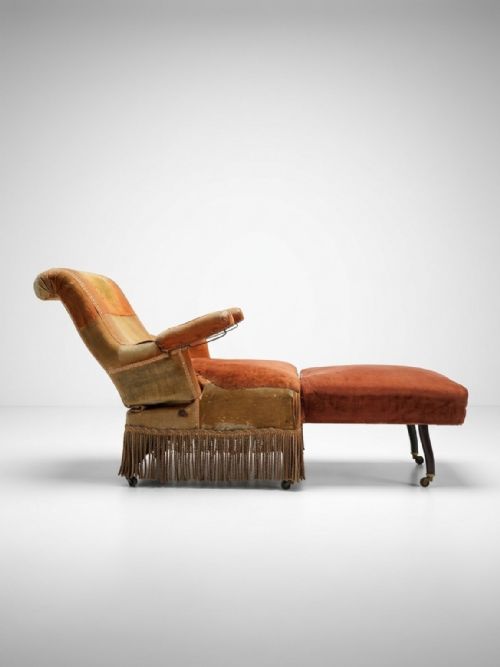
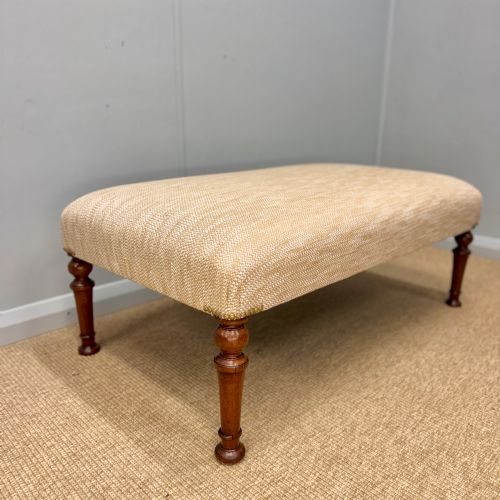
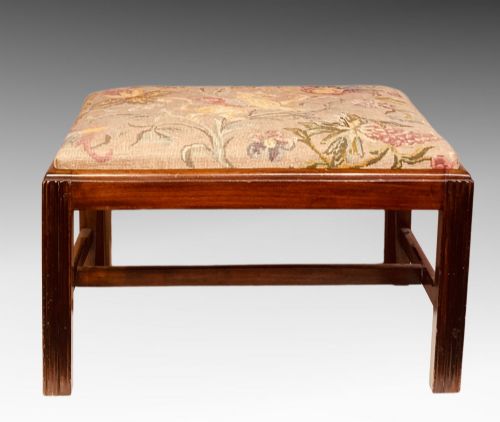
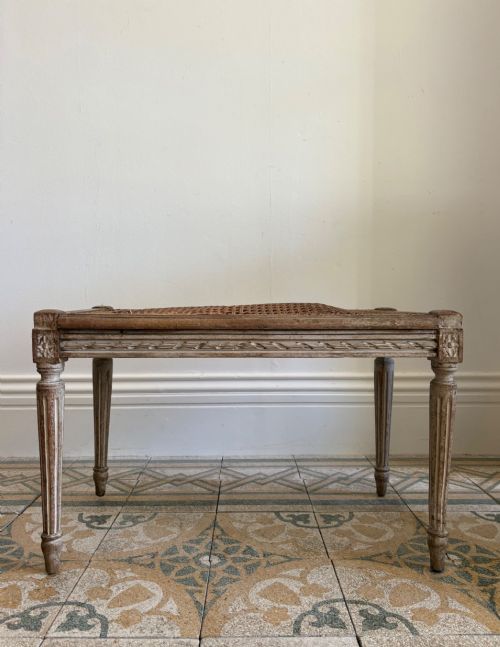
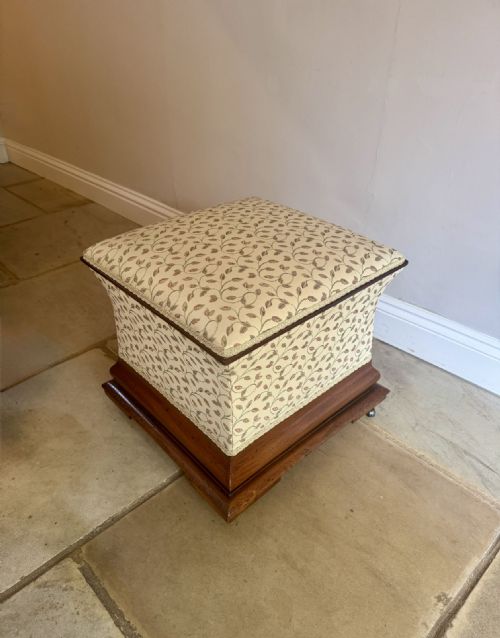
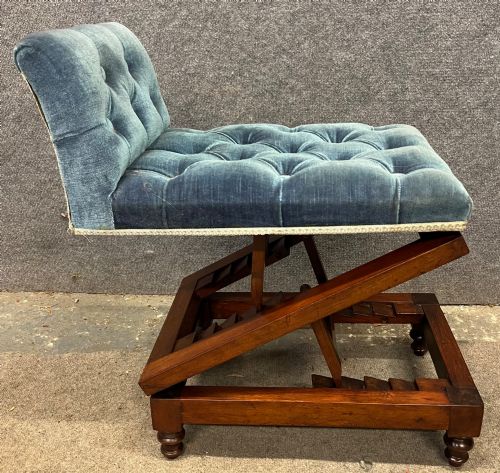
A vintage footstool serves as low seating or a rest for the feet, appearing across numerous forms such as fireside stools, dressing table seats, ottomans and window benches. When searching for a vintage footstool, buyers encounter pieces ranging from simple country elm and oak constructions to grander revival designs.
The selections span multiple centuries, with Victorian and Edwardian examples sitting alongside earlier 18th-century forms, 19th-century pieces, and 1930s Art Deco items. Walnut and mahogany predominate among the finer woods, while beech and pine appear in vernacular seating.
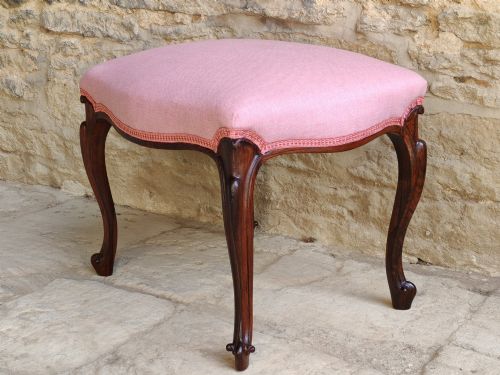
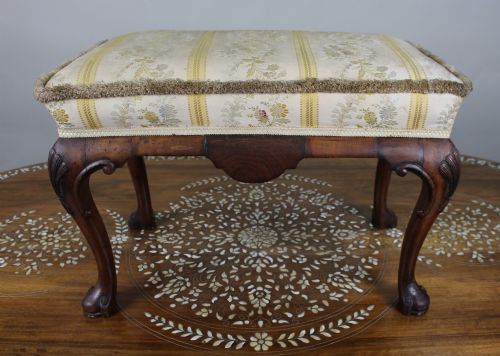
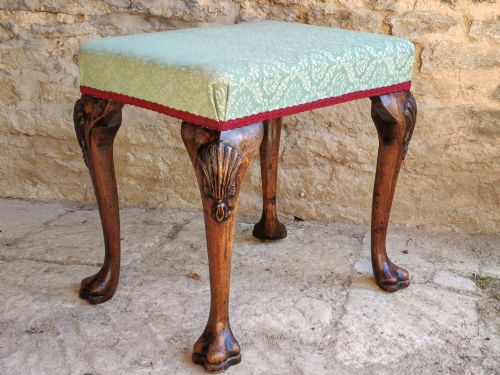
Revival styles heavily influence the inventory, featuring Queen Anne style cabriole legs, Chippendale carved details, and Regency proportions. Pieces originate from English workshops as well as Scottish, French, Swedish, and Anglo-Indian makers.
How they were made
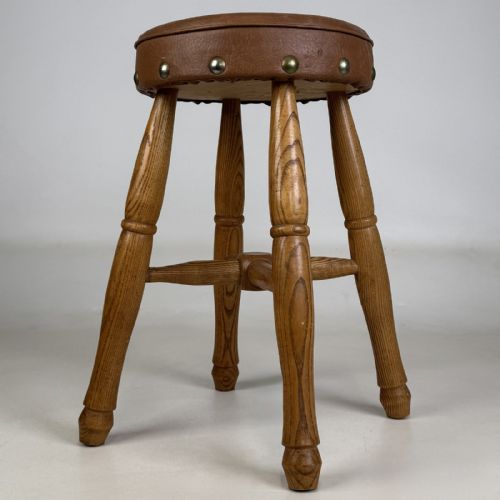
Cabinetmakers utilised hardwoods such as mahogany, walnut, oak, and rosewood for frames, employing traditional joinery alongside turned legs and carved decoration. Beech and elm frequently form the structure of simpler country and tavern stools.
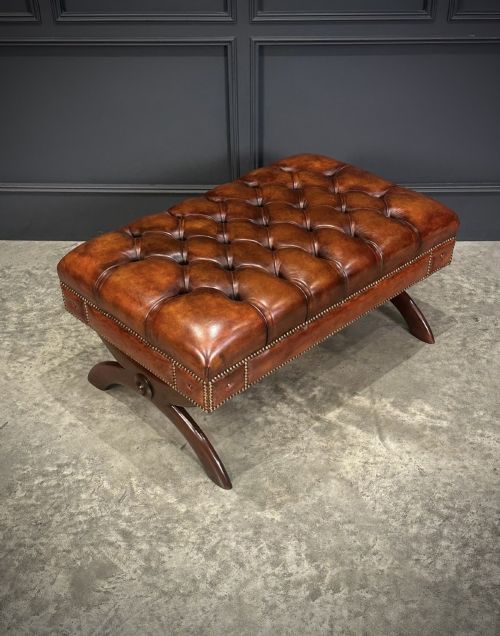
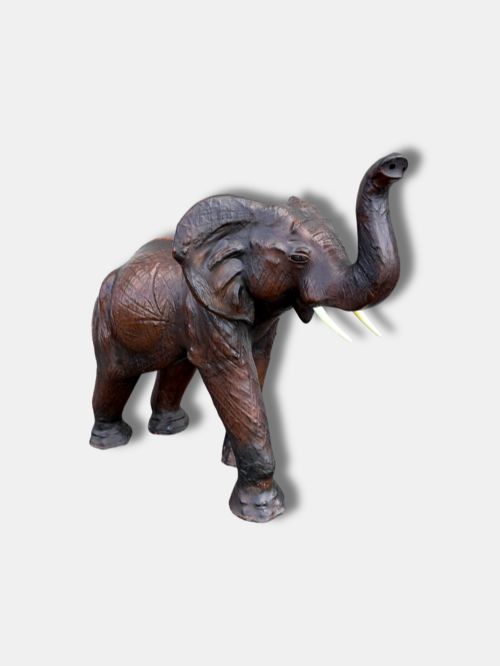
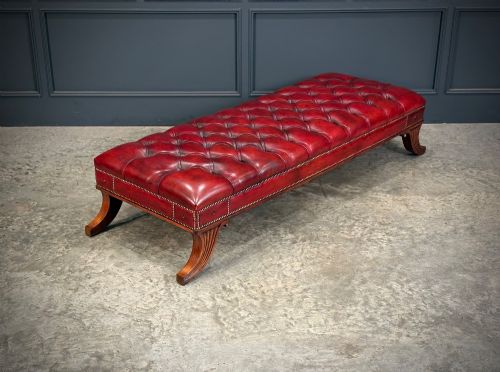
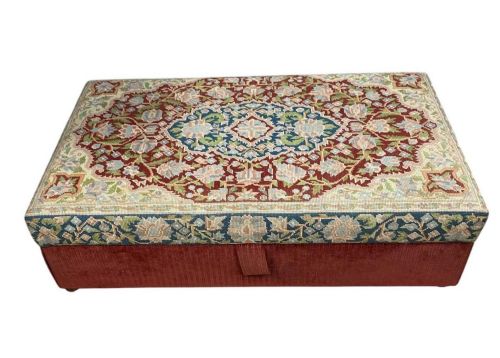
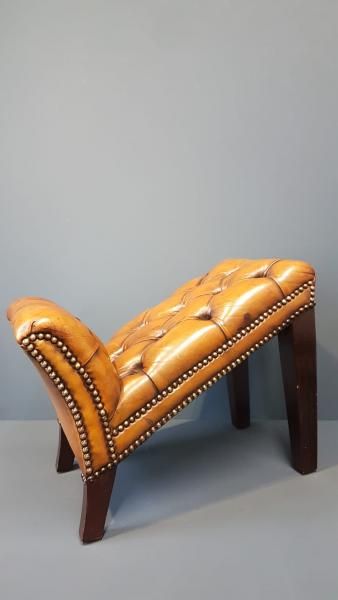
Upholstery methods involved textile coverings, needlepoint work, hand-dyed leather, and buttoned hides secured over padding, sometimes complemented by brass hardware or gilt accents.
The listings combine walnut, mahogany, oak, elm, and rosewood across forms ranging from simple country seats to ornate Victorian parlour stools.
What varies in quality
The distinction between standard examples and top-tier pieces lies in the crispness of timber carving, the choice of dense burr walnut or figured mahogany, and the integrity of original joinery. Finer items display balanced proportions, such as well-executed cabriole legs with proper scroll feet.
Upholstery quality also dictates value, where hand-dyed leather, needlepoint work, or traditional horsehair stuffing preserved beneath period textiles reflect the original maker's investment in materials.
Arthur Simpson Of Kendal·Harry and Lou Epstein
The Vintage Footstool Glossary
- Cabriole leg
- A furniture leg that curves out and then narrows inward, commonly ending in a pad or claw foot on Queen Anne and Victorian pieces.
- Needlepoint
- A type of canvas work embroidery utilised historically for durable seat covers and decorative footstool tops.
- Cross stretcher
- Wooden rails connecting the legs near the base to provide structural rigidity and decorative symmetry.
- Ottoman
- A low upholstered seat or footstool without a back or arms, often built on a larger scale.
- Windsor
- A traditional chair or stool construction method where legs and spindles are fitted directly into a solid carved wooden seat.
Vintage Footstool: Frequently Asked Questions
How do I date an antique footstool?
Dating relies on identifying timber choices, construction techniques, and stylistic markers such as Victorian buttoning or Regency legs. Secondary woods and tool marks underneath often corroborate the period.
Comparing the piece to documented examples from the same decade helps narrow down the origin.
Are these stools suitable for daily use?
Most solid wood frames with sound joinery easily withstand everyday sitting or resting feet. Periodic checks of the leg joints ensure long-term stability.
Delicate gilt or highly carved display pieces require more careful placement in the home.
What is the difference between an ottoman and a footstool?
Ottomans typically offer a larger surface area intended to double as low seating or a coffee table. Footstools generally remain smaller and focus purely on supporting seated occupants.
Both forms utilise similar upholstery and timber framing traditions.
How should I clean leather upholstery on a footstool?
Leather surfaces benefit from dusting with a soft cloth and occasional treatment with appropriate leather dressings to prevent drying. Avoiding direct sunlight preserves the natural dye.
Needlework or fabric seats require gentle vacuuming through a mesh guard.