
Vintage Flower Oil Artwork
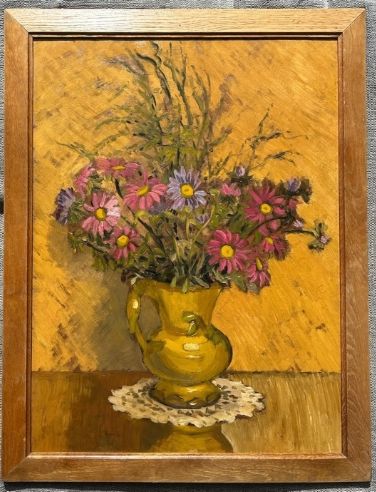
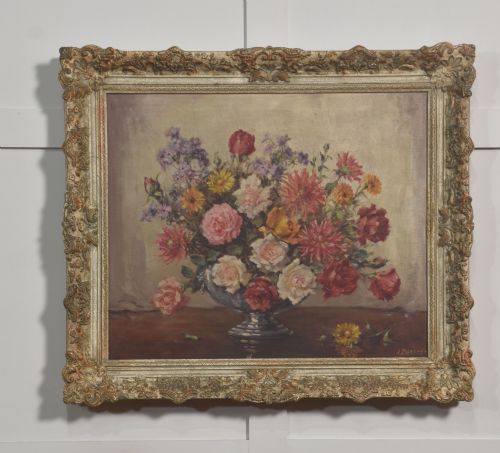
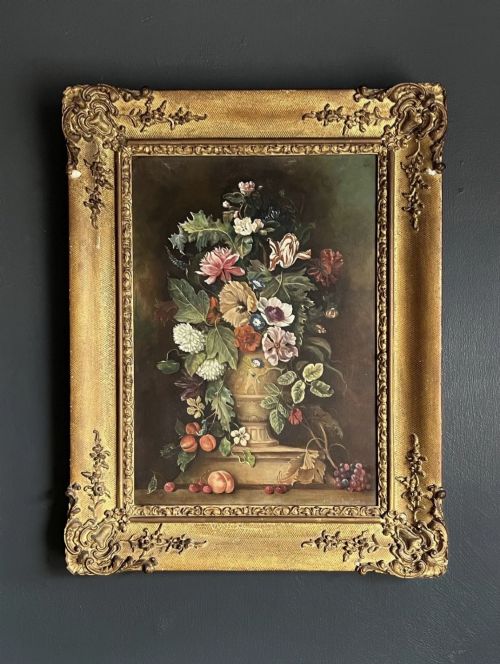
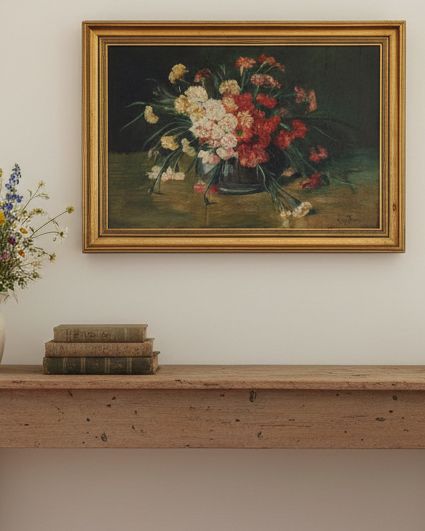
Vintage flower oil artwork brings rich pigment and botanical study into a room, capturing floral forms through decades of varied painting traditions.
Vintage Flower Oil Artwork
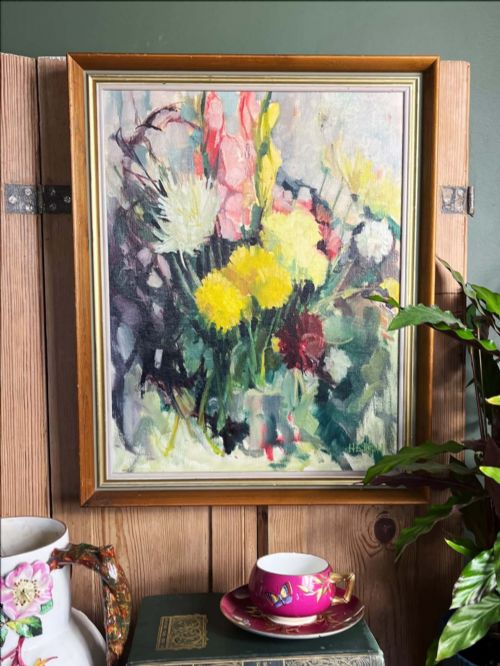
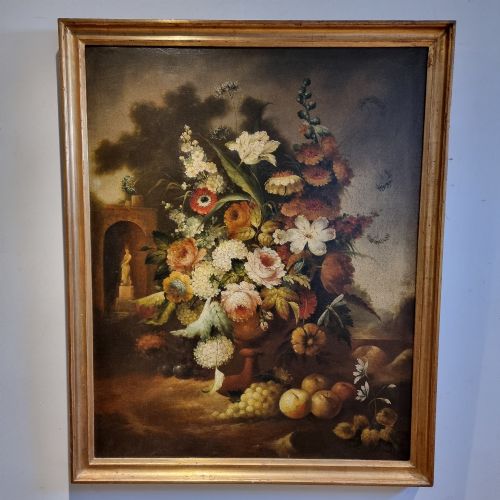
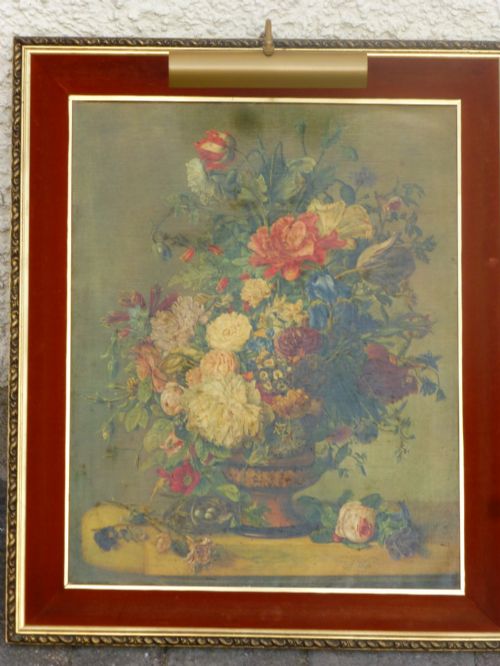
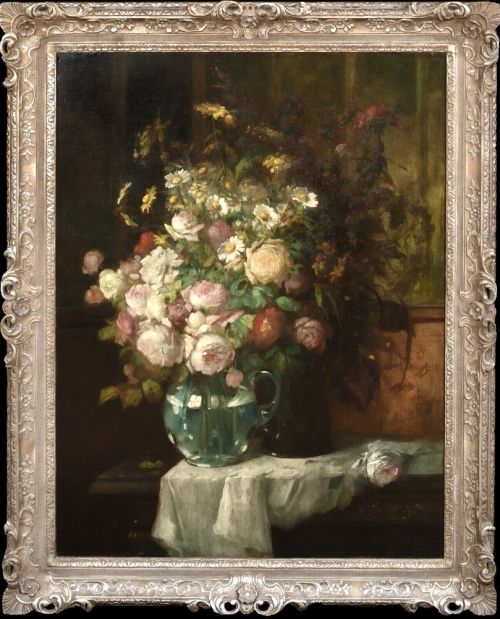
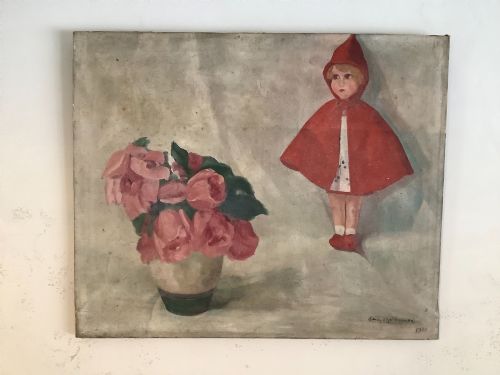
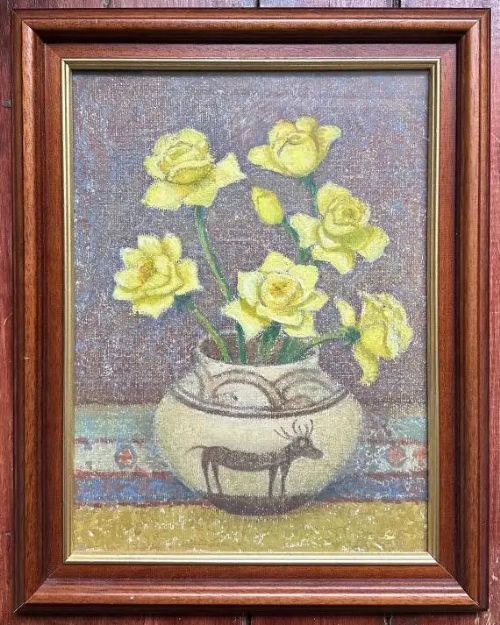
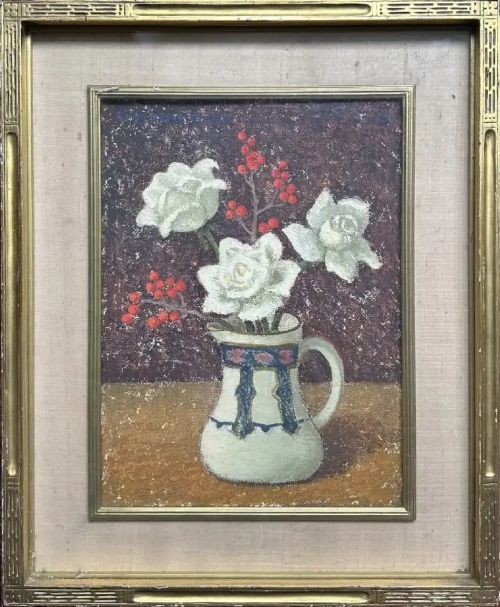
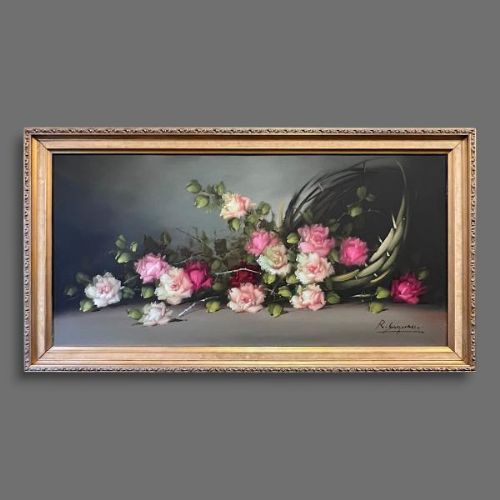
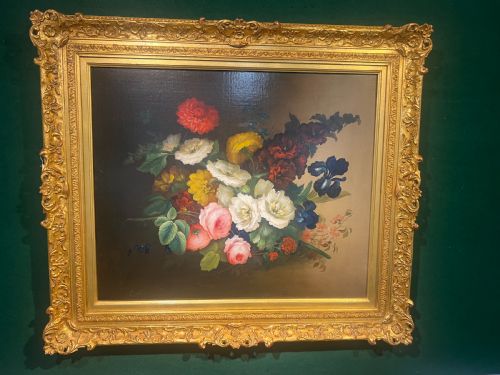
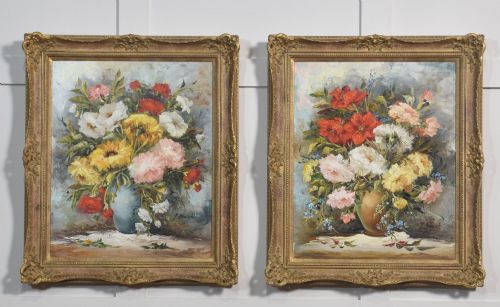
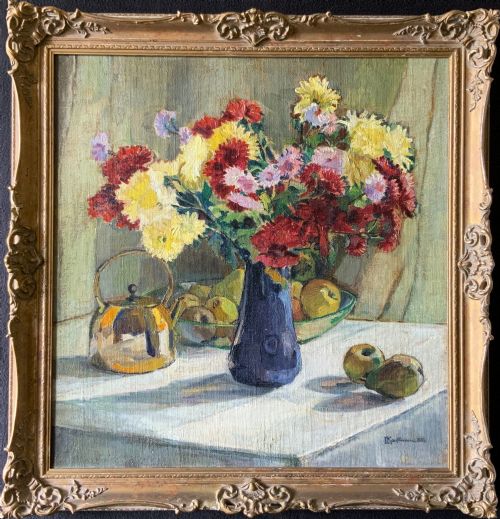
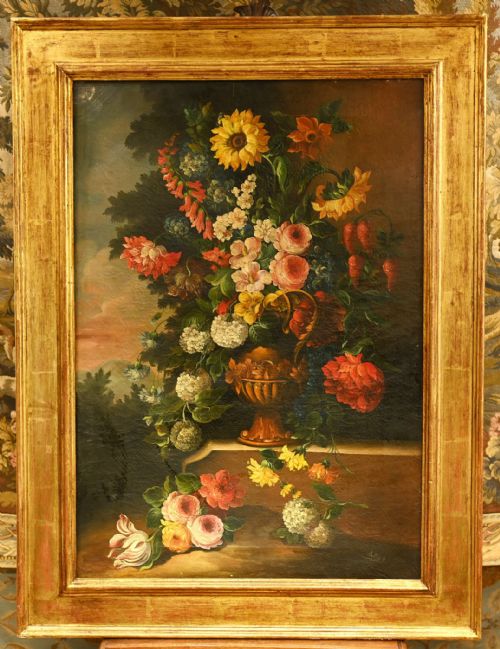
Vintage flower oil artwork encompasses oil paintings depicting floral subjects, botanical studies, and still life arrangements created across the nineteenth and twentieth centuries. These pieces range from naive Flemish compositions and Dutch Golden Age interpretations to bold Mid-Century Modern and Impressionist canvases. Buyers most frequently encounter mid-twentieth-century examples featuring canvas or board supports housed in original frames.
The selections span diverse regional schools, including British, French, Belgian, and American impressionism alongside traditional still life formats. Subjects extend from simple vases of roses and carnations to elaborate floral displays spilling from baskets or pottery. Works frequently combine botanical detail with interior settings or abstracted backgrounds reflecting the aesthetic of their decade.
Materials and construction
Artists painted these works primarily with oil paint applied to stretched canvas or rigid board supports. The medium allows for thick impasto texture, luminous blending, and deep colour saturation that preserves botanical tones across generations. Many pieces retain their original wooden frames, frequently finished with layered gesso and gilt surface treatments.
Techniques vary from precise pointillist dots and luminist light effects to swift impressionist brushstrokes and modernist abstraction. The interaction between oil pigment and canvas grain provides the physical substance characteristic of these painted works.
Materials recorded across the archive include gilt gesso frames, terracotta pots, wicker baskets, and heavy oil paint.
Distinctions in quality
Quality rests upon the artist's command of tone, composition, and paint handling rather than the mere age of the canvas. Superior works display confident brushwork that defines petal structures and light play without relying on rigid outlines.
The harmony of the colour palette and the integrity of the original frame contribute significantly to a piece's visual weight. Finer examples maintain stable pigment layers with minimal surface craquelure and retain strong provenance through legible signatures or attribution.
Kenneth Cozens·I Berezny·Konstantin Stoitzner·Emma Fordyce MacRae·Edwin Steele·Manuela Bonati·Owen Bowen·Gertrude Hayes·Simon Pietersz Verelst·Winifred Turner·Amile Coppieters·Florence Hess·A Nikolokov·Calzolari·Ernest Higgins Rigg·Sir Matthew Smith
The Vintage Flower Oil Artwork Glossary
- Impasto
- Paint applied thickly to a canvas, standing out in relief from the surface and catching the light.
- Gesso
- A plaster mixture applied to wood frames or canvas as a base for moulding or gilding.
- Still life
- A painting featuring inanimate subject matter, typically commonplace objects or natural items such as flowers.
- Provenance
- The chronological record of ownership and origin for a work of art.
- Craquelure
- A network of fine cracks in the surface paint or glaze of an oil painting, indicating age.
Vintage Flower Oil Artwork: Frequently Asked Questions
How do I date an oil painting?
Dating relies on stylistic clues, framing methods, and stretcher construction. Artists' signatures and canvas stamps often narrow the decade of creation.
Material analysis of the oil paint and canvas weave further assists in determining the historical period.
Where should I hang these paintings?
Floral still lifes suit dining spaces, sitting rooms, and hallways where natural light enhances the oil pigments. Avoid placement in direct sunlight to protect the colours.
Pairing pieces with traditional or mid-century interiors allows the botanical subject matter to anchor the room.
What is an oleograph?
An oleograph is a mechanical colour print textured to imitate an oil painting on canvas. These reproductions appeared frequently in the nineteenth and twentieth centuries.
Close inspection reveals tiny dot patterns or lack of brushstroke relief characteristic of printed media rather than hand-applied oil paint.