


Vintage Floral Table
A vintage floral table brings botanical ornament and historic woodwork into domestic spaces through inlaid marquetry and hand-painted surfaces.
Vintage Floral Table
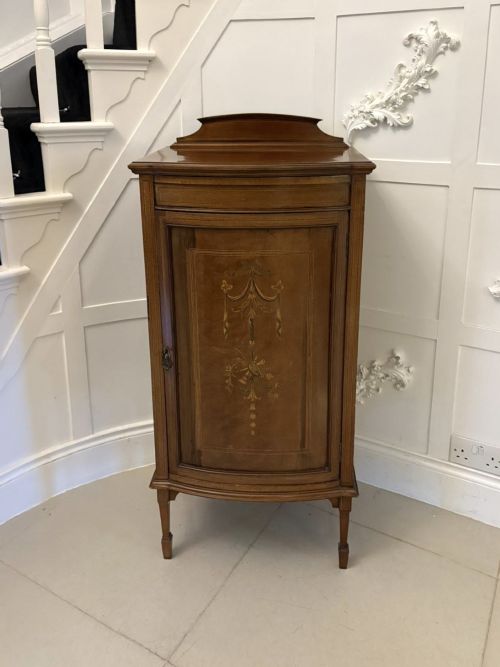
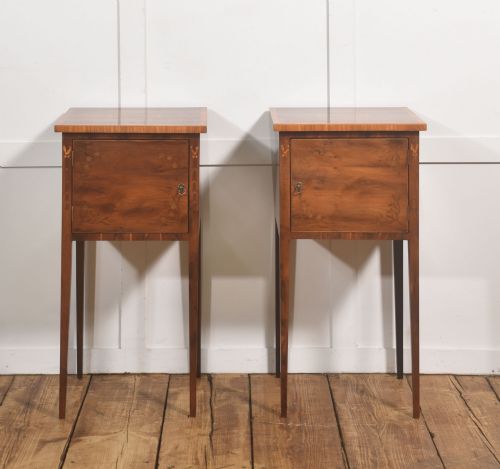
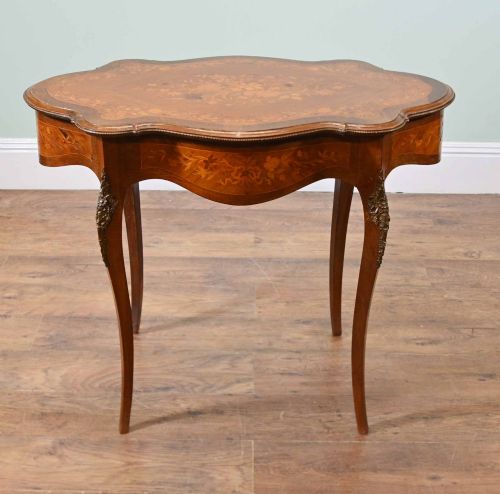
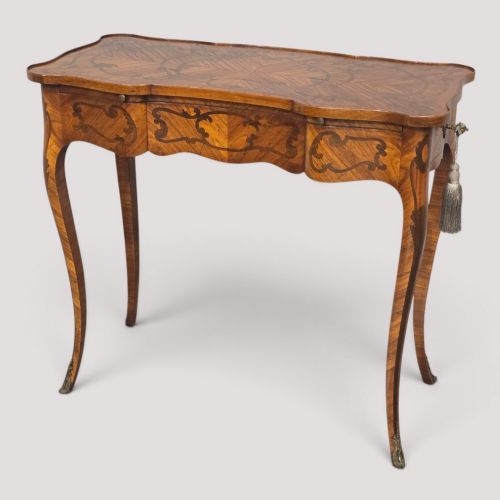
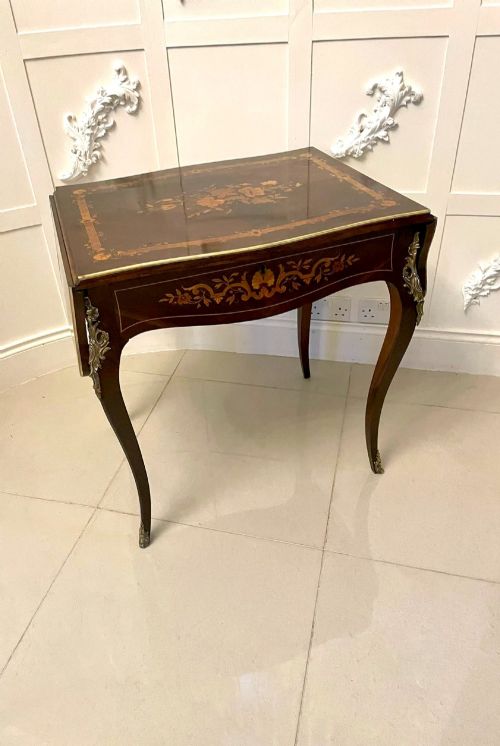
A vintage floral table encompasses occasional tables, bedside cabinets, writing desks, and coffee tables produced across the nineteenth and early twentieth centuries. These pieces emerge from English, French, and Italian workshops, reflecting Victorian, Edwardian, and Louis XV revival design tendencies.
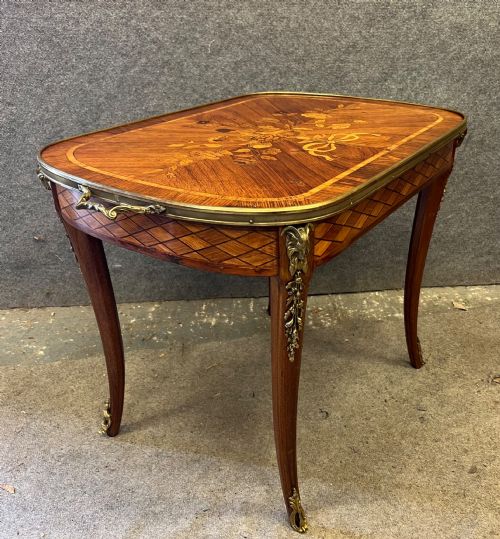
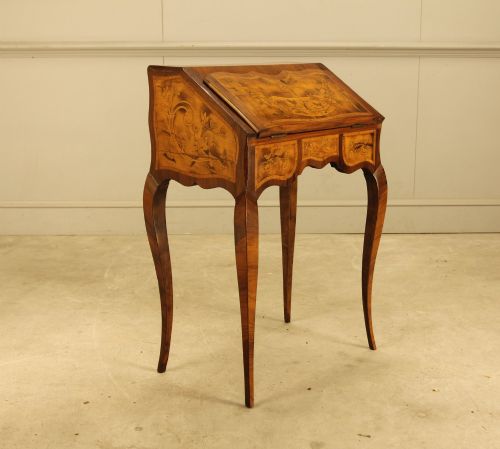
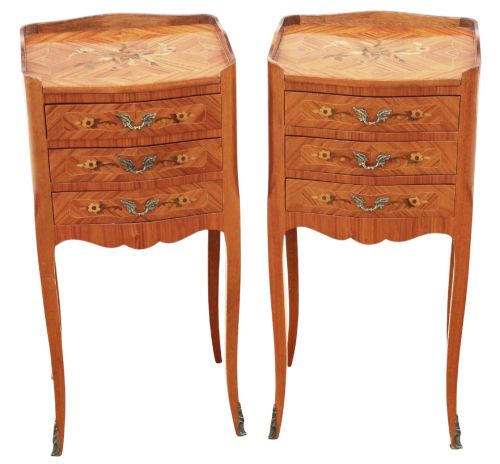
Buyers encounter walnut, mahogany, rosewood, and satinwood foundations embellished with floral marquetry, parquetry, or surface painting. Forms range from two-tier étagères and tray-top coffee tables to freestanding centre tables and pedestal occasional tables.
The selection includes specialised items such as Anglo-Indian bone-inlaid tables and Sheraton Revival oval tables. These variations demonstrate the broad domestic application of floral motifs in historic furniture making.
Materials and Technique
Cabinetmakers constructed the foundational carcases using dense hardwoods like mahogany, walnut, rosewood, and kingwood. These timbers provided stable bases for intricate surface decoration.
Floral ornamentation was achieved primarily through wood marquetry, utilising contrasting veneers to depict botanical sprays and blossoms. Alternatively, artisans applied hand-painted floral decoration directly to satinwood, mahogany, or specialised painted panels.
Vintage Floral Table Retail Price Guide 2026
Typical asking prices for vintage floral table among the pieces listed under this phrase on Sellingantiques today, from the lower quarter to the upper quarter. They describe what is for sale here now, not the wider market.
Periods represented across the items span from the nineteenth century through the Edwardian era and the nineteen-thirties.
Material Execution and Joinery
Quality rests upon the precision of the marquetry cutting and the variety of cabinet woods employed within the design. Finer examples integrate diverse natural veneers to create tonal depth in the floral depiction, rather than relying solely on surface paint.
Structural integrity and timber selection dictate the hierarchy of these pieces. Solid secondary timbers, balanced veneer work, and refined turning on legs or gallery edges distinguish exceptional commissions from standard domestic furniture.
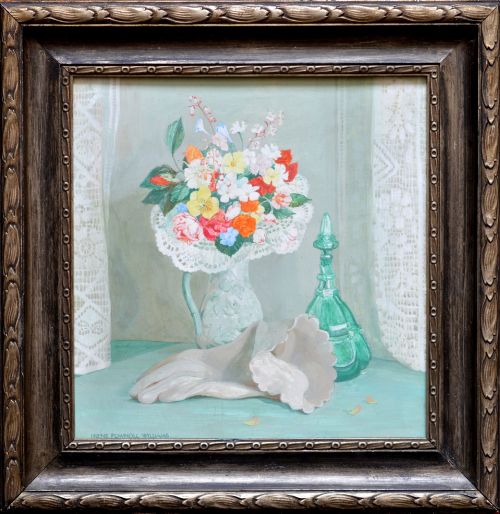
Liberty and Co·Royal Doulton·Stevens and Williams·Irene Christobelle Pownoll Williams
The Vintage Floral Table Glossary
- Marquetry
- Decorative veneer work arranged in geometric or pictorial patterns across a furniture surface. Craftsmen cut contrasting pieces of wood, shell, or bone to fit precisely into a designated ground.
- Kingwood
- A dense, heavily figured timber native to Brazil utilised extensively in fine cabinetmaking. Its rich dark brown colour and golden contrasting stripes made it a favourite for French revival pieces.
- Étagere
- A piece of furniture consisting of open shelves for displaying small objects or ornaments. These tiered tables often feature inlaid tops and delicate supports.
- Sheraton Revival
- An architectural and furniture style drawing inspiration from late eighteenth-century neoclassical designs. Pieces typically display satinwood veneers, tapered legs, and painted floral details.
Vintage Floral Table: Frequently Asked Questions
What woods were used for these tables?
Makers utilised a range of dense hardwoods for the primary structures and surface veneers. Walnut, mahogany, rosewood, satinwood, and kingwood appear frequently across the available pieces.
Lighter satinwood often served as a pale ground for painted floral decoration, while dark walnut and mahogany accommodated complex contrasting marquetry inlay.
How do I identify a Louis XV style piece?
Louis XV style tables display characteristic cabriole legs, serpentine shaped tops, and fluid, asymmetrical curves. Marquetry depicting floral sprays is typically framed by shaped kingwood or rosewood borders.
These French-inspired designs emphasise decorative grace, often incorporating two-tiered étagère structures or writing surfaces with slender proportions.
Where should I place a painted occasional table?
An occasional table with painted floral decoration suits reception rooms, hallways, or bedrooms as a decorative accent surface. Their compact dimensions allow them to function as bedside cabinets or lamp tables.
Protecting the surface from direct heat and moisture preserves the delicate hand-painted details and historic wood finishes over time.
What is the difference between marquetry and painted tables?
Marquetry involves assembling thin slices of various coloured woods into a pictorial floral mosaic embedded directly into the table top. Painted tables feature pigments applied straight onto the timber or panel surface.
Both techniques were employed during the nineteenth and early twentieth centuries to achieve botanical ornamentation, though marquetry relies purely on natural timber tones.