


Vintage Floral Paraffin Lamp
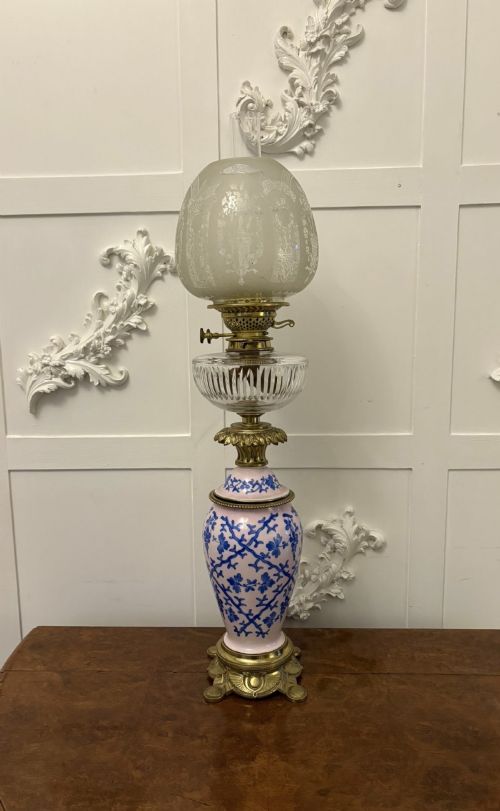
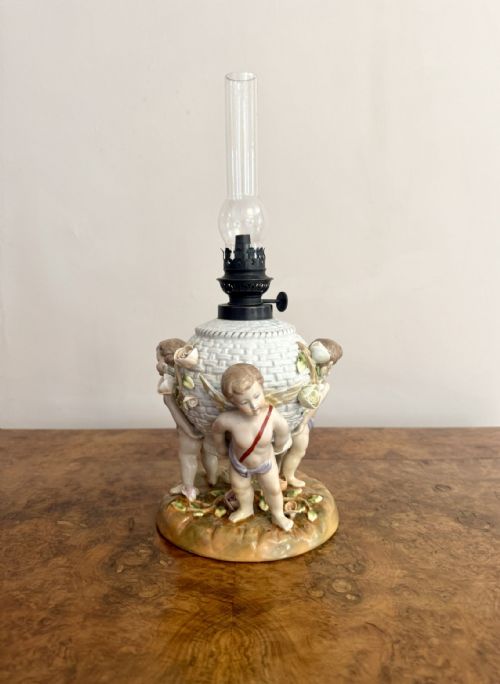
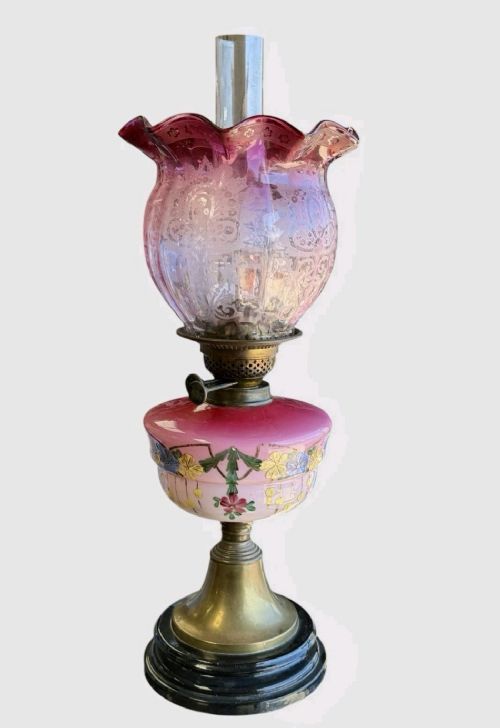
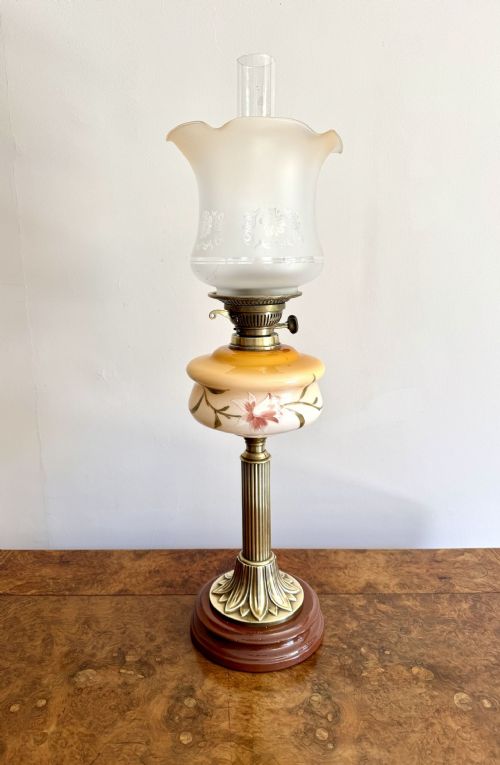
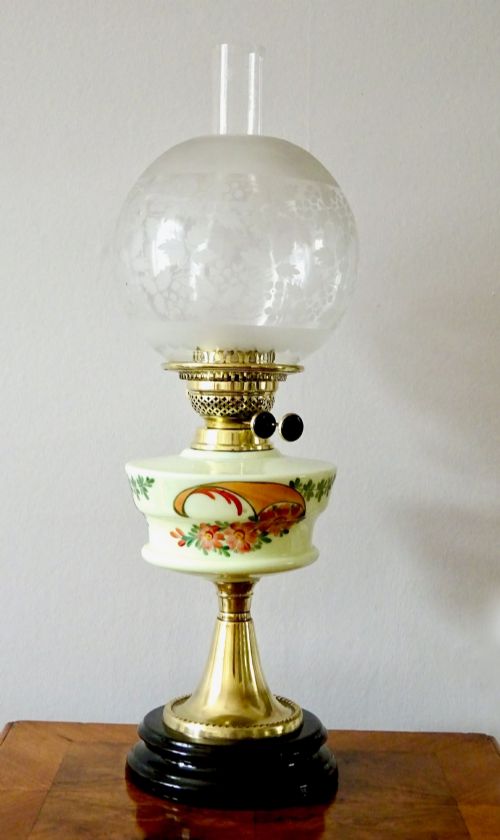
These vintage floral paraffin lamps combine functional Victorian and Edwardian lighting with hand-painted porcelain, cranberry glass, and brass construction.
Vintage Floral Paraffin Lamp
When you search for vintage floral paraffin lamp, you encounter table lamps, hanging shades, and complete oil lamps dating from the Victorian and Edwardian eras. The selection on this page centres on pieces produced between the 1860s and the 1930s, featuring decorative painted bowls and coloured glass.
How they were made
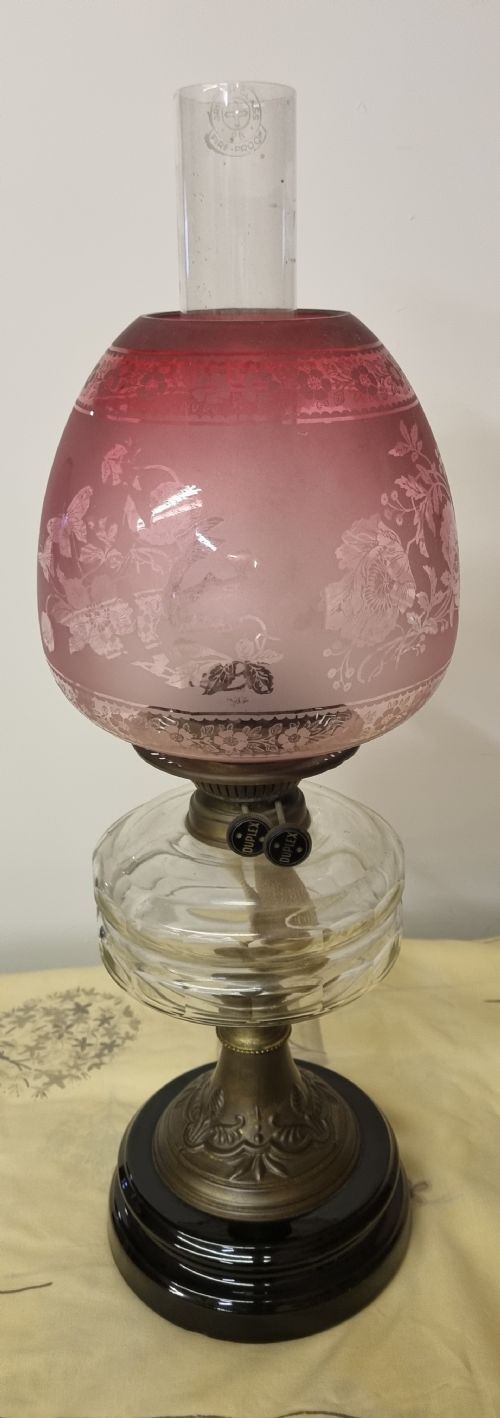
These lamps utilise combinations of moulded glass, porcelain, and brass, often incorporating specialised techniques such as cranberry glass and opaline finishes. Manufacturers shaped molten glass into fonts and tulip shades while casting and turning brass components to form the structural mounts.
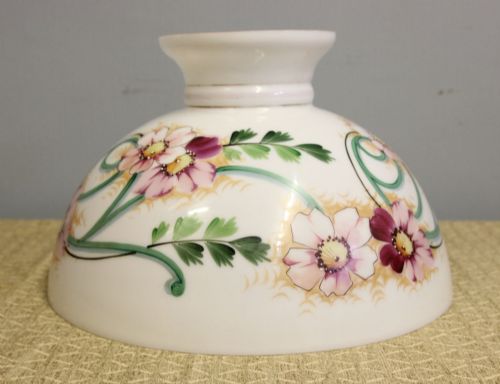
Decoration relied heavily on hand-painted floral designs applied directly to the porcelain bodies or glass shades. Some pieces incorporated gilt decoration to highlight the painted bowls and metal mounts.
Tulip shades bring perennial spring indoors, regardless of the weather outside.
What varies in quality
Quality in these lamps rests on the crispness of the brass casting and the artistry of the hand-painted floral decoration on the porcelain and glass fonts. Superior pieces display finely detailed brushwork and substantial metal weight rather than mass-produced uniformity.
The integration of materials also defines the better examples, where coloured glass shades match the proportions and colour palette of the supporting ceramic and brass bases.
Sitzendorf
The Vintage Floral Paraffin Lamp Glossary
- Paraffin lamp
- A domestic lighting fixture that burns paraffin oil through a wick housed in a burner. These lamps typically feature a glass or ceramic font to hold the fuel.
- Font
- The reservoir that holds the paraffin oil, usually fashioned from glass, porcelain, or brass. It sits above the base and beneath the burner assembly.
- Cranberry glass
- A rich pink or red transparent glass created by adding gold chloride to the molten batch. It appears frequently in Victorian lamp shades and fonts.
- Opaline glass
- An opaque or translucent glass, often pale green, pink, or white, used extensively for decorative lamp shades during the nineteenth and early twentieth centuries.
Vintage Floral Paraffin Lamp: Frequently Asked Questions
How do I date a paraffin lamp?
Dating relies on stylistic markers, material types, and manufacturing techniques recorded across the Victorian and Edwardian periods. Pieces from the eighteen-sixties often exhibit heavier porcelain bodies, whereas later twentieth-century examples shift in proportion and shade design.
Examining the burner mechanisms and the specific shade geometry helps narrow the decade of production. Comparing the floral painting style to known ceramic patterns further clarifies the age.
Can these lamps still burn paraffin?
Most buyers acquire these pieces for decorative display rather than functional indoor lighting. Converting them back to active use requires careful inspection of the internal reservoir and burner condition.
Many collectors prefer to preserve the original wicks and brass fittings without introducing fuel. Safety standards for historical lighting differ significantly from modern electrical alternatives.
What is cranberry glass?
Cranberry glass is a distinctive pink-red transparent material produced by introducing gold into the glassmaking process. It became exceptionally popular for Victorian lamp shades and decorative fonts.
The depth of the pink hue varies depending on the concentration of gold and the cooling process. This glass type contrasts sharply with brass mountings and painted porcelain bowls.
Where did people place these lamps?
Households positioned these table lamps on parlour tables, sideboards, and mantelpieces where the light could illuminate the room. Hanging variations were suspended from ceilings to light larger living spaces.
The decorative floral designs ensured the lamps added colour to the interior even when unlit during daylight hours.