


Vintage Floral Ceiling Fitting
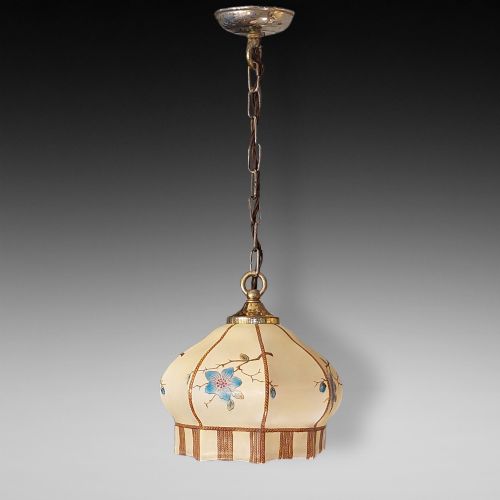
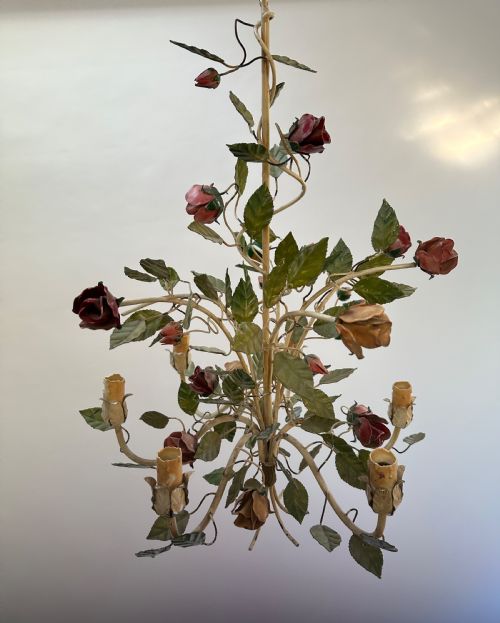
A vintage floral ceiling fitting brings botanical charm and ambient illumination to a room through delicate metalwork and glass.
Vintage Floral Ceiling Fitting
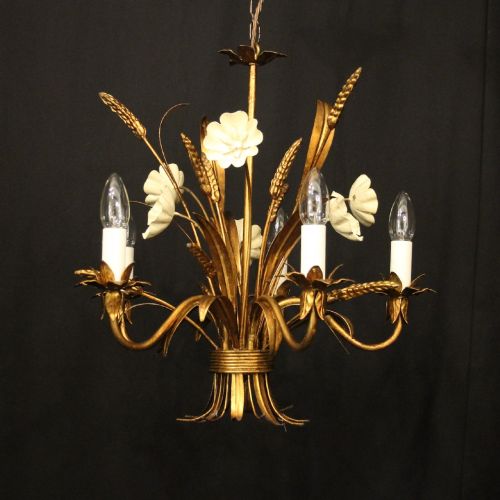
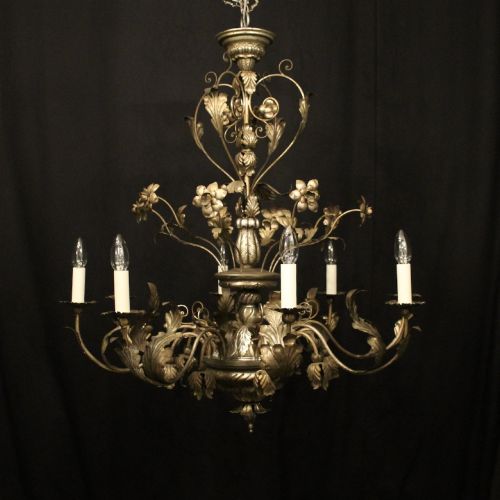
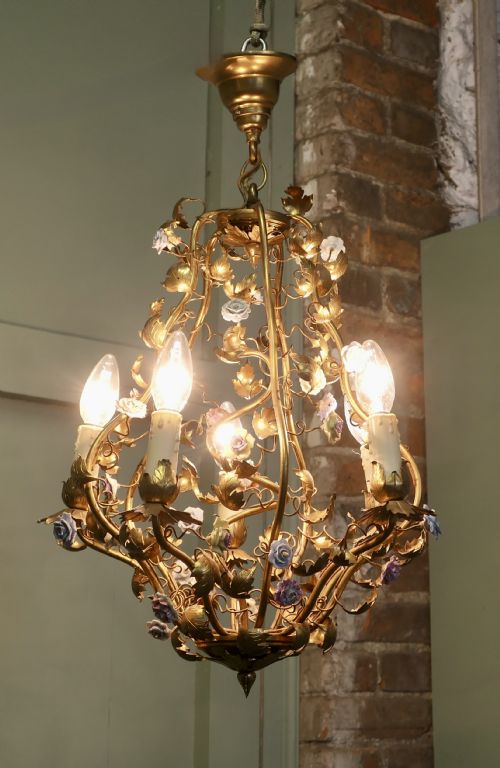
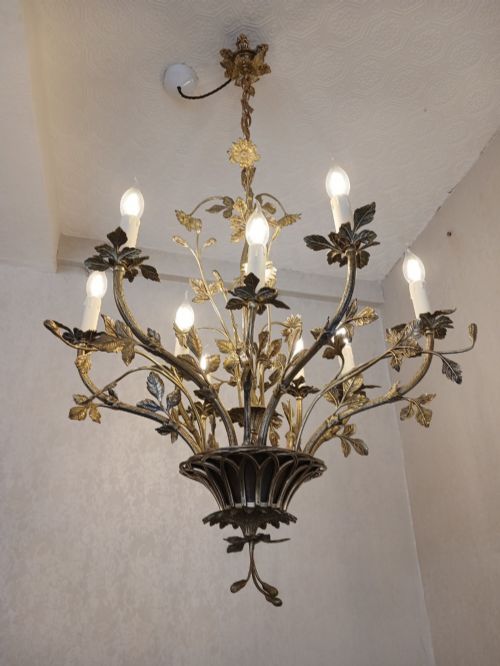
When you search for a vintage floral ceiling fitting, you encounter a selection of chandeliers, pendant lights, and ceiling lights that incorporate botanical motifs into their design. These fixtures frequently date from the Edwardian era through the 1930s, reflecting periods such as 1900, 1910, 1920, and 1930.
The most common versions on this page are French and Italian fixtures, often styled after French Chateau, French Country, Florentine, or Rococo Revival aesthetics. They range from intimate small wire chandeliers with flowers to larger multi-bulb configurations spanning up to twelve lights.
Many examples utilise painted metal, toleware, porcelain, or ceramic flowers alongside gilt metal, brass, iron, glass, and crystal. This variety allows a buyer to find both restrained single shades and elaborate multi-light centrepieces for domestic spaces.
How they were made
Makers constructed these ceiling fittings using structural metals such as brass, iron, bronze, and gilt or silver-gilded metal to form the branches and frames. Artisans shaped wires and cast components to support the weight of the fixtures while maintaining an organic silhouette.
Botanical details were introduced through hand-painted glass shades, porcelain elements, and polychrome toleware. Elements like ceramic flowers and crystal droplets were wired or pinned directly to the metal armature to create the floral effect.
Some tiny wire chandeliers measure a mere nine inches, proving that botanical exuberance requires very little actual headroom.
What varies in quality
The distinction between tiers of quality rests largely upon the fineness of the botanical modeling and the materials employed. Hand-painted glass shades and carefully sculpted ceramic or porcelain flowers demonstrate superior artistic investment compared to simpler stamped metal leaves.
Subtlety in the application of gilt, silver gilding, and polychrome finishes elevates a piece, as does the integration of crystal elements that refract light. Structural complexity, such as a twelve-light Florentine arrangement versus a single shade, also dictates the ambition of the original workshop.
The Vintage Floral Ceiling Fitting Glossary
- Toleware
- Painted or lacquered tinplate items often shaped into botanical forms. This technique permits vibrant polychrome decoration on leaves and petals.
- Gilt metal
- Metal treated with a gold-coloured coating or leaf to provide a lustrous surface. It is frequently utilised on French and Italian chandeliers to reflect light.
- Florentine
- A decorative style originating from Florence characterised by ornate carved or gilded foliage and scrollwork. It appears frequently on Italian multi-light chandeliers from the early twentieth century.
- Rococo Revival
- An ornate design movement favouring asymmetrical scrollwork, natural forms, and C-scrolls. This aesthetic influences the flowing, floral lines of many Edwardian and 1930s chandeliers.
- Capodimonte
- A type of fine porcelain originating from Naples, known for detailed sculptural flowers and figures. Pieces incorporating this material display distinct ceramic craftsmanship.
Vintage Floral Ceiling Fitting: Frequently Asked Questions
How do I choose the right size?
Consider the proportions of your room and the ceiling height before selecting a fixture. Smaller spaces accommodate single shade pendants or compact wire chandeliers with flowers.
Larger rooms require multi-light chandeliers, such as the seven or twelve light Florentine models, to provide adequate illumination and visual balance.
Where should I hang these lights?
These decorative fittings suit living rooms, bedrooms, or dining areas where ambient lighting is desired. Their botanical motifs complement traditional or eclectic interior schemes.
Ensure the ceiling height permits the chosen drop, particularly with multi-bulb chandeliers that extend further downward.
Are these fittings compatible with modern wiring?
Most antique and vintage light fixtures require inspection and potential rewiring by a qualified electrician to meet current safety standards. This ensures the internal components safely handle modern electrical loads.
Professional installation is recommended for heavy brass, bronze, and crystal chandeliers.
How do I identify the period of a fitting?
Dating relies on stylistic markers, materials, and construction techniques typical of eras like the Edwardian period or the 1920s and 1930s. Art Deco influences appear alongside traditional Rococo Revival curves in this timeframe.
Examining the metalwork, paint finish, and glass types helps narrow down the decade of manufacture.