
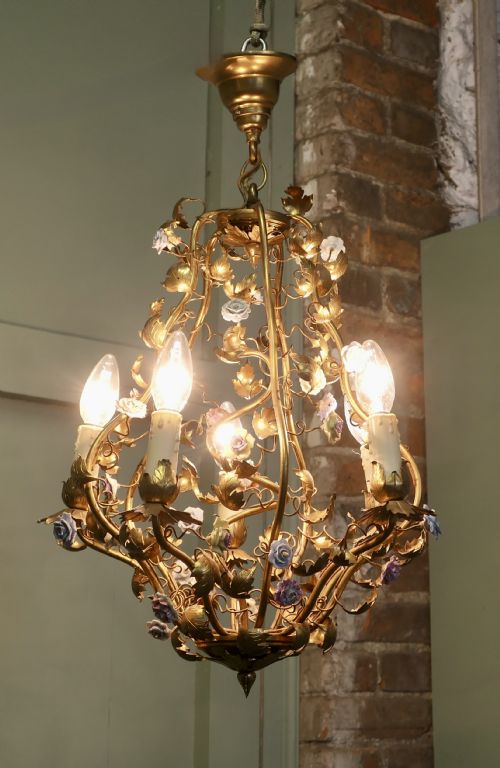
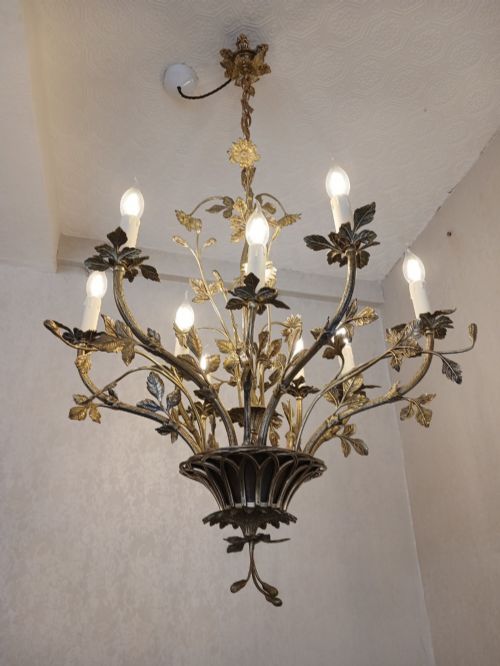


Gilt Floral Ceiling Light
A gilt floral ceiling light brings the charm of floral form and gilded metalwork directly to your room.
Gilt Floral Ceiling Light
A gilt floral ceiling light typically takes the form of a chandelier or hall lantern adorned with botanical motifs. When you search for this phrase, you find fixtures originating from the Edwardian era and the early decades of the twentieth century, specifically pieces dated between 1900 and 1930.
The aesthetic leans heavily towards continental European workshops, particularly French and Italian design traditions. You encounter styles ranging from French Chateau and Rococo Revival to Florentine work, featuring branches shaped to mimic stems and foliage.
The most common configurations on this page include multi-light chandeliers and single-light lanterns equipped with arms, branches, and candle sockets. These fixtures combine metallic structure with ornamental details to create a distinct overhead focal point.
How they were made
The construction of a gilt floral ceiling light relies on foundational metals such as bronze, brass, and iron that receive a gilt or silver-gilded surface finish. Artisans shape these metals into branching armatures that resemble natural plant growth.
Floral elements are integrated through the use of ceramic, porcelain, toleware, and cut crystal drops. Porcelain and ceramic blossoms are often hand-painted or tinted in polychrome shades to introduce naturalistic colour alongside the metallic framework.
Listings for this phrase include pieces from the Edwardian period alongside items dated between 1900 and 1930.
What varies in quality
Quality in a gilt floral ceiling light rests on the artistry of the metalwork and the delicacy of the botanical components. Finer examples display meticulously hand-formed toleware or ceramic petals and substantial bronze or brass structures rather than simple stamped sheet metal.
The integration of decorative elements like crystal drops, tent and waterfall formations, or Capodimonte details distinguishes standard production from more ambitious decorative lighting. The application of gilding and polychrome paint also shows varying degrees of hand skill and depth.
The Gilt Floral Ceiling Light Glossary
- Gilt
- A thin layer of gold or gold-coloured material applied to a surface of metal or wood. It provides a reflective finish that catches candlelight or electric illumination.
- Florentine
- A decorative style originating in Florence, Italy, known for ornate carved or gilded foliage and scrollwork. It frequently appears on Italian chandeliers from the early twentieth century.
- Capodimonte
- Italian porcelain originating from Naples, famous for detailed sculptural flowers and figures. Pieces from this tradition add specific ceramic modelling to lighting fixtures.
- Tent and Waterfall
- A lighting configuration where strings of crystals form a tent shape above and a cascading waterfall effect below the main frame. This arrangement increases the light refraction of the fixture.
Gilt Floral Ceiling Light: Frequently Asked Questions
How do I clean a gilt floral ceiling light?
Dust the metal arms and delicate ceramic or glass flowers gently with a soft brush or feather duster.
Avoid harsh chemical cleaners that can strip the gilt surface or damage the hand-painted polychrome details on the floral elements.
Are these lights suitable for low ceilings?
Many multi-branch chandeliers and larger lanterns require adequate ceiling height to hang properly without obstructing movement.
Single-light hall lanterns or fixtures with shorter drop chains offer a better fit for rooms with standard ceiling heights.
Can I use modern LED bulbs in these fixtures?
Modern LED candle bulbs work well as long as they match the correct wattage limits and base size of the original sockets.
Choosing warm white bulbs helps replicate the softer glow of older lighting without generating excessive heat.
How do I identify a Florentine lighting piece?
Florentine fixtures typically feature carved or formed metalwork styled after natural leaves and flowers, often finished with silver or gold gilding.
They originate from Italian workshops associated with the decorative traditions of Florence.