


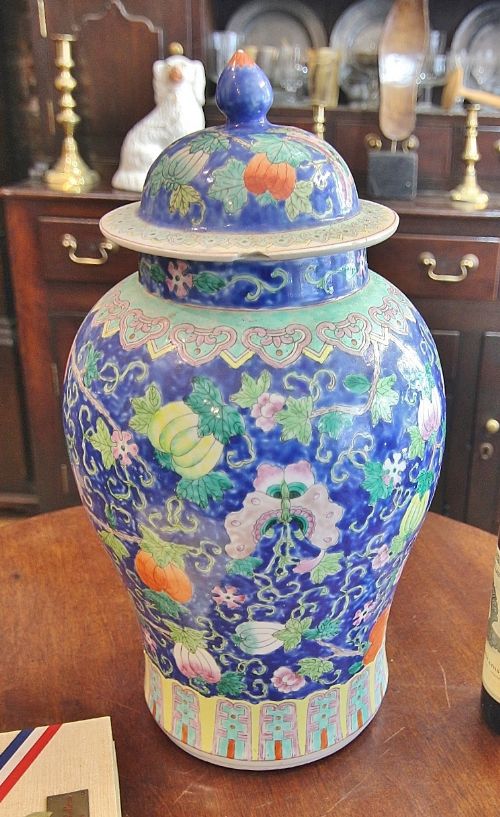


Vintage Floor Vase
These vintage floor vases bring scale and substance to a room, offering striking decorative presence through varied ceramic, glass and metal forms.
Vintage Floor Vase
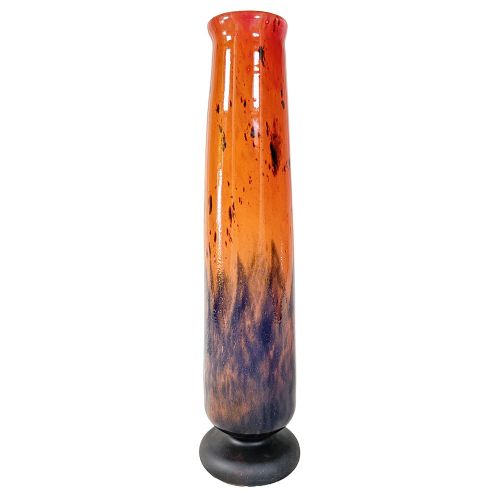
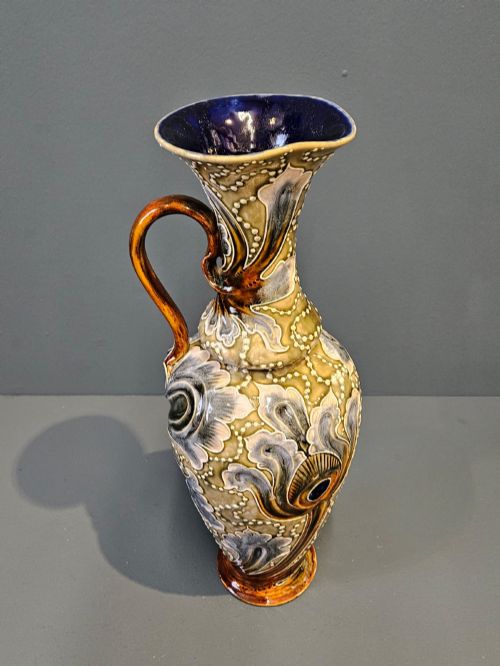
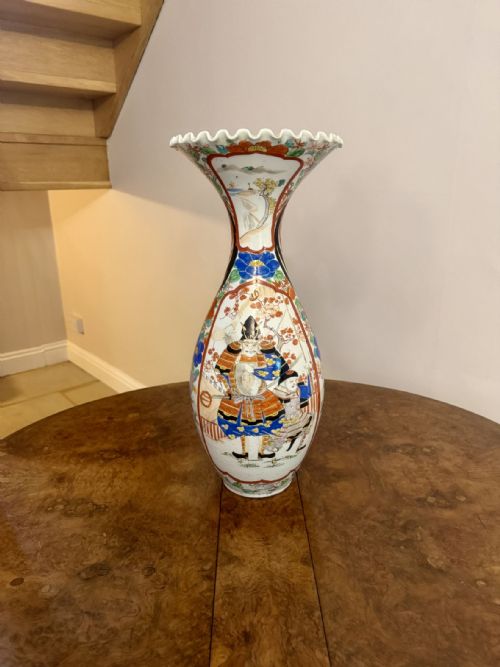
A vintage floor vase provides substantial height and visual weight for interior spaces, often taking the form of large vessels, ewers, and urns. When exploring vintage floor vase options, buyers encounter pieces originating from diverse traditions, including Japanese Imari, Satsuma, Chinese porcelain, and Art Deco glass.
The selection ranges from nineteenth-century earthenware and copper vessels to early twentieth-century crystal and cloisonné enamel. Many examples stand well over standard tabletop heights, designed specifically to anchor empty corners or fireplace hearths.
How they were made
Pottery and porcelain pieces utilise traditional throwing, moulding, and glazing techniques, often finished with hand-painted enamel or gold leaf details. Glass vessels rely on heavy-walled crystal production, sometimes featuring signed bubble glass or moulded Art Deco profiles.
Metal items employ copper, brass, and silver-plated construction, shaped through spinning or panel assembly to support grand dimensions. Wooden examples demonstrate traditional turning methods to achieve stable, columnar bodies.
Vintage Floor Vase Retail Price Guide 2026
Typical asking prices for vintage floor vase among the pieces listed under this phrase on Sellingantiques today, from the lower quarter to the upper quarter. They describe what is for sale here now, not the wider market.
Listings feature materials ranging from earthenware and porcelain to enamel, brass, and turned wood.
What varies in quality
Quality rests in the precision of form, the depth and execution of hand-applied decoration, and the overall structural integrity of heavy materials. Superior vessels demonstrate balanced proportions despite their scale, with crisp surface detailing and unblemished glazes or metal finishes.
Thicker glass formations, refined ceramic bodies, and intact surface ornamentation distinguish the finer examples from simpler utilitarian containers.
Daum·Doulton Lambeth Ware·Brannam·Kinkozan
The Vintage Floor Vase Glossary
- Earthenware
- Porous pottery fired at lower temperatures, typically requiring a glaze to achieve watertight properties. It forms the heavy body of many traditional storage and decorative vessels.
- Cloisonné
- Metalwork technique where thin wire partitions create raised cells on a surface, which are subsequently filled with enamel paste and fired. This produces intricate, colourful patterns across large bodies.
- Imari
- Japanese porcelain style featuring characteristic underglaze blue and overglaze red, gold, and green pigments. These patterns often cover substantial export vases and temple jars.
- Crystal
- High-clarity glass containing metallic oxides that increase weight and refractive brilliance. It allows for thick, sculptural vessels that catch light effectively.
- Ewer
- A large pitcher with a wide spout and looped handle, originally intended for pouring water but frequently produced purely for display.
Vintage Floor Vase: Frequently Asked Questions
Where should I place a large vintage vase?
These tall vessels suit spacious reception rooms, wide hallways, or empty fireplace hearths where their height commands the space. They function best directly on the floor rather than on furniture.
Ensure the location protects the piece from accidental knocks, particularly given the substantial weight and fragile nature of glass or ceramic bodies.
How do I clean and maintain a heavy antique vase?
Dust surfaces regularly with a soft, dry cloth to prevent particulate buildup on textured glazes, metalwork, or delicate painted enamel. Avoid harsh chemical cleaners that might strip historic patinas or gilding.
Lift rather than slide heavy ceramic or metal vessels when repositioning to protect both the base and the floor surface.
How can I tell the period of a tall vase?
Dating relies on stylistic markers such as Art Deco geometric profiles, Victorian ornamentation, or traditional Asian export motifs. Maker marks, signature etchings, and material composition also provide clear chronological indicators.
Examine the weight, manufacturing seams, and base wear to understand the age and origin of the piece.