



Vintage Firing Glass
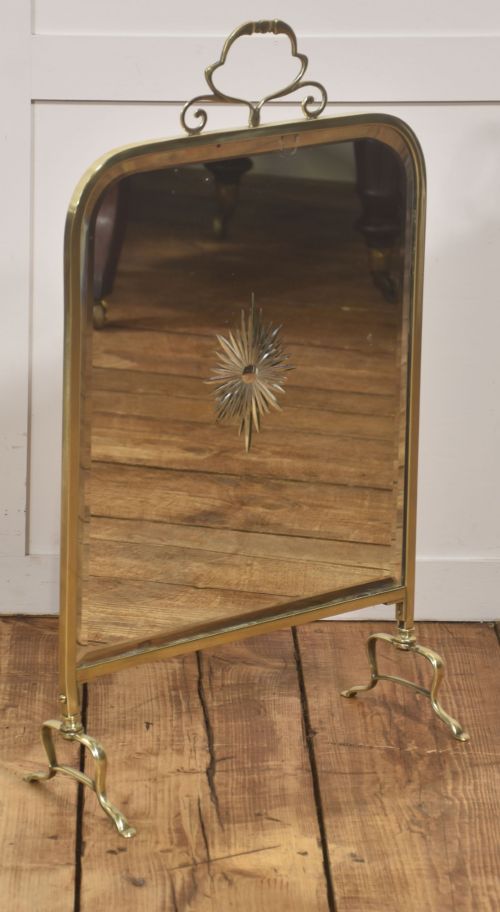
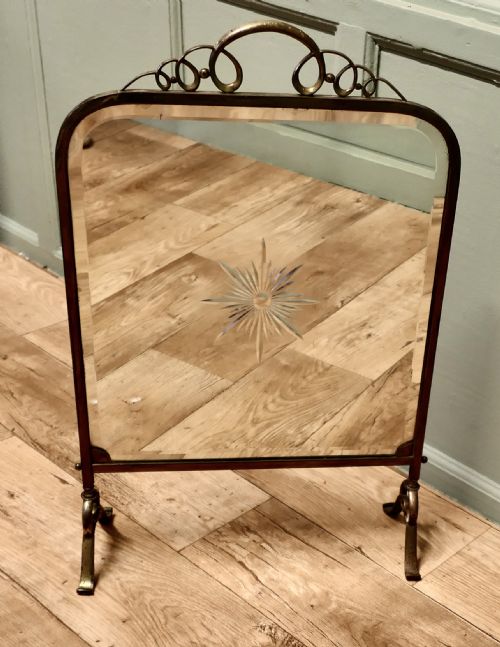
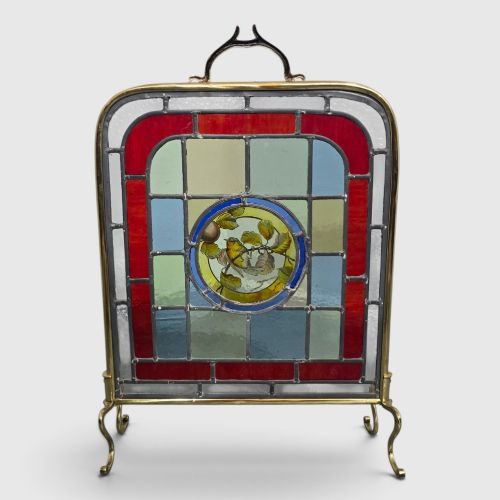
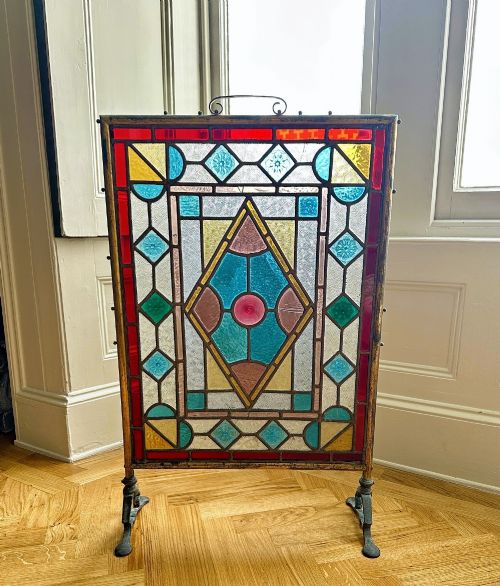
These vintage firing glass pieces bring character to a hearth with their heavy frames and decorative panels.
Vintage Firing Glass
When you search for vintage firing glass, you encounter functional hearth guards and decorative screens designed to shield a room from fireplace heat. The most common examples on this page combine brass or iron frames with mirror, leaded, or stained glass panels.
The objects span multiple eras, including Georgian, Victorian, and later Art Deco and Art Nouveau periods. Alongside standard firescreens, the selection includes related fireside accessories and occasional glassware pieces sharing similar domestic origins.
Makers utilised sturdy base metals like brass and iron to support heavy glass panels, creating substantial household items. These pieces reflect changing interior tastes from nineteenth-century ornamentation to twentieth-century geometric styling.
Materials and construction
Makers constructed these pieces using strong brass or iron frameworks to hold heavy glass panels securely in place. Metalwork often includes sunburst motifs, scrollwork, or adjustable doors designed for domestic hearth use.
Glass elements range from etched and cut panels to stained glass and mirror plates. Lead and bronze frequently appear alongside the primary materials, adding structural support and decorative contrast to the finished firescreen.
Vintage Firing Glass Retail Price Guide 2026
Typical asking prices for vintage firing glass among the pieces listed under this phrase on Sellingantiques today, from the lower quarter to the upper quarter. They describe what is for sale here now, not the wider market.
Judging quality and craftsmanship
The distinction between standard examples and superior pieces lies in the crispness of the metalwork and the complexity of the glass design. Hand-cut, etched, or stained glass panels demonstrate higher skill than plain mirror insertions.
Heavier gauge brass frames and solid iron stands provide better stability and longevity. Finer items exhibit precise joint work and integrated decorative details such as sunburst motifs or bronze mountings.
The Vintage Firing Glass Glossary
- Firescreen
- A decorative barrier placed in front of an unlit fireplace to block the empty grate. These items usually feature a glass or mirror panel set within a metal frame.
- Art Nouveau
- A design style characterised by flowing, organic lines and floral motifs. Pieces from this movement often incorporate sinuous brass framing around glass panels.
- Art Deco
- A twentieth-century style defined by geometric shapes, streamlined forms, and symmetry. Items in this aesthetic frequently utilise sunburst patterns and clean metallic lines.
- Stained glass
- Coloured glass pieces joined together with lead caming to form decorative patterns. This material creates vibrant coloured light effects when positioned near a light source.
Vintage Firing Glass: Frequently Asked Questions
What is a vintage firing glass?
These items are decorative hearth screens and glass panels used to shield rooms from open fireplaces. They combine metal frames with glass inserts to serve a functional purpose in period interiors.
Over time, their role shifted from practical heat guards to decorative focal points within the living space. Today, collectors place them around unused hearths to add architectural interest.
How do I style a firescreen at home?
Place the screen directly in front of an empty fireplace opening to create a polished look during warmer months. The reflective mirror or coloured glass panels catch natural room light.
Ensure the scale of the frame matches your fireplace surround. Pairing brass frames with complementary metal hearth accessories helps unify the room's design.
How do I identify the period?
Examine the decorative motifs and metal framing styles to determine the likely era of manufacture. Sinuous, flowing lines typically indicate Art Nouveau influence, while geometric patterns point towards Art Deco.
Materials also offer clues, as heavy brass frames and stained glass panels frequently align with nineteenth and early twentieth-century manufacturing techniques.
Are these screens heavy?
Many examples incorporate solid brass, iron, or bronze frames combined with thick glass panels. This construction provides the necessary weight to stand securely on a hearth floor.
When moving or positioning the screen, support both the base and the frame. Heavier items require stable placement to prevent tipping.