





Vintage Fire Irons Set
A vintage fire irons set brings practical hearth management and period character to a room, spanning brass, steel, and iron.
Vintage Fire Irons Set
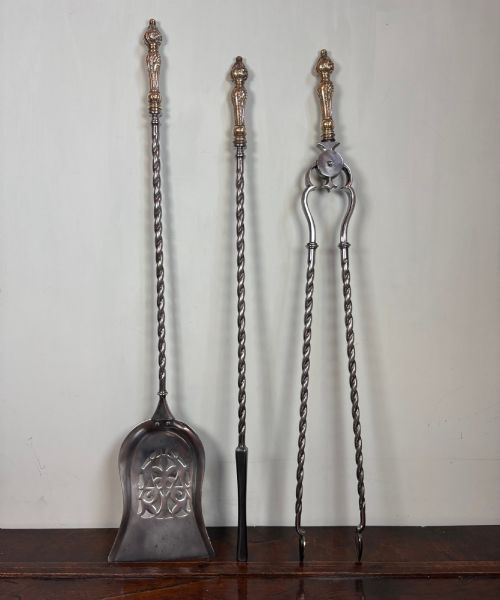
A vintage fire irons set comprises essential hearth implements designed for tending a domestic fire, typically grouping pokers, tongs, and shovels. When exploring this selection, buyers encounter groupings spanning the eighteenth, nineteenth, and early twentieth centuries, reflecting diverse periods from Georgian symmetry to Victorian elaboration.
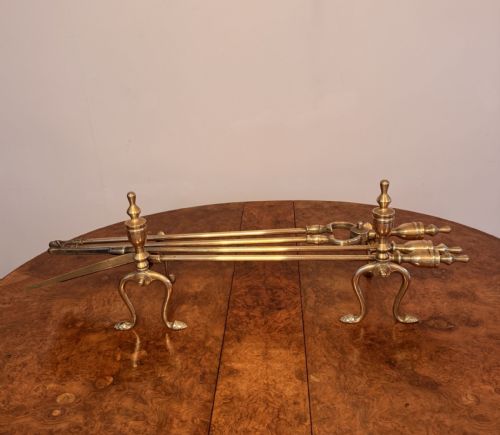
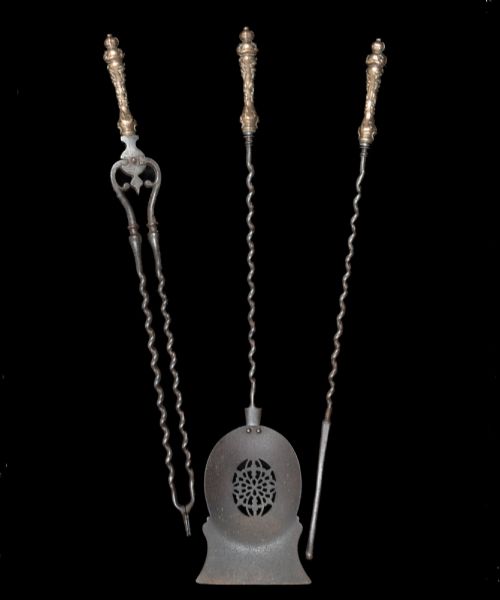
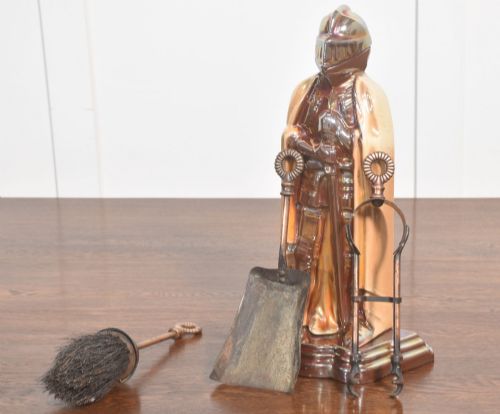
The most common configurations on this page include matching sets of brass or polished steel tools, often accompanied by companion stands, fire dogs, or baskets. Pieces range from plain country house utility items to ornate Rococo and Gothic Revival designs meant to be displayed beside the hearth.
Origins stretch from English country houses to French manors, incorporating regional material choices such as heavy cast iron or bright brass. Buyers select these groups to complement period fireplaces or to anchor a working hearth with authentic metalwork.
Materials and construction methods
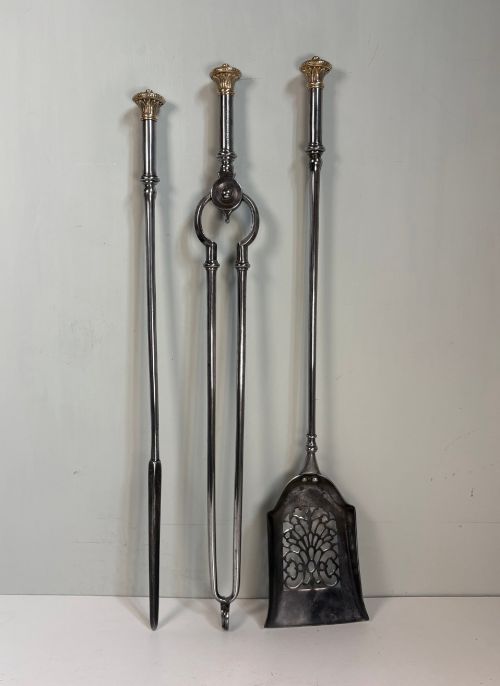
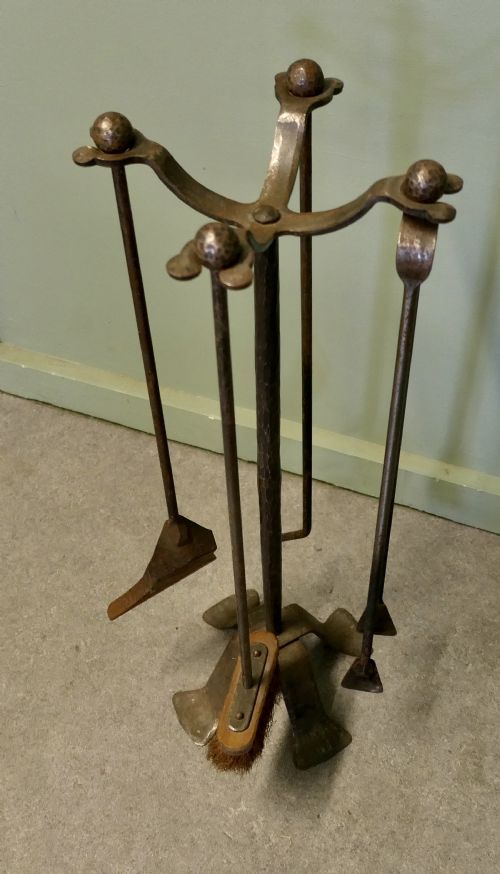
Makers utilised forged steel and wrought iron for strength, shaping shafts and handles to withstand daily use. Polished steel surfaces offered a bright finish in formal rooms, while heavier cast and wrought iron suited larger hearths.
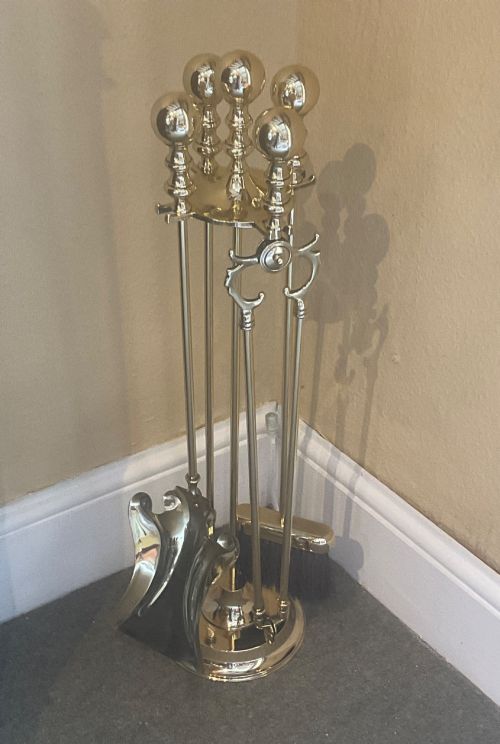
Brass formed another primary material, often cast into decorative handles or utilised for companion stands and fire dogs. Artisans combined brass with steel, creating two-tone sets that balanced bright ornamentation with durable iron working ends.
Vintage Fire Irons Set Retail Price Guide 2026
Typical asking prices for vintage fire irons set among the pieces listed under this phrase on Sellingantiques today, from the lower quarter to the upper quarter. They describe what is for sale here now, not the wider market.
Listings feature periods spanning from the eighteenth century through the Edwardian era, incorporating brass, steel, and wrought iron.
Determining quality and distinction
Quality rests in the weight of the metal and the integrity of the joins between handles and shafts. Superior sets display crisp casting in brass motifs or careful hand-forging in steel, avoiding loose fittings or thin gauge metal.
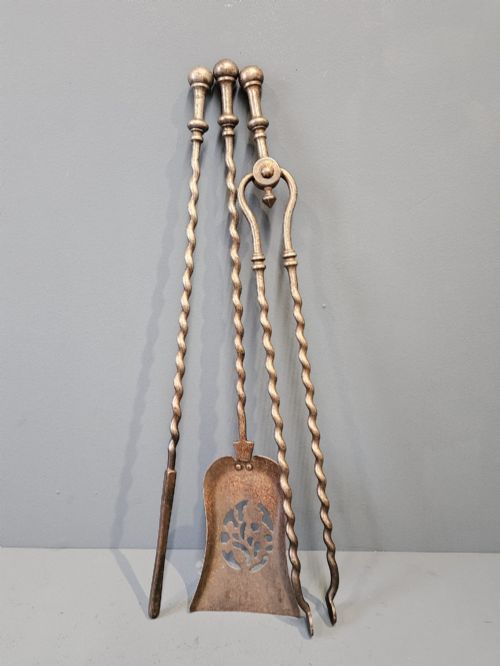
Refinement of detail separates standard utility tools from finer parlor sets, evident in rope twist handles, integrated bronze work, or matching fire dogs. Sets retaining their original stands or complete matching tool counts command greater appreciation.
The Vintage Fire Irons Set Glossary
- Companion set
- A matched grouping of fireplace tools usually displayed together on a stand or rack.
- Fire dogs
- Support irons placed in the hearth to hold logs, frequently found alongside period fire tools.
- Rococo style
- An ornate decorative approach featuring C-scrolls and asymmetrical natural motifs, common on Victorian brass sets.
- Gothic Revival
- A nineteenth-century design movement drawing inspiration from medieval architecture, visible in pointed arches and heavy ironwork.
- Inglenook
- A deep fireplace recess designed for seating, associated with sturdy country house fire tools.
Vintage Fire Irons Set: Frequently Asked Questions
What tools come in a set?
A standard set typically includes a poker for stirring embers, tongs for positioning logs, and a shovel for clearing ash. Many groupings also incorporate a companion stand or matching fire dogs.
These pieces were designed to work together as a cohesive unit beside the hearth, ensuring both utility and a uniform appearance when displayed.
How do I date a set?
Dating relies on material combinations, decorative styles, and manufacturing marks. Georgian and early nineteenth-century examples often favour plain steel or brass, while Victorian and Edwardian sets introduce cast motifs, rope twists, and specific stylistic revivals.
Examining the construction methods, such as hand-forging versus machine casting, provides further clues regarding the era of production.
How should I display them?
Sets are traditionally arranged beside the fireplace using a dedicated companion stand, hanging rack, or resting against fire dogs. Keeping the tools together maintains the visual balance of the hearth.
Positioning them within easy reach of the grate ensures they remain functional while contributing to the room's period aesthetic.