



Georgian Brass Fire Tools
Georgian brass fire tools bring brilliant polish and hearth-side utility together, offering the traditional brass and steel sets that collectors seek for period fireplaces.
Georgian Brass Fire Tools
When a buyer searches for georgian brass fire tools, they encounter functional hearth accessories originating from the Georgian, Regency, and Victorian periods. These listings include complete sets and individual implements such as shovels, pokers, and tongs.
The most common versions met on this page are sets combining brass elements with steel components, alongside specialised companions featuring ring handles or engraved details. Pieces span the eighteenth and nineteenth centuries, reflecting the evolving styles of period hearths.
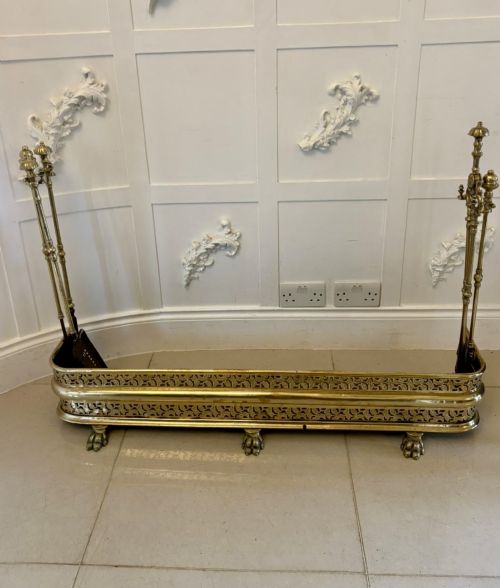
Companions range from simple domestic sets to elaborate fireside suites incorporating claw and ball designs or mechanical bellows. Each object serves a practical role in tending coal or wood fires while adding metallic warmth to the room.
How they were made
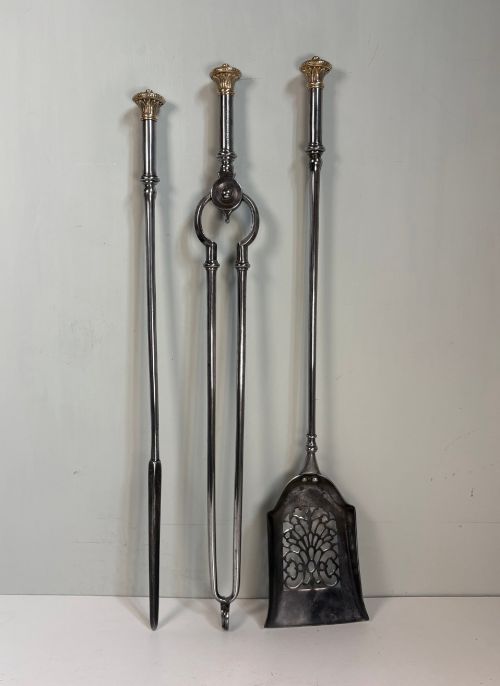
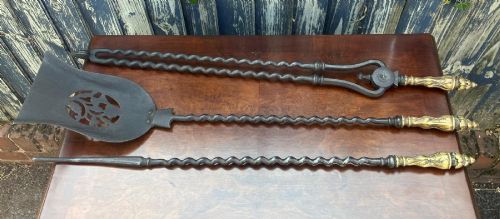
Maker construction relies on combinations of brass, steel, and iron, utilising cast brass handles alongside durable steel shafts for functional strength. Gilt brass finishes appear on finer examples to provide a brighter reflective surface near the grate.
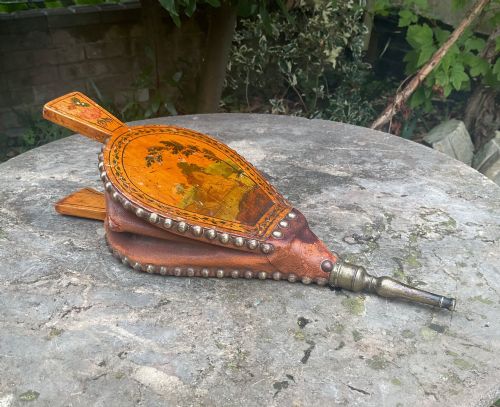
Bellows incorporate timber such as mahogany paired with flexible leather panels and brass nozzles to direct air into the flames. Engraving and turning techniques shape the handles and surface patterns across the eighteenth and nineteenth-century pieces.
Georgian Brass Fire Tools Retail Price Guide 2026
Typical asking prices for georgian brass fire tools among the pieces listed under this phrase on Sellingantiques today, from the lower quarter to the upper quarter. They describe what is for sale here now, not the wider market.
Listings feature brass, steel, iron, cast brass, and gilt brass, alongside secondary materials like mahogany and leather in mechanical bellows.
What varies in quality
Distinctions in quality rest upon the crispness of the casting and the integrity of the materials, where solid brass handles and properly paired steel shafts represent superior manufacture. Engraved decoration and substantial metal thickness elevate standard utility implements into accomplished decorative objects.
Complete matched sets command greater interest than assembled groups, maintaining consistent design motifs across every tool. The survival of original elements, such as specific ring handles or companion stands, separates standard replacements from cohesive period suites.
The Georgian Brass Fire Tools Glossary
- Georgian
- Pertaining to the period from 1714 to 1830 spanning the reigns of the first four Georges, known for classical proportions and refined metalwork. Items from this era exhibit restraint and careful proportion.
- Regency
- A stylistic era covering the early nineteenth century and the Regency of George, Prince of Wales, often featuring bolder classical motifs. This period produced sharp contrasts between bright brass and dark steel.
- Gilt brass
- Metal coated with a thin layer of gold or gold-coloured alloy to enhance brilliance and prevent tarnish. It provides a rich decorative finish on select hardware.
- Bellows
- A device with flexible leather sides and wooden boards used for pumping air into a fire. Mahogany examples frequently utilise brass tacking and nozzles.
- Companion set
- A matched group of fireplace tools, usually including a shovel, poker, and tongs, designed to be displayed together. These suites form the primary focus of hearth collections.
Georgian Brass Fire Tools: Frequently Asked Questions
What tools are included in a set?
Complete sets typically comprise a shovel, a poker, and a pair of tongs designed for managing coal or wood. Some groupings also incorporate mechanical bellows or dedicated stands.
Historical sets vary in size and implement count, reflecting the specific heating needs of eighteenth and nineteenth-century rooms.
How do I date these tools?
Dating relies on stylistic markers, manufacturing techniques, and the combination of metals like steel and cast brass. Georgian examples display earlier neoclassical lines, while nineteenth-century pieces often introduce heavier Victorian forms.
Matching the handle design and construction methods to known period standards helps establish the approximate age of each implement.
Are brass fire tools purely decorative?
While highly decorative due to their bright polished surfaces, these pieces were manufactured for active daily use on the hearth. The steel shafts and iron components provide the necessary strength for moving heavy fuel.
Owners today frequently continue to use robust antique sets with open fires, provided the metal is handled with reasonable care.
Why do some sets mix brass and steel?
Combining brass handles with steel shafts and tips balances aesthetic appeal with practical durability. Brass offers a warm, polished appearance for the grip, while steel withstands the intense heat and physical stress inside the grate.
This hybrid construction became a standard manufacturing method across the Georgian and Regency eras.
How should I clean antique brass?
Maintenance requires gentle cleaning with non-abrasive cloths to preserve the historical surface and any accumulated patina. Heavy chemical polishes can strip away age-appropriate depth and soften crisp cast details.
Regular dusting and minimal intervention keep the metal stable without erasing the evidence of centuries of use.