




Vintage Female Nude Study
A vintage female nude study captures the human form through direct observation, offering intimate glimpses into academic discipline and personal expression.
Vintage Female Nude Study
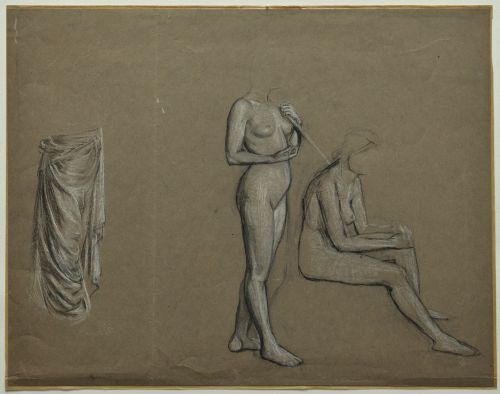
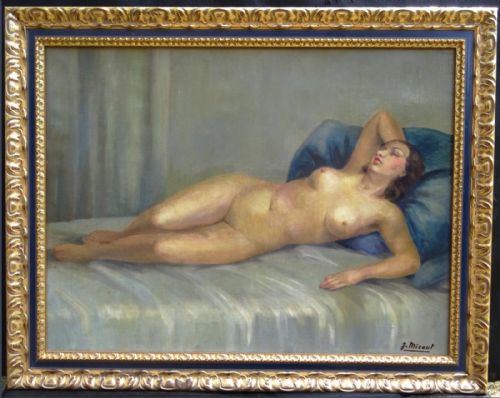
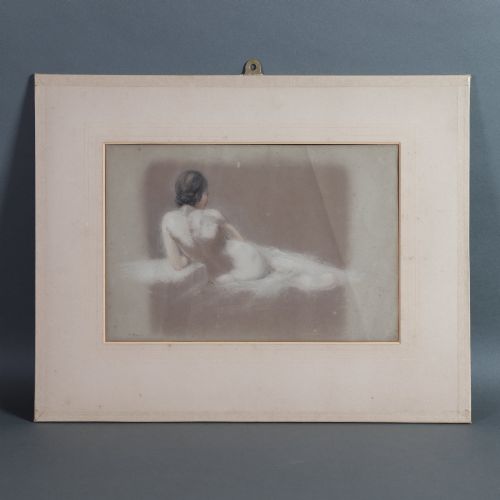
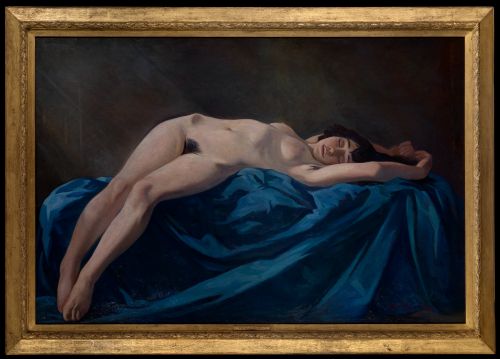
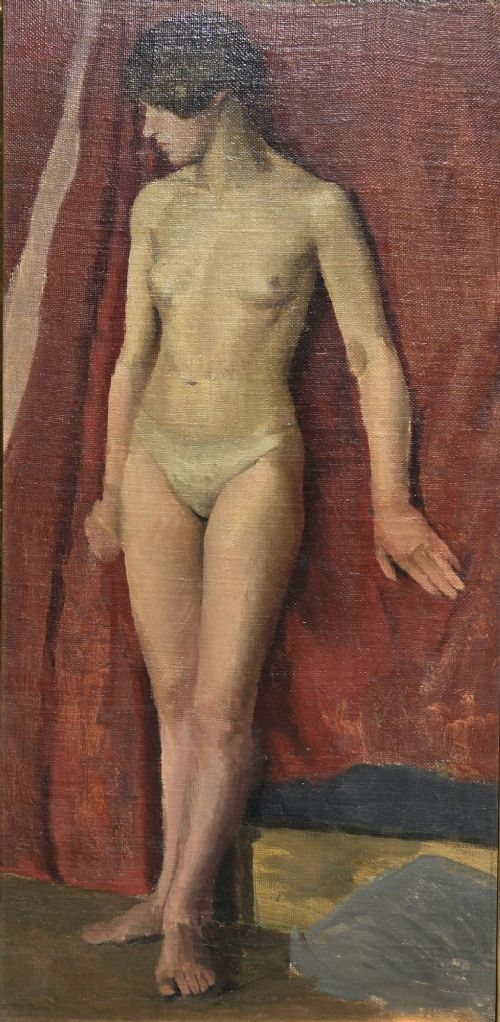
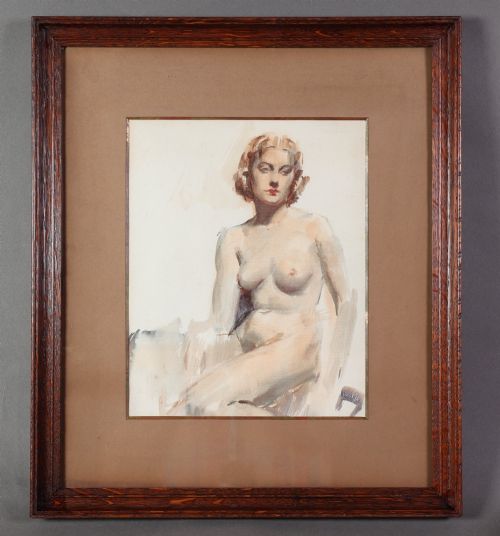
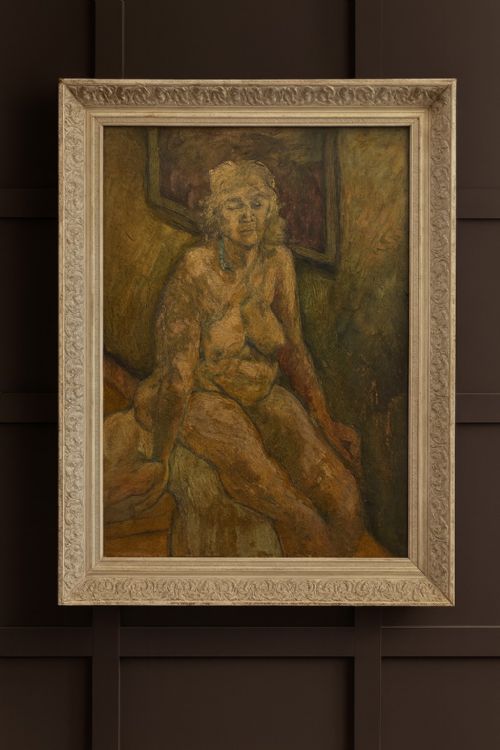
A vintage female nude study comprises original drawings and paintings executed across the nineteenth and twentieth centuries, spanning periods from Victorian Academic to Modern British and Art Deco. These works range from rapid charcoal sketches on paper to finished oil paintings on canvas and board.
Buyers encounter various portrayals of the female form, including recumbent figures, seated models, and life studies created in traditional art school settings. Many pieces bear attribution to named artists or distinct continental schools from France and Britain.
Materials and Techniques
Artists executed these studies utilising traditional media such as oil paint, charcoal, chalk, pastel, and mixed media applied to canvas, wood, paper, and glass supports. Canvas laid onto board and heavy paper sheets provide the foundational structure for many surviving life drawings.
Execution methods vary from precise Victorian academic rendering and chiaroscuro lighting to loose impressionist brushwork and expressive modernist mark-making. Monochrome charcoal and chalk contrast with the rich pigment application found in French and British oil paintings.
Vintage Female Nude Study Retail Price Guide 2026
Typical asking prices for vintage female nude study among the pieces listed under this phrase on Sellingantiques today, from the lower quarter to the upper quarter. They describe what is for sale here now, not the wider market.
Listings feature works spanning from the 1880s through the 1960s, executed in oil, charcoal, chalk, and mixed media on canvas, paper, and wood.
Assessing Quality and Execution
Quality rests upon the sureness of the draughtsmanship and the artist's command of proportion, volume, and light across the subject. Stronger examples demonstrate confident handling of anatomy and tonal contrast, whether rendered in rapid charcoal strokes or layered oils.
The distinction between a casual classroom exercise and a successful finished work lies in the vitality of the line and the sensitivity of the observation. Provenance and attribution to documented painters further elevate the standing of individual pieces.
William Blake Richmond·William Etty·Eric Robertson·Winifred Rymer·Augustus John·Winifred Eugene Ballard·Yetta Kane·Raymond Arthur Roadnight·Frank Dobson·Henry Bird
The Vintage Female Nude Study Glossary
- Life study
- A drawing or painting executed directly from a live model in a studio or art school setting. These works capture immediate observation rather than idealized convention.
- Chiaroscuro
- The use of strong contrasts between light and dark to give a sense of volume to three-dimensional figures. This technique defines form in many period oil paintings.
- Mixed media
- An artwork combining two or more distinct artistic materials, such as charcoal and chalk used together on paper. This approach allows varied textural effects.
- Recumbent
- A posture depicting a figure lying down or reclining horizontally. This pose appears frequently in both French oil paintings and British drawings.
Vintage Female Nude Study: Frequently Asked Questions
What is a life study?
A life study is an artwork created directly from a live model in a studio environment. Artists used these sessions to practice anatomy and tone.
Such drawings and paintings record the quick observations of the studio rather than finished academic compositions.
How do charcoal and oil studies differ?
Charcoal and chalk drawings offer direct, linear interpretations of the human form on paper supports. They highlight the initial draftsmanship of the artist.
Oil paintings on canvas introduce colour, pigment thickness, and blended light, requiring different preservation methods than works on paper.
Where were these artworks produced?
These pieces originate primarily from British and French studios spanning the late nineteenth century through the mid-twentieth century. Many reflect academic training in London and Paris.
Regional art schools and individual artists' workshops also produced a large portion of the surviving drawings.
How should paper studies be framed?
Works on paper require conservation mounting to prevent direct contact with glass and protect fragile charcoal or chalk surfaces. Acid-free materials preserve the integrity of the sheet.
Keeping drawings away from direct sunlight prevents the fading of delicate pigments and paper discolouration.