




Vintage Farm Animal Art
These vintage farm animal art pieces capture livestock and poultry in oils, watercolours, and carved forms from the Victorian era to the twentieth century.
Vintage Farm Animal Art
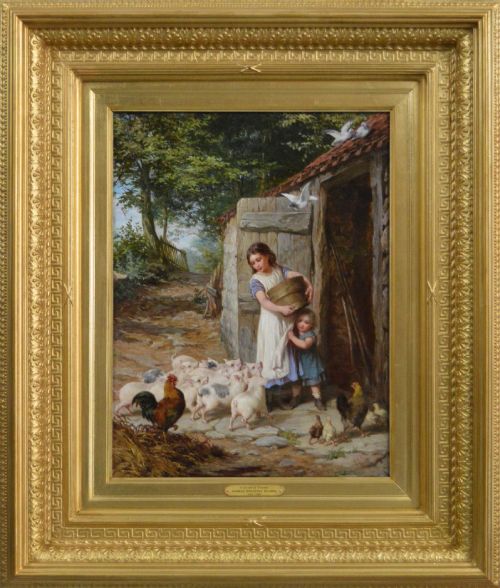
Vintage farm animal art encompasses oil paintings, watercolours, decorative figurines, and sculptures depicting rural scenes of cattle, horses, pigs, and poultry. When searching for vintage farm animal art, buyers encounter works ranging from Victorian rural realism and the British animalier tradition to Edwardian studies and twentieth-century pastoral compositions.
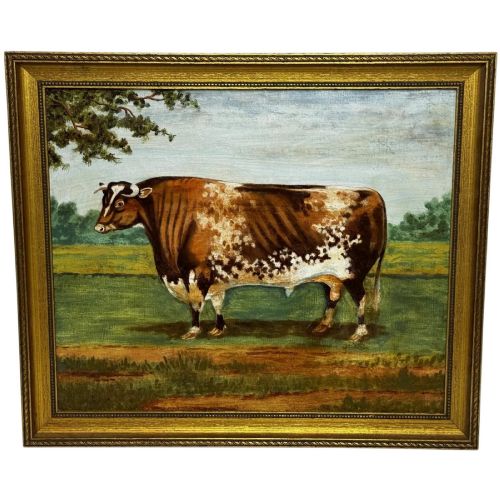
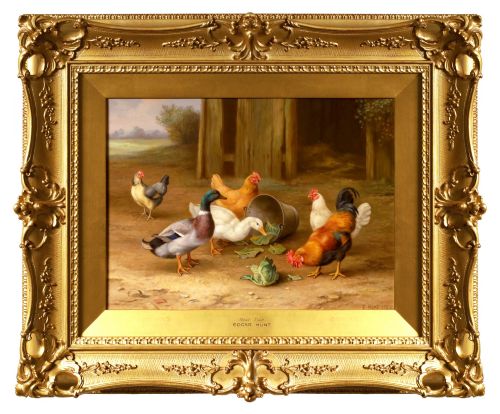
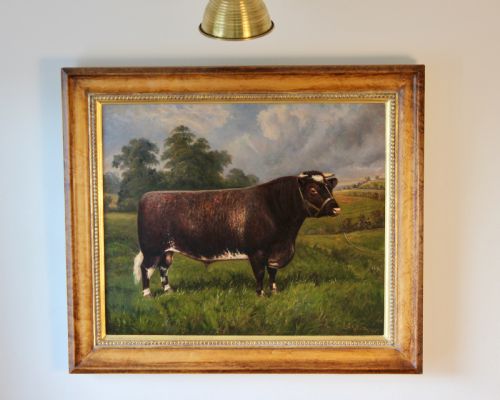
The pieces on this page lean heavily towards oil paintings on canvas framed in giltwood, alongside watercolours, paper mache cows, and life-size carved wooden figures. These works document agricultural life through portraits of prized shorthorn bulls, farmyard poultry, and working animals in their daily environments.
How they were made
Painters utilised oil paint and watercolour on canvas or paper to build detailed representations of livestock, feathers, and rustic textures. Canvases are frequently mounted in gesso and giltwood frames that reflect the decorative standards of the nineteenth and early twentieth centuries.
Sculptural works and decorative figures utilise carved wood, paper mache, and applied finishes to render animals with physical presence. Makers applied traditional sculpting and moulding techniques to achieve the lifelike postures seen in goats, cows, and farmyard groupings.
Paper mache cows from the early twentieth century stand shoulder to shoulder with life-size carved Indian goats.
What varies in quality
Anatomical precision and the handling of light separate standard decorative farmyard scenes from accomplished works by named painters. The rendering of animal musculature, coats, and expressions demonstrates the technical skill of the hand behind the brush or chisel.
The integrity of the original framing, particularly moulded giltwood and gesso surrounds, influences the overall presentation of painted canvases. The fidelity of the composition and the strength of the provenance tied to recorded artists elevate individual pieces.
George Augustus Holmes·Edgar Hunt·John Frederick Herring Jnr·Percival Glenfern·Claude Cardon·R Lauritsch VI·W. A. Clark·George Smith RSA·H. Strafford
The Vintage Farm Animal Art Glossary
- Animalier
- A nineteenth-century artistic focus on the realistic depiction of animals, particularly livestock and working beasts. Practitioners of this style emphasised anatomical accuracy and natural behaviour.
- Giltwood
- Wood that has been coated with a thin layer of gold leaf or metallic paint. This finish was standard for framing nineteenth-century oil paintings.
- Gesso
- A plaster-like mixture applied to wooden frames or panels before gilding or painting. It provides a smooth surface for intricate moulded decorative details.
- Pastoral Realism
- An art movement dedicated to depicting rural life and agricultural scenes without idealisation. It focuses on the honest portrayal of farm animals, labourers, and landscape elements.
- Watercolour
- A painting method where water-soluble pigments are applied to paper. It yields translucent colour washes suited for delicate studies.
Vintage Farm Animal Art: Frequently Asked Questions
What periods do these pieces span?
The selection includes works from the Victorian era, the Edwardian period, and the broader nineteenth and twentieth centuries.
Dates range from mid-nineteenth-century cattle prints and Victorian oil paintings to twentieth-century watercolours and paper mache figures.
Which animals appear most frequently?
Cattle, including shorthorn bulls and Friesian cows, form a significant portion of the painted and sculpted subjects. Horses, goats, pigs, and various poultry such as hens, cockerels, ducks, and chicks also populate the scenes.
These animals are shown individually as portraits or gathered in busy farmyard compositions.
How were these artworks framed?
Many oil paintings retain their original or period-appropriate giltwood and gesso frames. These ornate surrounds complement the traditional aesthetic of nineteenth-century British school painting.
Watercolours and prints utilise period paper mounts and protective glazing suited to works on paper.