
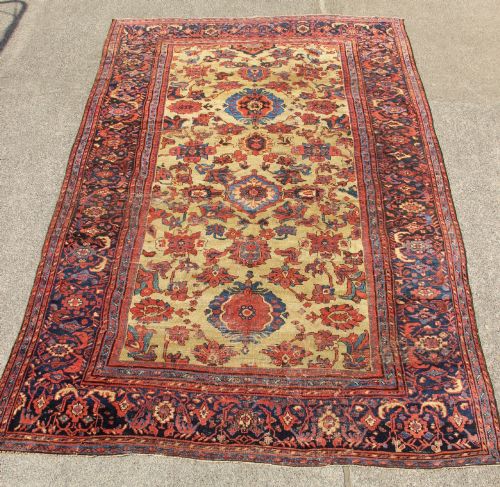
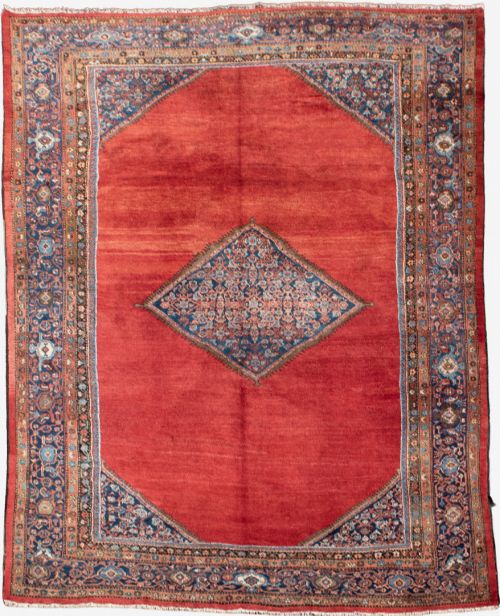


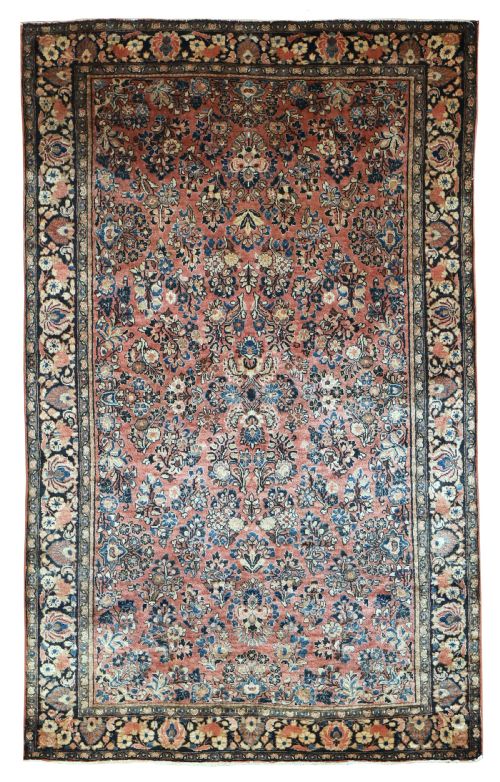
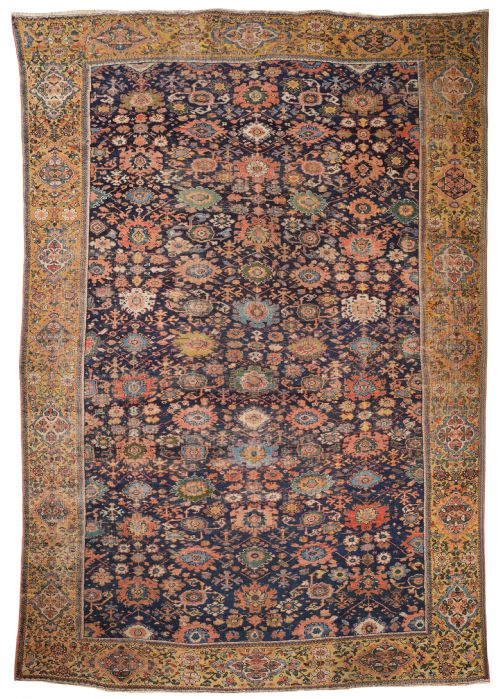
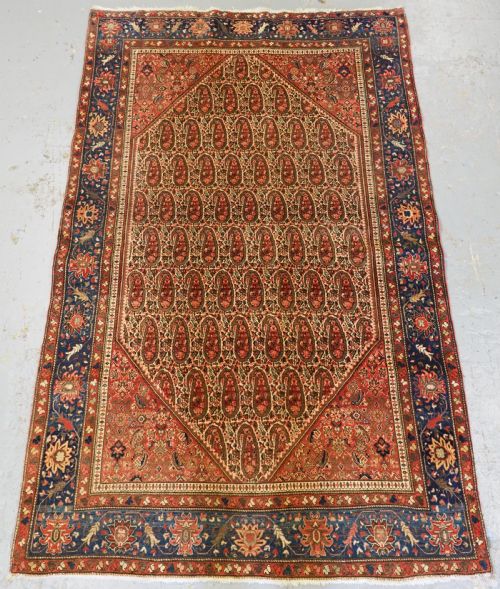

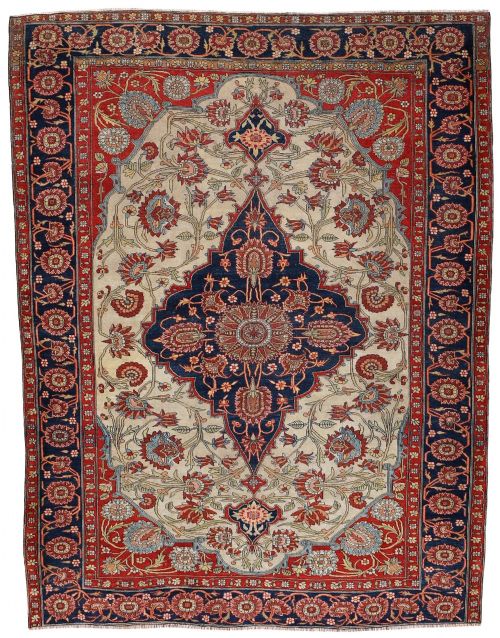
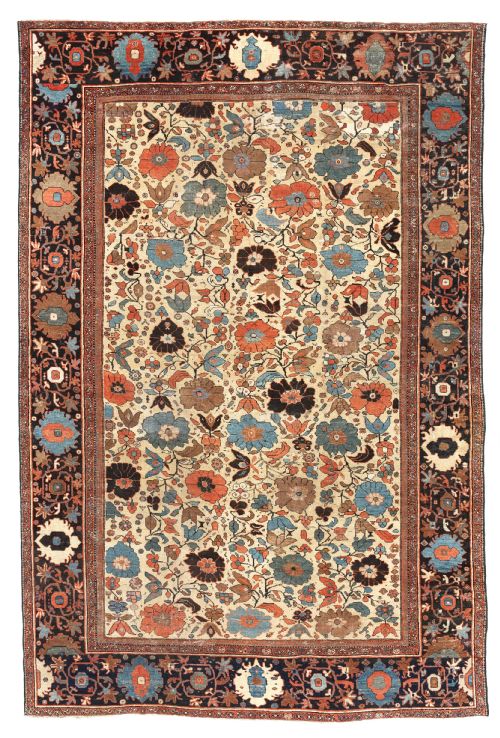
Vintage Farahan Rug
These vintage farahan rug examples are fine Persian floor coverings prized for their intricate patterns and enduring wool construction.
Vintage Farahan Rug
A vintage farahan rug represents a distinct tradition of Persian weaving originating from the nineteenth and early twentieth centuries. Buyers searching for a vintage farahan rug will encounter room-size carpets, square formats, and long runners spanning periods from eighteen-fifty to nineteen-thirty.
The selection includes traditional Persian pieces alongside related Sarouk Farahan and Sarouk types. These floor coverings bridge centuries of craftsmanship, offering historic character for residential interiors.
Materials and construction
Every vintage farahan rug relies upon wool pile set onto a cotton foundation. Artisans utilised these natural materials to achieve both resilience and detailed patterning across large carpets and smaller rugs.
Weavers employed traditional Persian techniques, resulting in dense structures and very fine weaves that define the durability of these historic textiles.
Listings feature pieces spanning from eighteen-fifty to nineteen-thirty, constructed entirely from wool and cotton.
Assessing quality
Quality in a vintage farahan rug rests upon the precision of the weave and the subtlety of the overall design. Finer knotting permits sharper rendering of traditional motifs like the boteh pattern.
The integrity of the wool pile and the balance of the composition distinguish exceptional room-size carpets and runners from standard examples.
The Vintage Farahan Rug Glossary
- Boteh
- A traditional teardrop or almond-shaped motif frequently found on Persian carpets and rugs. This ancient pattern appears across many historic textile traditions.
- Farahan
- A style of Persian weaving associated with specific workshops and villages known for refined execution. These pieces date predominantly from the nineteenth and early twentieth centuries.
- Sarouk
- A neighbouring Persian weaving centre that produced dense, high-quality rugs often linked with Farahan production. Sarouk pieces share similar wool materials and traditional styling.
- Runner
- A long, narrow carpet format designed primarily for hallways or corridors. Runners maintain the same wool pile and cotton foundation as larger room-size rugs.
Vintage Farahan Rug: Frequently Asked Questions
How do I date a farahan rug?
Dating relies on stylistic analysis, structural examination, and historical records spanning from eighteen-fifty to nineteen-thirty.
Comparison of wool quality and dye characteristics helps place each piece within its specific period.
Are these rugs suitable for high-traffic areas?
The durable wool pile and cotton foundation make many of these historic carpets robust enough for everyday use.
Placing a quality underlay beneath the rug helps protect the historic structure in busy rooms.
What is the difference between Farahan and Sarouk?
While both originate from traditional Persian weaving regions, Farahan pieces often display distinct knotting densities and specific design repertoires.
Sarouk rugs share related materials and were frequently produced in adjacent workshops during the same eras.
How should I clean my antique rug?
Professional cleaning tailored to antique wool textiles is essential for preserving the natural fibres and dyes.
Regular gentle vacuuming without a beater bar prevents dust accumulation within the cotton foundation.