


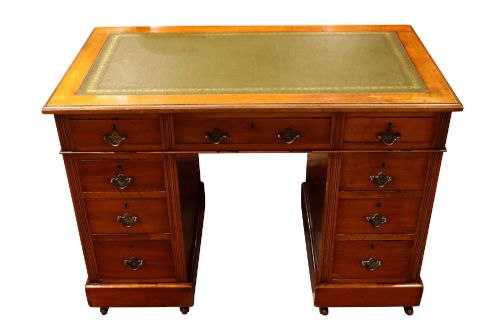
Vintage Executive Study Table
A vintage executive study table is a substantial workspace for serious work, bringing period craftsmanship and rich timber into a room.
Vintage Executive Study Table
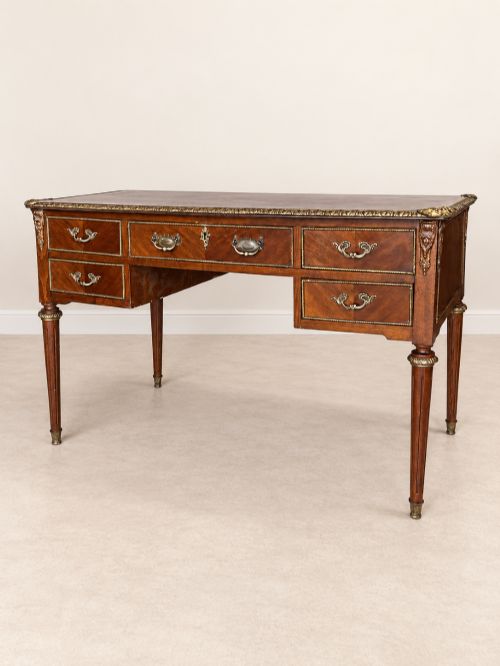
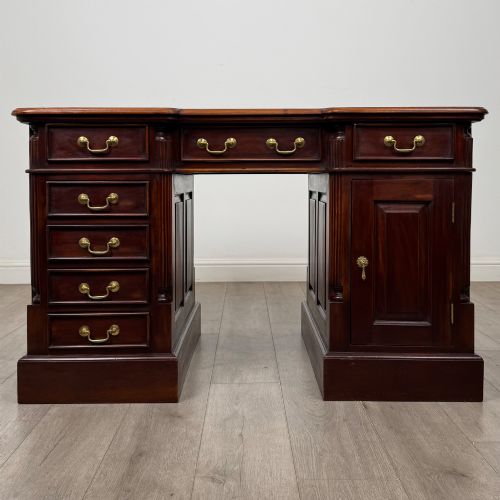
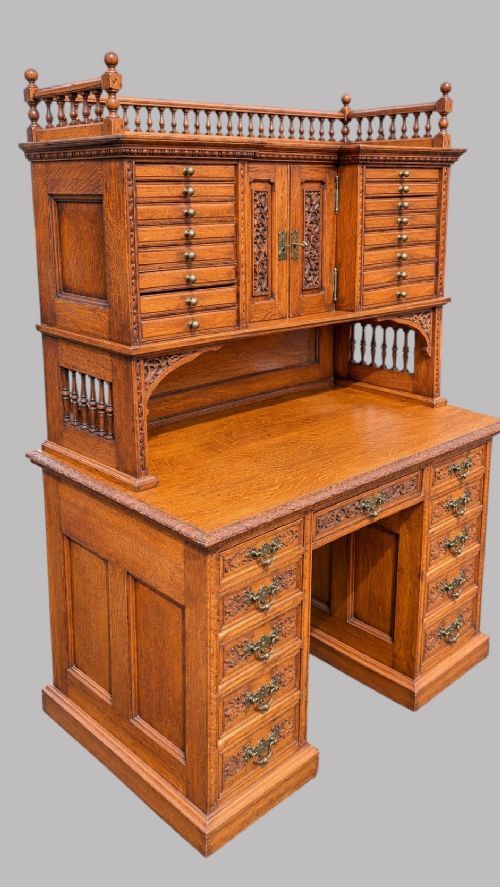
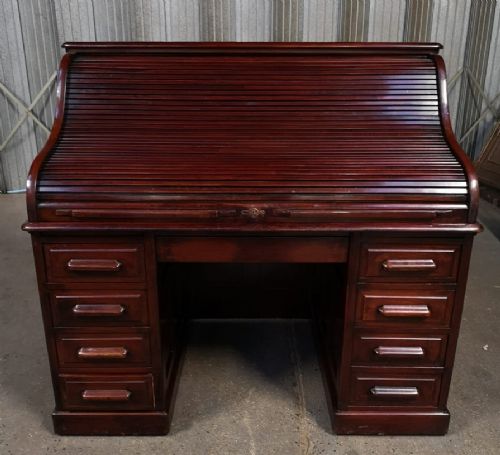
A vintage executive study table encompasses heavy pedestal desks, partners desks, and library writing tables designed for administrative or scholarly use. These pieces span from the 18th century through the Victorian and Edwardian eras into the 1930s Art Deco period.
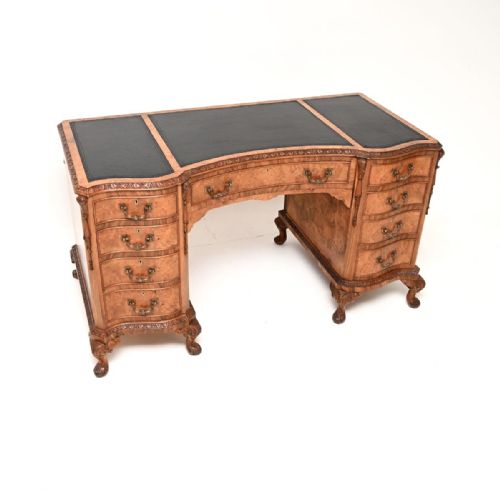
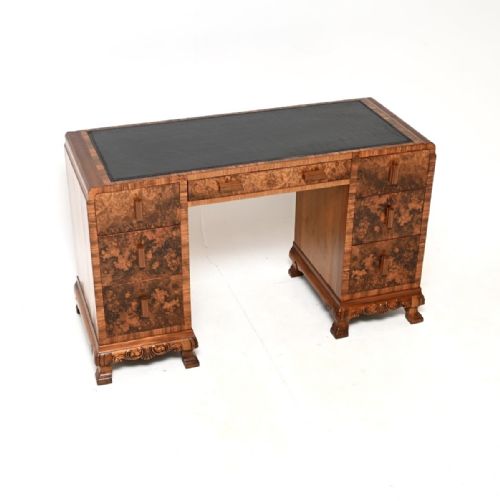
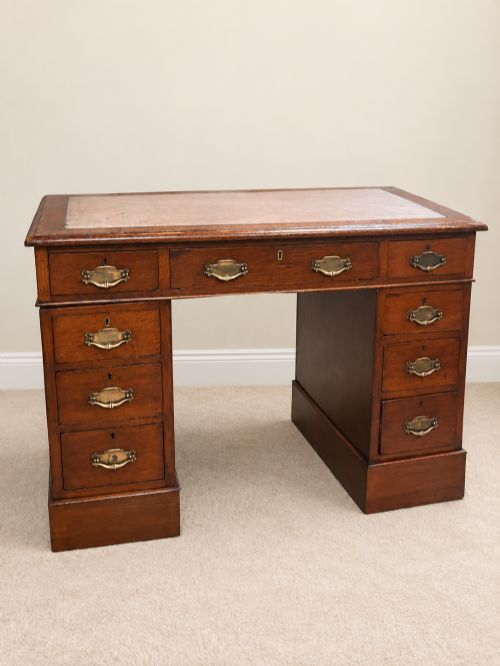
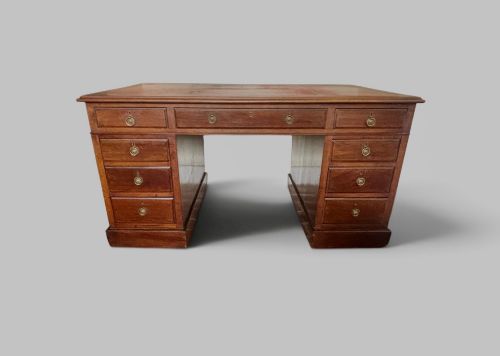
The most common formats found here are mahogany and burr walnut pedestal desks featuring multiple drawers and inset leather writing surfaces. Partners desks offering simultaneous workspace from both sides also appear regularly.
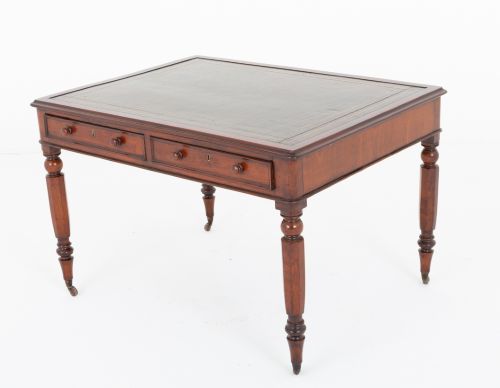
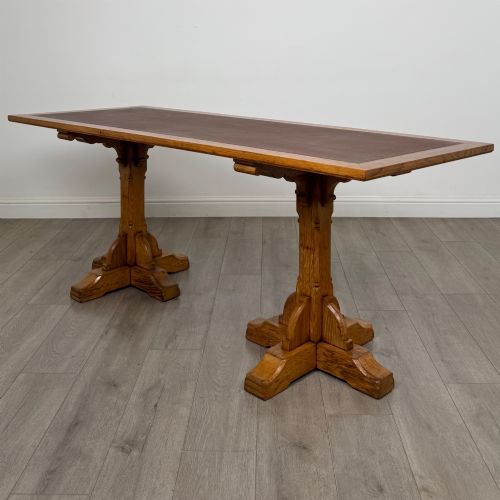
Origins range from English cabinet makers to French workshops, utilising traditional forms such as the kneehole desk and the free-standing library table. Each piece reflects the functional requirements of historic studies and executive offices.
Materials and construction methods
Makers utilised dense hardwoods such as mahogany, oak, and walnut, frequently applying burr walnut or satinwood veneers to create striking surface patterns. Solid timber frames provided structural stability for large writing surfaces.
Insets of tooled leather supplied a durable writing plane, while brass hardware, including handles and key escutcheons, completed the cabinetry. Joinery techniques relied on dovetailed drawer construction and robust pedestal framing.
The listings span from the 18th century through the Victorian and Edwardian eras up to 1930s Art Deco.
Distinguishing quality across the range
Quality rests in the selection of timber figures, such as highly figured burr walnut veneers, and the crispness of applied mouldings and carved details. Maker attribution significantly elevates a piece, as seen in documented examples from established London cabinet makers.
Internal construction, including solid mahogany drawer linings and original brass hardware rather than later replacements, separates standard utilitarian desks from exceptional library tables and partners desks.
Trollope & sons·Edwards & Roberts·Maple and Co·Hobbs & Co.
The Vintage Executive Study Table Glossary
- Pedestal desk
- A heavy freestanding desk consisting of two independent pedestals containing drawers, connected by a central desktop and modesty panel.
- Partners desk
- A large double-sided desk designed for two people to work opposite one another, featuring banks of drawers on both sides.
- Kneehole desk
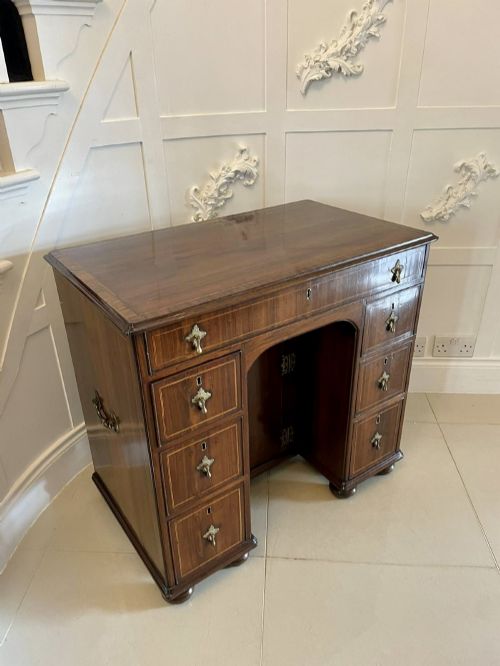
- A compact desk featuring a central recess for the sitter's legs, flanked by vertical columns of drawers.
- Bureau plat
- A French freestanding writing table, typically featuring a leather-inset top and one or more frieze drawers.
- Partners table
- A large library table or writing table finished on all sides for central placement in a room.
Vintage Executive Study Table: Frequently Asked Questions
What is a partners desk?
A partners desk is a large double-sided workspace designed with drawers and cupboards on both faces. This configuration allowed two individuals to sit opposite each other and work simultaneously.
Such desks were traditionally utilised in executive offices, libraries, and large studies where central placement in the room was required.
How do I identify a Victorian pedestal desk?
Victorian pedestal desks are typically constructed from dense timbers like mahogany or walnut and feature two banks of drawers supporting the top. They often incorporate inset leather writing surfaces and traditional brass drawer pulls.
Dating relies on construction methods such as hand-dovetailed drawer boxes and the specific weight and grain of the timber used.
Are Art Deco study tables different?
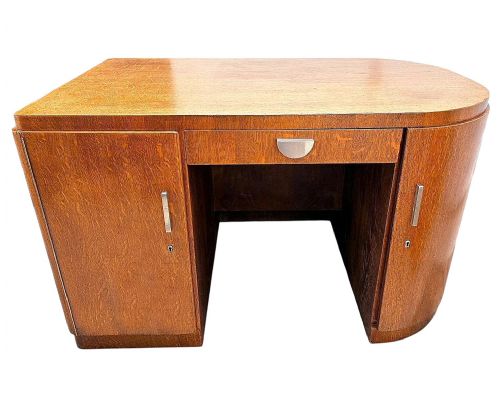
Art Deco study tables from the 1930s favor streamlined modernist profiles and exotic veneers such as burr elm or satin birch. They often replace traditional carved ornamentation with geometric symmetry and clean lines.
These pieces reflect the changing interior aesthetics of the early 20th century while maintaining the functional requirements of a writing desk.
How should I care for a leather desk top?
Leather desk tops require gentle cleaning with a slightly damp cloth and regular treatment with specialist leather balms to prevent drying and cracking. Avoiding excessive direct sunlight helps preserve the colour and gold tooling.
Proper maintenance protects the vintage surface while retaining the authentic texture acquired through decades of use.