





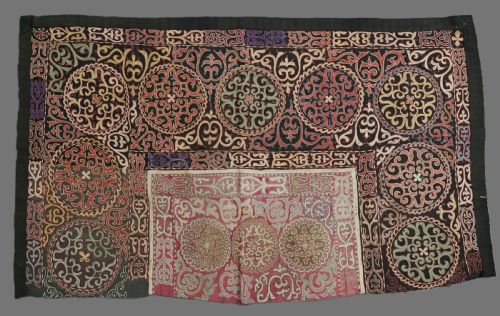


Vintage Ethnic Textile
These vintage ethnic textile pieces bring rich hand-woven character and traditional regional artistry into modern interiors.
Vintage Ethnic Textile
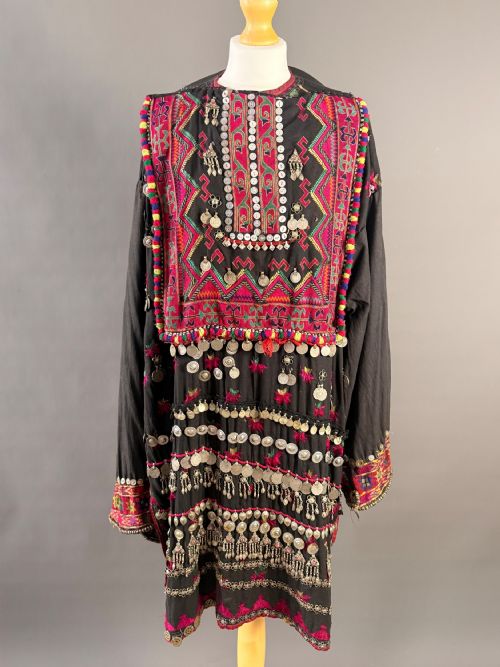
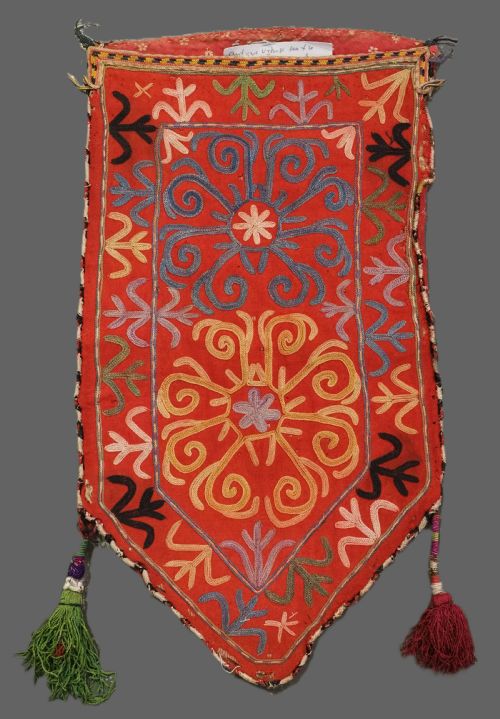
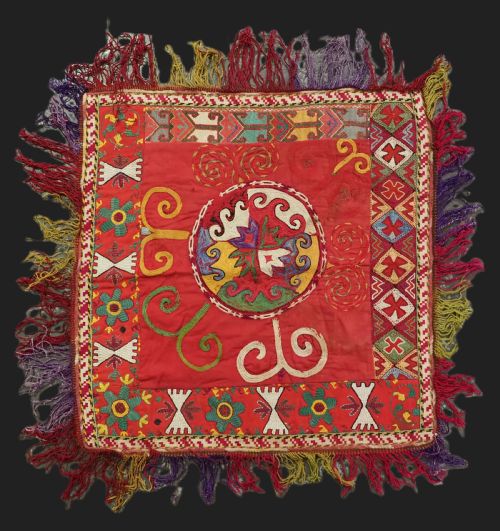
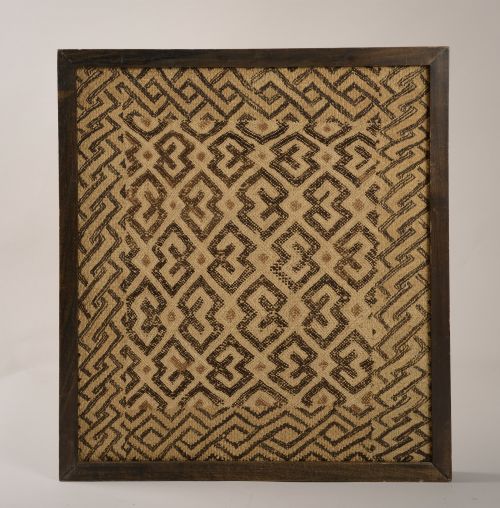
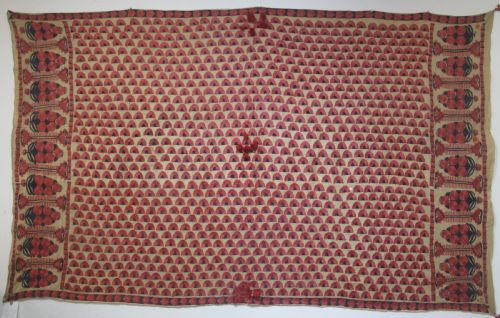
When searching for a vintage ethnic textile, collectors encounter diverse forms including wall hangings, ceremonial covers, and tribal panels originating from Central Asia, South Asia, and Africa. These pieces span periods from the mid-nineteenth century through the early twentieth century, reflecting distinct regional heritage and domestic traditions.
Wall art and decorative panels dominate the available forms, designed originally for nomadic yurt decoration or traditional domestic interiors. Buyers typically select these textiles to display as framed wall art or textured interior panels that anchor a room with historical depth.
What varies in quality
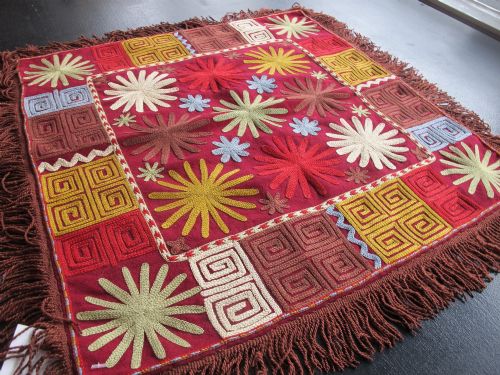
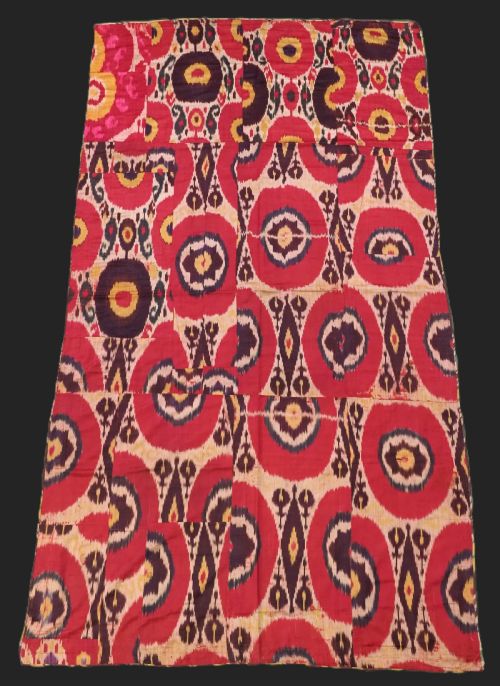
Quality in these textiles rests upon the density of the hand-work, the complexity of the regional design, and the survival of the original ground material. Pieces executed with tight, uniform silk embroidery or precise ikat patterns represent the higher end of the range.
The vibrancy and retention of natural dye colours significantly influence the standing of an individual piece, as does the structural integrity of the woven or embroidered fabric. Textiles retaining full dimensions without heavy restoration command greater appreciation among collectors.
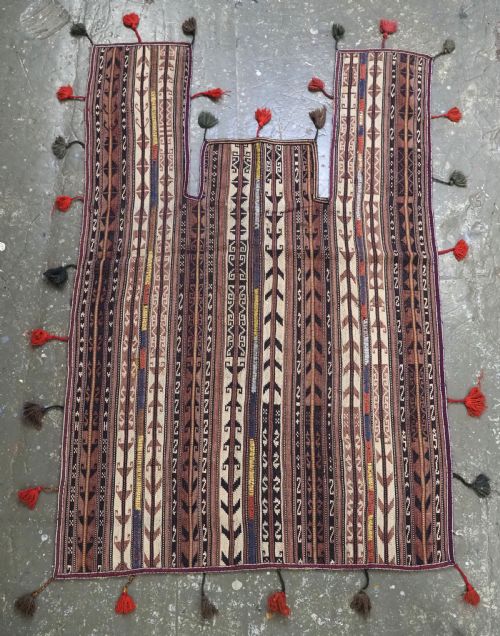
Several textiles served as ceremonial horse blankets, proving that nomadic livestock once dressed better than most humans.
The Vintage Ethnic Textile Glossary
- Suzani
- A large, embroidered tribal wall hanging from Central Asia, traditionally worked in silk thread on a cotton ground as part of a bride's dowry.
- Ikat
- A dyeing technique where yarns are tie-dyed prior to weaving, producing characteristic feathered pattern edges across panels and garments.
- Chuval
- A large tent bag made by Turkmen tribes, utilised for storage inside traditional nomadic dwellings.
- Tush kyiz
- A large, elaborately embroidered Kyrgyz wall hanging created by women to commemorate traditional marriages in a yurt.
- Kuba cloth
- A textile panel woven from raffia palm fibres by peoples in Central Africa, noted for geometric cut-pile designs.
Vintage Ethnic Textile: Frequently Asked Questions
Where do tribal horse covers come from?
Nomadic groups such as the Lakai tribe in Uzbekistan and northern Afghan communities produced ceremonial horse covers for festive processions and weddings. Artisans decorated these wool and cotton textiles with dense embroidery.
These pieces draped over horses during tribal celebrations, reflecting the wealth and artistic skill of the owner's family. Surviving examples now serve as distinctive wall tapestries.
What distinguishes an ikat fabric panel?
Ikat production involves binding and dyeing warp threads before weaving begins, which creates the signature blurred outlines along the pattern motifs. Uzbek weavers mastered this technique for garments and furnishing panels.
Textiles produced this way display rich colour integration on both sides of the cloth. This method required precise mathematical planning by the weaver.
How should I care for a textile wall hanging?
Display these textiles away from direct sunlight to prevent natural dyes from fading over time. Supporting the full weight evenly across a backing reduces strain on old cotton or wool grounds.
Professional mounting helps preserve fragile embroideries and woven structures without causing damage to the original fibres. Regular gentle dusting maintains the surface without requiring washing.