


Vintage Etagere
These open tiered stands known as vintage etagere bring vertical display and surface space to a room, spanning periods from Regency to the twentieth century.
Vintage Etagere
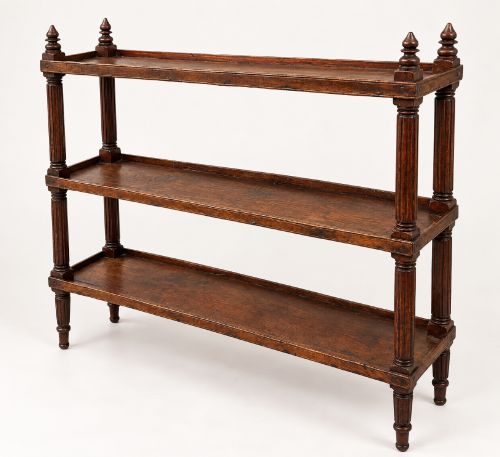
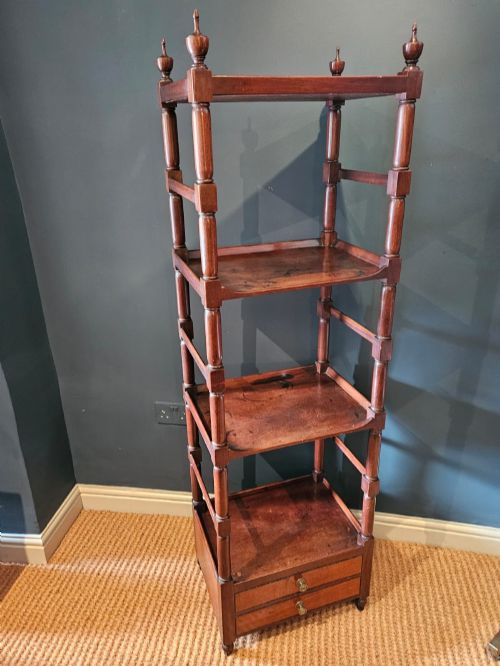
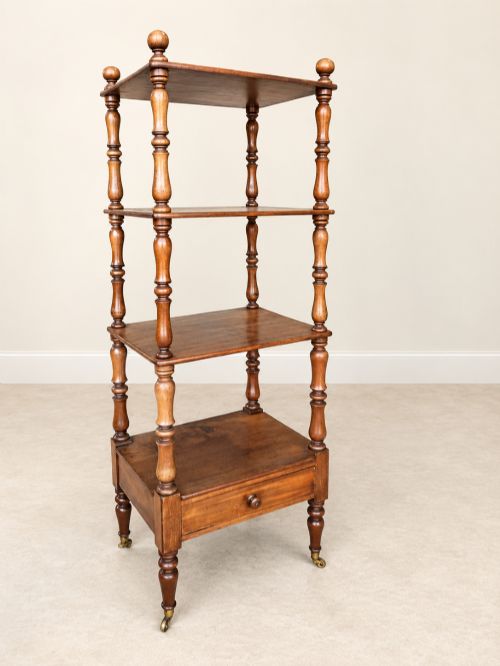
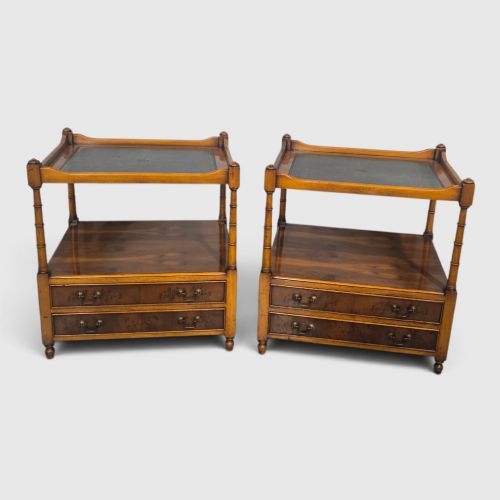
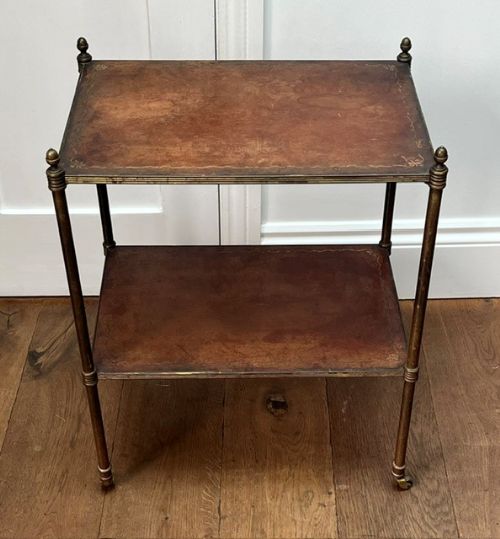
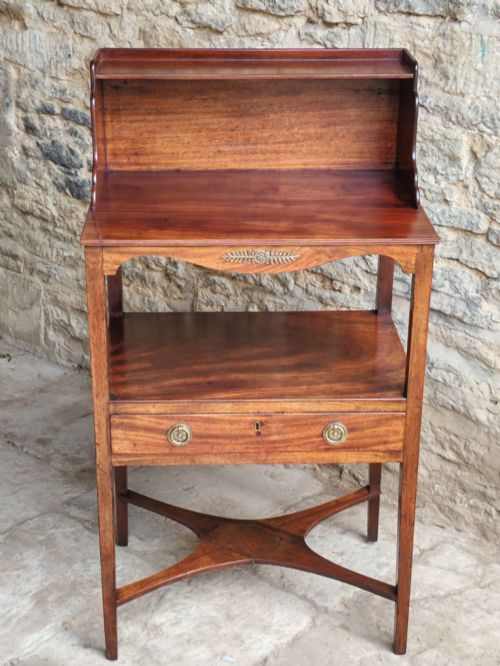
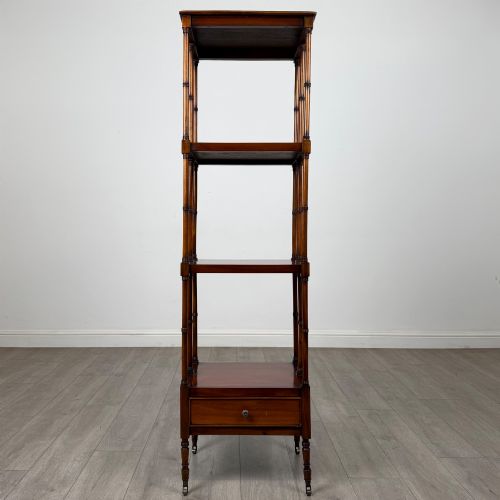
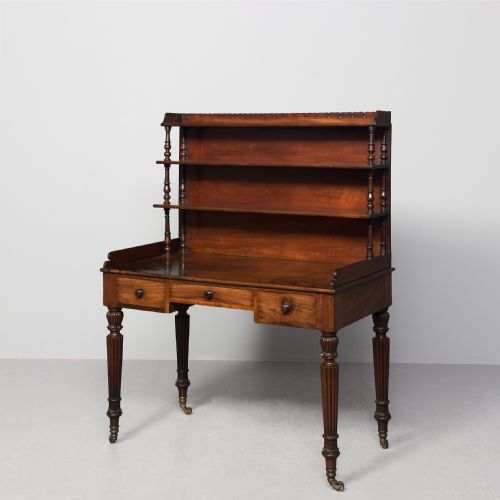
When you search for a vintage etagere, you find tiered display structures designed to hold books, plants, and decorative objects across multiple levels. The pieces on this page range from nineteenth-century mahogany what-nots and walnut corner shelves to twentieth-century brass, lacquer, and bamboo tiered tables.
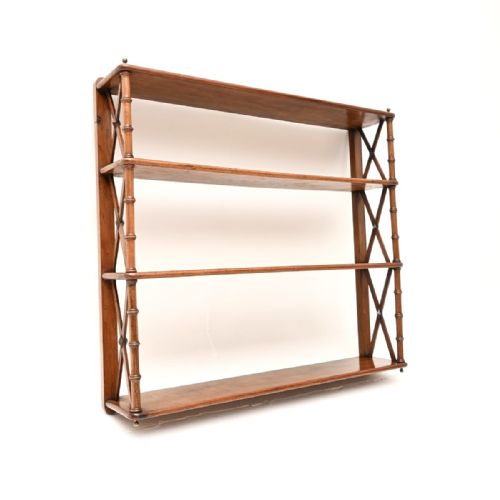
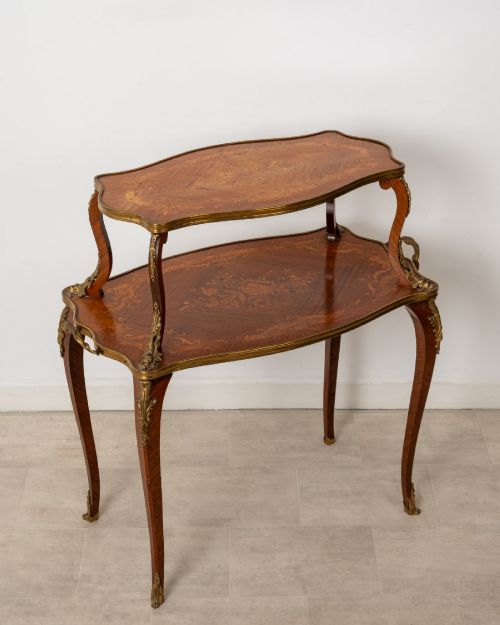
The form appears in various configurations, including wall-mounted shelves, freestanding multi-tiered units, and corner cabinets. Origins span across English cabinet-making traditions, French styles like Louis XV, and continental painted designs.
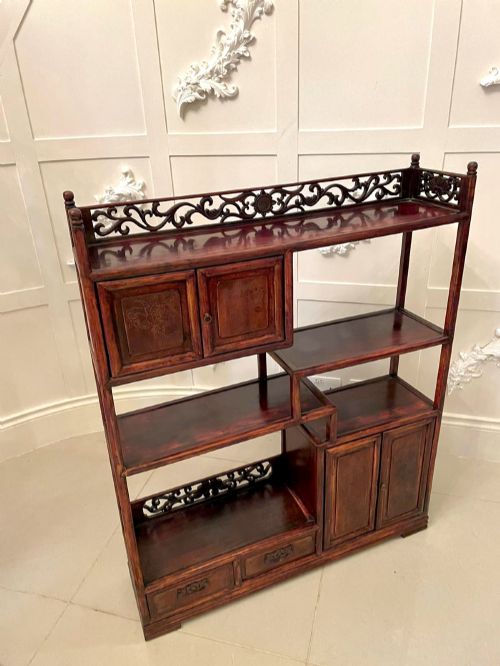
Victorian examples frequently utilise rich burr walnut or rosewood with turned supports and pierced fretwork, whilst later twentieth-century iterations lean towards lacquered brass, bamboo, and glass-topped tiers.
Materials and construction
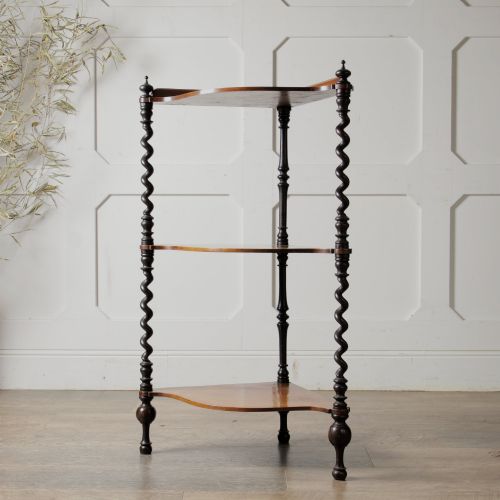
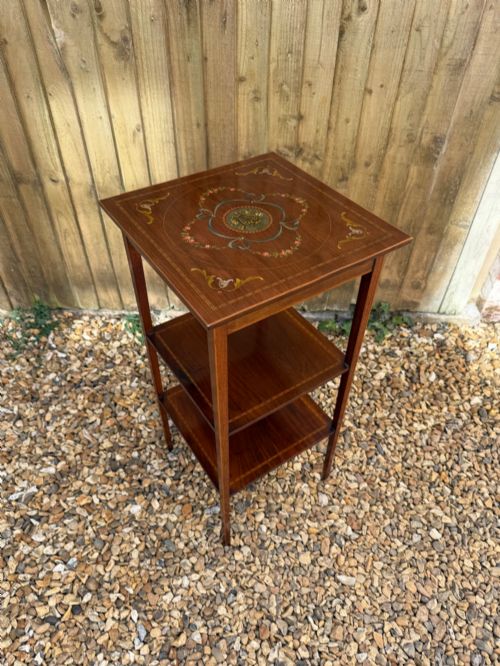
Cabinet-makers relied heavily on timbers such as mahogany, walnut, rosewood, and yew, often constructing shelves with fine parquetry, marquetry, or inlaid veneers. Structural uprights range from slender wooden pillars and barley twists to turned legs and bamboo stalks.
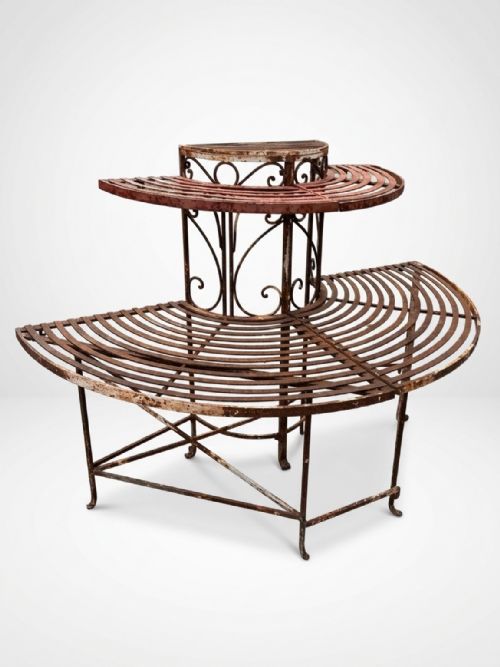
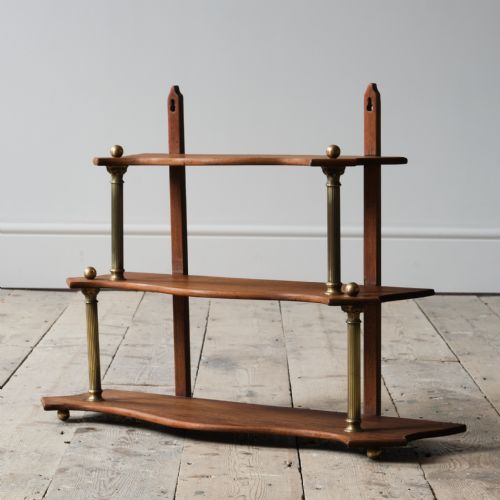
Metal elements appear in brass detailing, lacquered brass frames, wrought iron racks, and wirework planter structures. Surface finishes involve traditional polishing, gilt accents, and painted lacquer work.
Listings feature etageres and what-nots in mahogany, walnut, rosewood, and bamboo, spanning the Regency period through the Edwardian era and into the 1930s.
Separating the ordinary from the exceptional
The upper tier of craftsmanship shows in the selection of timbers like burr walnut and kingwood, where figured grain patterns dictate the visual weight of the furniture. Finer examples display meticulous joinery, such as delicate pierced fretwork and precise parquetry inlay.
Structural integrity across multiple tiers relies on the rigidity of the upright supports, whether turned wooden pillars, barley twists, or solid brass framing. Elaborate decorative programmes, including hand-painted lacquer and gilt highlights, elevate simpler utilitarian shelving into distinct display furniture.
James Mein of Kelso·Mallett of London
The Vintage Etagere Glossary
- What-not
- A Victorian term for an open tiered shelving unit used for displaying ornaments and bric-a-brac. These often fit into corners or stand against walls.
- Marquetry
- Decorative woodwork where pieces of veneer are fitted into a ground material to form geometric patterns or pictorial designs. This technique frequently graces the surfaces of French-influenced pieces.
- Fretwork
- Ornamental design created by cutting patterns through thin wood using a scroll saw or piercing technique. Victorian corner what-nots often employ this for decorative brackets.
- Barley twist
- A type of turned wooden support resembling the spiral of a barley sugar twist. It is a common feature on nineteenth-century supports and table legs.
Vintage Etagere: Frequently Asked Questions
What is an etagere used for?
An etagere serves as an open shelving unit designed to display collections, books, and decorative objects across multiple levels. In period interiors, they functioned as display pieces for porcelain, plants, and small curiosities.
Today, they suit living rooms, hallways, and bedrooms where vertical storage is needed without blocking light or making a space feel cramped.
How do I date a wooden whatnot?
Dating relies on timber choices, construction techniques, and stylistic markers associated with specific periods like the Regency or Victorian eras. For instance, heavily figured burr walnut and pierced fretwork point towards mid-to-late nineteenth-century Victorian production.
Earlier Regency pieces tend to feature cleaner mahogany lines with brass gallery rails, whilst Edwardian examples often incorporate lighter satin birch or inlaid rosewood.
Can these shelves hold heavy books?
Most tiered etageres and what-nots were built for ornaments, ceramics, and lighter volumes rather than heavy reference libraries. Freestanding pieces with slender pillars or bamboo frames are best suited for decorative objects and small plants.
Wall-mounted shelves require secure fixing to wall studs if used to support heavier items like stacked books.
Where should I place an etagere?
Corner etageres fit neatly into unused angles of a room, making efficient use of awkward spaces. Freestanding two-tier tables and shelving units work well as room dividers, side tables, or against a blank wall.
Keep them away from direct heat sources and strong sunlight to protect vulnerable polished wood veneers and lacquer finishes.