



Vintage Entryway Mirror
A vintage entryway mirror brings practical utility and period character to a hall, combining reflective glass with hooks, shelves, and stands.
Vintage Entryway Mirror
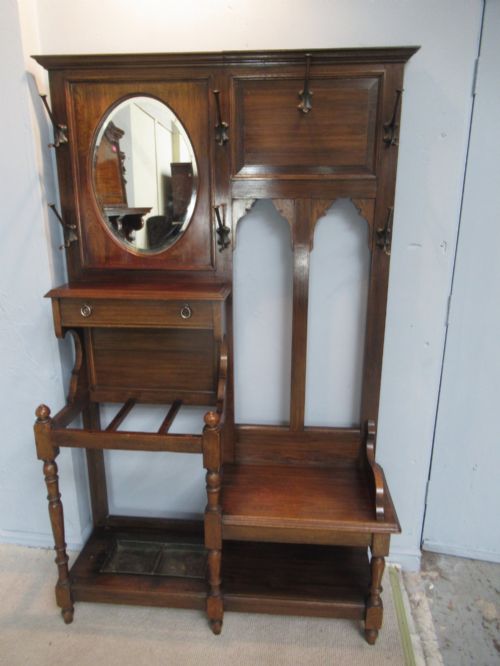
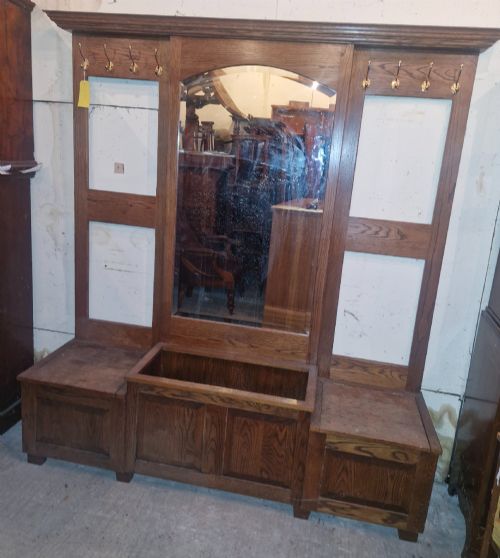
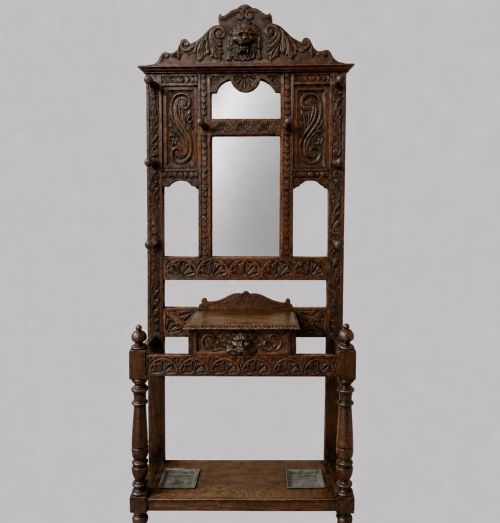
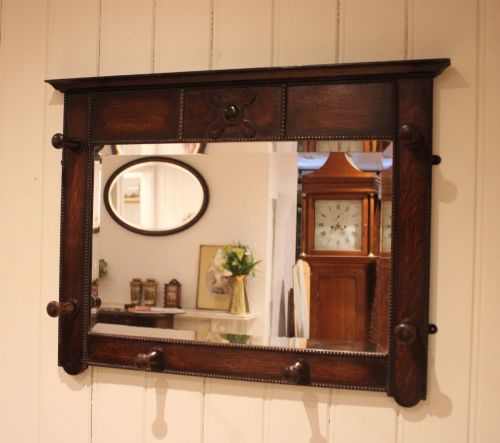
When searching for a vintage entryway mirror, buyers encounter a range of forms, from compact wall-hanging cloakroom mirrors with shelves to large multi-functional hall stands incorporating hat hooks, umbrella racks, and console tables. These pieces date from the nineteenth century through the Edwardian period and into the Art Deco era, reflecting the diverse domestic needs of past households.
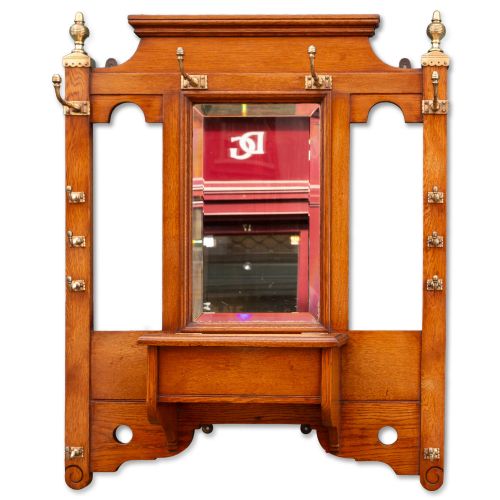
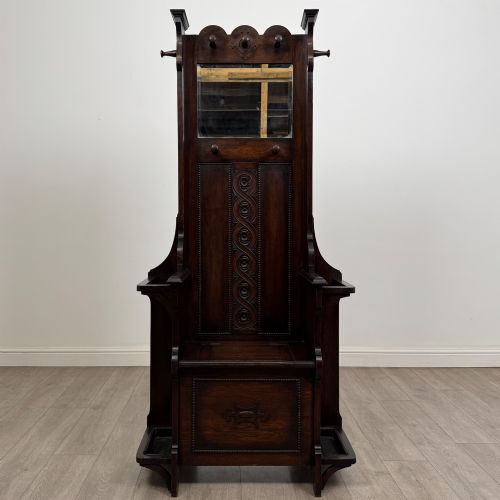
The most common formats on this page are oak, mahogany, and walnut hall stands that integrate a central mirror with woodwork, alongside simpler wall-mounted oak and brass coat racks with built-in mirrors. Pieces span stylistic movements including Victorian, Arts and Crafts, Art Nouveau, and French Art Deco, utilising materials suited to heavy daily use in entrance halls.
Materials and construction methods
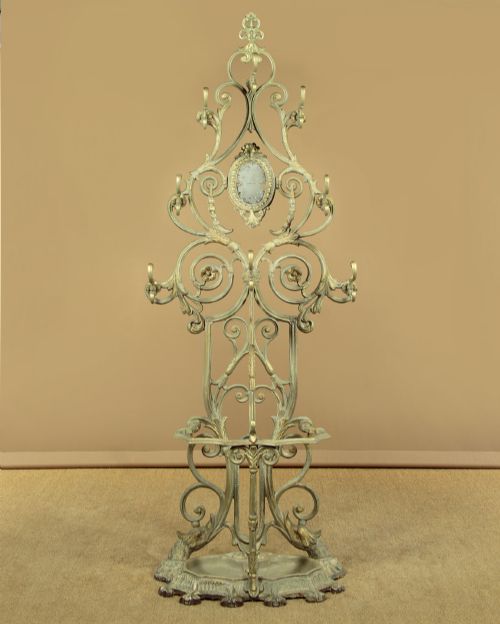
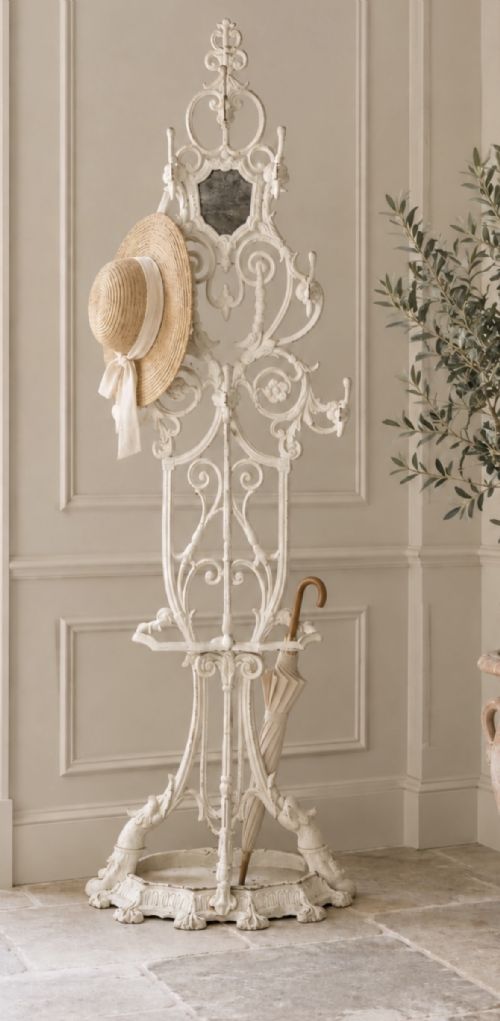
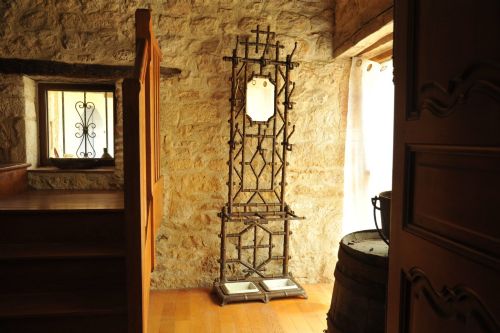
Makers utilised solid hardwoods such as oak, mahogany, and walnut, often finished with carved details, bevelled glass plates, and brass or cast iron coat hooks. Structural elements on larger hall stands frequently combine timber frames with cast iron or wrought iron umbrella trays and marble console inserts.
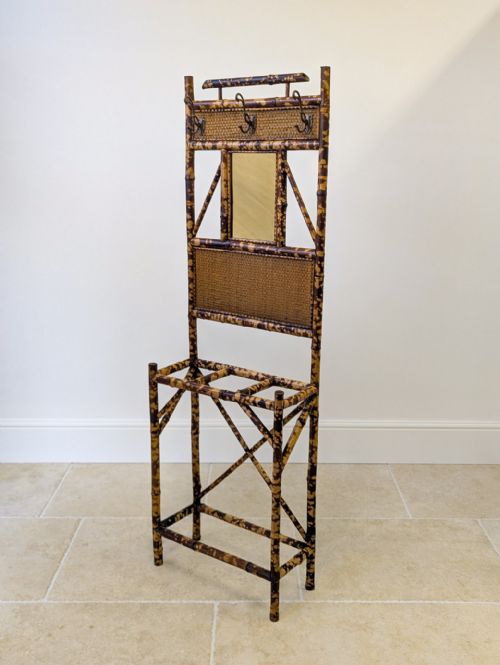
Alternative construction methods include bentwood techniques and faux bamboo finishes, particularly seen in French wall mirrors and umbrella stands from the late nineteenth and early twentieth centuries. Hardware attachments, from brass rails to multi-functional hooks, were securely fastened to withstand the weight of coats and hats.
Listings feature oak, mahogany, walnut, and bamboo, alongside cast iron and brass elements.
Distinguishing quality in hall mirrors
Quality in these pieces rests upon the selection of timber, the depth and precision of the carved decoration, and the integrity of the integrated hardware. Heavy golden oak, figured walnut, and substantial mahogany pieces demonstrate superior joinery compared to lighter utilitarian alternatives.
The integration of secondary materials such as marble shelves, heavy cast iron drip pans, and original bevelled mirror glass elevates a piece. Design cohesion within specific stylistic movements, such as Arts and Crafts or Art Nouveau, further separates standard production items from more ambitious workshops.
Fischel
The Vintage Entryway Mirror Glossary
- Hall stand
- A multi-functional piece of furniture designed for an entryway, typically combining a mirror, coat hooks, a shelf, and umbrella storage.
- Bevelled glass
- Mirror glass with an angled, polished edge created to catch the light and add decorative depth.
- Bentwood
- Wood steamed and bent into curved shapes, a technique utilised by makers such as Fischel for lightweight hall stands.
- Faux bamboo
- Wood carved, painted, or moulded to imitate the segmented stalks of natural bamboo, popular in nineteenth-century decorative items.
- Aesthetic Movement
- A late nineteenth-century design style that emphasised visual beauty and incorporated eclectic influences including Japanese motifs.
Vintage Entryway Mirror: Frequently Asked Questions
What is a last look mirror?
A last look mirror is a compact wall-hung glass specifically positioned near an exit door so occupants could check their appearance before leaving the house.
These pieces typically date from the Edwardian period and often include a small integrated shelf for gloves, keys, or calling cards.
How were hall stands used in Victorian homes?
Victorian hall stands served as the primary storage station for outdoor wear, accommodating heavy overcoats, hats, walking sticks, and umbrellas in the entrance hall.
The inclusion of a mirror allowed visitors and family members to adjust their attire upon entry, while marble inserts and trays caught wet mud from boots and umbrellas.
How do I distinguish Arts and Crafts hall stands?
Arts and Crafts hall stands display a focus on honest construction, visible joinery, and the natural grain of golden oak.
They reject excessive ornamentation in favour of sturdy frames, hand-hammered brass hardware, and geometric or stylized plant motifs.
Are wall-mounted mirrors and hall stands the same age?
Wall-mounted mirrors, cloakroom racks, and floor-standing hall stands span the same broad nineteenth and early twentieth-century periods.
Wall-hung variants appear across Victorian, Edwardian, and Art Deco eras, constructed from matching materials like oak, mahogany, and wrought iron.